How Calcined Quartz Supports Enamel Glaze Adhesion and Thermal-Cycling Performance
Learn how calcined quartz is evaluated in enamel glazes for metal and glass, using sieve residue, chemistry, glaze addition, adhesion and thermal-cycling evidence.
CALCINED QUARTZ IN ENAMEL GLAZES
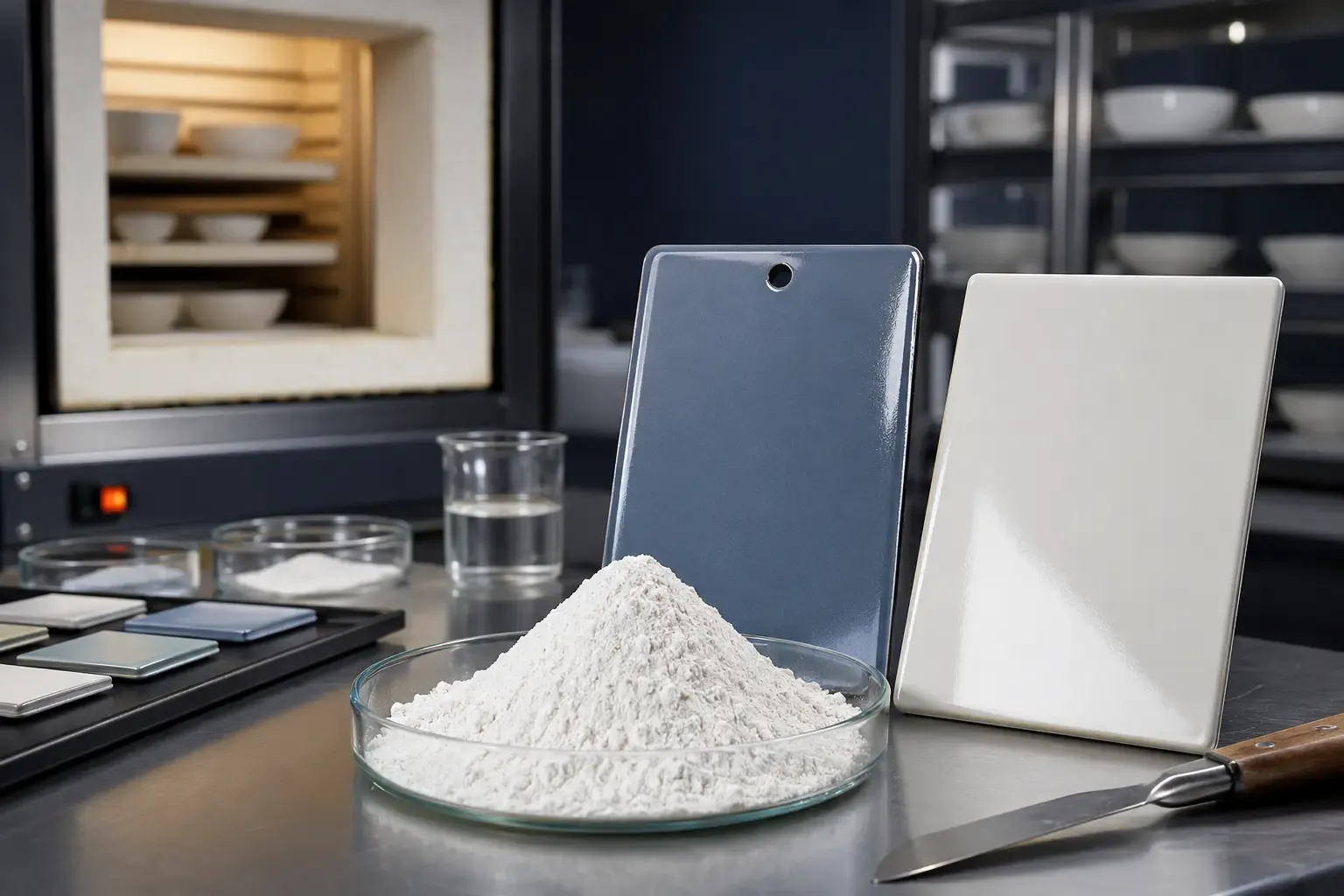
For enamel coatings on metal or glass, calcined quartz should be judged as part of the complete glaze system. Sieve residue, chemistry, addition level, substrate, firing and cooling conditions must be reviewed together before a grade is approved.
When a buyer asks whether a silica mineral will improve an enamel coating, the useful question is not simply whether the powder is white or chemically pure. The practical question is whether its particle-size distribution and mineral phase fit the frit, the substrate and the firing schedule. This guide explains a testable way to make that decision and connects the evaluation to Changtong's calcined quartz powder for enamel glazes.
1. Start With the Glaze System, Not the Powder Alone
Enamel performance is created at the interface between the fired glaze and its substrate. The mineral component can influence packing, melt interaction and the final texture, but it does not independently guarantee thermal-shock resistance, chemical resistance or wear life.
| Buyer question | What should be checked | Why it matters |
|---|---|---|
| Will the glaze adhere to metal? | Frit, surface preparation, coating thickness and firing window | The same mineral can behave differently on different substrates |
| Can it tolerate rapid heating and cooling? | Thermal expansion match, glaze integrity and defined heat-cool cycles | Cracks and spalling are system-level failures |
| Will the surface resist chemicals and wear? | Fired surface, service chemicals and abrasion method | A powder specification cannot replace a finished-coating test |
2. What the Comparison Reports Actually Show
Two customer-side comparison reports supplied for this project recorded sieve residue and chemistry for two calcined silica samples. The figures below are transcribed as reference test results from the dated reports; they are not presented as a universal specification for every production lot.
| Report date | Sample | 200 mesh residue per 100 g | 325 mesh residue per 100 g | SiO₂ | Fe₂O₃ |
|---|---|---|---|---|---|
| 2023-09-13 | 1# | 0.16 g | 9.64 g | 99.50% | 0.03% |
| 2023-09-13 | 2# | 0.04 g | 5.80 g | 99.53% | 0.02% |
| 2023-10-30 | 1# | 0.80 g | 8.76 g | 99.43% | 0.07% |
| 2023-10-30 | 2# | 0.96 g | 8.48 g | 99.63% | 0.08% |
The two reports used a glaze ratio of 9312E : 9315 : 9316E = 55 : 25 : 20 and added each calcined silica sample at 8%. Both reports described the compared samples as close in surface appearance and adhesion under those trial conditions.
3. Why Particle Size and Silica Phase Need Separate Discussion
Particle size affects how a powder packs and disperses in a glaze batch. The relevant acceptance point is not a fashionable mesh number; it is the distribution and residue method that the customer and supplier agree to use. The silica phase also matters. Quartz-to-cristobalite transformation and the cristobalite inversion can influence thermal-expansion behavior during firing and cooling, so phase control should be considered when the application is sensitive to cracking, crazing or spalling.
For comparison, fused silica powder is an amorphous silica option often considered where very low thermal expansion is central to the formulation. It should not be substituted automatically for calcined quartz: the frit, firing response and required surface properties still need to be tested.
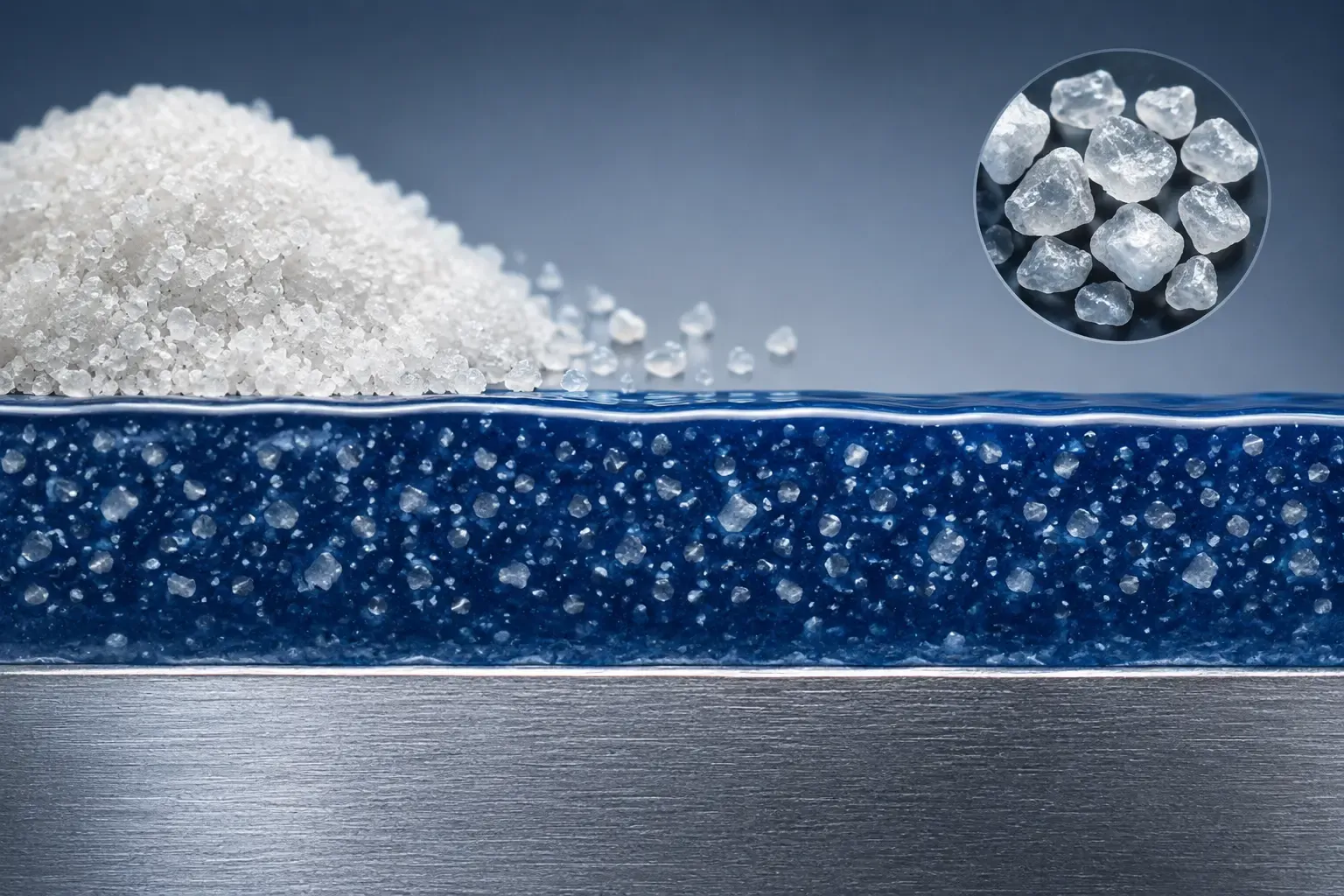
The interface illustration is for technical explanation; production performance must be verified with the customer's own frit and substrate.
4. Build a Test Plan for Metal and Glass Separately
Metal and glass do not present the same surface preparation, stiffness or thermal-expansion conditions. A meaningful trial therefore keeps the powder constant while changing only the variables that define the real application.
| Stage | Metal substrate | Glass substrate | Record |
|---|---|---|---|
| Preparation | Cleaning, roughness and pretreatment | Cleaning, surface condition and edge quality | Substrate lot and preparation method |
| Firing | Peak temperature, dwell and cooling rate | Peak temperature, dwell and thermal gradient | Firing curve and coating thickness |
| Performance | Adhesion, corrosion exposure and abrasion | Cracking, adhesion and heat-cool cycling | Before/after appearance and failure mode |
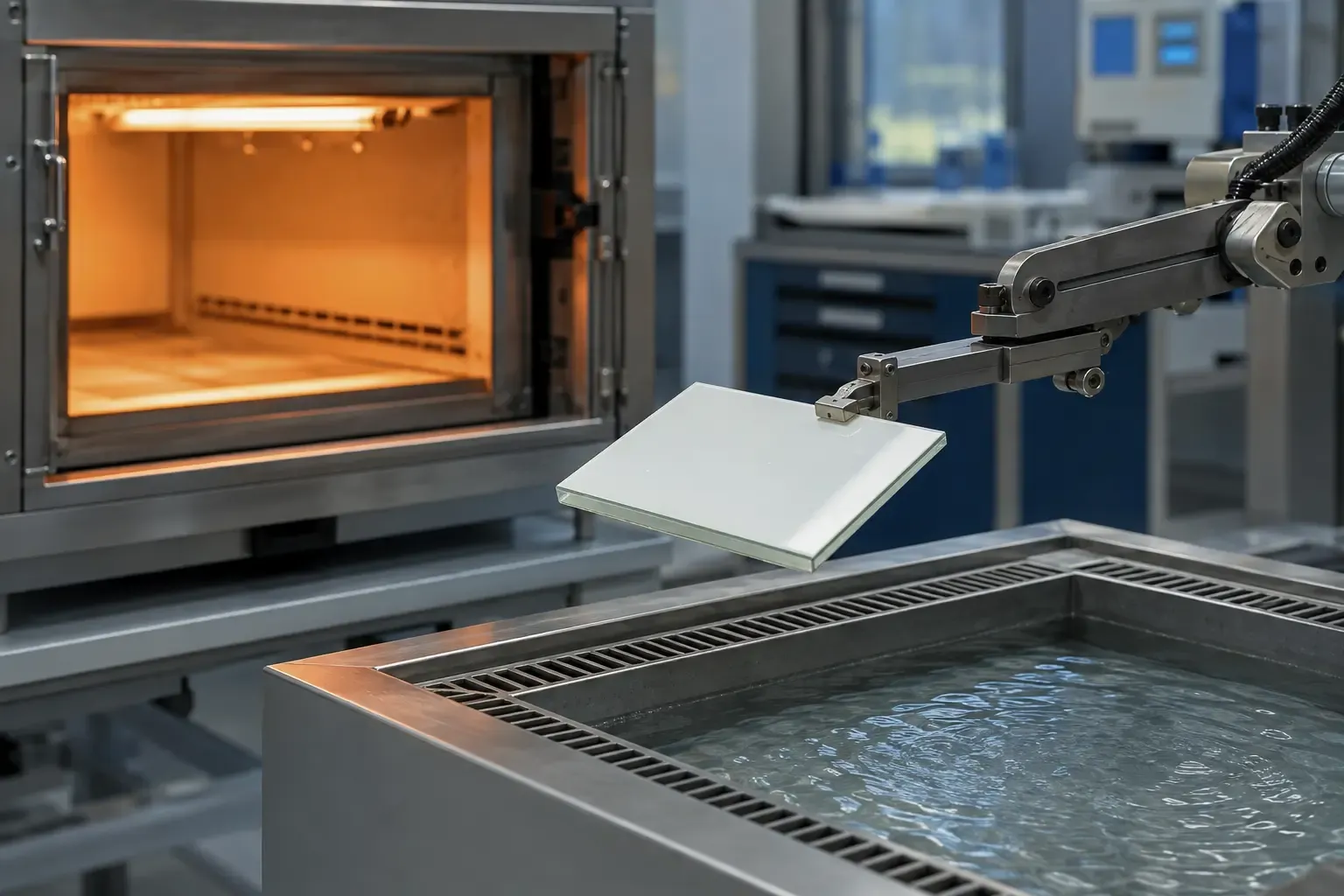
Thermal-cycle equipment and conditions are illustrative. The customer should define the cycle, inspection interval and pass criteria.
5. Quality Documents That Make a Trial Reproducible
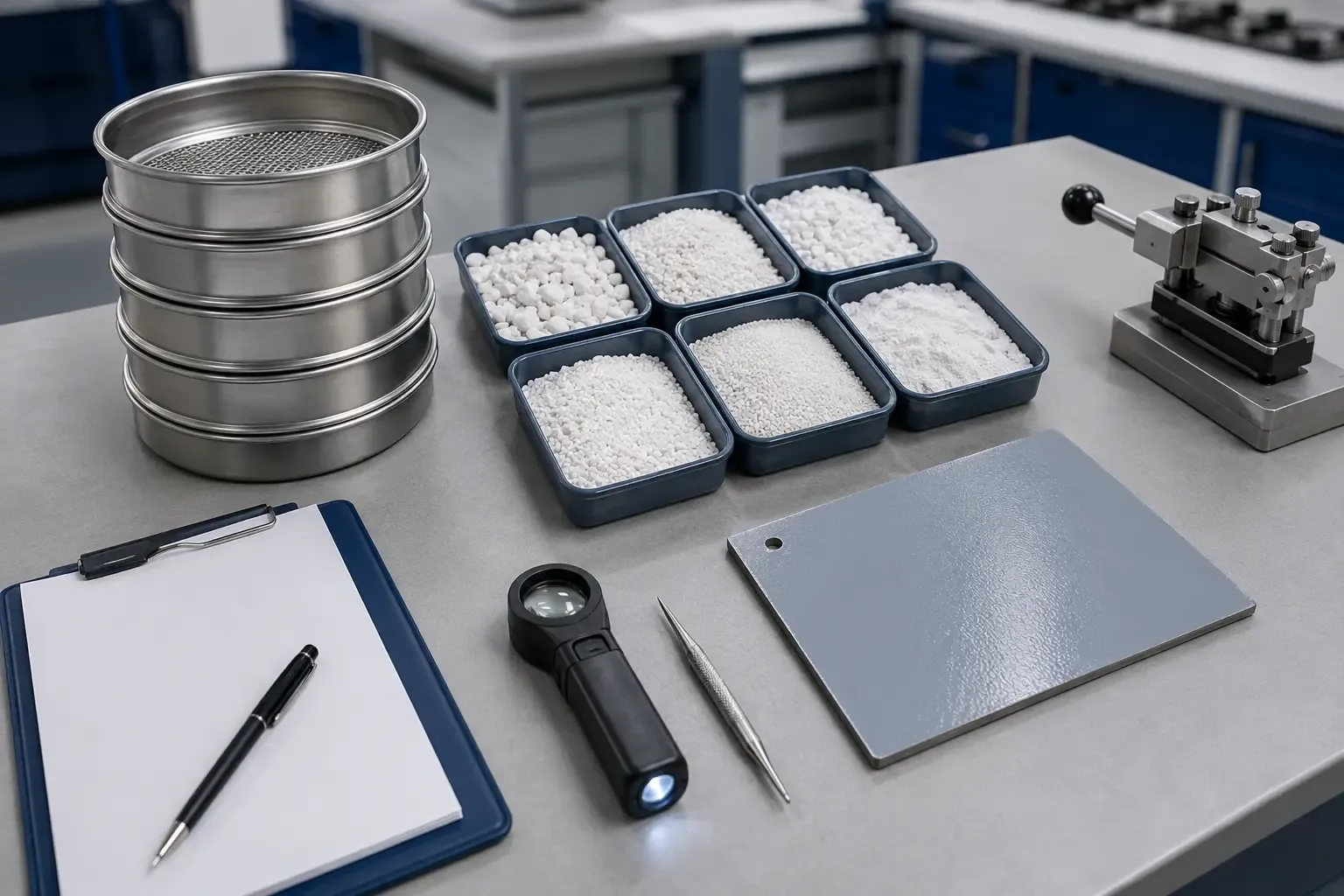
A useful sample is more than a bag of powder. The test record should connect the material identity to the screening method, chemistry, glaze batch and finished-panel observations. This is where a supplier's documentation process becomes more valuable than a generic performance slogan.
| Document or record | Minimum useful content |
|---|---|
| Material identification | Product name, lot reference, target grade and packing unit |
| Particle-size record | Sample mass, sieve method, mesh screens and residue result |
| Chemical record | SiO₂, Fe₂O₃ and analytical basis agreed for comparison |
| Application trial | Frit ratio, addition level, substrate, firing curve and observations |
6. Practical Buying Checklist
- Define the substrate and service environment before selecting a mineral phase.
- Agree the sieve method and sample mass instead of relying on a mesh label alone.
- Compare samples at the same frit ratio, addition level, mixing route and firing schedule.
- Keep adhesion, heat-cool cycling, chemical exposure and abrasion results as separate observations.
- Ask the supplier to link the final recommendation to a lot record and a reproducible test.
For a broader phase comparison, see Fused Silica vs Cristobalite vs Quartz. For the product-specific material scope and report-derived data, visit Calcined Quartz Powder for Enamel Glazes.
Frequently Asked Questions
Does calcined quartz alone make an enamel glaze thermal-shock resistant?
No. Thermal cycling depends on the complete glaze, substrate, thickness, firing curve, cooling conditions and inspection method.
What evidence is available for this product direction?
Two dated comparison reports recorded sieve residue, SiO₂, Fe₂O₃ and an 8% addition trial. The compared samples showed close appearance and adhesion under the stated formulation.
Should metal and glass use the same test?
They should be evaluated separately because surface preparation, stiffness and thermal-expansion conditions differ.
Can fused silica replace calcined quartz automatically?
No. Fused silica may offer a different thermal-expansion profile, but the substitution must be qualified against the actual frit and firing process.
Discuss a Calcined Quartz Glaze Trial
Send the substrate, frit composition, target sieve result, addition level, firing schedule and service conditions. Changtong can review the material fit before sampling.
Request a QuoteReferences
Customer-side calcined silica comparison reports dated 2023-09-13 and 2023-10-30, supplied for this technical review.
Digitalfire: Cristobalite Inversion; Accuratus: Fused Silica Material Properties; Effects of Fused Silica Addition on Thermal Expansion.