Industrial Silica Listings: Identity Fields Online Sellers Need
A field-by-field guide to industrial silica listings: phase, grade, size method, document status, intended use and safety boundaries.
BUYER-FACING DATA CHECK
An accurate listing answers three different questions.
An online silica listing is useful only when a buyer can tell what the material is, which grade the data describes and what still needs lot confirmation. Treat the page as an identity record, not a substitute for a COA, TDS or SDS.
Identity: what the material is. Grade: which commercial option is described. Evidence: what must be confirmed for the lot.
Put identity above the marketing name
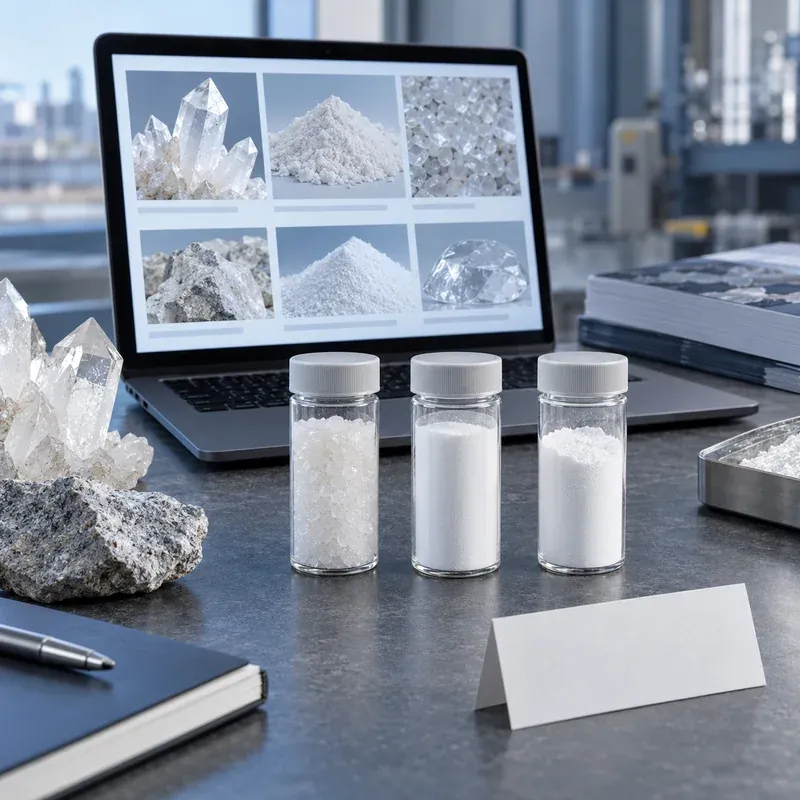
Use a specific product title and material family in the first screen. For example, Changtong’s General-Purpose Crystalline Silica Powder 325 Mesh is natural crystalline quartz powder; its public page lists SiO₂ 99.3–99.7%. Changtong’s Fused Silica Powder 325 Mesh is amorphous fused silica; its page lists SiO₂ 99.8–99.99%. The published ranges are catalog information, not lot COA values. Never merge the two because both say 325 mesh, and never relabel either as precipitated or fumed silica.
Fields that prevent a wrong purchase
| Listing field | What to publish | What stays conditional |
|---|---|---|
| Material identity | Natural crystalline quartz powder or amorphous fused silica, as stated on the selected product page. | Grade-specific phase or XRD documentation when a buyer requires it. |
| Size | 325 mesh as the catalog grade label. | Actual distribution, sieve residue and test method for the quoted lot. |
| Chemistry | Catalog SiO₂ range, clearly called a published product-page range. | Current COA result and acceptance tolerance. |
| Application | Examples from that product page, stated as trial candidates. | Dispersion, firing, dielectric or other finished-part performance. |
| Supply | Ask for packing and lead time in the inquiry. | Price, stock, MOQ and delivery date until quoted. |
Use a short evidence trail beneath the buy inquiry
- Link to the precise product page, not a generic “silica” category.
- State that current TDS, SDS and lot COA should be requested for the selected grade and destination. Do not upload a generic sheet as proof for every SKU.
- Ask the buyer for process, binder, target size criterion and sample quantity before presenting a grade as fit for purpose.
- Display safety information appropriate to material identity and the local market. Crystalline silica dust exposure is a separate workplace risk; the NIOSH overview is general reference, not a classification for a Changtong lot.
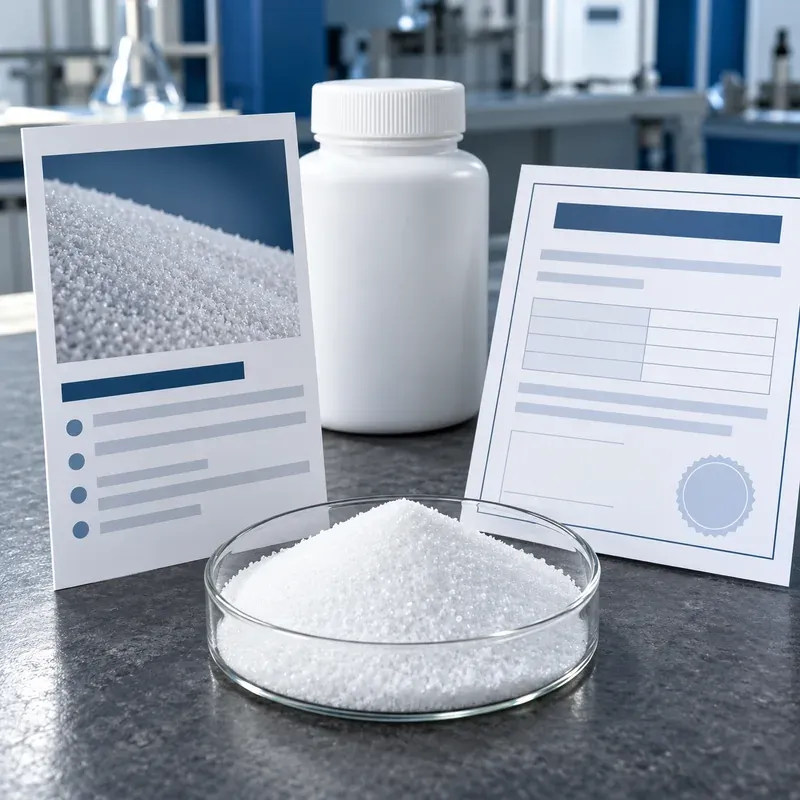
A draft listing snippet buyers can use
General-Purpose Crystalline Silica Powder 325 Mesh. Natural crystalline quartz powder for industrial ceramics, refractories and mineral-filled compounds. Changtong’s public product page lists SiO₂ 99.3–99.7%; confirm the exact grade, size distribution, test method, current lot COA, SDS, packing and trial fit before ordering. Request a sample for your process.
This is an illustrative listing assembled from the linked product page. A seller must verify permission to use supplier material and keep live offer details current. Do not claim “food grade,” “non-hazardous,” or guaranteed finished-product performance without relevant evidence.

FAQ
Can the seller say 325 mesh equals one exact micron size?
No. The label cannot replace an agreed distribution and test method for acceptance.
Can one SDS cover every silica family?
Ask for the current sheet corresponding to the selected product and market. Phase and surface treatment matter.
Does the catalog purity range certify the shipment?
No. Match a current lot COA and test basis to the purchase specification.
Source basis: Changtong’s linked product pages; NIOSH silica safety overview is independent general reference. No customer result or seller inventory is asserted.
Request a Quote
Send the exact listing SKU, buyer application, target size criterion and destination for a grade-specific response.
Contact Changtong for listing-grade evidence