Cristobalite in Enamel Frits: Phase Control and Glaze Fit
Learn how to screen cristobalite for enamel frits and ceramic glazes using XRD phase evidence, chemistry, particle size, thermal fit and controlled firing trials.
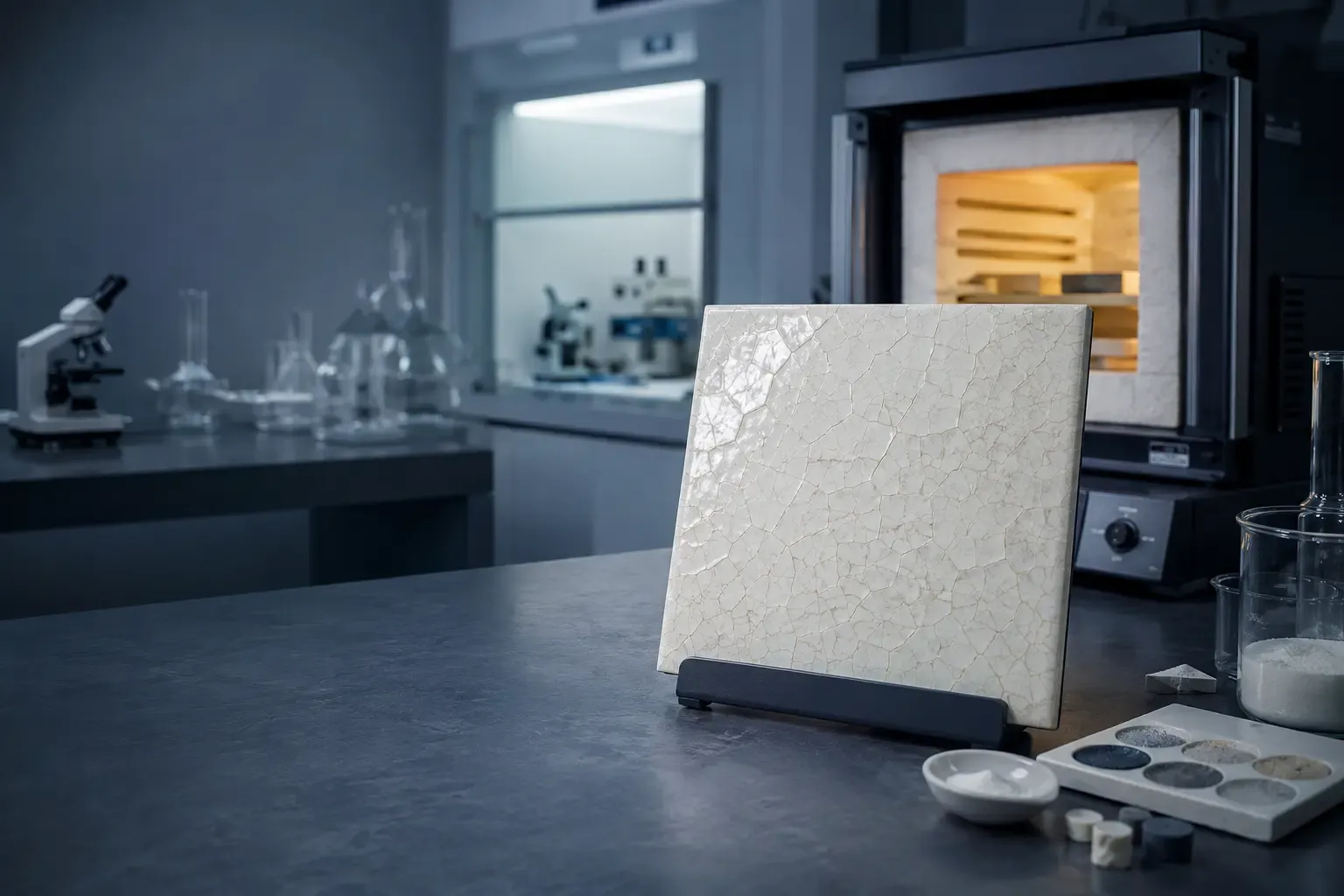
Cristobalite can be useful in a frit or glaze development program only when its phase identity, particle-size method, chemistry and thermal fit are checked together.
The key question is not whether a powder is simply labelled “cristobalite.” It is whether the selected mineral phase behaves predictably in the customer’s frit, glaze, substrate and firing cycle.
Why Phase Identity Matters in Frit and Glaze Work
Cristobalite is a crystalline polymorph of silicon dioxide. Research on glass-ceramic glazes shows that crystalline phases can change thermal-expansion behaviour and the stress relationship between a glaze and its substrate. The relevant engineering variable is therefore not the product name alone, but the phase assemblage after processing and firing.
For a technical background, see the peer-reviewed study Crystalline phase characterization of glass-ceramic glazes and the practical discussion of cristobalite inversion. These are reference sources, not Changtong product specifications.

What Buyers Should Confirm Before a Trial
A useful incoming review combines four evidence groups. A COA can describe a lot; a TDS defines the grade; an SDS/MSDS covers handling; and XRD provides phase evidence. The documents should not be treated as interchangeable.
| Review item | What to ask for | Why it affects the trial |
|---|---|---|
| Phase identity | Named XRD method, phase interpretation and lot reference | Confirms that the material being trialled is the intended silica polymorph. |
| Chemistry | SiO₂ and relevant impurity limits from the applicable COA or TDS | Minor oxides can change melt behaviour, colour response and compatibility with the frit. |
| Particle size | Sieve or laser-diffraction method, reporting basis and retained fraction | PSD affects dispersion, dissolution or reaction rate, settling and surface finish. |
| Handling | Moisture condition, package format, lot identity and SDS/MSDS | Moisture and traceability influence repeatability and safe plant handling. |
Changtong’s existing high-whiteness cristobalite product page illustrates the type of application and grade context buyers can review. The final frit or glaze acceptance limits must still be agreed against the customer’s own formulation and process.
For a related evaluation framework, see our guide to calcined quartz in enamel glaze adhesion and thermal-cycling tests. The material routes are related but not interchangeable; this article remains focused on cristobalite phase control.
How to Design a Controlled Frit or Glaze Trial
1. Lock the baseline
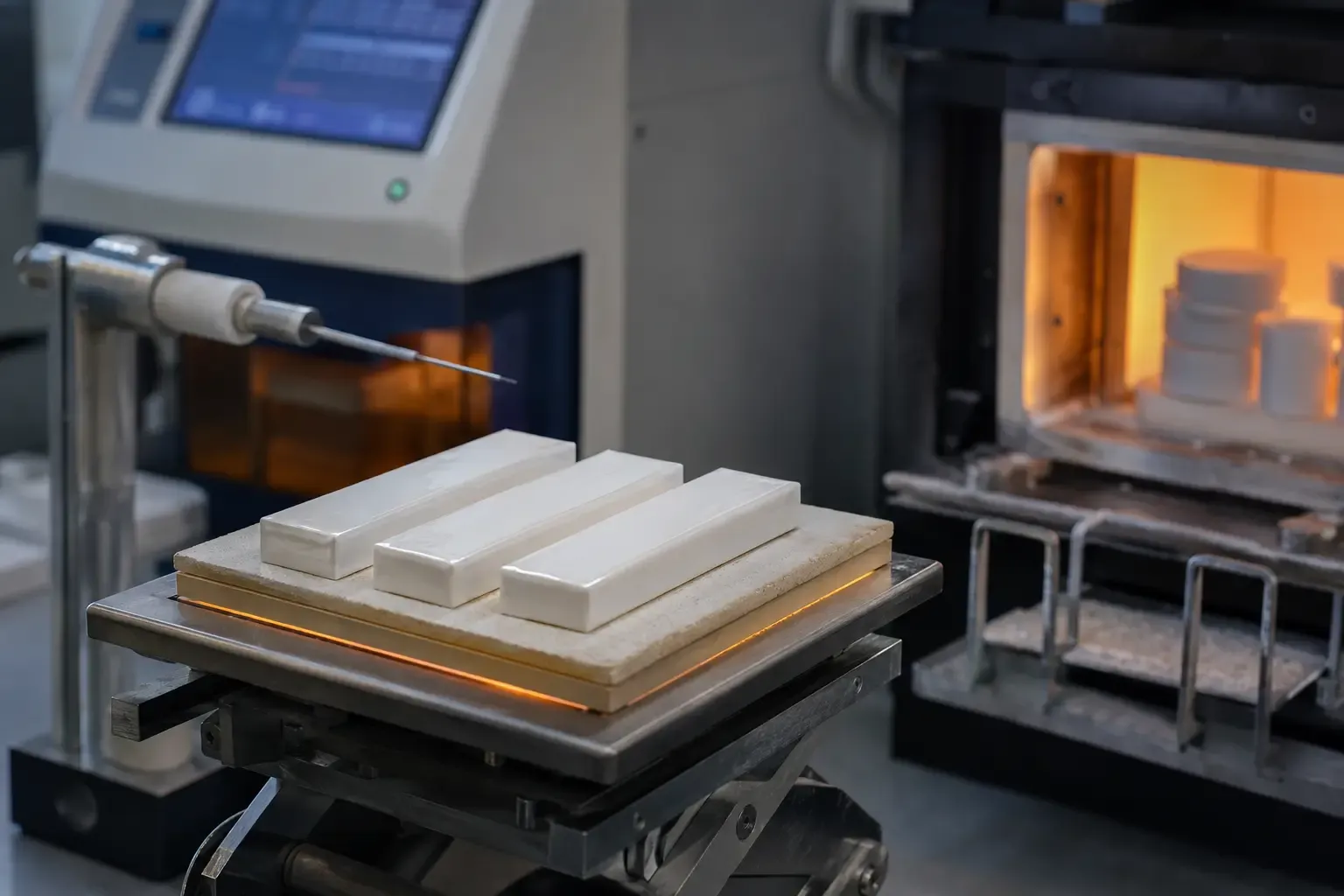
Record the current frit or glaze batch, solids, mixing sequence, substrate, coating thickness, drying condition and firing profile. A material substitution cannot be interpreted if several process variables change at the same time.
2. Change one mineral variable
Use the agreed cristobalite grade and document the addition basis. Keep the first screening trial narrow enough to show whether the candidate changes flow, surface appearance, adhesion, cracking, crazing or dimensional response.
3. Inspect after firing and cooling
Use the customer’s established checks for surface defects, coating fit, adhesion and thermal cycling. Where expansion behaviour is important, measure the body, glaze or coated sample with a defined method rather than inferring performance from a mesh label.
Enamel Frits and Ceramic Glazes Need Different Fit Checks
Enamel coatings are evaluated on a substrate such as steel, while ceramic glazes are evaluated together with a ceramic body. The same cristobalite grade can therefore require different screening logic. In enamel work, substrate preparation, coating thickness, firing schedule and ground-coat interaction matter. In ceramic work, body composition, porosity, glaze chemistry and cooling history also influence the result.
| Application route | Primary fit questions | Decision boundary |
|---|---|---|
| Enamel frit on metal | Does the candidate preserve wetting, coating uniformity, adhesion and thermal fit on the specified metal and firing cycle? | Do not approve from powder appearance alone; use coated panels and the customer’s thermal and adhesion checks. |
| Ceramic glaze | Does the candidate fit the body, glaze chemistry, firing range and cooling profile without creating unacceptable stress or defects? | Do not transfer an enamel result directly to a ceramic body. |
| Frit or glaze raw-material substitution | Does the new phase and PSD reproduce the control after the same mixing, firing and inspection steps? | Use a documented control-versus-candidate trial before scale-up. |
Common Interpretation Errors
- Confusing phase with process history: “Calcined” describes a heat treatment; it does not by itself prove the final phase or phase proportion.
- Using mesh as a complete PSD: a sieve limit and a laser-diffraction distribution answer different questions.
- Borrowing another application’s result: a cristobalite result from a refractory or casting trial is not automatically an enamel or ceramic-glaze result.
- Overstating company data: industry references and published research provide context; Changtong’s lot-specific values must come from the applicable COA, TDS or XRD record.
Frequently Asked Questions
Is cristobalite the same as calcined quartz?
No. Calcination is a process description. Cristobalite is a silica crystal phase. The phase identity and conversion level must be confirmed by the applicable XRD evidence.
Can one grade be used for enamel frits and ceramic glazes?
It may be screened for both, but the approval decision is application-specific. Substrate, glaze or frit chemistry, coating thickness, firing and cooling conditions all need to be included in the trial.
What particle-size information should be requested?
Ask for the method, reporting basis and acceptance limit. If the customer uses sieve residue, request the relevant sieve result; if using laser diffraction, request the dispersion and reporting conditions.
What should be sent for a technical quotation?
Send the application, substrate or body, frit or glaze type, target particle-size method, chemistry limits, trial quantity, packaging requirement and requested documents. Use the Contact Us page for a grade review and quotation request.
Need a Cristobalite Grade Review?
Share your frit or glaze system, substrate, firing curve and test method. Changtong can review the required cristobalite grade, documentation scope and trial questions before a quotation is prepared.
Request a QuoteReference note: Public technical references are used for general engineering context. They do not replace Changtong’s product-specific COA, TDS, SDS/MSDS or XRD records, and no public reference value in this article is presented as a Changtong test result.