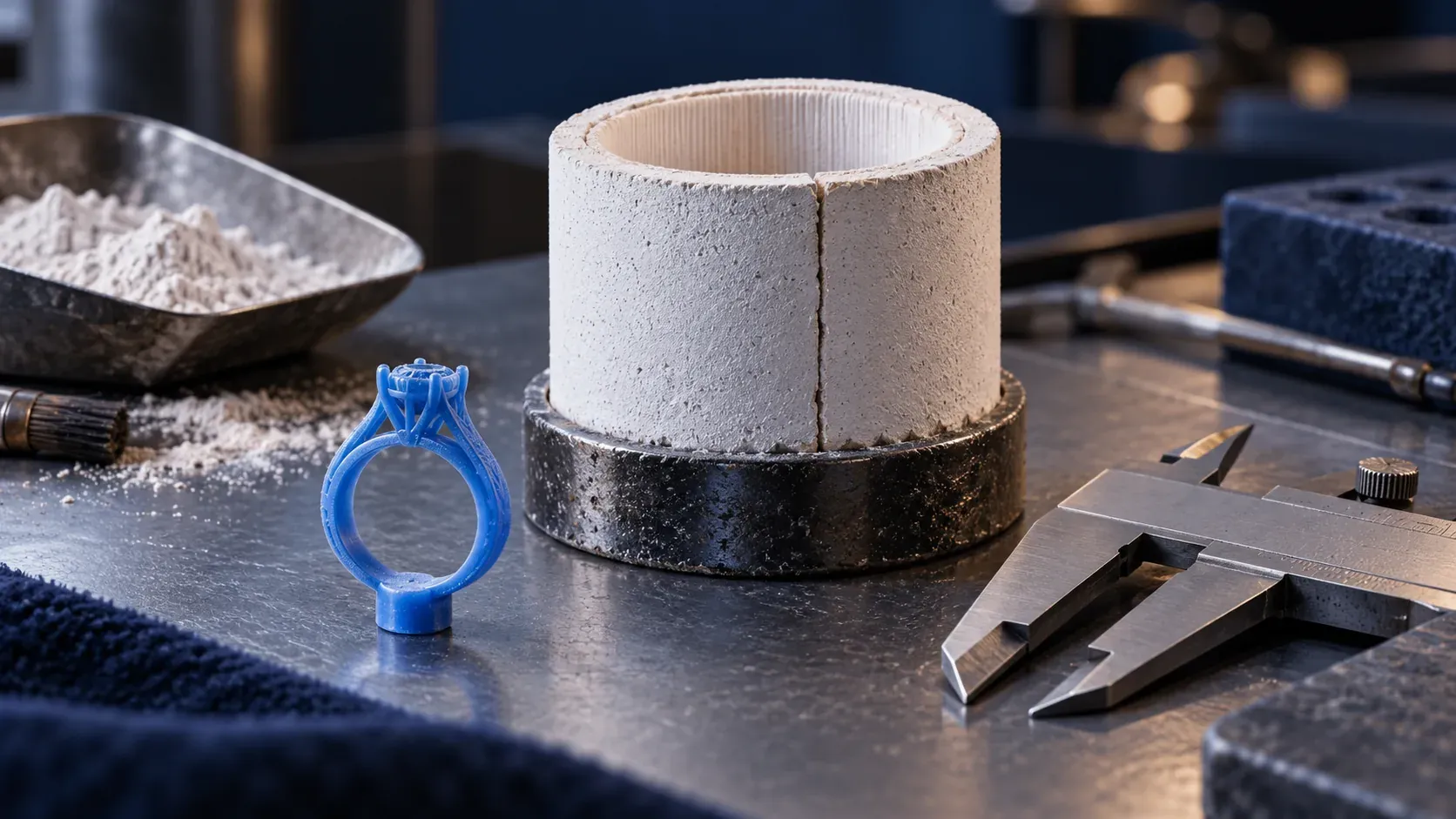
Cristobalite jewelry casting investment mold expansion depends on more than a material curve. The casting ring, liner and mold orientation can constrain movement in different directions. Before changing pattern dimensions, check ring geometry and measure the mold response in more than one axis.
Why the casting ring belongs in the expansion trial
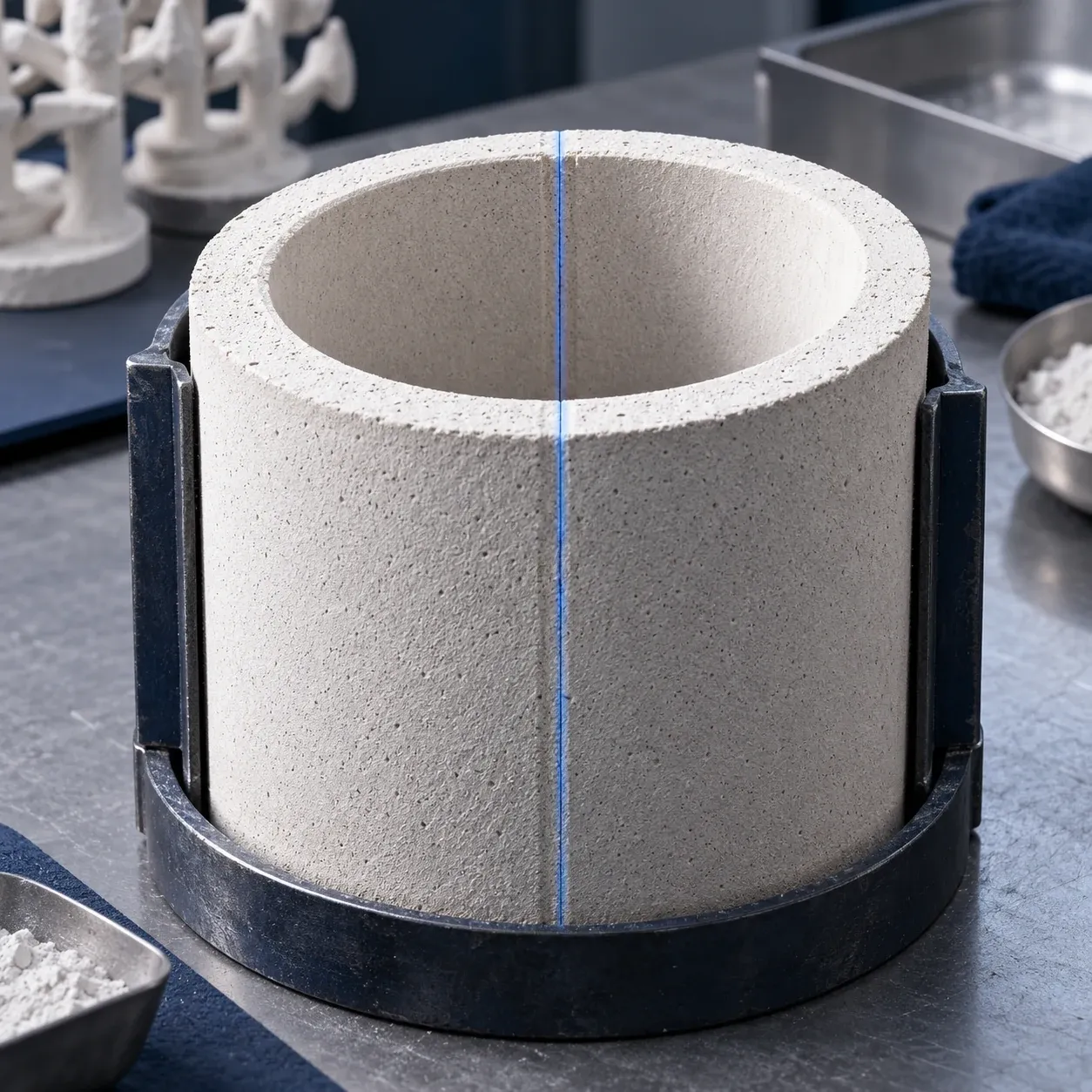
In lost-wax casting, dimensional compensation reflects pattern size, investment behavior, mold restraint and alloy behavior during casting and cooling. A change in the ring or liner can alter how freely the mold moves around its circumference and along its length.
This matters when a foundry transfers a laboratory expansion curve to production. A curve describes a specimen under its test conditions; a ring mold has boundaries, seams, open ends and a pattern location. The 1997 study of anisotropic expansion in gypsum-bonded cristobalite molds reported non-uniform total expansion, with greater expansion toward ring open ends and an asbestos-liner seam. The investigators linked anisotropy to the calcium-sulfate/silica investment and its environment.
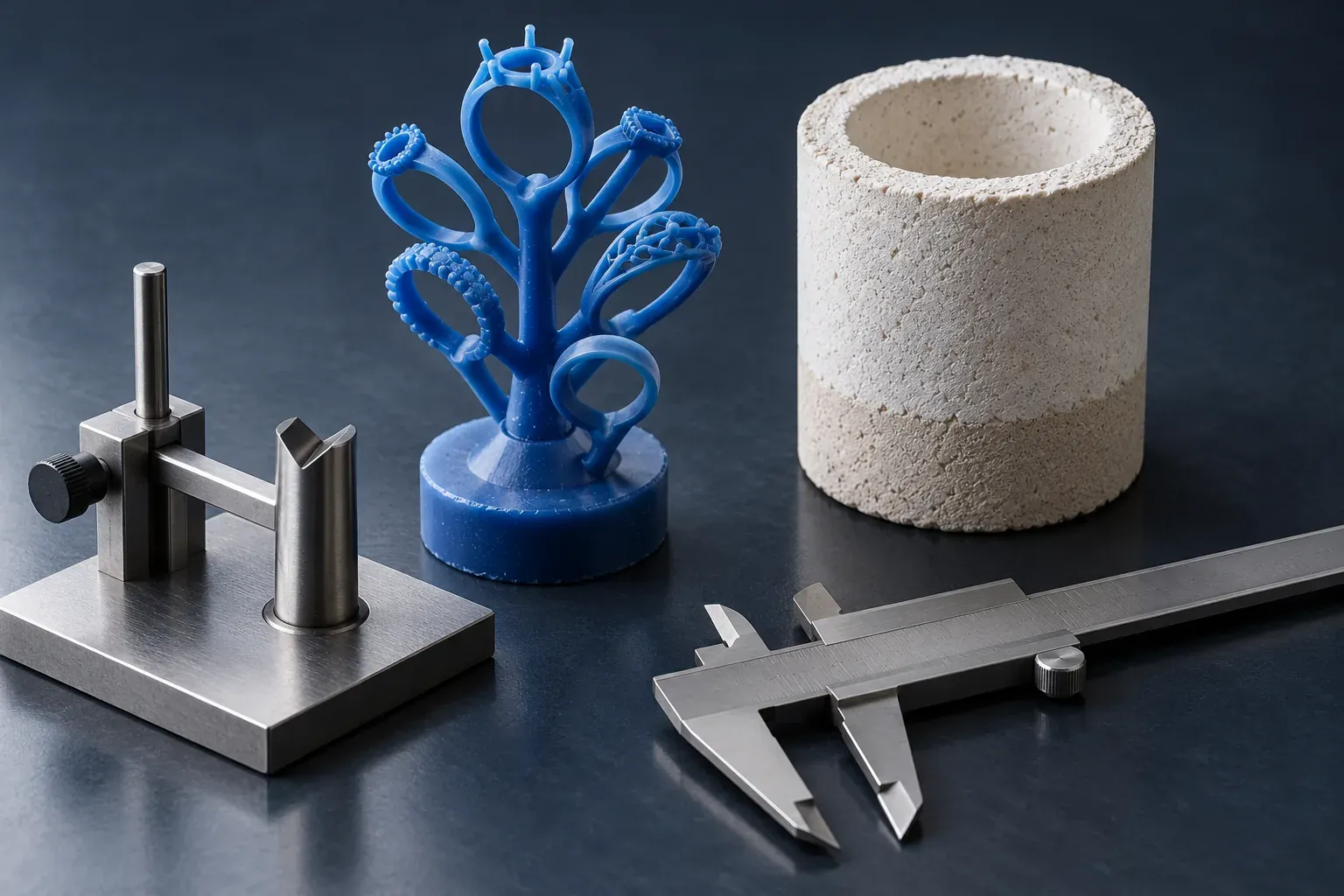
This dental study, using a fused-quartz tube pattern and dental alloys, is methodological evidence that mold expansion can be direction-dependent. It does not validate a jewelry alloy, ring setup, or Changtong product specification. Treat it as a reason to measure your own system, not as a numerical compensation rule.
Liner contact can change the boundary condition
Casting ring liner expansion in jewelry investment depends on more than liner material: thickness, moisture, seam position and contact with the ring wall can affect restraint and water interaction. A 1988 dental study compared smooth ring surfaces with wet cellulose, dry ceramic and asbestos liners in gypsum-bonded cristobalite investment. It reported different total expansions and noted that dry liners could absorb water from the mix.
Those results do not establish a universal ranking for jewelry foundries or predict performance with a different investment, ring or burnout schedule. They show why “liner type” alone is an incomplete process note. Record installation and conditioning, and do not change liner wetness and ring dimensions in the same comparison.
A controlled trial: vary ring geometry only
Define one reference setup, then compare one geometry change at a time—for example, ring diameter, ring length or liner fit. Keep liner material, thickness, moisture and seam orientation fixed unless liner geometry is the factor being tested. Use replicate molds where practical; randomize run order if furnace position or timing may matter.
Choose the measurement method before starting. Use a repeatable test pattern or dimensional reference at a defined ring position, measured at the same process stage with the same instrument and orientation. Keep mold measurements separate from cast-piece results, which also reflect alloy filling, cooling and finishing. Mark axes and pattern position consistently.
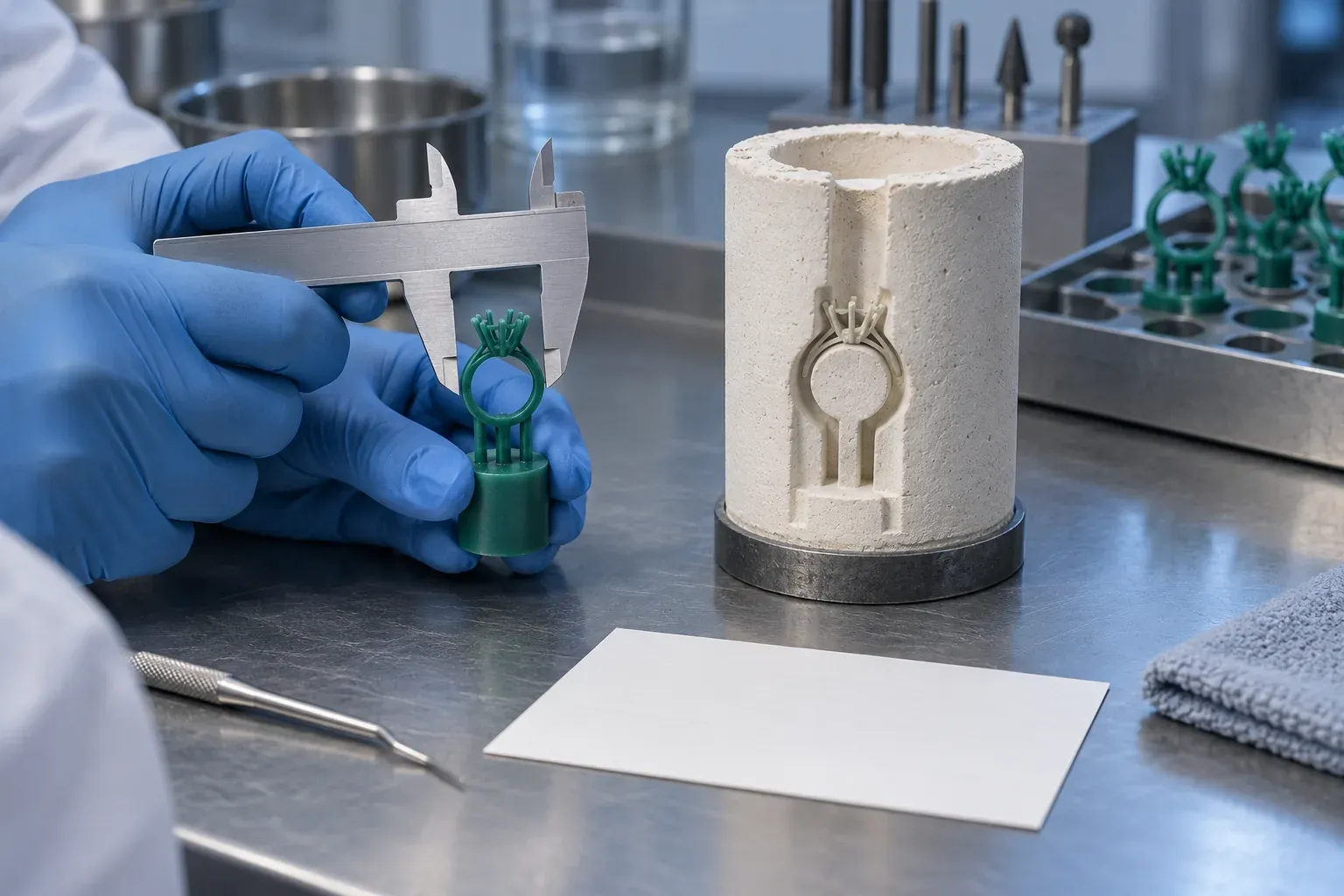
Summarize each condition by axis, not as one average. Check repeatability and directional differences. If dimensions vary near open ends or a seam, record the location and its relation to the pattern. A small, noisy difference is not a sound basis for revising pattern compensation; confirm a proposed adjustment in a production-representative casting trial.
Decision rule: qualify the ring-and-liner setup first; set pattern compensation from repeatable, application-specific measurements.
Use the evidence within its limits
The cited studies concern dental procedures. They support measuring anisotropy, ring boundaries and liner condition, but do not predict jewelry-alloy dimensions or certify a commercial investment. Do not infer crack-free performance, a universal expansion value or guaranteed metal-shrinkage compensation from them.
For related process questions, see our guide to planning a water-to-powder ratio trial and our guide to reading expansion curves through heating and cooling. Those cover distinct variables; this article focuses on ring geometry, restraint and measurement direction.
Frequently asked questions
Can a bulk expansion value set my jewelry pattern allowance?
Not by itself. Use it as material information, then validate your ring setup, pattern, alloy and process with repeatable measurements and casting trials.
Should I change the liner and ring size together?
No, if your goal is to identify cause. Hold liner type, condition and installation stable while testing one geometry factor; test liner changes separately.
Why measure in several directions?
Because mold movement can be anisotropic. A single axial reading or overall average may conceal a radial, circumferential or location-specific difference.
Conclusion
Gypsum-bonded cristobalite mold anisotropic expansion makes ring dimensions and liner restraint part of the effective mold system. Map the axes, document the seam and liner condition, and change one geometry variable while holding the wax pattern, alloy, investment ratio, burnout and measurement method fixed. Use repeatable results to decide whether production validation is warranted.
Discuss your investment casting requirements
Include your casting-ring dimensions, liner setup and process conditions.
References and evidence boundary
- Shibuya M, Ohsawa M, Matsumoto H, Hisatsune K, Yasuda K. “Anisotropic expansion in gypsum-bonded cristobalite investment mold.” Dental Materials Journal. 1997;16(1):48–59. PubMed record.
- Earnshaw R. “The effect of casting ring liners on the potential expansion of a gypsum-bonded investment.” Journal of Dental Research. 1988;67(11):1366–1370. PubMed record.
These studies concern dental materials and test systems; they provide methodological context only and do not establish a jewelry-alloy specification or Changtong product performance.