Cristobalite Silicone Seals: Test Recovery Beyond Hardness
Evaluate cristobalite-filled silicone seals with controlled compression, cure history and recovery measurements. Hardness alone cannot qualify seal behavior.
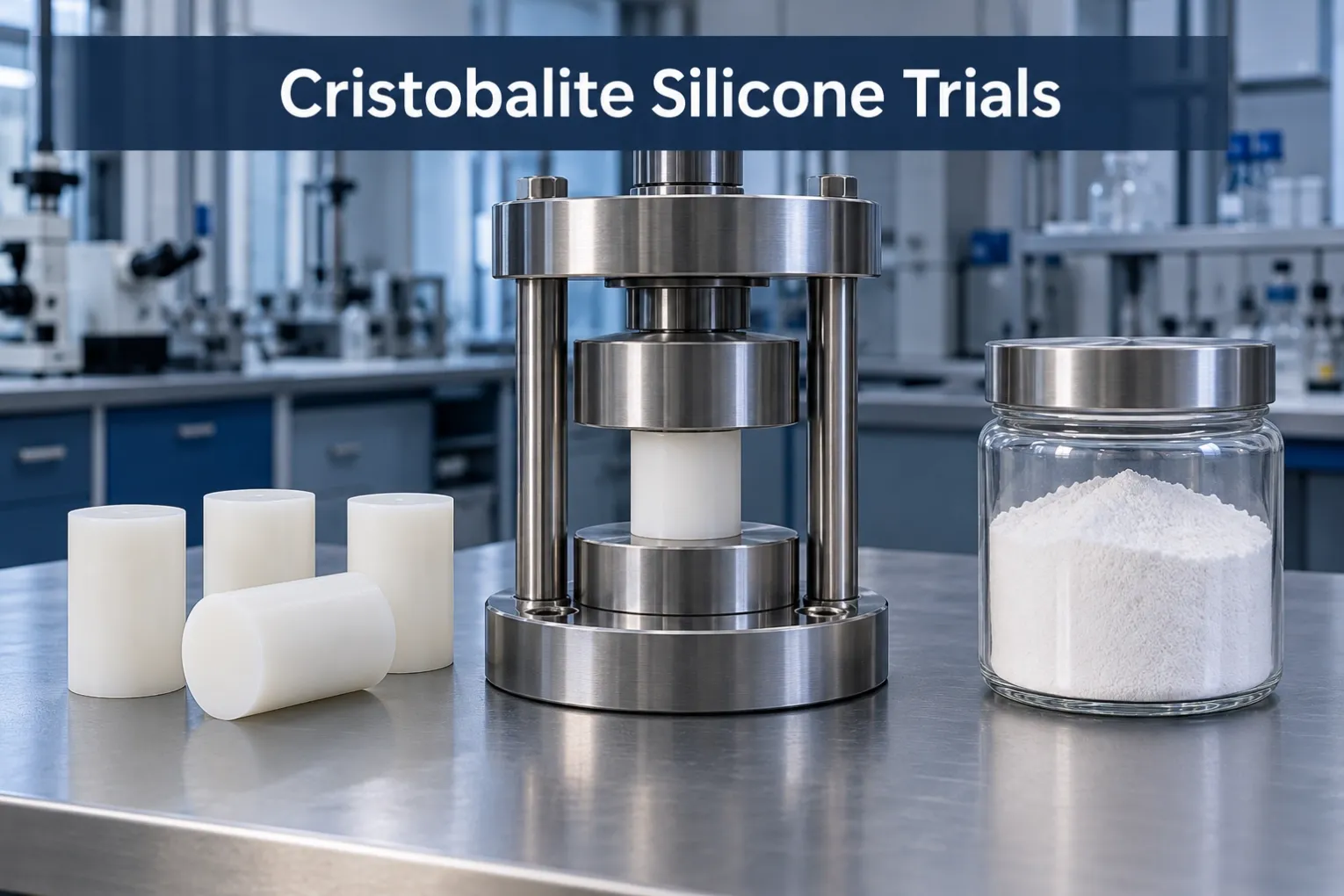
Two silicone compounds can reach the same hardness and recover differently after a long period under compression. For a gasket buyer, the useful next question is not simply how hard the compound feels, but how much thickness it recovers after a controlled release.
Changtong technical guide · · Industrial Application Guides
Write the Seal's Duty Before the Compound Trial
Begin with the component: joint geometry, assembly compression, temperature exposure, contact medium and intended duration. Identify whether the duty is predominantly static or repeatedly moving. A short laboratory comparison cannot automatically predict a seal's entire service life, and compression set is not a complete leakage or stress-retention test.
Changtong's calcined cristobalite product is positioned for silicone rubber trials. The mineral addition belongs to the complete compound, alongside the polymer, reinforcing filler, cure system and processing aids. Do not describe cristobalite as interchangeable with precipitated or fumed reinforcing silica. Its suitability for a sealing formulation requires evidence from that formulation.
Build a Comparison with an Unchanged Cure History
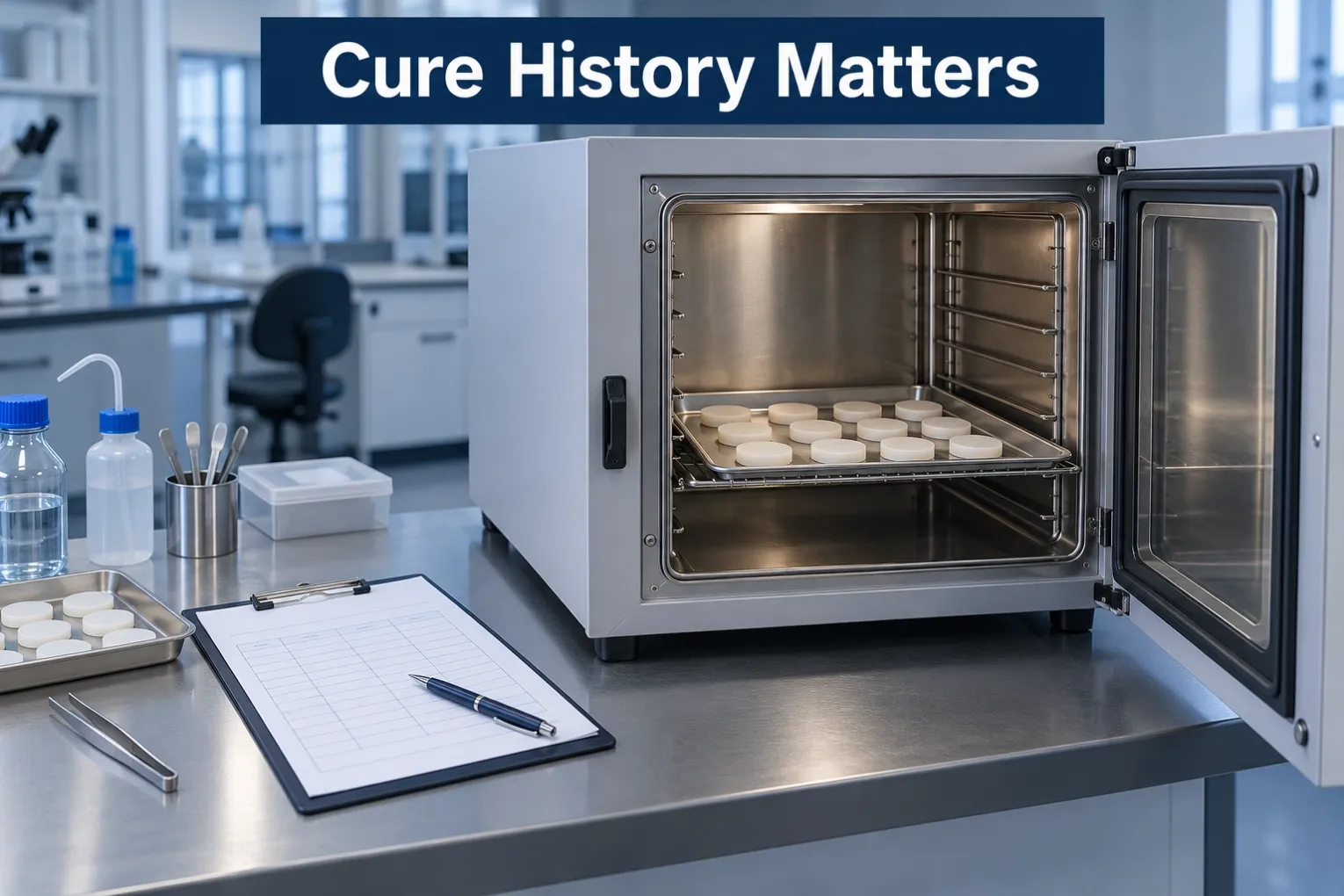
Use a retained production compound as the control. Record the candidate mineral grade, addition level and the basis of that addition, then preserve the mixing route and cure system. Record primary cure and any post-cure before specimen conditioning. If processing conditions must change for the candidate, report that change rather than presenting a supposedly isolated filler comparison.
Hardness remains worth recording, but it is a companion measurement. An equal-hardness comparison and an equal-recipe comparison answer different questions. If polymer, cure agent or reinforcing silica is adjusted to reach a target hardness, the result describes the revised compound. It does not establish an independent compression-set benefit from cristobalite.
| Stage | Comparison control | Decision supported |
|---|---|---|
| Compound preparation | Polymer, cure system, mineral loading and mixing | Whether the candidate is a controlled formulation |
| Compression exposure | Method, specimen, deformation, time and temperature | Whether laboratory results are comparable |
| Recovery and part trial | Release conditions, recovery interval and seal duty | Whether the compound merits component approval |
Keep the Compression and Recovery Conditions Together
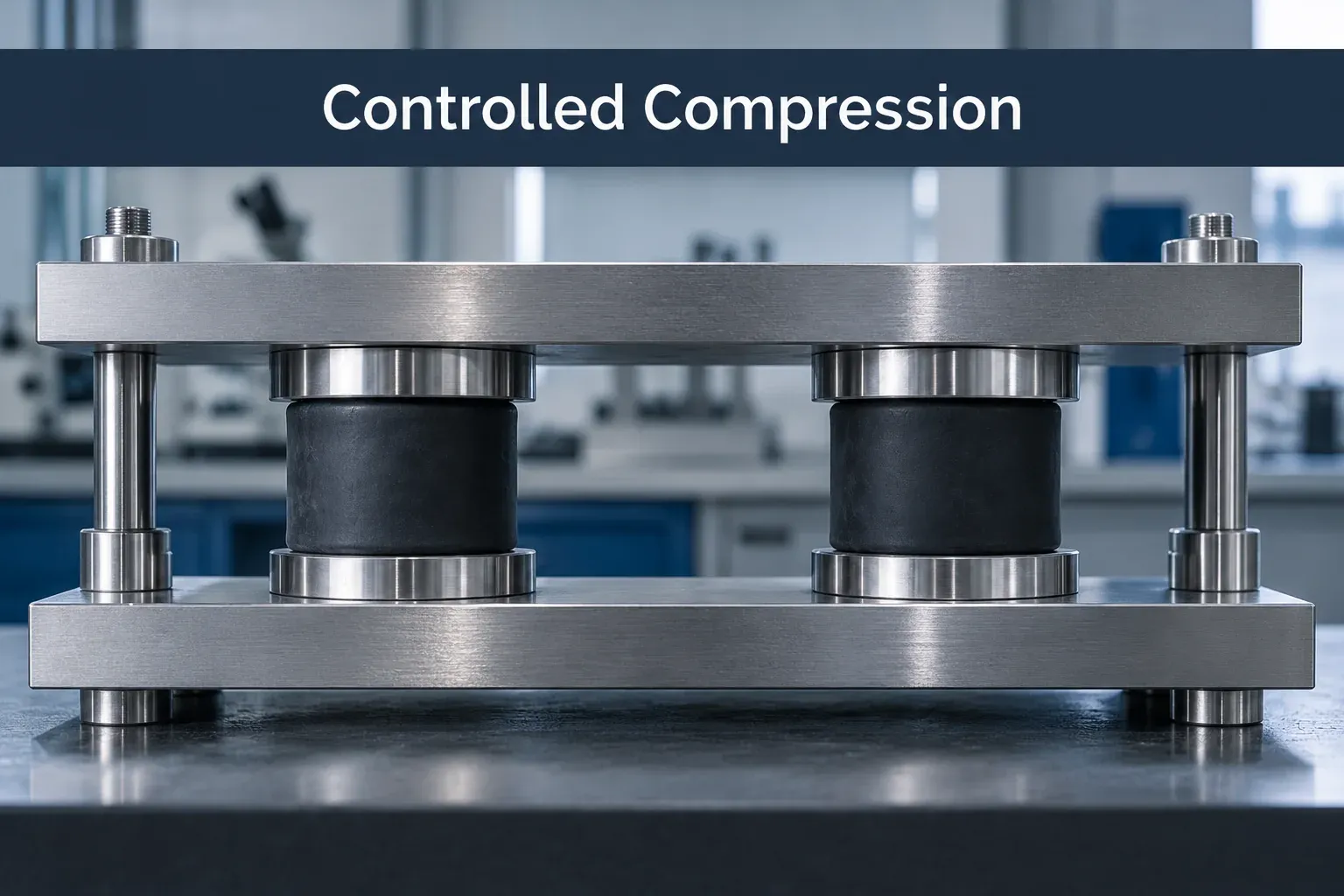
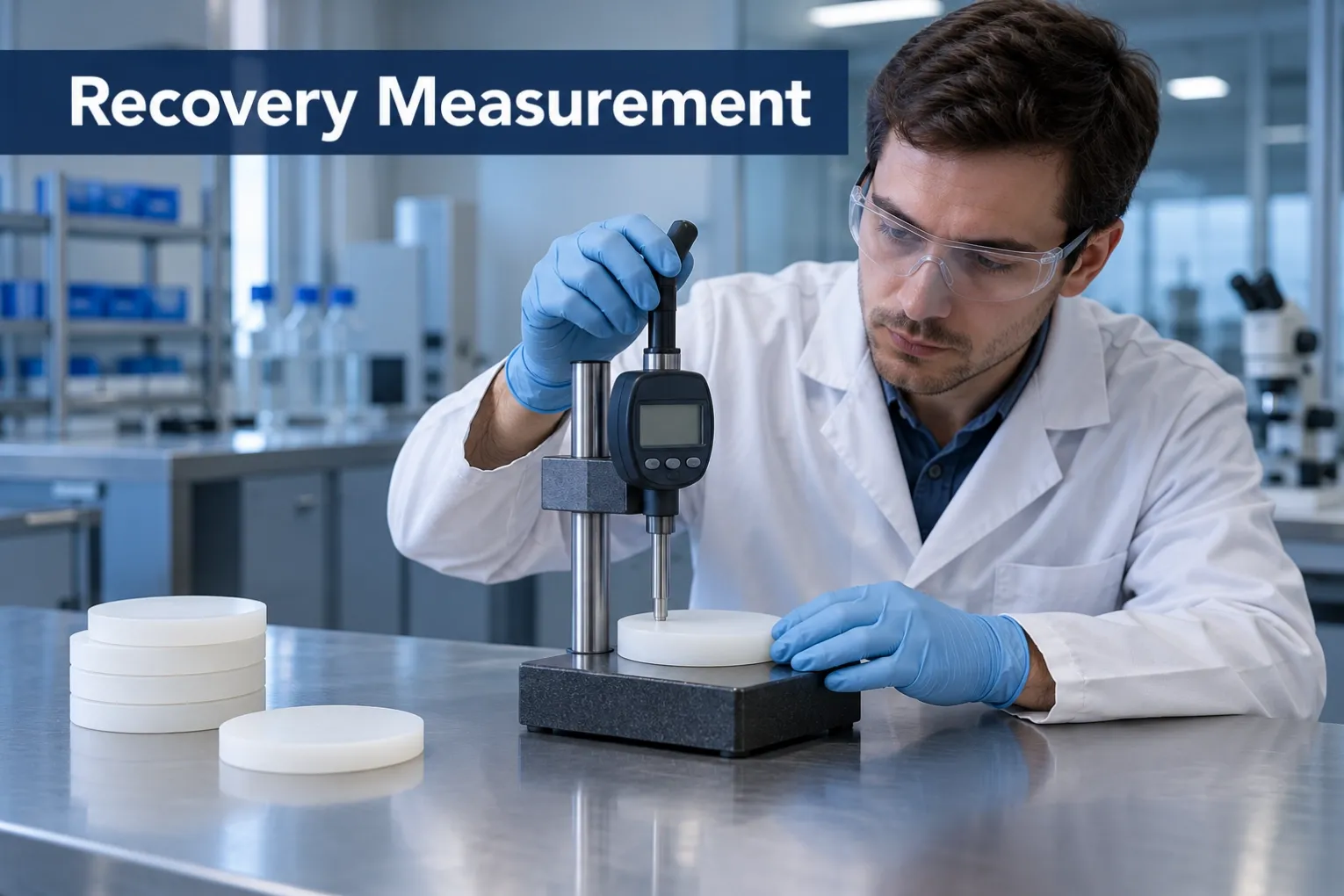
ASTM D395-18(2025) covers compression-set methods, while ISO 815-1:2019 addresses ambient and elevated-temperature testing. Select an agreed method and have the laboratory apply its full procedure. Method designation, specimen dimensions, imposed deformation, exposure time and temperature, release conditions and recovery interval belong on the same report.
The important comparison is the returned dimension under the specified measurement conditions. Measure specimens consistently and retain individual results rather than only a favorable average. A longer recovery period can change the reported outcome. An unexplained difference in recovery conditions is therefore a reason to reconcile reports before changing a purchase specification.
Decide What the Result Can Release
An initial screening can identify a formulation worth taking to component testing. A seal approval should also consider compression force, assembly tolerances, relevant fluid exposure and leakage under the actual duty. A laboratory disc has different geometry from a molded gasket, and its good recovery does not guarantee correct compression in the joint.
For an RFQ, specify the intended compound route, existing mineral grade, target processing conditions and agreed evidence. Request current-lot documentation for the proposed cristobalite grade. Keep any powder chemistry or sizing result separate from the finished rubber's compression-set result; neither can replace the other.
No sealing, recovery or service-life improvement is guaranteed for Changtong powder. This guide defines a customer-side qualification route, not a report of a completed supplier trial.
Frequently Asked Questions
Does higher hardness guarantee a better seal?
No. Recovery, force, geometry and duty conditions must also be evaluated.
Is a powder COA a compression-set certificate?
No. A powder COA identifies mineral properties; compression set is measured on the prepared rubber compound.
Can results from different methods be pooled?
Only after the laboratory establishes an appropriate comparison. Do not silently treat different release or recovery conditions as equivalent.
Related products
Calcined Cristobalite Powder for Silicone RubberRelated technical guides
Qualifying cristobalite for silicone rubber extrusionReferences and Evidence Limits
- ASTM D395-18(2025): compression-set method scope
- ISO 815-1:2019: ambient and elevated-temperature compression set
Public source descriptions checked on 22 October 2026. References support the stated subject and method boundaries; they are not Changtong test certificates. Consult the applicable full method for execution.
Request a Quote
Share your silicone compound route, seal duty, mineral loading and agreed compression-set method to discuss an appropriate sample.
Request a Grade Review and Quote