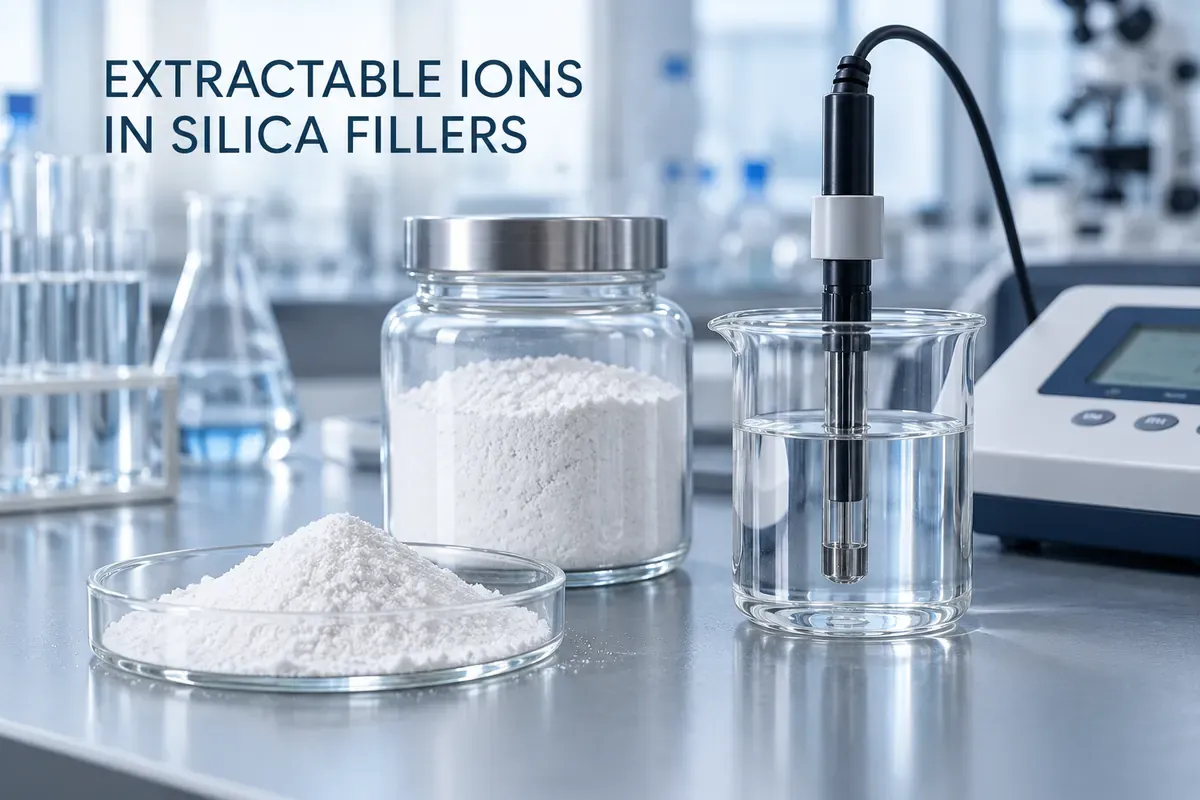
Extractable Ions in Silica Fillers: Why EC, Na+ and Cl− Need a Defined Extraction Method
Compare EC, extractable sodium and chloride in silica fillers. Define extraction conditions, reporting units and laboratory checks before setting purchase limits.
Materials: crystalline, fused and surface-treated silica fillers | Applications: electronic potting and resin compounds | Reviewed: 17 October 2026
Purpose: define comparable extraction results, not a universal ionic-purity limit.
A supplier reports low electrical conductivity. Your incoming laboratory finds more sodium than expected. A third report shows chloride below its reporting limit. These results can all be technically plausible without describing the same property. Before rejecting a silica batch, ask a more useful question: what material was extracted, under which conditions, and on what basis was the result reported?
Electrical conductivity, extractable sodium and extractable chloride are complementary measurements. They are not interchangeable certificates of electronic reliability. A purchasing specification becomes useful only when its extraction procedure, analytical method and acceptance rule travel with the number.
Start with three different measurands
Here, EC means electrical conductivity of a defined aqueous suspension or extract—not the thermal conductivity of a filler and not the bulk electrical conductivity of a cured compound. USGS guidance explains that water conductance depends on the types and amounts of dissolved substances and on temperature. Consequently, an EC result does not identify which ions produced the response. [1]
| Measurement | Question it addresses | What it does not establish |
|---|---|---|
| EC, typically μS/cm | How conductive is this defined liquid or suspension? | Specific Na+ or Cl− concentration |
| Extractable sodium | How much sodium entered the chosen extract? | Total sodium within the original mineral |
| Extractable chloride | How much chloride was recovered under this protocol? | All chlorine-containing species or finished-part reliability |
Also distinguish dissolved sodium reported by an elemental technique from chemical speciation. An ICP result normally reports sodium as an element in the prepared solution. Calling it “Na+” is convenient for an aqueous-extract discussion, but it does not mean the instrument has independently determined every original sodium species.
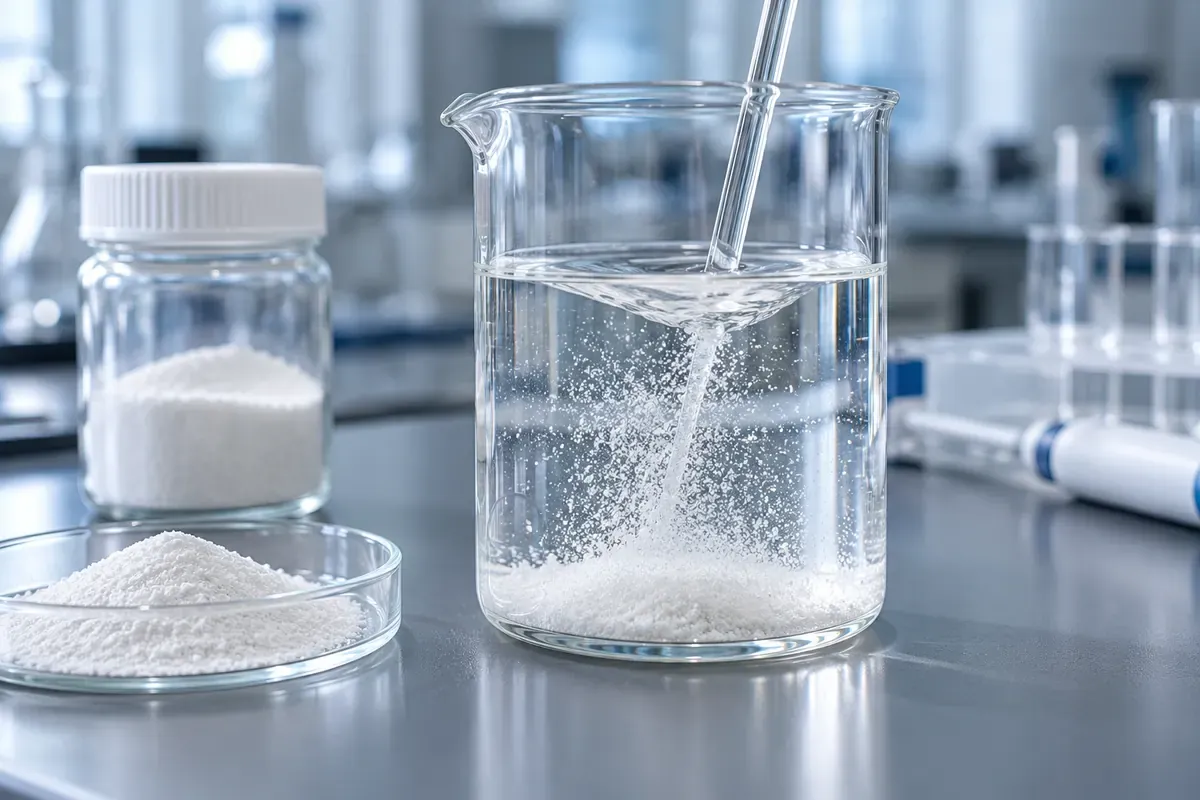
A standard's material scope matters
ASTM D8300-25 is an active electrical-conductivity test for precipitated, hydrated silica, suitable for characterizing rubber-grade silicas. Its public description includes boiling a defined sample in distilled or deionized water, dilution to a 4% mass-per-volume suspension, and measurement at 20°C. Those conditions show why a method number matters. They do not make this an automatically applicable acceptance standard for natural ground quartz or fused silica. [2]
A buyer and supplier may agree an adapted method for a different filler. If so, identify it as an adaptation, record deviations and validate its suitability. Do not label an improvised room-temperature rinse as full compliance with a standard whose procedure was not followed.
The same boundary applies to electronics methods. IPC-TM-650 2.3.28B concerns extractable ionic contamination on printed boards and assemblies. It specifies extraction details and permits agreed alternatives. Its board-area reporting basis cannot simply be copied onto a powder certificate. Its useful lesson for powder buyers is procedural transparency, not a ready-made silica limit. [3]
Write the extraction contract before the acceptance limit
The following is a proposed purchasing framework, not a published standard or a claim about Changtong's routine laboratory capability. Ask both laboratories to approve it before comparing supplier data with incoming inspection.
1. Define the powder that enters the vessel
Record product name, crystalline or amorphous identity, surface treatment, lot, sampling location and packaging condition. Specify whether the test uses material as received or material conditioned beforehand. Drying can change the sample basis or treatment condition; an undocumented drying step prevents a clean comparison.
2. Fix mass, water and extraction conditions
State powder mass, extraction-water volume, water-quality requirement, vessel material, temperature, duration and agitation. Define whether time begins when heating starts or when the target temperature is reached. Record how evaporation is controlled and whether the extract is restored to a final volume. A hotter or longer procedure is a different test, not automatically a more accurate version of the first one.
3. Specify the fraction actually analyzed
Will the laboratory measure a stirred suspension, settled supernatant, centrifuged liquid or filtered extract? If filtered, document filter material and pore size. Hydrophobic surface-treated fillers may wet differently from untreated powders. Record the wetting procedure; do not quietly add a surfactant or solvent, because the addition changes the extraction system and may introduce its own analytical background.
4. Separate EC measurement from ion analysis
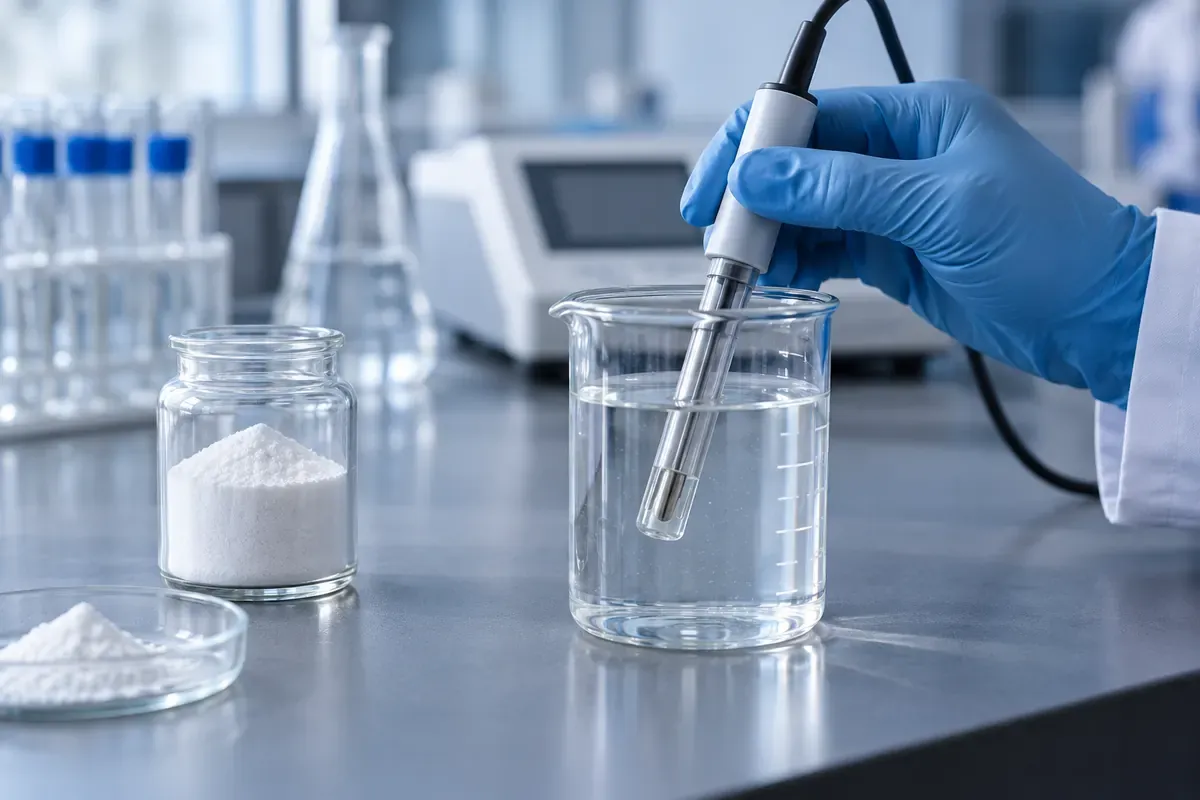
State the EC measurement temperature, calibration and temperature-compensation setting. Keep a separate, unmodified aliquot when necessary: acid preservation suitable for an elemental determination is not a neutral step for conductivity. The laboratory should define aliquot handling rather than trying to obtain every result from an increasingly modified bottle.
Choose methods that answer the ion-specific question
EPA Method 300.0 describes ion chromatography for inorganic anions including chloride and recognizes solids following extraction. It requires data-quality objectives and quality-control checks. This supports IC as an analytical route for an appropriate extract; it does not supply an electronic-grade silica acceptance limit or validate every extraction chemistry. [4]
EPA Method 200.7 includes sodium among the analytes measurable by ICP-AES. It distinguishes dissolved analysis from procedures involving digestion and notes matrix-dependent detection performance. For a silica purchasing project, ask the laboratory to validate sodium measurement in the actual extract and identify any adaptation. Digestion of the mineral and analysis of a water extract answer different questions. [5]
A complete report should state the analytical method, dilution, reporting limit, blanks and any departures. “Not detected” without a limit is insufficient. Nor should a result below the reporting limit be silently entered as zero when assessing agreement between laboratories.
Keep solution units separate from powder units
For a defined extract, a mass-normalized result can be calculated as:
Use concentrations in mg/L, volume in L and powder mass in kg. Define whether powder mass is as received or dry basis.
For illustration only, a blank-corrected concentration of 0.020 mg/L in 0.100 L obtained from 0.010 kg of powder gives 0.20 mg/kg, assuming no further dilution. This is arithmetic, not a Changtong result or proposed specification. Unrecorded evaporation, an incorrect dilution factor or mixing grams with kilograms would invalidate the conversion.
EC cannot be inserted into this calculation as though it were an analyte concentration. Likewise, “ppm” needs a stated basis: a solution concentration and a mass fraction of powder are not interchangeable merely because both reports use the same abbreviation.
Resolve a disagreement with retained samples
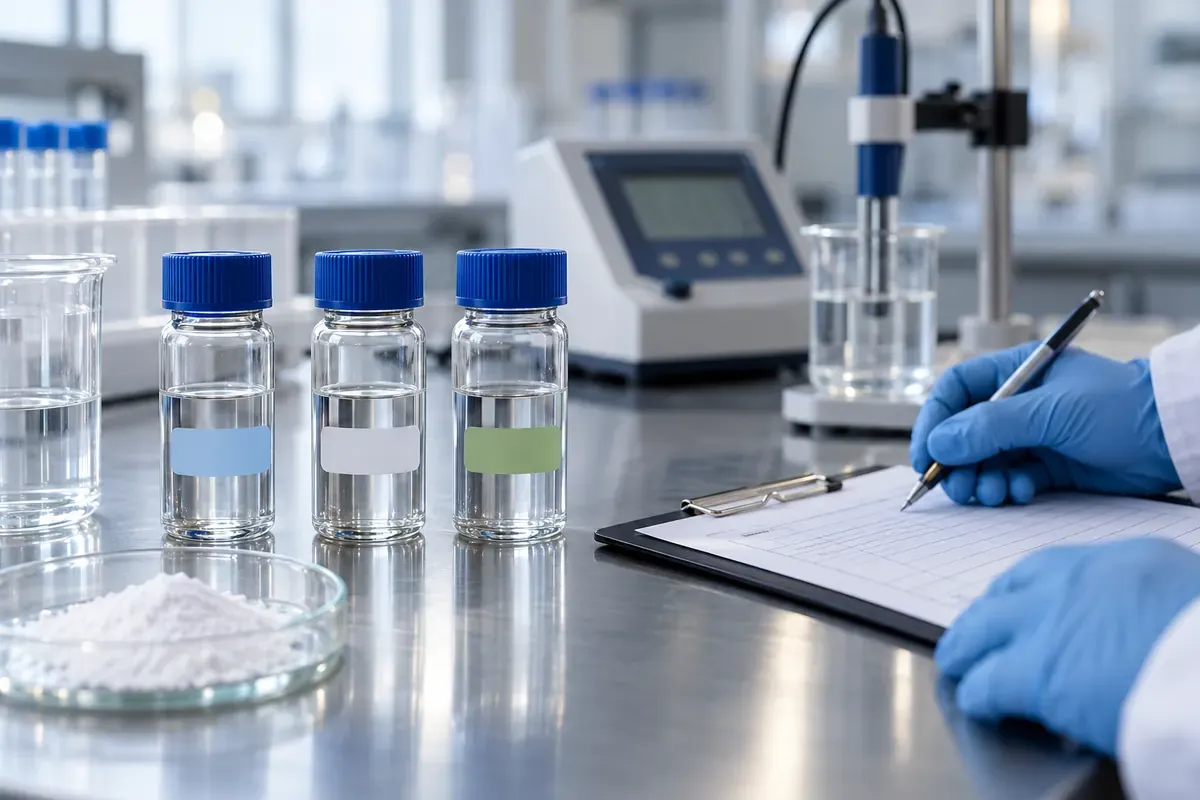
Before changing supplier or washing a production lot, exchange the complete methods and split a representative retained sample. Run independent extractions, not just repeat injections from one bottle. Include a method blank through the entire procedure and appropriate analytical controls. Agree in advance how uncertainty, reporting limits and borderline results will be handled.
Then relate raw-material screening to the actual resin system. A low extract value alone does not qualify a finished encapsulant. Resin, additives, mixing, cure, moisture exposure and device design remain part of the application assessment. Use customer-defined cured-compound electrical and environmental tests rather than promising reliability from powder chemistry alone.
Frequently asked purchasing questions
Does high SiO₂ purity guarantee low extractable ions?
No. Bulk composition and release into a specified liquid are different measurands. Request the extraction result rather than deriving it from the SiO₂ percentage.
Can EC replace sodium and chloride testing?
Not when acceptance limits are ion-specific. EC is a useful defined screening measurement, but a particular conductivity reading does not establish separate sodium and chloride concentrations.
Is there one correct extraction time for every silica?
This guide establishes none. Select conditions with the laboratory and application owner, validate repeatability and keep the method unchanged for routine comparisons.
Prepare an RFQ that can be evaluated
For crystalline silica filler for electronic packaging, send the material identity, resin system, loading, particle-size requirement and proposed extraction protocol. List EC, sodium and chloride separately, with units and acceptance rules. Before comparing supplier paperwork, use our silica-powder COA guide to separate reported properties from application-specific acceptance tests.