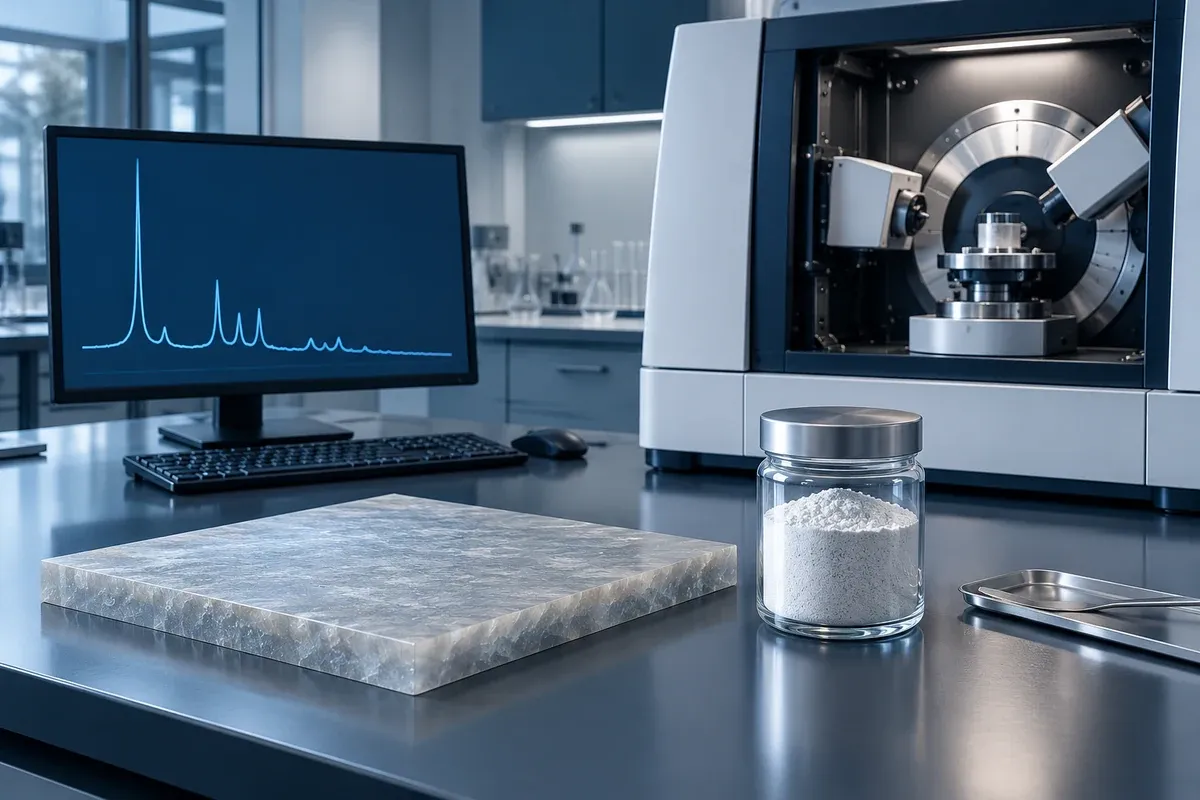
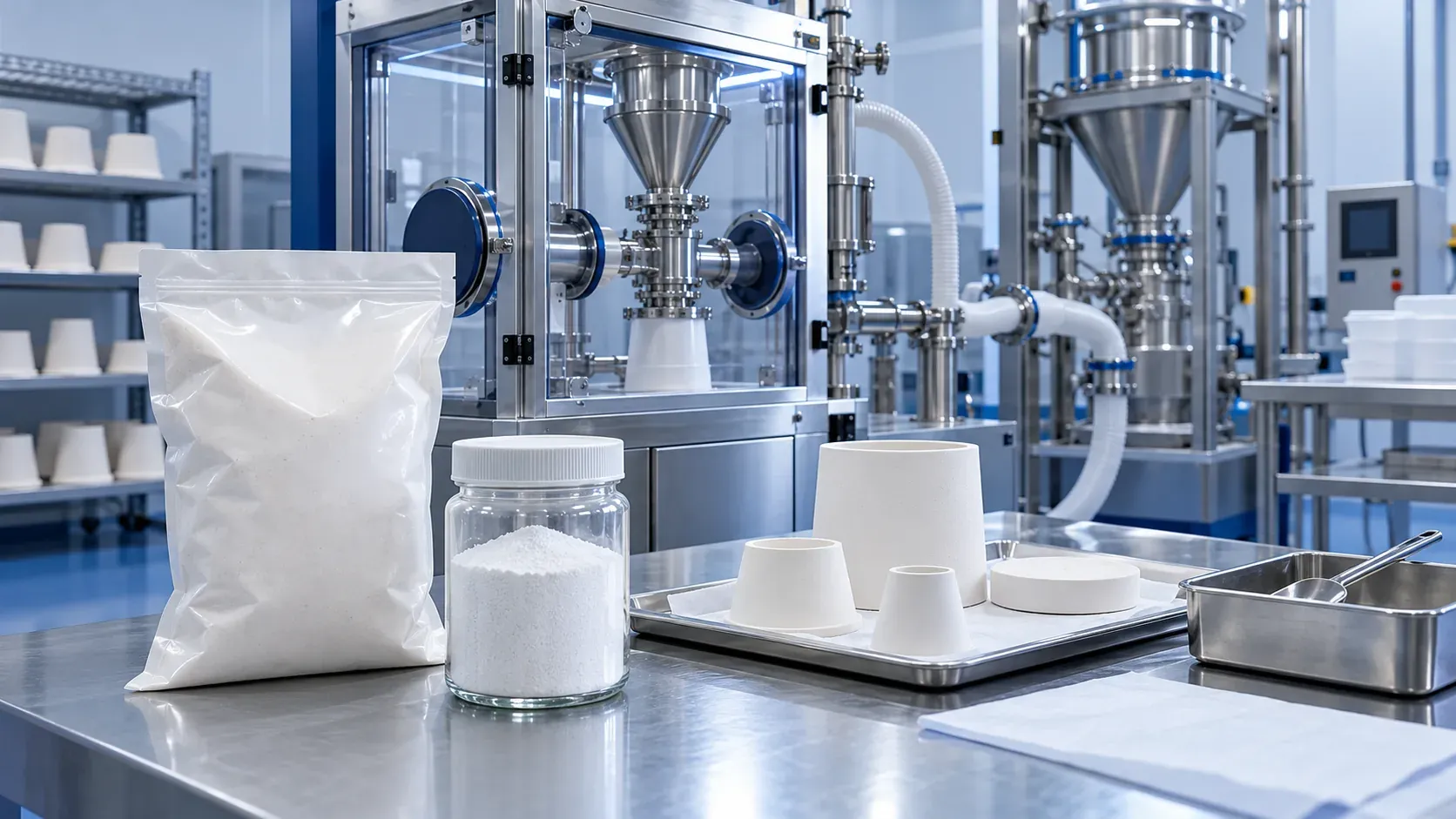
When two fused silica flour suppliers describe a grade as “low dust,” the useful question is not which brochure sounds more confident. It is whether both results came from comparable tests—and whether the test resembles the way your team opens, transfers and feeds flour during investment casting shell production.
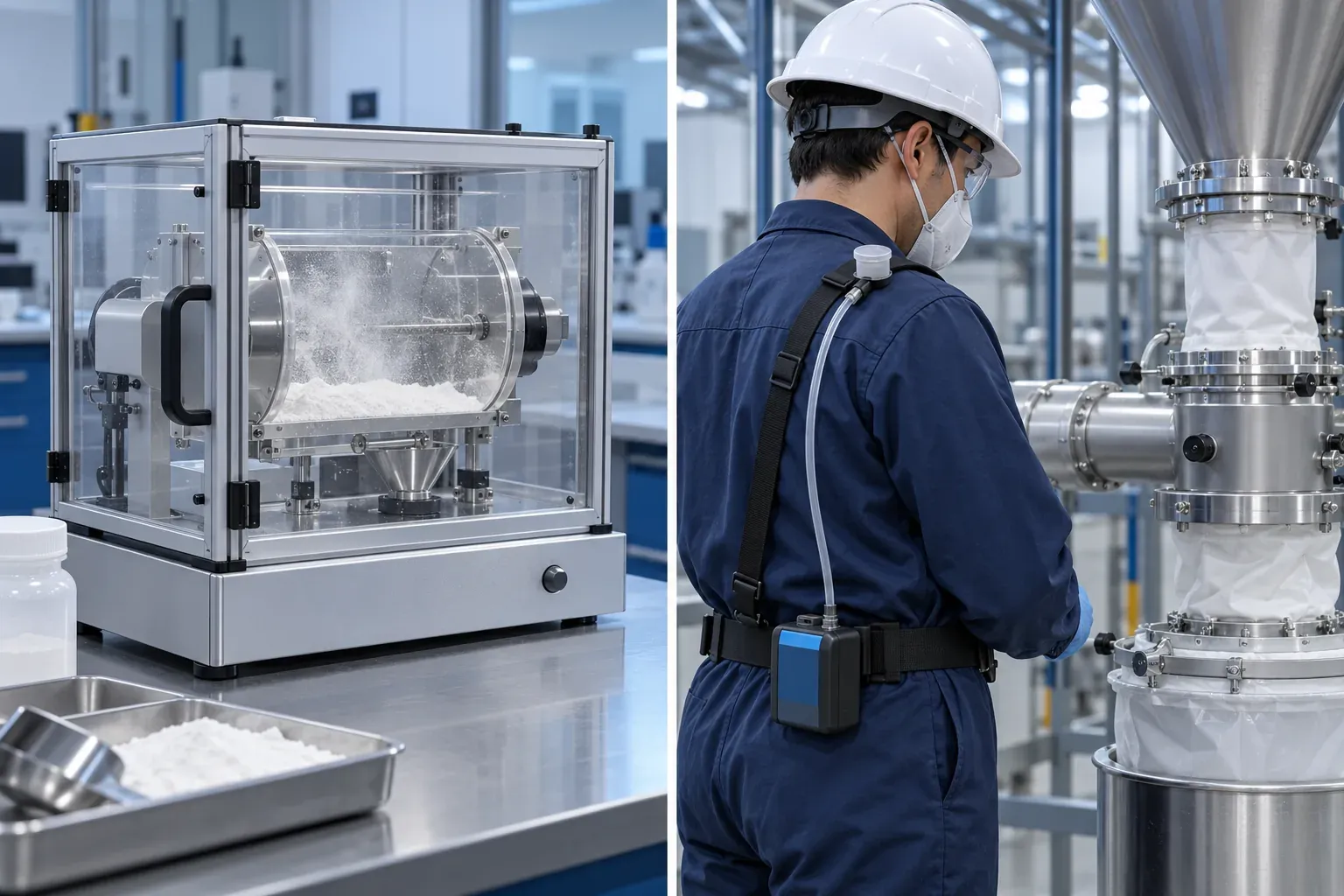
A supplier dustiness result describes powder behavior under a defined laboratory stimulus. It does not predict a worker’s measured exposure in your plant. Treat those as two linked but separate evidence streams: use dustiness to compare material under controlled conditions, then assess actual work tasks and controls in the workplace.
Start with the report, not the label
Dustiness is method-dependent. NIOSH’s Manual of Analytical Methods, Chapter AD explains that results vary with the test configuration and particle-sampling arrangement; materials can even rank differently across methods. A number without its method and conditions is therefore a weak basis for supplier ranking.
Before comparing offers, ask each supplier for the test method and edition, sample identity, conditioning and handling protocol, measured fractions, replicate results and the complete report. If one report measures a respirable fraction and another reports only total or inhalable dust, do not treat their figures as like-for-like.
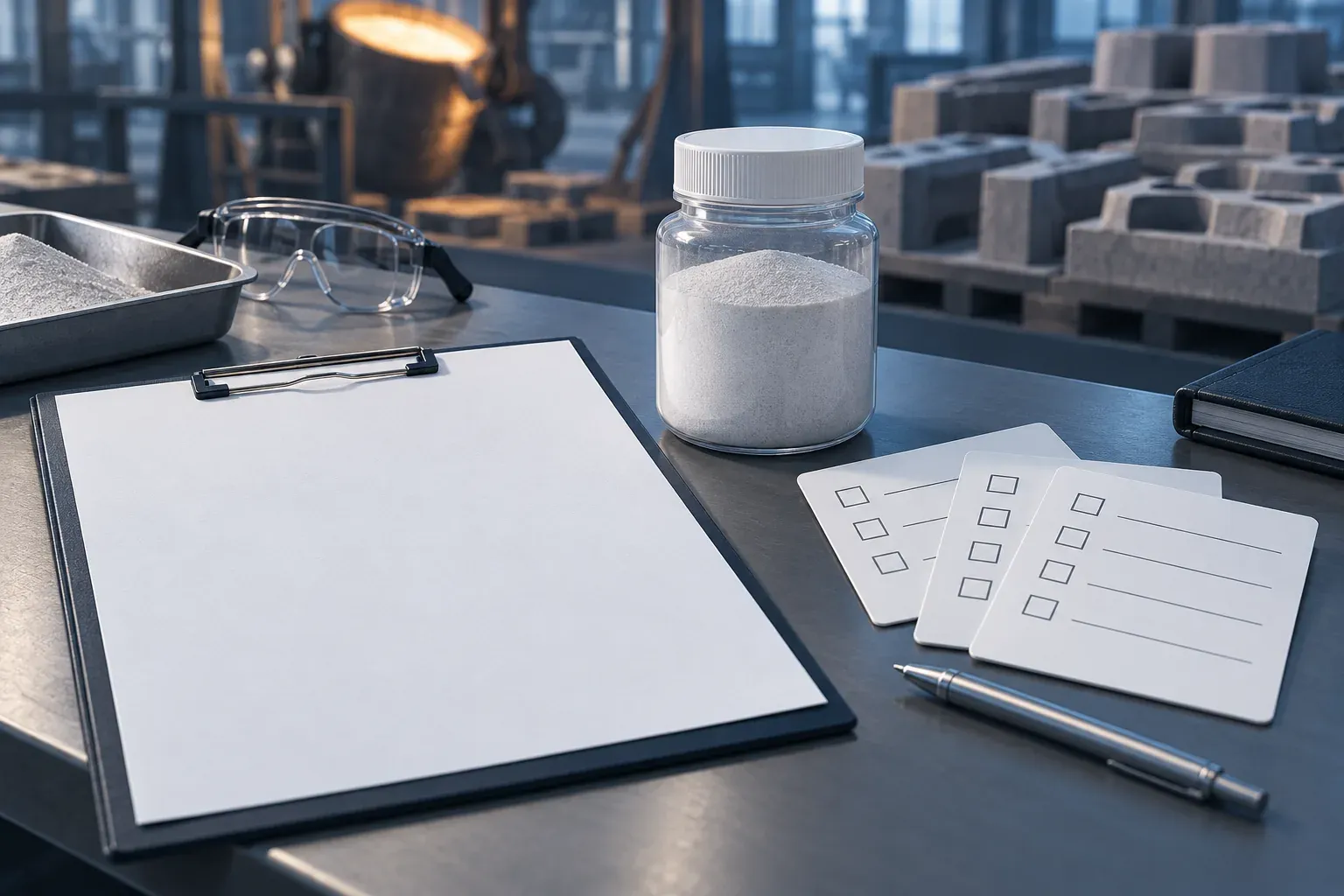
Match the method to the handling question
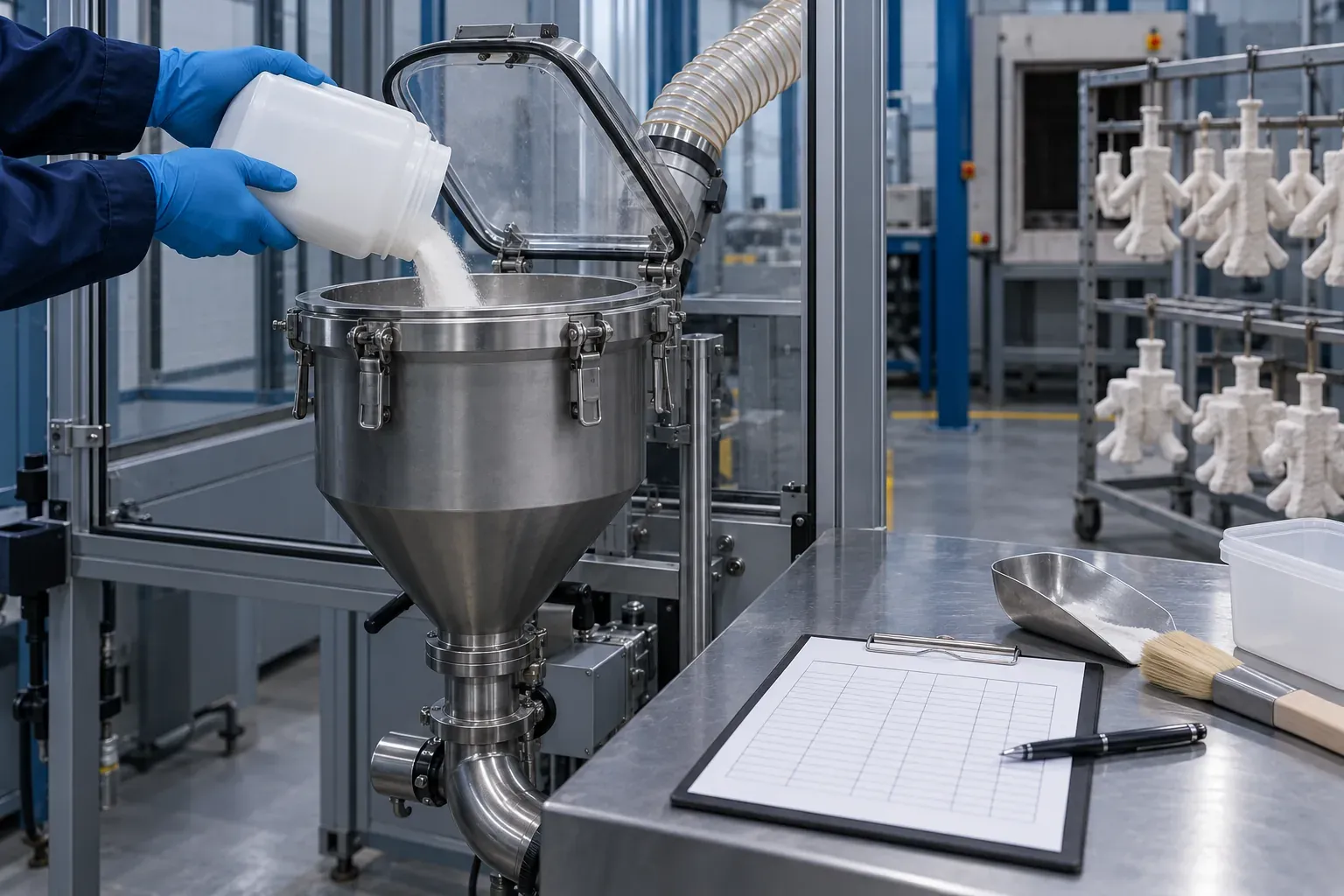
For an investment casting flour handling review, list the material movements that matter in your plant: opening a bag or container, pouring or scooping, transferring to a mixer or hopper, and feeding the next process. Note the scale of each movement, drop height, equipment and whether flour is handled in a closed or open transfer. This task map helps the team judge whether a laboratory dust-generation method is a useful screening comparison or a poor stand-in for the process.
Ask the supplier to explain exactly how the submitted sample was conditioned and handled before testing. Moisture and prior handling can affect the result; record the reported moisture state and any conditioning, storage, mixing or transfer steps. For your own trial, keep the material lot and test procedure traceable. Do not assume a score from a differently conditioned sample answers your plant’s question.
Build a useful supplier comparison
In a controlled foundry trial, use the same lot size, receiving container, transfer route, feed rate and observation period for each candidate where practical. Document visible dust separately from measured airborne fractions: appearance can help identify process differences, but it is not a quantitative exposure result. If the trial uses different handling steps, record them rather than blending the outcomes into one unexplained score.
Interpret respirable dust carefully
“Respirable” identifies a particle-size fraction collected under a defined sampling convention; it is not a synonym for total dust or for a workplace exposure measurement. A supplier’s respirable dustiness index can help compare source strength when the same method and basis are used. It does not tell you what a worker breathed during a shift.
NIOSH distinguishes dustiness testing from personal breathing-zone sampling. Workplace exposure also depends on the task, quantity handled, worker position and technique, ventilation, enclosure, local exhaust and equipment condition. Opening bags, dumping, charging, conveying and cleanup can each create different conditions. Review these tasks separately with the appropriate workplace exposure assessment process and qualified EHS support.
For crystalline silica requirements, consult the applicable jurisdiction and official guidance. OSHA’s crystalline silica overview describes its standards and compliance resources for covered U.S. workplaces. This supplier comparison is not a compliance determination, health assessment or assurance that exposure is controlled. The separate crystalline silica handling guide can support general planning, but it does not replace site-specific assessment.
Request evidence that can travel with the lot
For a supplier comparison, ask for the method and edition, conditioned moisture and handling protocol, measured fractions, sample or lot identity, replicate results and the full report. Then link the selected lot to a documented, repeatable foundry handling trial. Keep workplace air sampling and exposure-control review in a separate record so material screening is not mistaken for exposure verification.
References and method scope
Sources- NIOSH Manual of Analytical Methods, 5th Edition, Chapter AD: Quantification of Airborne Dusts From Powders (January 2024).
- OSHA: Silica, Crystalline — Overview.
Optional standards reference: the EN 15051-2:2025 catalog page identifies a rotating-drum dustiness-testing standard. Catalog metadata only; no inaccessible standard clauses are quoted or interpreted. Catalog listing.
Discuss a comparable handling trial
Include the shell process, transfer equipment, handling scenario and report fields you need to evaluate.