Incoming Inspection Sampling for Silica Powder: Lots, Retains and Test Frequency
Build a traceable incoming-inspection sampling plan for silica powder using lot identity, representative increments, retain samples and risk-based test frequency.
This technical guide is a screening and trial framework. It does not establish a universal grade limit or guarantee finished-product performance; approval remains tied to the buyer’s method, formulation and applicable requirements.
Start with the decision, not the number
A certificate of analysis describes a defined sample or lot; it does not remove the need for an incoming-inspection plan. The plan should explain what constitutes a lot, how samples are selected, which tests are released immediately and how retains are stored. That structure makes a supplier conversation and an internal investigation much faster.
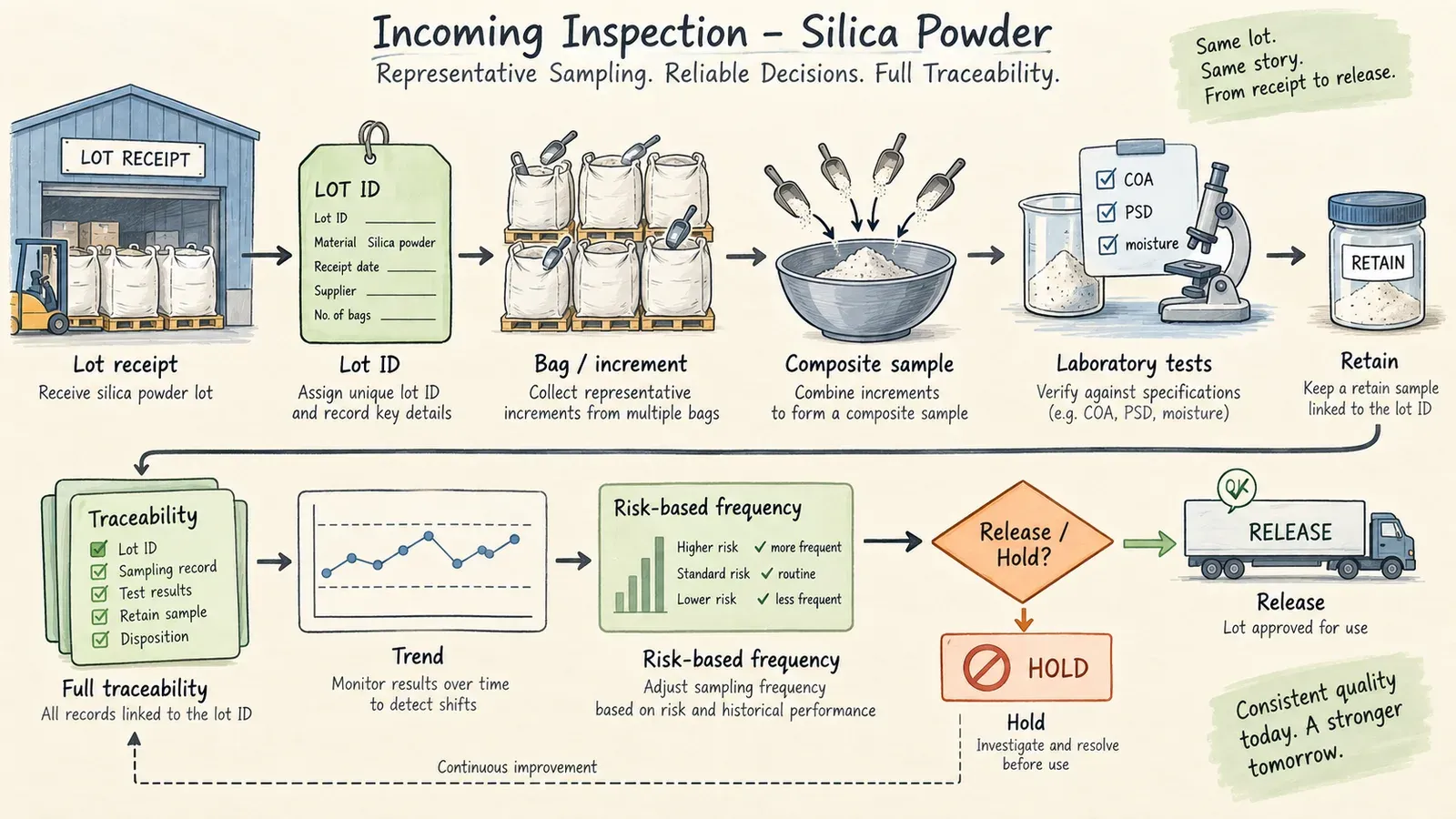
Define the lot and the decision owner
Start with the purchase order, supplier lot number, package count, production date and document revision. Decide whether a lot means one production run, one shipment, one grade or a combination defined by the quality agreement. Do not combine packages from different lots simply because they arrived on the same truck.
Name the release owner and the escalation path. Purchasing, warehouse, laboratory and production should know which fields can release material and which deviations require technical review. This avoids a package being consumed while its identity or test scope is still unclear.
Take representative increments
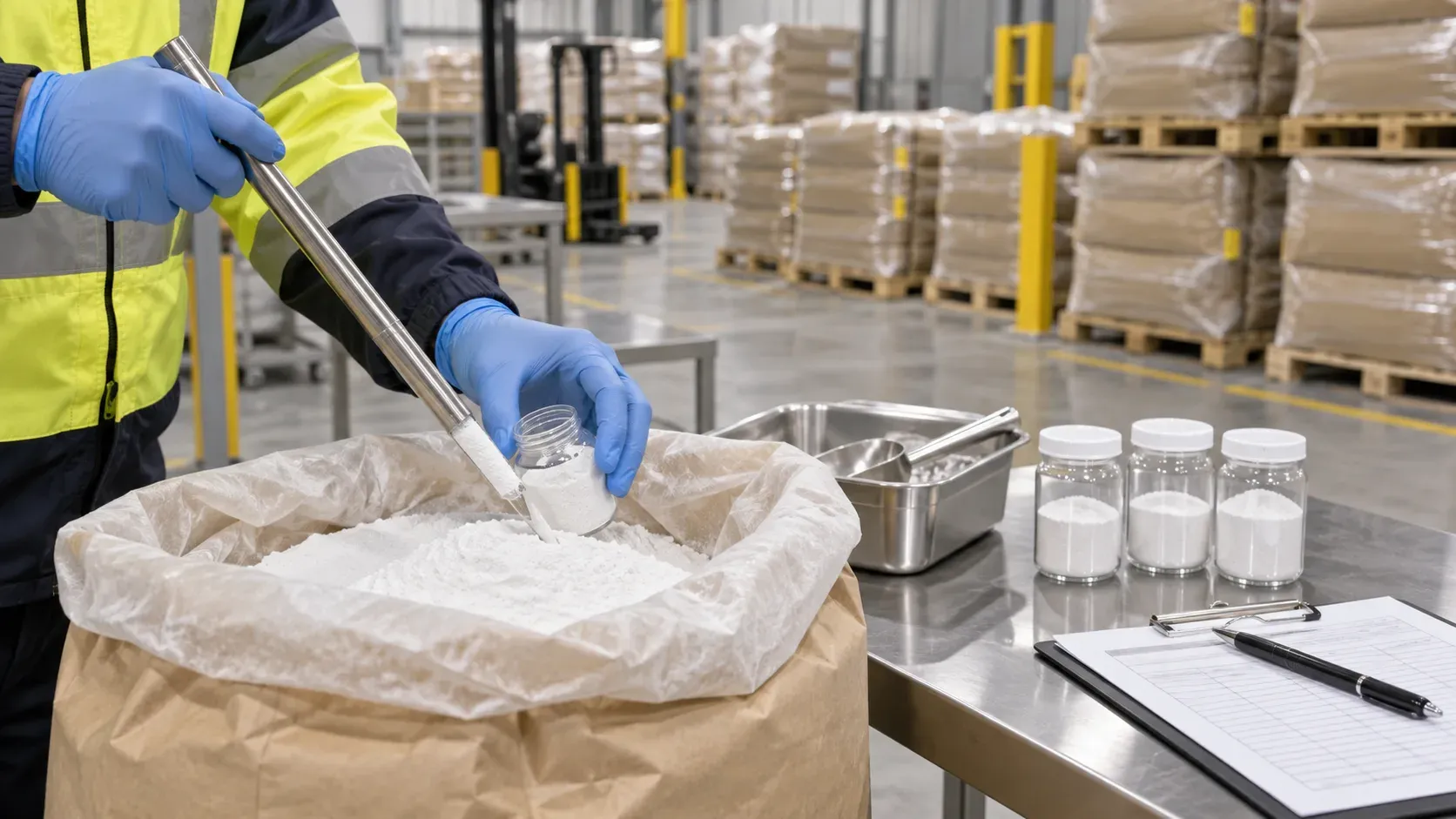
A sample should represent the lot rather than the easiest bag to reach. Use a documented selection pattern, clean sampling tools and a container that protects the powder from moisture and contamination. Record package identifiers and the number of increments combined into the laboratory sample.
If the material is visibly segregated, caked or damaged, preserve that observation as evidence instead of blending it away. A nonconforming condition may be local to one package, but it still needs a traceable decision.
Separate release tests from confirmation tests
Release tests should match the risk of the application and the approved specification. Depending on the grade, that may include appearance, moisture, particle-size evidence, chemistry or a defined phase check. A full requalification is not automatically required for every delivery, but the reason for the frequency should be recorded.
Use confirmation or periodic tests to monitor drift, verify a supplier change or investigate a complaint. Keep the test method and acceptance limit beside the result. A result without method, lot and sample identity is weak evidence even when the number looks plausible.
Keep retains useful
Store a sealed retain with the lot and sample identifiers, collection date and storage condition. The retain should be large enough for the planned investigation and protected from moisture, dust and mix-up. Define how long it is kept and who can release or discard it.
When a production result is unexpected, compare the retain, incoming result, current COA and process record as one evidence chain. This is more informative than asking whether the supplier's average value is normally acceptable.
Decision matrix
| Event | Minimum record | Action |
|---|---|---|
| Routine lot receipt | Lot, packages, COA revision, sample plan | Hold until release fields are reviewed |
| Damaged package | Package ID, photos, condition, sample | Segregate and investigate |
| Supplier change | Change notice and affected lots | Increase confirmation testing |
| Complaint | Retain, process batch and test method | Run a matched comparison |
Practical checklist
- Define the lot in the purchase and quality agreement.
- Sample by a repeatable, representative pattern.
- Record method, units, lot and sample identity together.
- Store labelled retains under controlled conditions.
- Set test frequency by application risk and change history.
Related technical reading
Use these current pages to connect the test plan to the next purchasing or formulation decision:
These links provide context only. Confirm the current grade, lot documents and customer-side trial conditions before approval.
Discuss a silica material trial
Send the application, material identity, target method, acceptance fields, expected quantity and required documents. Changtong can help structure a sample and evidence review without treating a single laboratory value as a performance guarantee.