Tile Adhesive Filler Qualification: PSD, Water Demand and Grout Trials
Learn how to qualify crystalline silica powder in tile adhesives and grouts through PSD, water-demand, workability and finished-mortar trials.
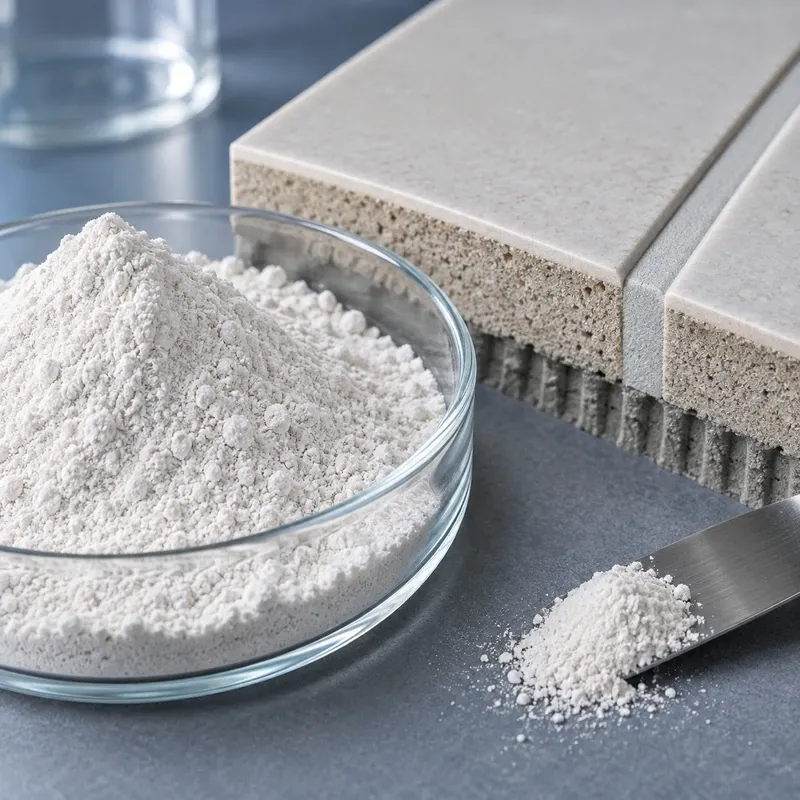
This guide covers crystalline silica powder as one mineral component in tile-adhesive and grout formulation trials. It does not establish finished-mortar compliance or claim that one powder grade delivers a universal adhesion, open-time, slip, shrinkage or strength result.
Why particle-size data matters more than a mesh name
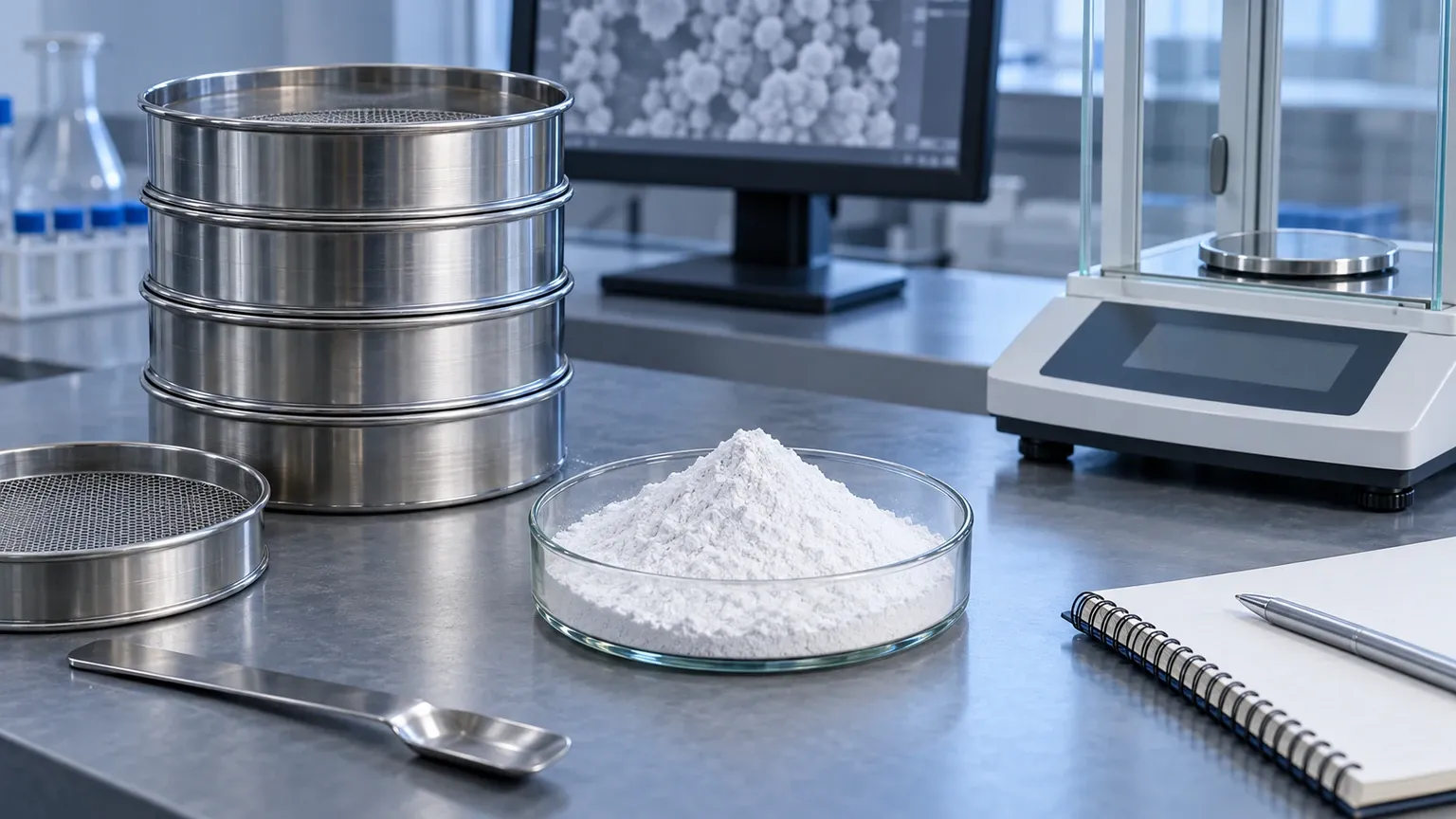
A commercial mesh designation is a useful purchasing shorthand, but it does not describe the full particle-size distribution (PSD). Two powders sold under the same nominal mesh can differ in their fine fraction, median size, coarse residue and test method. Those differences can change packing, surface area, water demand and the way a mortar moves under a notched trowel.
Request the test method, reporting basis and acceptance limits together. If sieve residue is used, specify the sieve opening and maximum retained fraction. If laser diffraction is used, align the dispersion procedure and the reported percentiles. Our guide to silica powder particle-size distribution explains why results from different methods should not be treated as interchangeable.
Start with the role of the mineral fraction
Crystalline silica powder may be evaluated as part of the mineral filler package in cementitious tile adhesives, ceramic grouts and related dry-mix mortars. It is not the binder, polymer modifier or rheology additive. Its practical effect must therefore be judged inside the complete formulation.
- Packing: the candidate grade changes how the fine mineral fraction occupies space between larger particles.
- Water demand: a shift toward finer material can increase surface area and may change the water needed to reach a comparable consistency.
- Application feel: coarse residue and distribution shape can affect drag, smoothness and visible texture.
- Consistency: stable PSD, moisture and lot identification help keep trial conclusions traceable.
This is why a supplier should not promise better adhesion, lower shrinkage or easier application from powder identity alone. The finished mortar must be tested against the applicable product requirement.
Build a controlled formulation trial
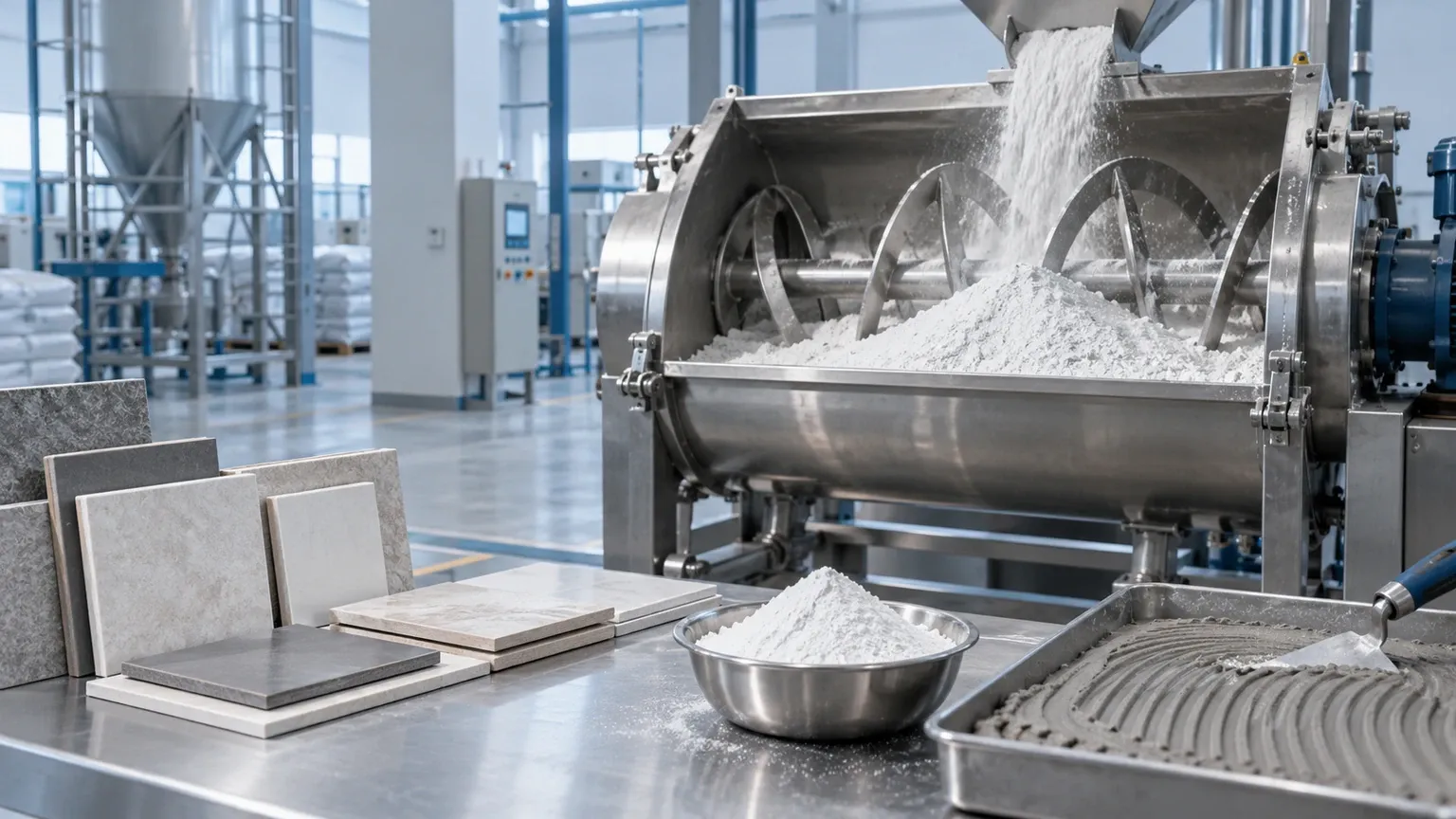
Use the current approved formulation as the control. Replace or adjust one defined part of the mineral fraction at a time, keep the mixing sequence and conditioning procedure fixed, and record the actual water addition. A trial that changes filler loading, polymer level and water simultaneously cannot show which variable caused the result.
Record the dry-mix baseline
- cement type and batch;
- aggregate and filler grading;
- polymer and cellulose-ether grades;
- crystalline silica powder dosage;
- mixing time, rest time and remix procedure;
- laboratory temperature and humidity.
Compare fresh-mortar behavior
Measure the water required to reach the target consistency, then observe wetting, lump formation, trowel drag, ridge shape, sag or slip tendency, open-time behavior and working-time change. Use the same tile, substrate, notch and application method for each candidate. An apparently smoother mix is not automatically better if it requires more water or loses performance after conditioning.
Test the cured system, not the powder in isolation
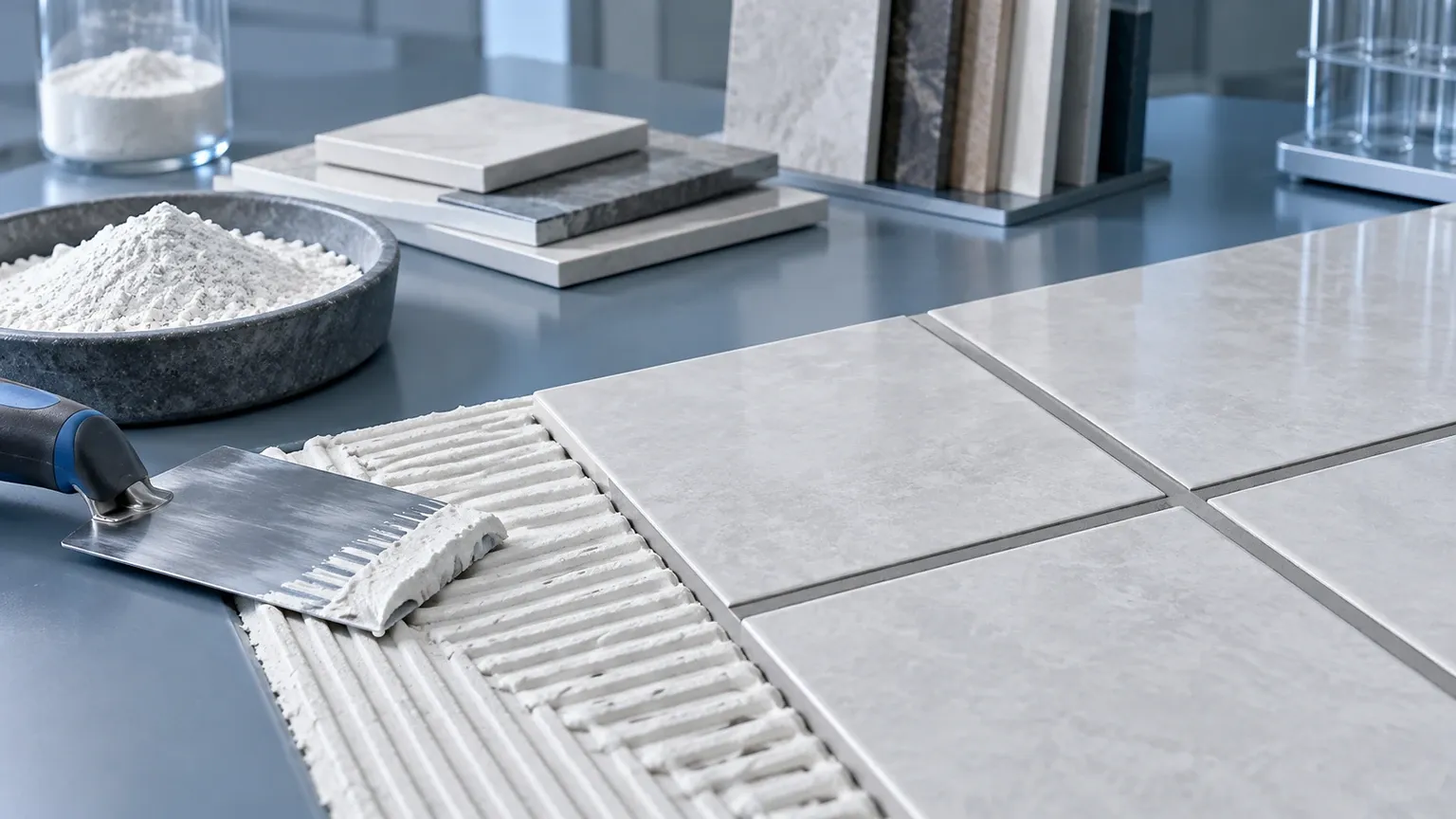
ISO 13007 separates specifications and test methods for tile adhesives and grouts. Depending on the intended product and market, the evaluation may include adhesion, open time, slip, deformation, flexural or compressive strength, shrinkage, abrasion, water absorption or chemical resistance. The applicable edition and regional requirement should be confirmed by the formulator; a raw-material data sheet does not replace finished-product testing.
Use a decision table instead of a single pass/fail impression
| Observation | Possible variable to examine | Next controlled check |
|---|---|---|
| Higher water demand | Finer fraction, surface area, filler dosage or other absorbent ingredients | Compare PSD and water at equal consistency; repeat at fixed filler loading |
| Rough trowel feel | Coarse residue, aggregate interaction or incomplete wetting | Check retained fraction and inspect a drawdown under the same notch |
| Early stiffening | Water balance, admixture compatibility or mixing/rest sequence | Repeat with fixed timing and verify every additive batch |
| Good fresh feel but weak cured result | Binder/polymer balance, excess water, conditioning or substrate preparation | Return to the control and run the required finished-mortar test |
What to request from the silica supplier
A useful qualification file should connect the quotation, grade, sample and delivered lot. Ask for:
- material identity and raw-material route;
- particle-size method, distribution or defined sieve residue;
- grade-specific chemistry and moisture information;
- current TDS, SDS and a lot-specific COA where available;
- packing, sample size and change-control expectations.
The general-purpose crystalline silica powder page is a practical starting point for a grade discussion, but the correct cut must be matched to the customer’s dry-mix formulation. Use our COA review guide to align the grade and lot evidence before approval.
Safety and handling belong in the trial plan
Crystalline silica can become respirable when fine dust is generated. Receiving, opening, weighing, mixing and cleanup should be covered by the facility’s exposure assessment and dust-control procedures. Review the current SDS and the rules that apply in the destination market. OSHA’s crystalline-silica resources describe engineering and work-practice controls; they are general safety references, not a substitute for a site-specific program.
Qualification checklist
- Define whether the target is a cementitious adhesive, dispersion adhesive, reaction-resin adhesive, cementitious grout or reaction-resin grout.
- Write the required fresh and cured performance tests before requesting a sample.
- Specify PSD evidence and coarse-residue limits rather than relying on mesh alone.
- Run one-variable comparisons against the current formulation.
- Record water addition, mixing, conditioning and application observations.
- Approve the finished system and retain the grade- and lot-matched documents.
References and scope
- ISO 13007-1:2014 — specifications for ceramic-tile adhesives; confirmed current by ISO in 2025.
- ISO 13007-3:2010 — specifications for ceramic-tile grouts; confirmed current by ISO in 2025.
- ISO 13007-4:2013 — test methods for grouts; confirmed current by ISO in 2024.
- OSHA crystalline silica resources — general workplace exposure-control context.
These references explain industry terminology, test frameworks and safety context. They do not represent Changtong product test results. Grade approval must use the current product documents and the customer’s own formulation trials.
Discuss a tile-adhesive or grout trial
Send the binder system, current mineral grading, target PSD method, water-demand baseline, required finished-product standard and trial quantity. Changtong can review a suitable crystalline silica powder sampling scope without treating a mesh label as a performance guarantee.