Cool-Roof Coating Filler Selection: A Practical Cristobalite Trial Framework
Screen cristobalite powder for cool-roof coatings with a practical framework covering whiteness, PSD, dispersion, film quality, SRI and weathering evidence.
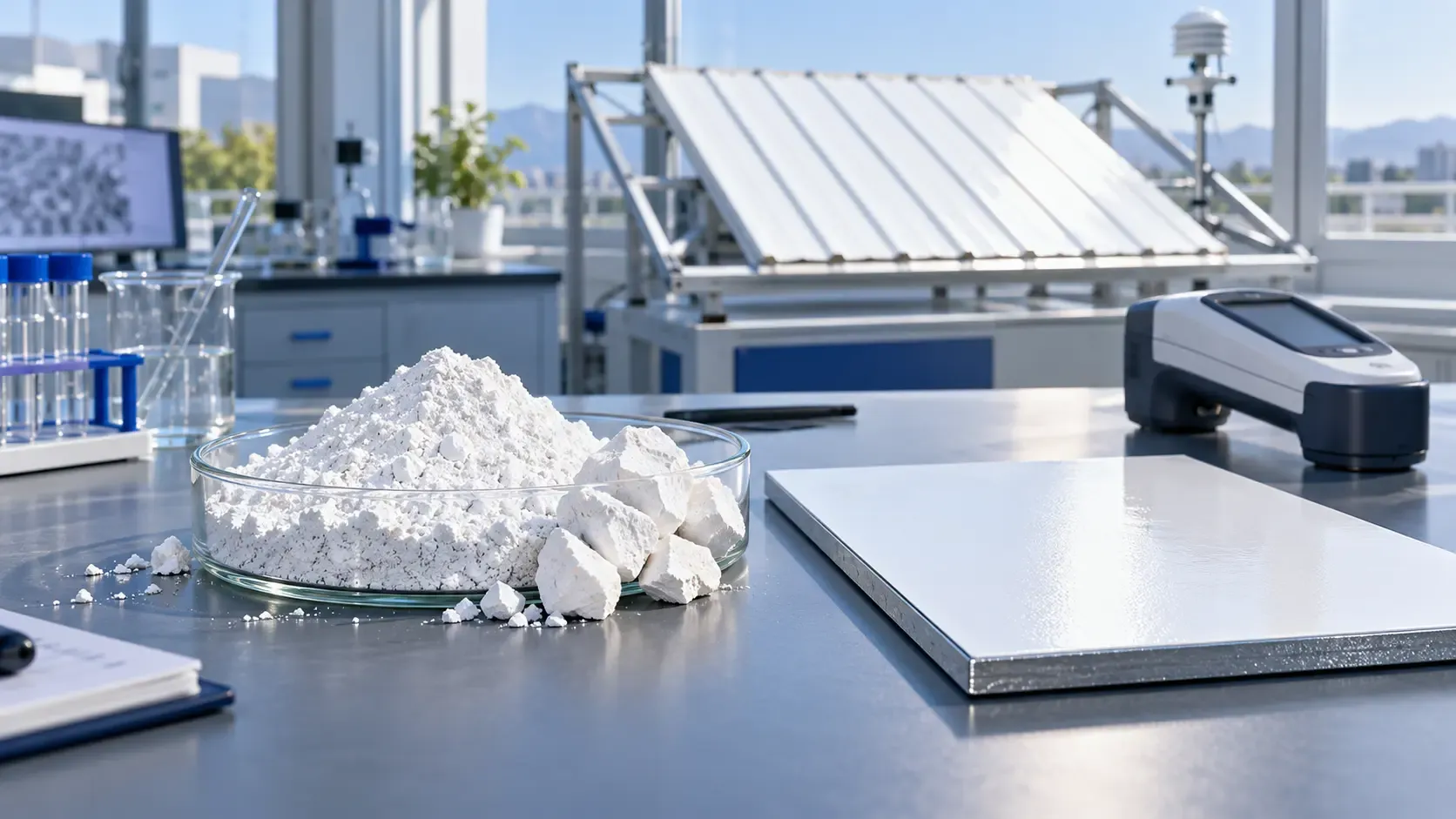
A cool-roof filler trial should connect powder selection with measured solar reflectance, thermal emittance, film quality, and weathered retention.
This guide is a screening framework for cristobalite powder in reflective roof-coating development. It does not promise a specific solar reflectance, thermal emittance, Solar Reflectance Index (SRI), coating life, or energy saving. Those results depend on the binder, pigment package, film thickness, surface preparation, exposure, and test method.
Why filler selection cannot be reduced to whiteness
White appearance is useful when developing a reflective coating, but it is not the same as measured radiative performance. A filler can look bright in a powder jar and behave differently after wetting, pigment blending, film formation, dirt pickup, or outdoor exposure. The practical question is whether the selected mineral remains part of a stable coating system that meets the customer’s measured acceptance criteria.
Solar reflectance describes the fraction of incident solar energy reflected by a surface. Thermal emittance describes how effectively the surface releases absorbed heat. The two measurements are often combined into SRI, but an SRI value belongs to a finished surface under a defined method; it should not be transferred from a raw powder to a coating without testing. The Cool Roof Rating Council provides a useful reference for keeping product ratings and radiative-property testing in scope.
| Variable | What it can influence | Evidence to collect |
|---|---|---|
| Powder appearance | Initial colour and visual uniformity | Defined whiteness or colour method and retained sample |
| Particle-size distribution | Packing, film texture, viscosity and dispersion | Method-specific PSD, batch identity and coating trial |
| Finished film | Reflectance, emittance, gloss, adhesion and defects | Drawdown or spray panel with controlled thickness |
Start with the coating system, not the mineral label
Before requesting a cristobalite grade, identify the coating type and the job the filler must perform. Acrylic, silicone, polyurethane, and other binder systems can differ in wetting, viscosity response, flexibility, weathering, and dirt retention. The same powder should not be assumed to produce the same film in each binder.
Define the application layer
Record whether the material is intended for a primer, intermediate layer, topcoat, repair coating, or a multi-layer roof system. Note the substrate, target dry-film thickness, application method, curing conditions, colour space, and exposure environment. These details determine whether a filler comparison is meaningful.
Separate reference grade information from coating claims
Changtong’s published high-whiteness cristobalite range lists M3000, M4000, and M6000 reference grades with listed D50 options of approximately 12, 5, and 3 μm. Treat these as product-page reference information and confirm the current batch specification, test method, and availability before using them in an RFQ. They are not a finished-coating reflectance guarantee.
Use a staged trial to find the useful particle-size window
A narrow particle-size preference is not automatically the best formulation choice. Finer material may change viscosity, surface area, film smoothness, and dispersion demand; a coarser option may change texture, settling, or defect risk. The right comparison holds the binder, pigment package, solids, mixing energy, and application thickness constant.
- Set the baseline. Keep the existing filler or control formulation as a reference and document its solids, viscosity, application method, and film thickness.
- Change one mineral variable. Compare one grade or particle-size option at a time so a colour or flow change can be traced to a defined cause.
- Record wet and dry behaviour. Note wetting time, mixing energy, viscosity drift, settling, foam, drawdown appearance, and cure response.
- Test the finished film. Measure the properties that determine acceptance rather than using powder brightness as a substitute for coating data.
The decision unit is the coated panel, not the powder sample. Powder data helps explain a trial; it does not replace finished-film evidence.

Check dispersion and film formation before radiative testing
Many formulation problems appear before a panel reaches a reflectance instrument. Look for incomplete wetting, floating or settling, agglomerates, pinholes, craters, streaks, excessive gloss variation, and poor edge coverage. A film that is not uniform cannot provide a reliable comparison of filler effects.
| Observation | Possible cause | Next check |
|---|---|---|
| Visible specks or streaks | Dispersion, contamination, or application inconsistency | Review mixing sequence, grind, screen, and wet-film uniformity |
| Settling or hard sediment | Density, rheology, storage time, or dispersion balance | Compare viscosity profile and re-dispersion after defined storage |
| Uneven gloss or texture | Particle packing, film thickness, surface leveling, or cure | Repeat controlled drawdowns at matched thickness |
Treat weathering as a retention question
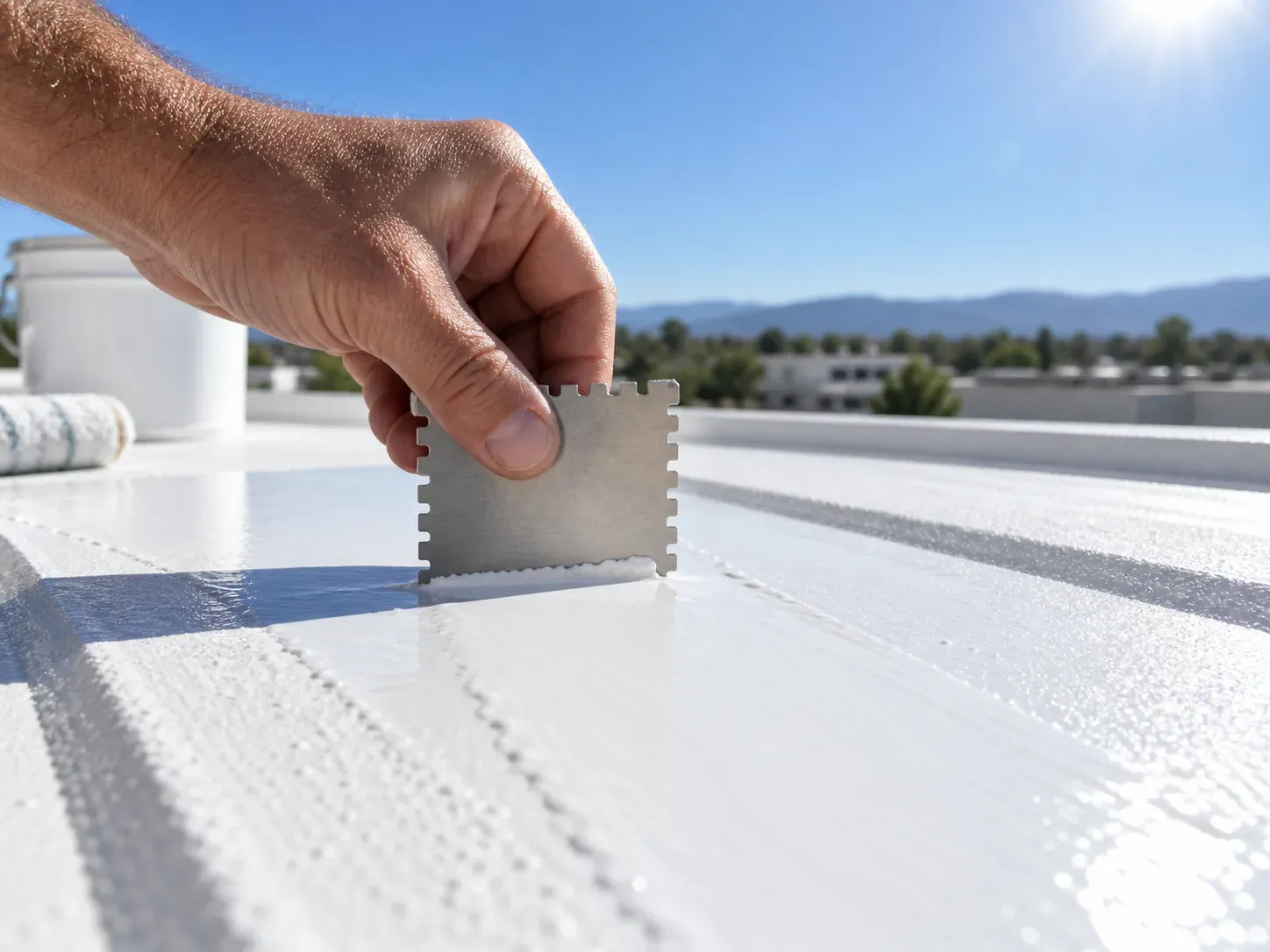
Initial reflectance is only one point in the qualification record. Roof coatings may experience ultraviolet exposure, moisture, temperature cycling, dirt deposition, cleaning, and substrate movement. A formulation that starts bright but loses uniformity or accumulates dirt rapidly may not meet the project’s real objective.
Use matched panels and document exposure duration, orientation, cleaning protocol, inspection intervals, and the same measurement method before and after exposure. Do not convert a short laboratory screen into a service-life claim.

What to include in a cristobalite coating RFQ
An actionable request allows the supplier to match the discussion to the real coating system. Include the binder family, pigment package, intended filler function, target solids, wet and dry film thickness, application method, substrate, colour requirement, storage conditions, weathering program, and acceptance tests.
Changtong’s high-whiteness cristobalite for cool-roof coatings can be reviewed against those variables. For broader coating-filler considerations, see the site’s silica powder selection guide for paints and coatings. Use the silica powder RFQ checklist and contact Changtong’s technical team to define sample scope and documentation.
FAQ
Does high powder whiteness prove high SRI?
No. SRI is derived from finished-surface radiative properties under a defined method. Powder whiteness can support formulation screening but cannot replace coating measurements.
Which cristobalite particle size should be used?
There is no universal answer. Compare the available grade options against binder wetting, viscosity, dispersion, film thickness, texture, and the customer’s finished-film tests.
Can a powder test replace an outdoor exposure test?
No. Powder chemistry and particle-size data help identify and control the raw material, while exposure testing evaluates retention in the complete coating system.
What should a supplier receive before recommending a grade?
Send the binder, pigment package, application method, target thickness, substrate, intended exposure, required documents, and the tests used to approve the coating.
Request a cool-roof filler trial discussion
Share your binder, pigment package, target film thickness, application method, and radiative-property test plan. Changtong can use those details to clarify grade scope, samples, and supporting documents.
Request a QuoteReference note: CRRC and California’s cool-roof guidance describe solar reflectance, thermal emittance, and SRI as properties of evaluated surfaces or products. These references support the testing framework only and do not represent Changtong’s measured coating data or a product guarantee.