
Fine Silica Moisture Pickup Control: Packaging, Storage and Mixing Checks
A practical control plan for limiting moisture pickup in fine silica from packaging receipt through storage, weighing and final mixing.
This technical guide is a screening and trial framework. It does not establish a universal grade limit or guarantee finished-product performance; approval remains tied to the buyer’s method, formulation and applicable requirements.
Start with the decision, not the number
Fine silica can change handling and formulation behavior when it picks up moisture between production, shipment and use. The right response is not simply to demand a lower moisture number. Control the package, storage environment, opening time, sampling method and test basis so a measured result represents the material that will actually enter the process.
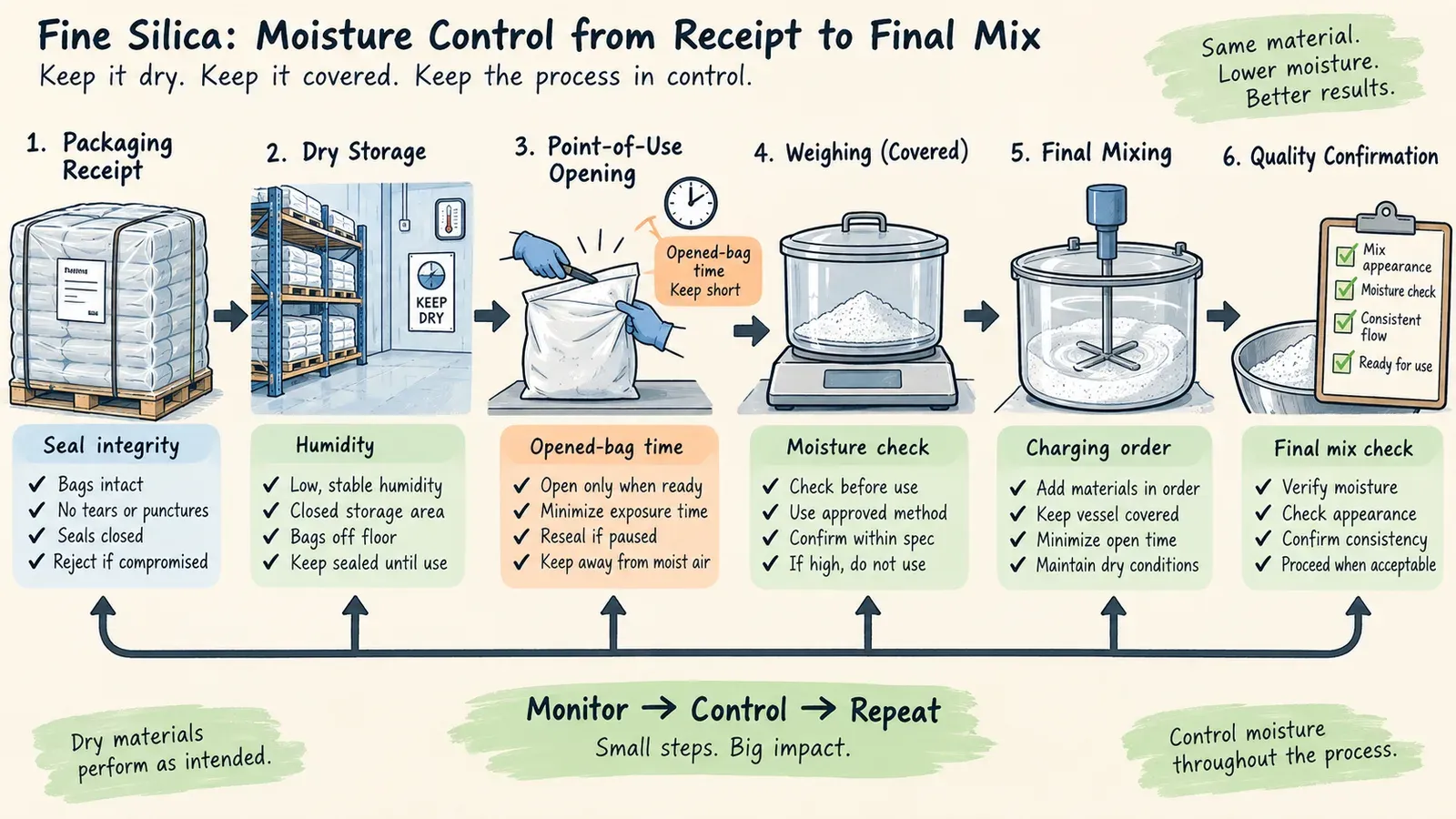
Map where moisture can enter
Review the complete path: package sealing, container liner, pallet wrap, warehouse humidity, temperature changes, opening, weighing, transfer and mixer charging. Condensation can occur when a cold package is opened in a warm humid room, even if the package was intact during transport.
Assign a control to each step. Examples include sealed liners, dry-room staging, covered transfer containers, short open time and a defined resealing method. The facility's exposure assessment and dust-control program remain mandatory; moisture control must not weaken safe handling.
Choose a method and sampling point
Moisture results are meaningful only when the method and sample condition are clear. State whether the result is loss on drying, a moisture analyser reading or another agreed method, and record temperature, time, sample mass and container condition. Do not compare values from different methods as if they were interchangeable.
Sample quickly into a sealed container and avoid leaving the jar open on the bench. If the lot is suspected of moisture stratification, take increments from defined packages and record the observation rather than averaging away a wet area.
Protect the formulation step
Keep the powder sealed until the batch is ready. Weigh by mass, use clean covered vessels and record the elapsed time between opening and charging. If the powder is preconditioned or dried, define the temperature and hold time and verify that the treatment does not alter a surface modification or phase-sensitive grade.
In a dry mix, monitor lumps, flow, feeder response and water demand. In a resin or polymer system, monitor wetting, dispersion, viscosity build and air release. A lower moisture result is useful only if the finished formulation becomes more stable under the same process conditions.
Handle an unexpected result
First check package identity, sample handling and method repeatability. Then compare the retain, current lot result, storage record and process observations. If the deviation is confirmed, quarantine the affected material and follow the site's nonconformance process rather than blending it into a production batch without technical approval.
Decision matrix
| Signal | Likely control point | Verification |
|---|---|---|
| Caking at receipt | Package seal or condensation | Inspect liner and compare retain |
| Moisture rises in storage | Humidity or damaged wrap | Review warehouse log and package condition |
| Water demand changes | Opened time or wet filler | Repeat at fixed conditioning |
| No change in test, poor flow | Agglomeration or morphology | Check PSD and handling response |
Practical checklist
- Map the full package-to-mixer moisture path.
- Use one defined method with documented conditioning.
- Minimise open time and reseal opened material.
- Pair moisture data with flow and formulation observations.
- Quarantine confirmed deviations and keep the retain traceable.
Related technical reading
Use these current pages to connect the test plan to the next purchasing or formulation decision:
These links provide context only. Confirm the current grade, lot documents and customer-side trial conditions before approval.
Discuss a silica material trial
Send the application, material identity, target method, acceptance fields, expected quantity and required documents. Changtong can help structure a sample and evidence review without treating a single laboratory value as a performance guarantee.