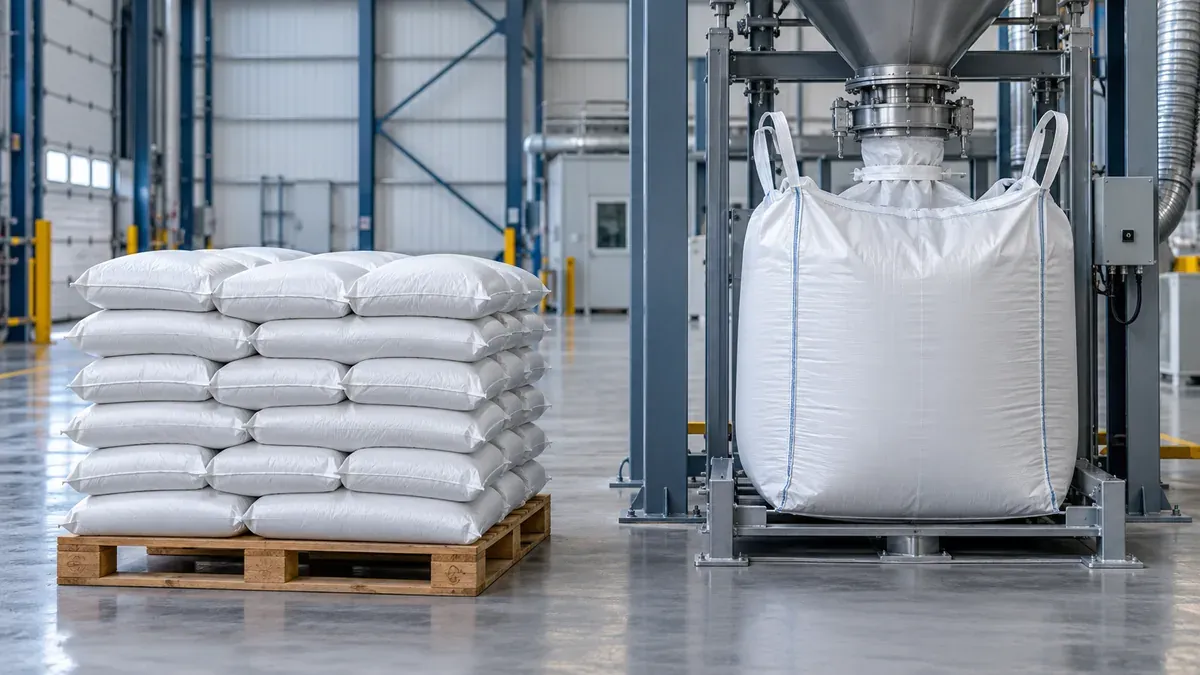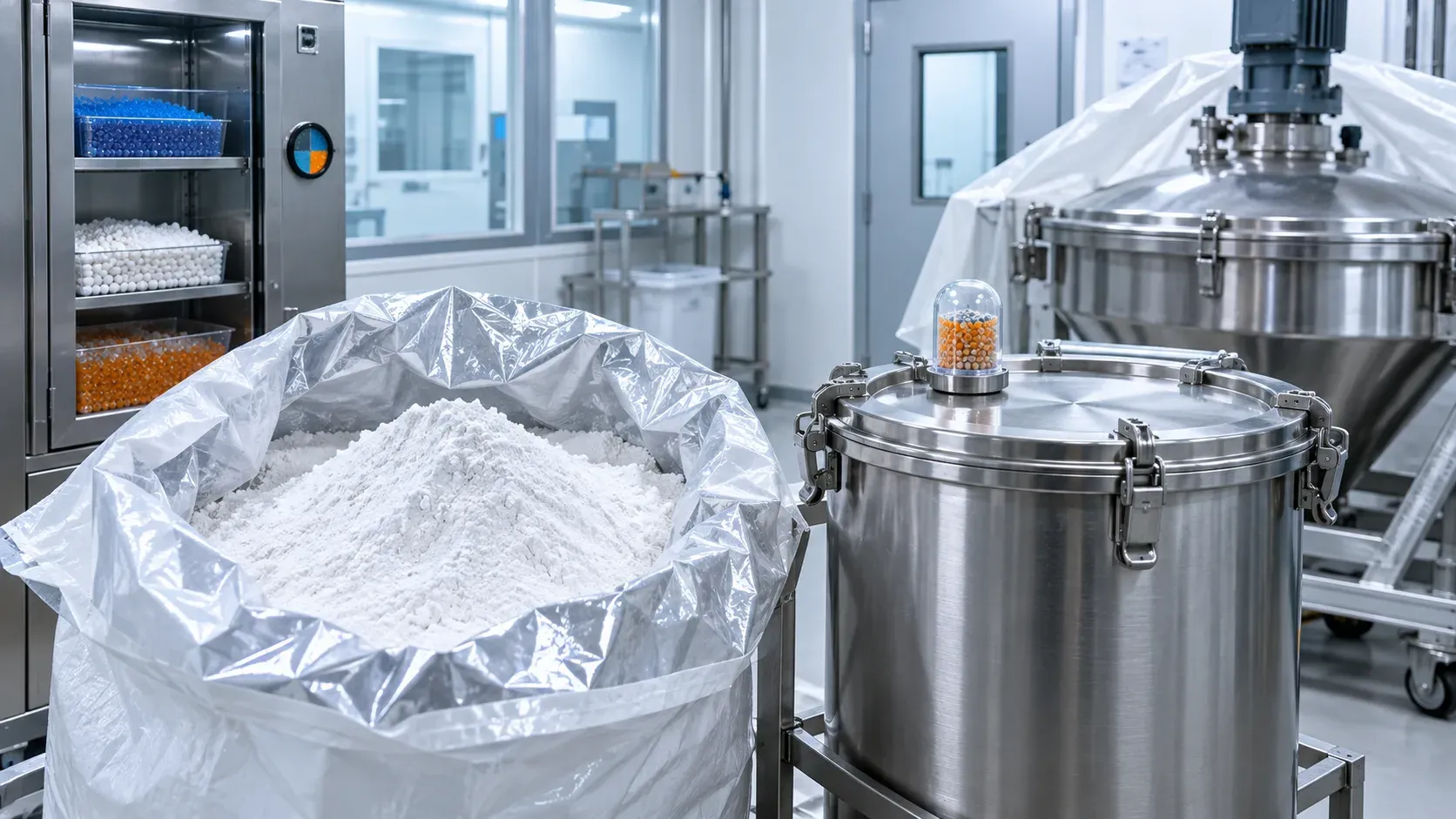
How to Store and Transfer Silica Powder Safely
Reduce moisture pickup, package damage and dust release when storing, opening, transferring and cleaning up silica powder at an industrial site.
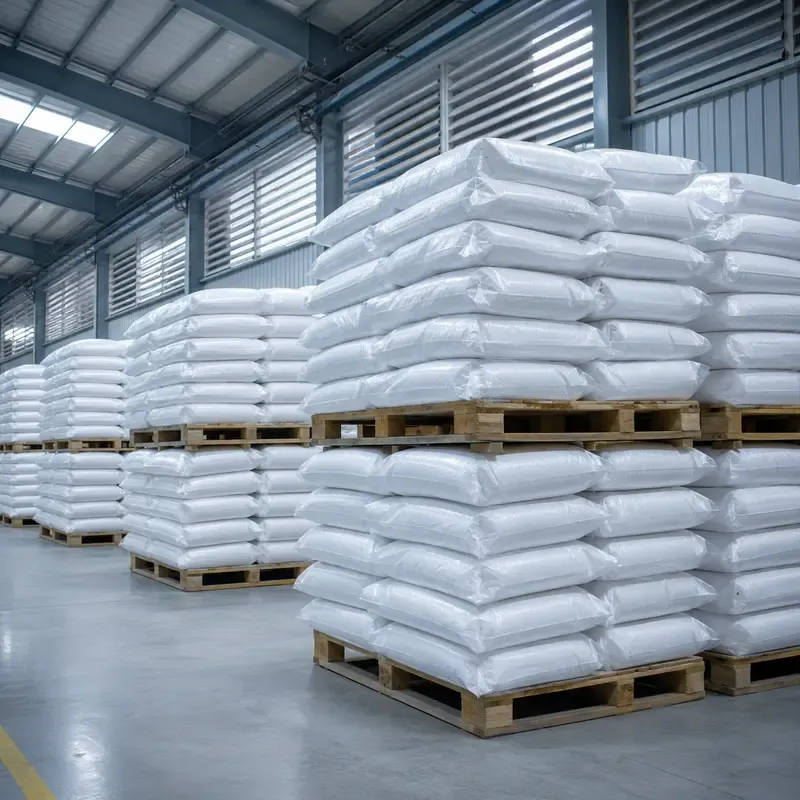
Safe silica powder storage is a moisture-control and dust-control task at the same time.
Packaging, ventilation, transfer equipment, housekeeping and worker protection must be selected for the actual powder and site. This guide does not replace the current SDS, local exposure assessment or site safety procedure.
Last updated:

Storage Controls Before the Bag Is Opened
| Control | Good practice | Check |
|---|---|---|
| Package integrity | Keep bags or containers closed, upright and protected from puncture. | Inspect damage, caking, wet marks and label identity. |
| Environment | Use a dry, ventilated area away from incompatible chemicals and water ingress. | Record leaks, condensation and unusual humidity conditions. |
| Stock rotation | Use lot identification and first-in/first-out rules where appropriate. | Match the lot to the COA and receiving record. |
| Segregation | Separate different grades and material families. | Prevent quartz, fused silica and cristobalite mix-ups. |
Opening and Transfer Without Creating a Dust Cloud
The priority is to keep powder enclosed and prevent dry sweeping or uncontrolled tipping. Use local exhaust or enclosed transfer where feasible, open packages in a controlled area, and follow the SDS and site risk assessment for respiratory and eye protection. The fused silica SDS warns that respirable dust can create serious occupational health risks; the control method must therefore be site-specific.
Receiving and Housekeeping Checklist
| Moment | Action | Do not do |
|---|---|---|
| Receiving | Check package, lot, label, SDS and visible damage before opening. | Do not open damaged bags in an uncontrolled area. |
| Transfer | Use closed or low-dust methods and avoid unnecessary drop height. | Do not shake or throw bags to empty them. |
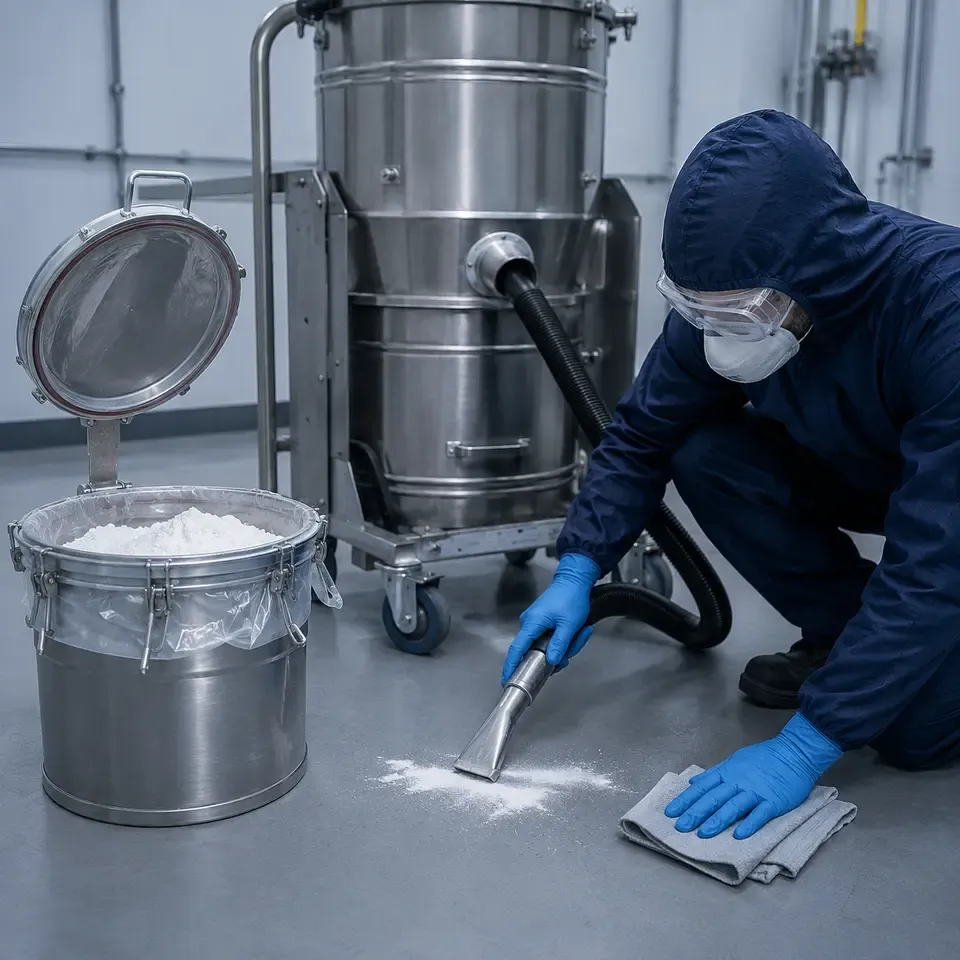
| Spill response | Follow the site spill plan and use suitable vacuum or wet methods. | Do not use ordinary dry sweeping if it can re-aerosolize dust. |
| After work | Close containers and record remaining lot identity. | Do not leave open powder or unlabeled partial bags. |
Frequently Asked Questions
Does a sealed bag remove all exposure risk?
No. Risk can occur during opening, transfer, cleaning and damaged-package handling. Use the SDS and site controls.
Can the same storage rule apply to fused silica and cristobalite?
Basic package and dust controls may overlap, but the current SDS and material-specific hazard information must control.
Is ventilation alone enough?
Not always. The hierarchy of controls may require enclosure, local exhaust, work practices, training and respiratory protection based on the risk assessment.
Related Changtong Product
For a crystalline-powder handling example, review General-Purpose Crystalline Silica Powder 325 Mesh and request the current SDS for the exact grade and destination market before storage or transfer.
References
Request the Current SDS Before Handling
Confirm the material identity, destination market and site handling procedure before shipment or trial.
Contact Changtong technical sales