25 kg Bags or FIBCs? Choosing Silica Powder Packaging for Your Plant
Compare 25 kg bags and FIBCs for silica powder by consumption, dosing, dust control, manual handling, lot traceability and receiving equipment.
Packaging is part of the process design
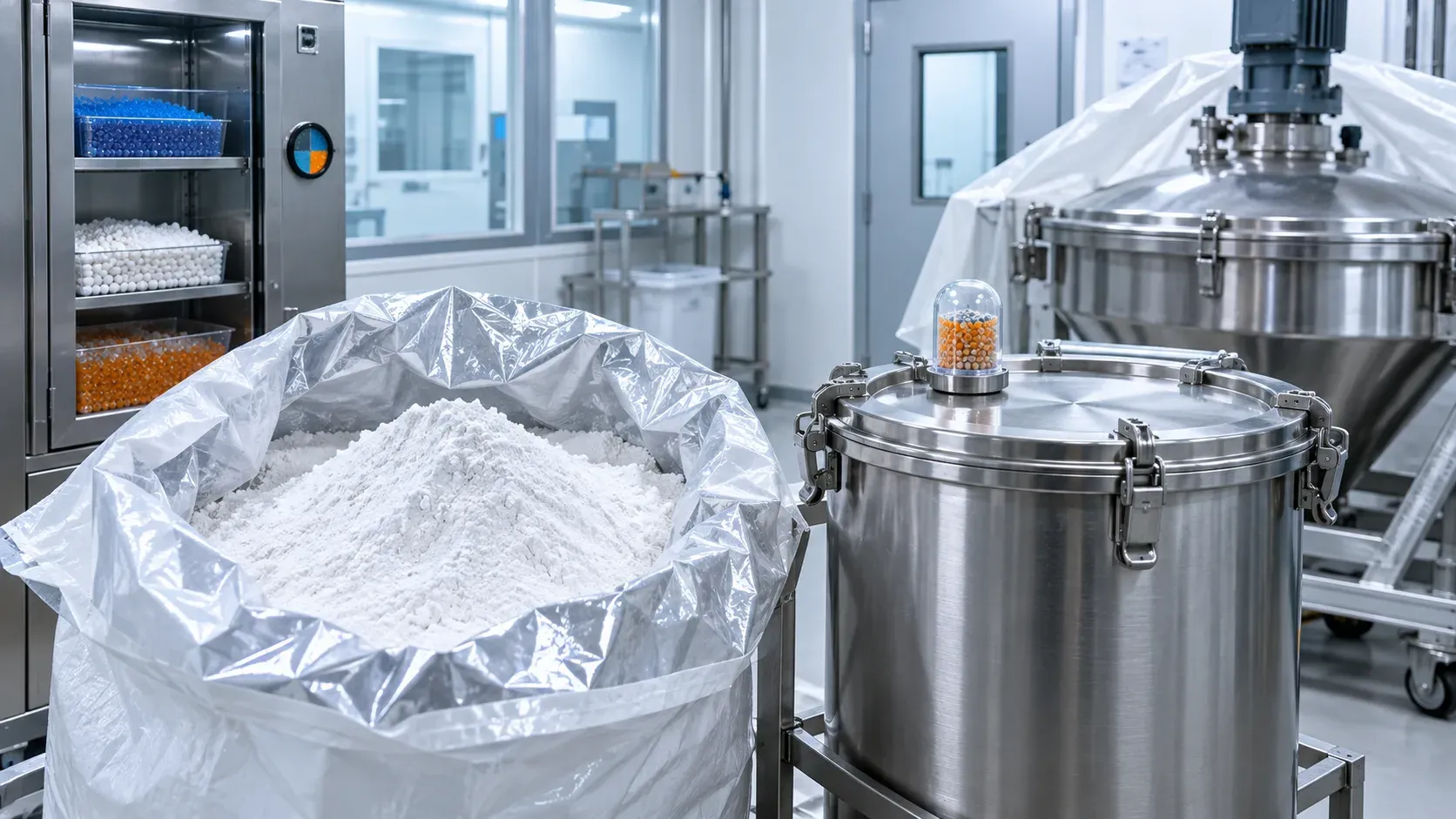
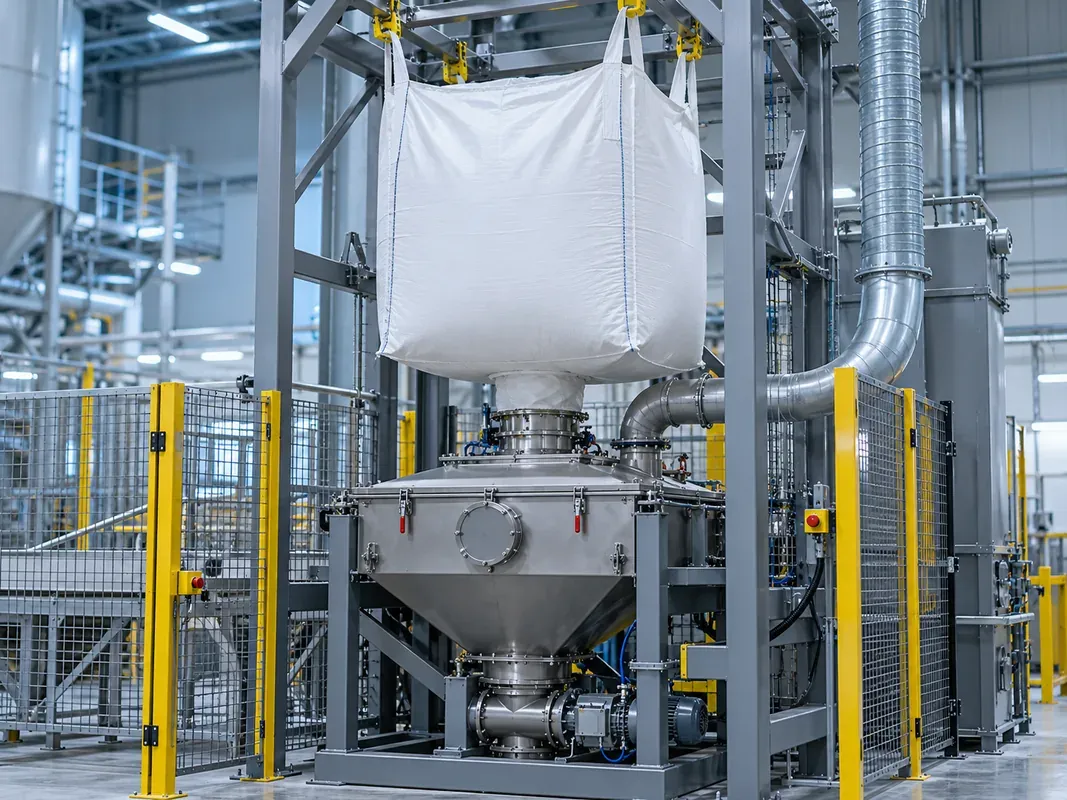
A bag is not only a transport container. It sets the unit dose, the number of manual touches, the discharge method and the way lots are segregated. A low-cost bulk pack can become expensive if the plant lacks a safe lifting frame, enclosed discharge station or accurate loss-in-weight feeder. Small bags can be flexible but create more openings and handling events.
Before requesting a format, map the route from truck or container to the mixer. Include unloading, quarantine, storage, transfer, weighing, empty-pack disposal and cleanup. Review the existing silica powder storage and transfer guide alongside the packaging decision.
Compare 25 kg bags and FIBCs by operating condition
| Decision factor | 25 kg bags | FIBC / bulk bag |
|---|---|---|
| Best fit | Lower consumption, frequent grade changes, manual batch additions or limited bulk equipment | Steady high consumption with approved lifting, support and enclosed discharge equipment |
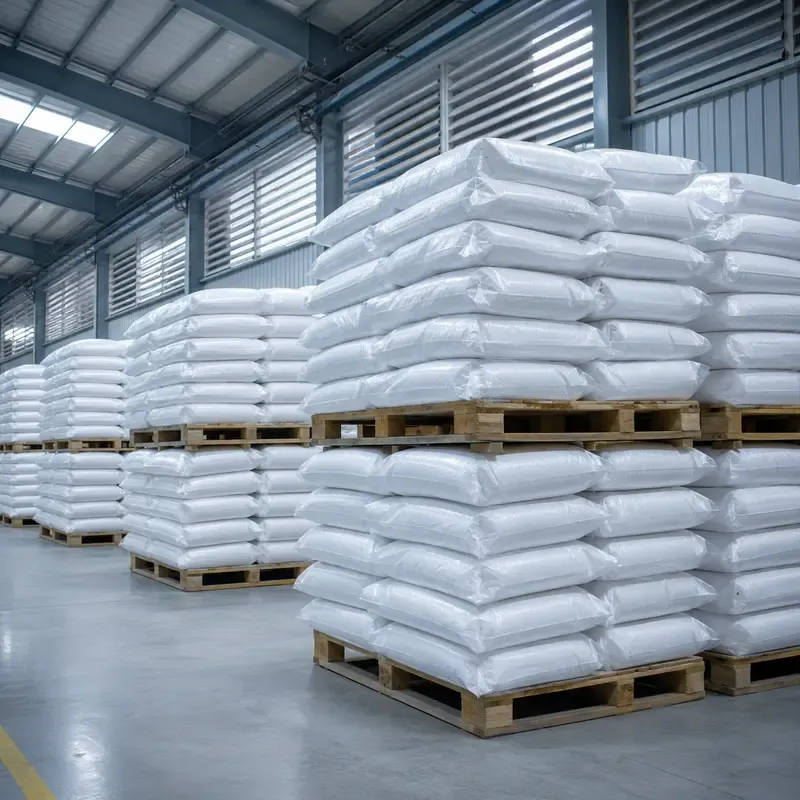
| Lot segregation | Individual bags are easy to count and quarantine, but labels must remain legible | Fewer units simplify counting; one damaged pack affects more material |
| Dosing | Convenient for recipes near whole-bag multiples; partial bags need resealing and control | Works well with metered discharge; poor flow or bridging can interrupt feeding |
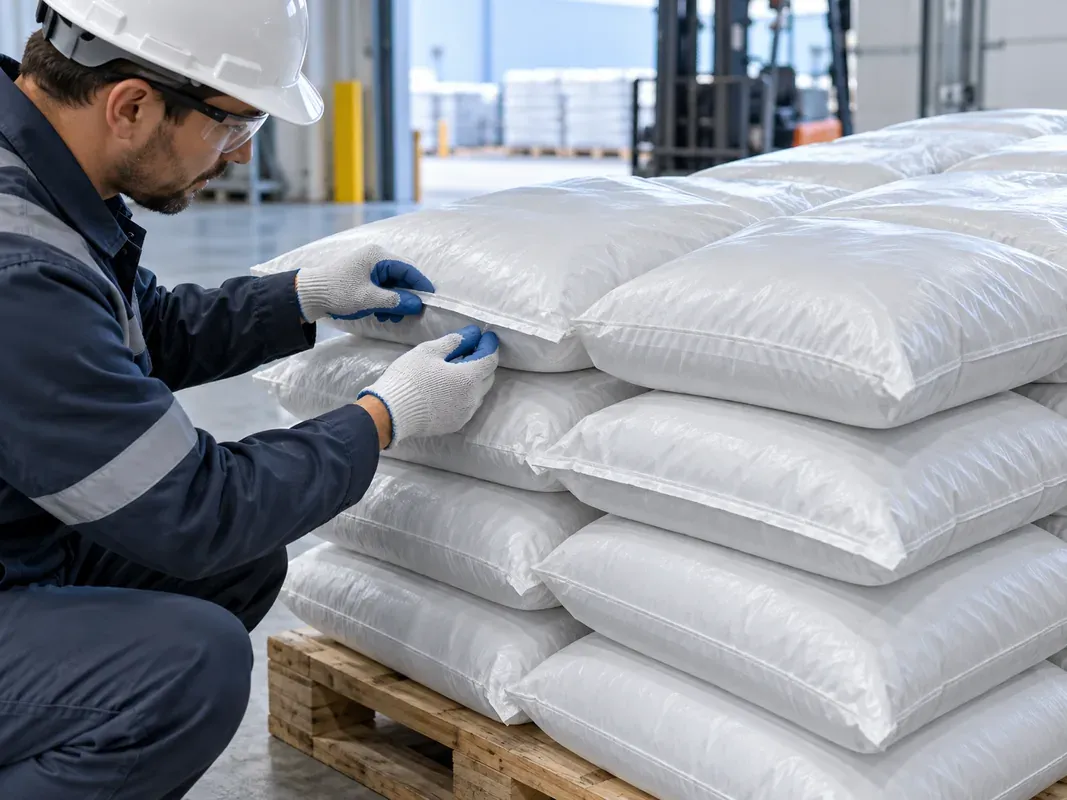
| Manual handling | More lifts, cuts and empty bags | Mechanical lifting is essential; operators must not stand beneath suspended loads |
| Dust points | More bag openings and tipping events | Fewer openings, but connection and empty-bag collapse need effective containment |
Calculate touches before comparing packaging cost
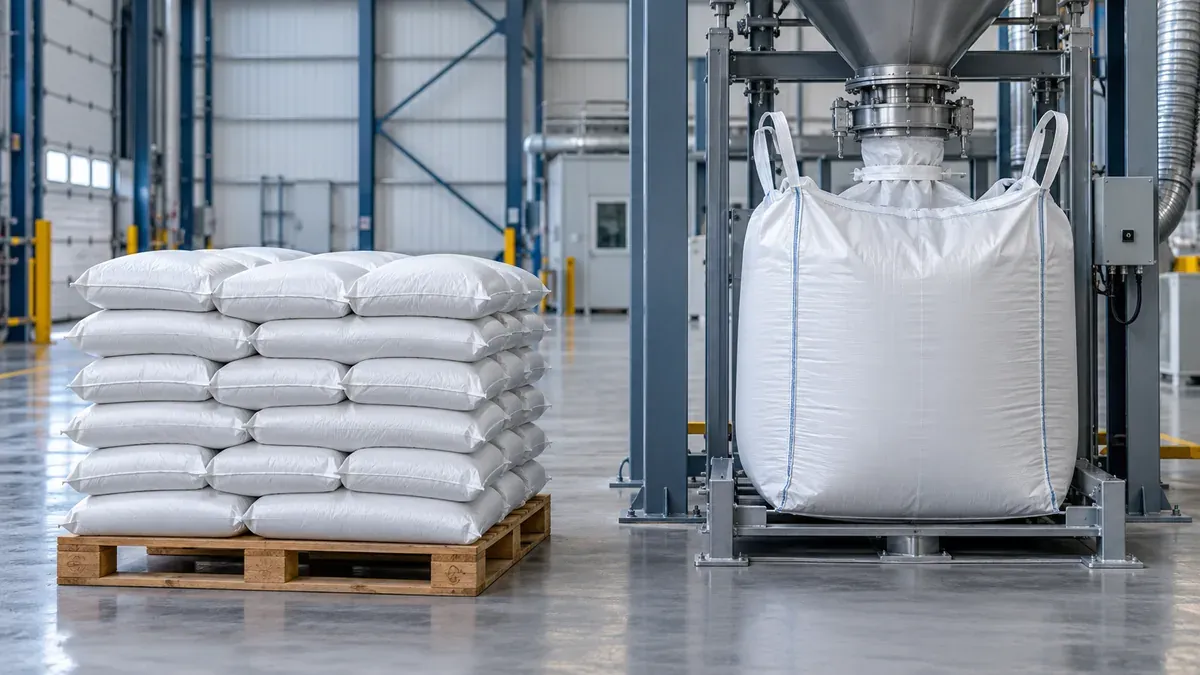
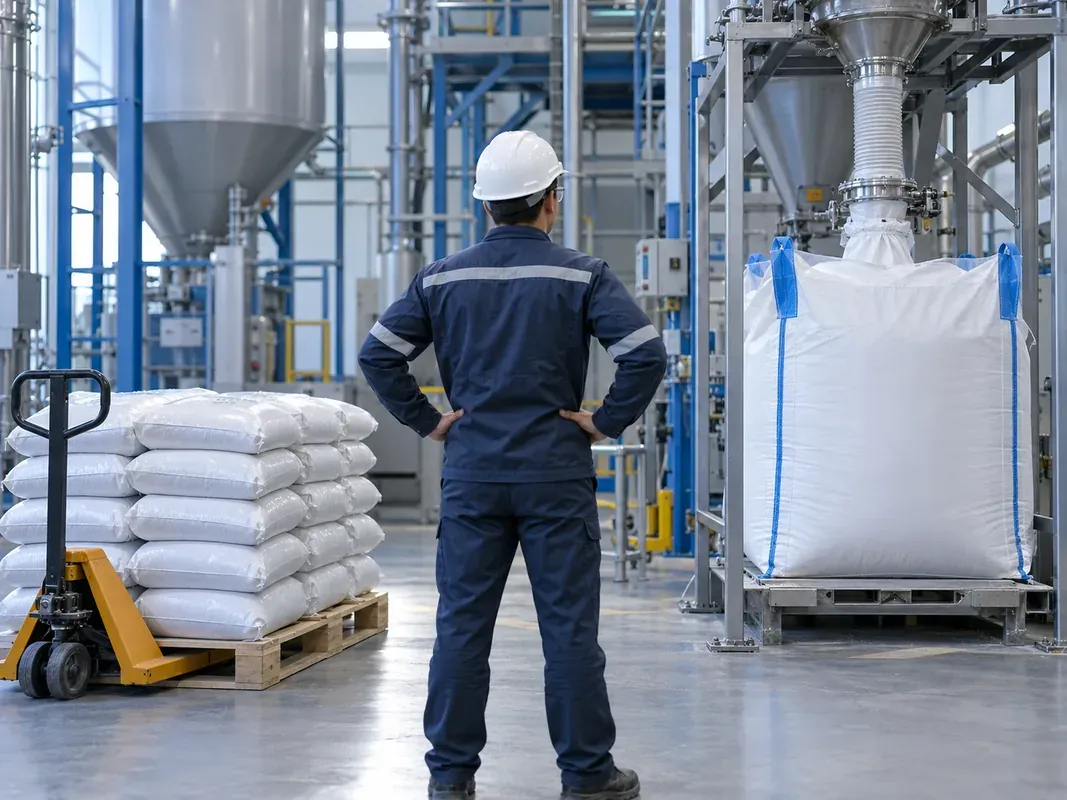
For a simple scale reference, 1,000 kg equals forty 25 kg bags or one 1,000 kg FIBC. That arithmetic does not prove that either option is safer or cheaper. Confirm the actual net weight, pack tolerance and plant lifting limits. Then count each touch: unload, move, open, dose, reseal, quarantine and dispose.
A plant that consumes 250 kg per batch may value ten whole 25 kg bags because the recipe is visible and easy to reconcile. A continuous process consuming several tonnes per shift may justify an FIBC station. If a partial FIBC remains connected between runs, include moisture protection, contamination control and lot-change cleanout in the plan.
Design dust control at the opening point
Crystalline silica-containing dust requires a site-specific exposure assessment and applicable controls. OSHA's general-industry guidance emphasizes engineering and work-practice controls, written exposure-control planning and restrictions on compressed-air cleanup where it can increase airborne dust. Local law may differ, so the plant's safety team must approve the transfer method.
Useful design questions include whether the bag-dump station is enclosed, where local exhaust captures dust, how the empty pack is collapsed, how spills are cleaned and how operators avoid reaching into a dust cloud. A respirator is not a substitute for feasible engineering controls.
Write the packaging specification, not only the pack name
| Specification field | Why the supplier needs it | Receiving check |
|---|---|---|
| Net weight and tolerance | Controls batch math, payload and invoice basis | Verify selected units with a calibrated scale. |
| Inner liner / moisture barrier | Matches storage climate and opened-pack exposure | Inspect seals, punctures and evidence of moisture. |
| FIBC inlet and outlet | Must connect to the filling and discharge equipment | Confirm spout dimensions before the first bulk order. |
| Lifting and safe working load | Must suit the approved material-handling system | Check labels, loops and damage before lifting. |
| Lot and grade marking | Preserves identity from receipt to production | Match pack labels to PO, packing list and COA. |
| Pallet and container plan | Affects payload, stability and unloading access | Inspect shift, tears, wetness and restraint on arrival. |
Use a packaging trial before changing the order
Trial the pack with the real forklift or hoist, discharge station, feeder and cleanup method. Measure unloading time, operator interventions, residual powder, dosing variation and the time needed to change lots. Keep the silica grade constant so the trial evaluates packaging rather than material performance.
If the plant is evaluating a general ground-quartz grade, the published 325-mesh crystalline silica powder page can anchor the material identity; packaging details still require order-specific confirmation.
FAQ
Is an FIBC always cheaper per tonne?
No. Compare the pack price together with payload, equipment, unloading time, residual product, dust control and disposal cost.
Can we open an FIBC and scoop partial batches?
That creates containment, dosing and traceability risks. Use an approved discharge and weighing method designed for the pack.
Should the same grade use both formats?
Only after confirming that liner, filling, compaction, transport and discharge do not change the agreed receiving or process result.
Confirm packaging before quotation
Provide consumption per batch or shift, preferred net weight, discharge equipment, warehouse conditions, destination and labeling requirements. Changtong can review packing feasibility with the selected grade.
Send the packaging brief