Fused Silica for High-Frequency Copper-Clad Laminates: A Low-Loss Trial Plan
A controlled fused silica trial plan for high-frequency copper-clad laminates, linking phase identity, PSD and resin processing to laminate-level loss and reliability checks.
Application trial guide · High-speed electronics
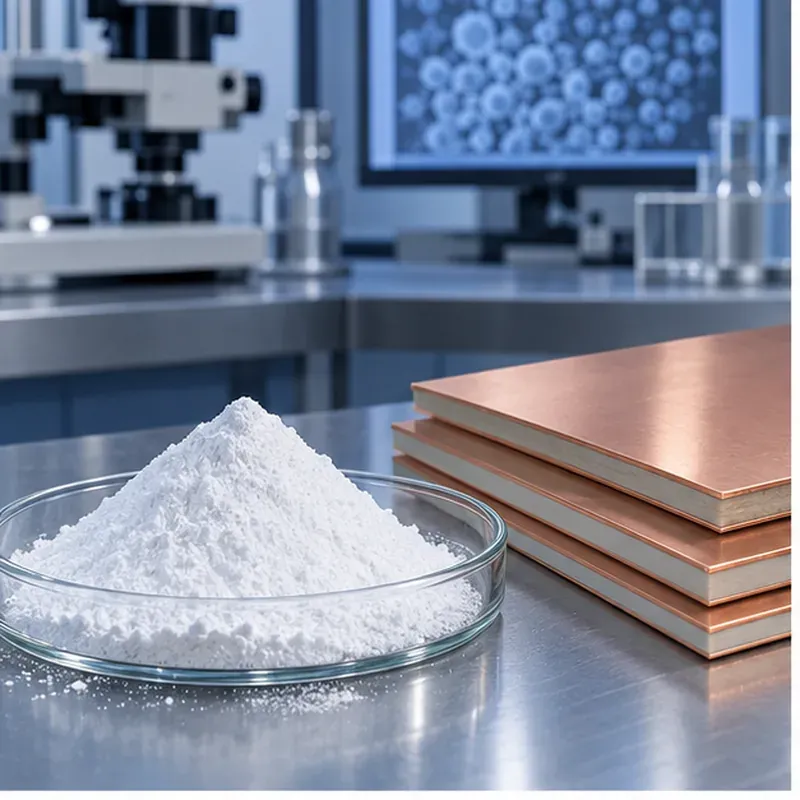
For a high-frequency copper-clad laminate (CCL), a silica filler decision should connect phase identity, particle-size distribution, moisture control and resin compatibility to laminate-level signal-loss and reliability results. This guide defines that evidence chain without treating a supplier data sheet as finished-board proof.
Why the Filler Trial Matters
Higher data rates increase the importance of dielectric loss, conductor roughness, resin chemistry and process consistency. Fused silica is an amorphous SiO₂ material; it must not be specified with the crystalline-silica or cristobalite template. Its lower thermal expansion is often relevant to dimensional control, but the final CCL result depends on the complete formulation and test frequency. Any dielectric value used for design should therefore be measured on the actual composite or laminate, not copied from a powder brochure.

Material Identity and Request Data
| Item | Evidence to request | Decision use |
|---|---|---|
| Phase identity | Amorphous fused silica; confirm by current TDS/COA and, when required, XRD method | Prevents substitution with quartz or cristobalite |
| Particle-size distribution | D10/D50/D90 in μm, method, dispersion medium and oversize control | Links packing, viscosity, filtration and surface quality |
| Moisture / volatiles | Grade-specific limit; confirm by current TDS/COA | Screens storage and interface risk |
| Ionic impurities | Test method and lot result where electronics use requires it | Supports insulation and corrosion-risk review |
| Surface treatment | Treatment chemistry, dosage control and storage condition | Checks compatibility with the selected resin |
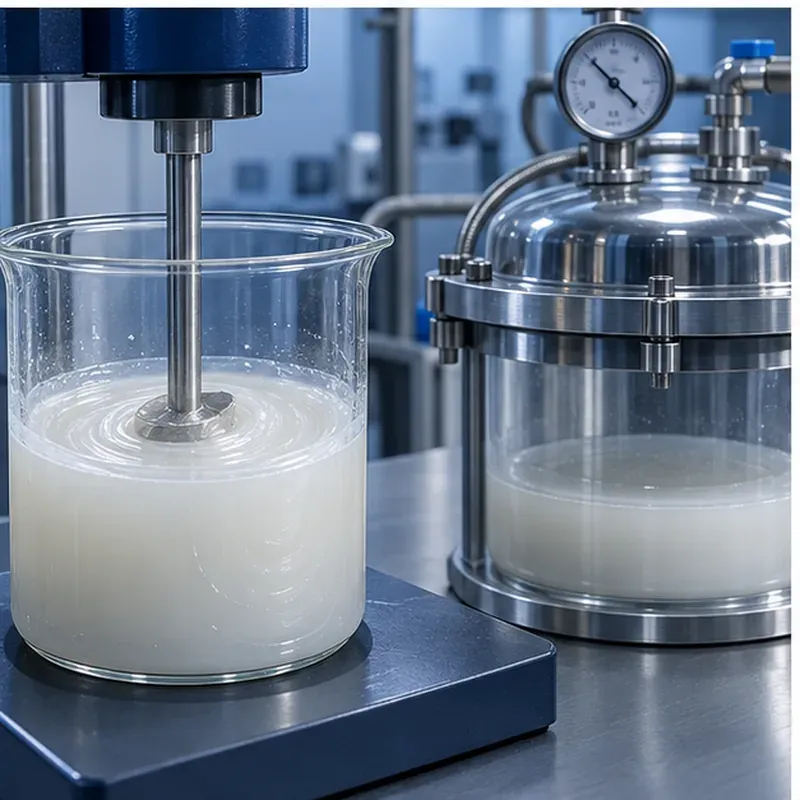
Controlled Formulation and Laminate Checks
- Lock the control. Keep resin, curing package, glass style, copper foil and press cycle unchanged.
- Define the filler variable. Change one factor at a time: grade, loading, PSD blend or surface treatment.
- Record compound behavior. Measure viscosity at a stated temperature and shear history; document dispersion, settling, filtration and deaeration.
- Build equivalent test coupons. Hold laminate thickness, resin content and cure state within the agreed window.
- Test the laminate. Use the customer-selected frequency and method for Dk/Df, then check peel strength, thermal expansion, water uptake and solder/thermal-cycle performance as applicable.
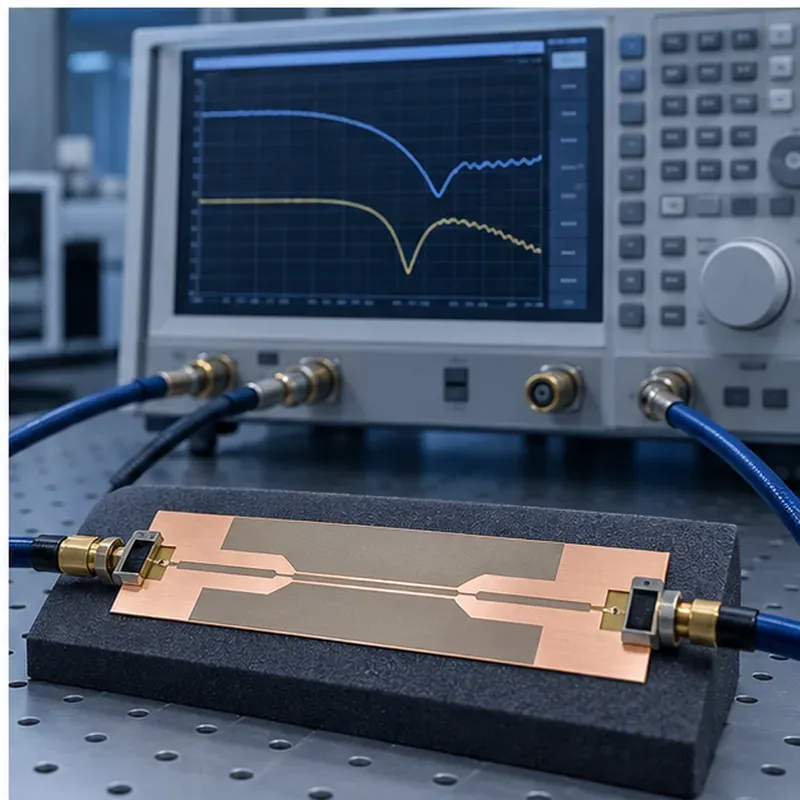
Decision Matrix and Engineering Boundaries
| Observed result | Check before changing grade | Next action |
|---|---|---|
| Viscosity rises sharply | Moisture, agglomerates, PSD blend, treatment-resin compatibility | Repeat a small controlled dispersion trial |
| Loss target is missed | Test frequency, resin cure, copper roughness and coupon geometry | Separate filler effect from laminate variables |
| Peel or thermal reliability declines | Interface, treatment level, resin wetting and cure cycle | Confirm by customer laminate trial |
Related Changtong Products
Review Changtong silica product options, compare the fused silica range, or send the target resin, filler loading and test frequency through Request a Quote.
FAQ
Can powder Dk/Df predict the finished laminate?
No. Resin, filler loading, interface, glass cloth, copper profile, cure state, frequency and test method all affect the laminate result.
What should an RFQ include?
State the resin family, target loading, PSD window, moisture and ionic requirements, surface-treatment preference, trial quantity and laminate-level acceptance tests.
Request a Fused Silica CCL Trial Quote
Send your resin system, target filler loading, PSD window, test frequency, trial quantity and required documents. We will align the inquiry with an available grade and current TDS/COA.
Request a Quote