Solar Glass Quartz Sand Qualification: Iron, PSD and Melt-Trial Evidence
A buyer-focused solar-glass guide linking quartz-sand phase, iron and trace chemistry, PSD, moisture and controlled melt-trial evidence.
Application guide · Solar glass raw materials
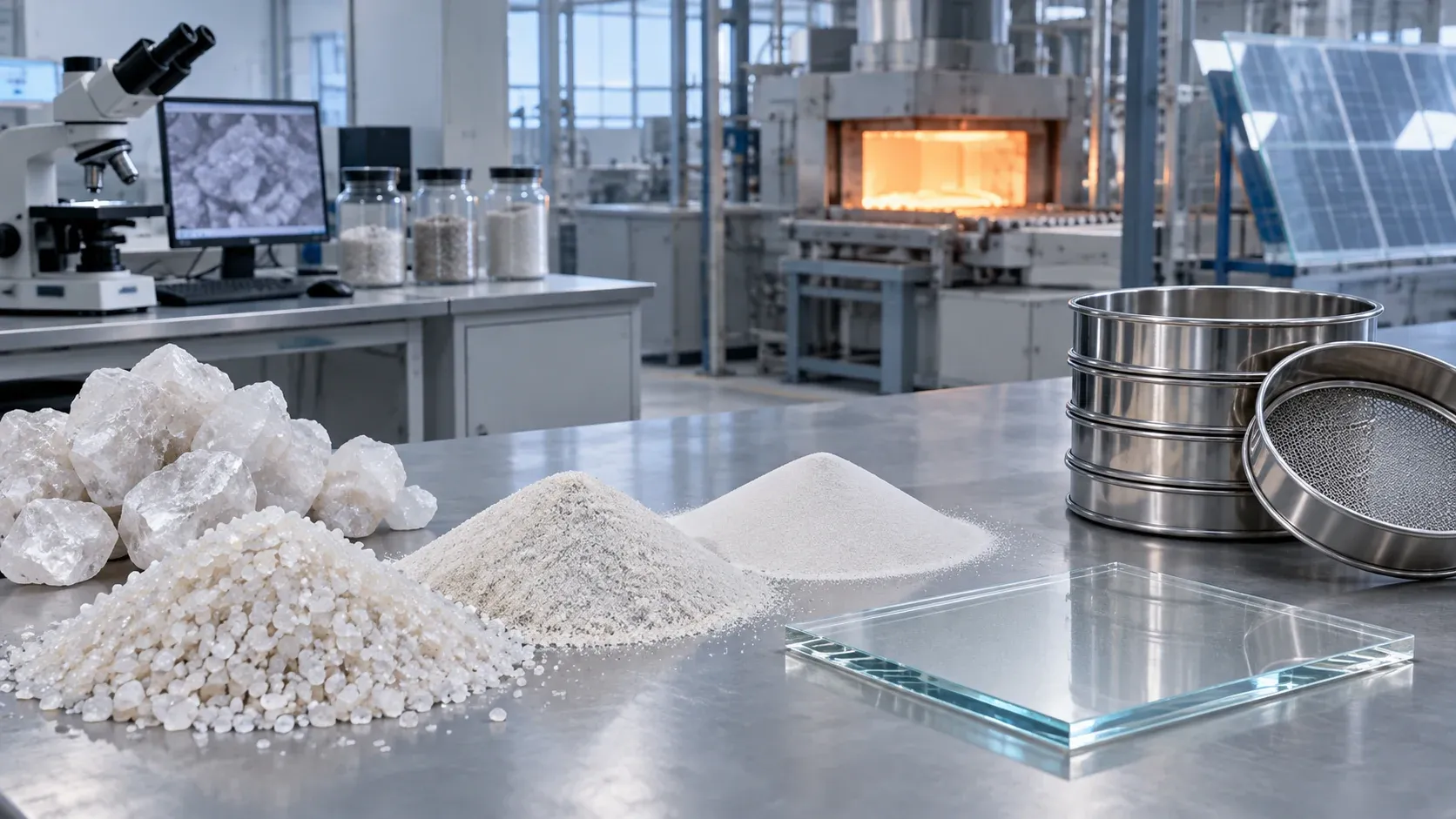
Solar-glass buyers need more than a low-iron headline. This guide connects quartz-sand chemistry, particle-size distribution, batch handling and melt-trial evidence so a grade can be screened against the actual glass recipe.
Why Quartz-Sand Qualification Is Getting More Specific
Solar PV manufacturing is under continued cost and capacity pressure. The IEA’s recent clean-technology manufacturing analysis reports that solar PV module prices fell by about 50% since 2023; that is industry context, not a Changtong material specification. For a glass batch, a small change in iron reporting, PSD or moisture can still change melt behavior, color, inclusions or yield. The practical response is a documented incoming-material and melt-trial workflow.
Natural crystalline quartz sand is not fused quartz, fused silica, cristobalite or finished photovoltaic glass. Keep phase identity separate before comparing chemistry or performance.
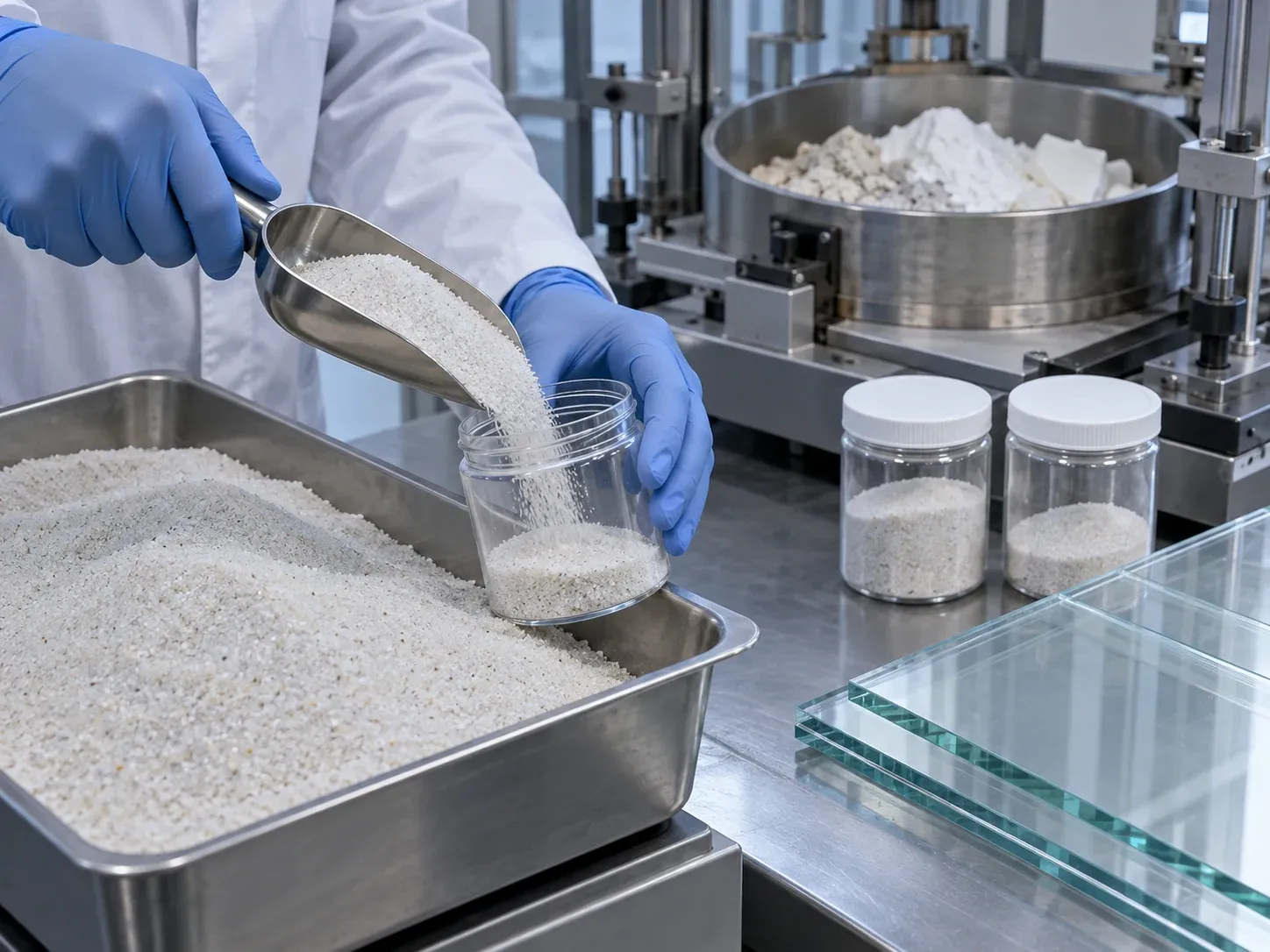
Material Identity and Data to Request
| Field | Buyer request | Why it changes the trial |
|---|---|---|
| Phase and identity | Natural crystalline quartz; current TDS/COA statement | Prevents mixing data from amorphous or converted silica |
| Iron and trace chemistry | Analytes, units, test method and lot basis | Makes low-iron comparisons auditable |
| Particle-size distribution | Sieve or laser method, range, oversize and fines rule | Controls feeding, segregation and melt uniformity |
| Moisture and packaging | Current TDS/COA, packing and storage window | Supports batch-mass and handling control |
| Melt evidence | Customer recipe, furnace conditions and coupon method | Powder data cannot guarantee finished-glass properties |
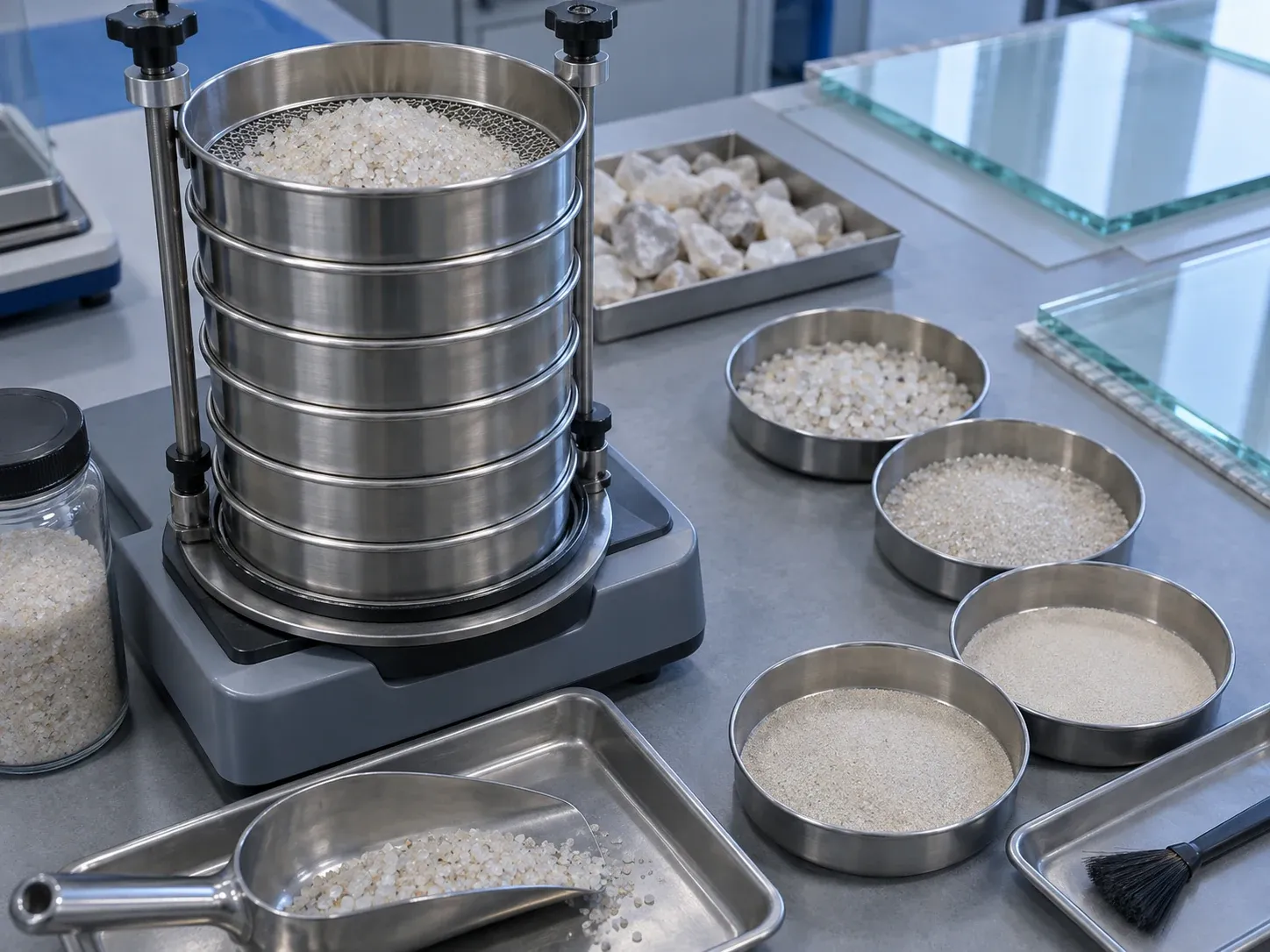
A Four-Stage Solar-Glass Trial
- Define the glass target. Record glass type, furnace route, cullet policy, optical method and color acceptance.
- Normalize the quotation. Align chemistry units, PSD basis, moisture method, oversize rule, quantity and documents.
- Run a controlled melt. Keep recipe, furnace profile and batch mass fixed so the sand variable stays interpretable.
- Inspect the glass. Review inclusions, bubbles, color, transmission, dimensional behavior and process yield using the buyer’s method.
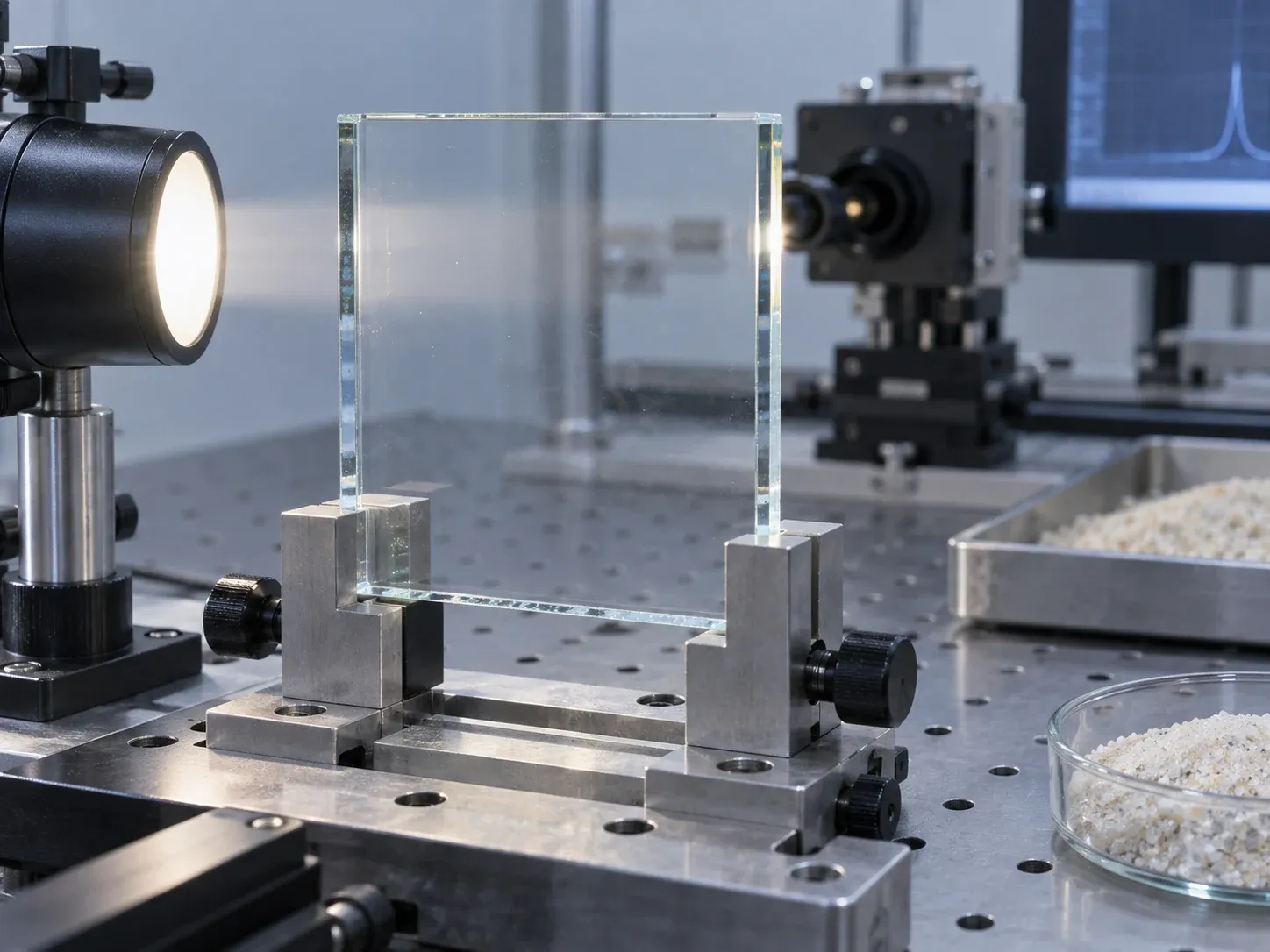
Decision Boundaries
Do not turn an industry reference into a supplier guarantee. Grade-specific iron, PSD, moisture and melt behavior must be confirmed by the current TDS/COA and a customer-side trial. If a customer needs a different glass route, compare high-purity quartz sand for quartz glass with the low-iron solar-glass sand product direction. For a broader aggregate route, see natural quartz sand for glass, ceramics and foundry.
FAQ
Can low iron alone predict solar-glass transmission?
No. Transmission depends on the complete batch, refining, forming, thickness and measurement method.
What should be sent with an RFQ?
Send the glass route, chemistry limits, PSD method, moisture basis, trial quantity, packing and required TDS/COA or SDS documents.
Request a Solar-Glass Quartz Sand Trial Review
Share the glass recipe, furnace route, chemistry limits, PSD method, quantity and destination so the available grade and evidence scope can be matched correctly.
Request a Quote