How to Choose High-Purity Quartz Sand for Quartz Glass Manufacturing
Learn how to choose high-purity quartz sand for quartz glass manufacturing by reviewing SiO2, iron, alkali, phase, particle size, moisture and melt-trial evidence.
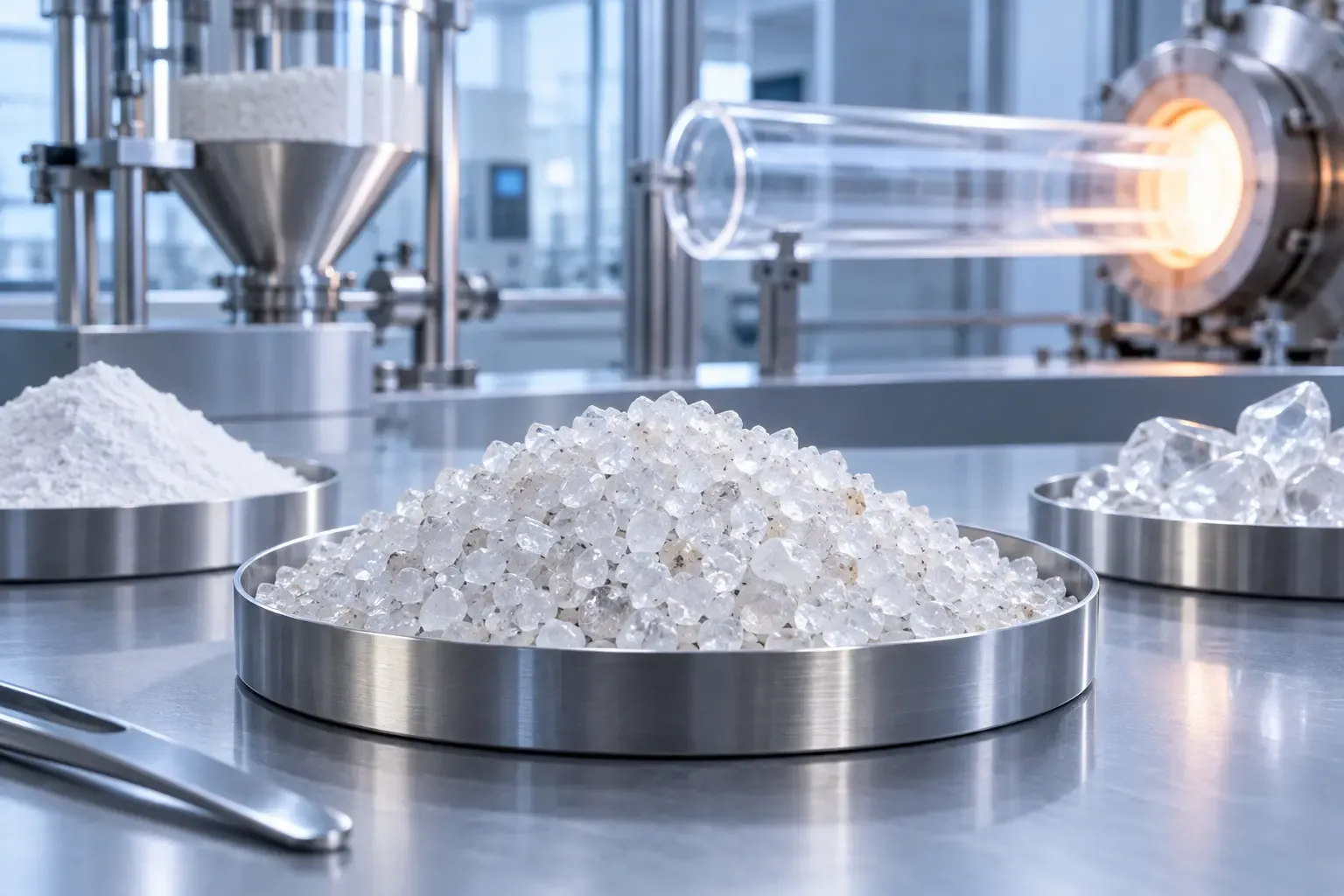
The right quartz sand specification starts with the glass process, not with a headline purity number.
Quartz glass buyers usually need a raw material that fits purity, impurity, alkali, particle-size and melting requirements at the same time. A clear specification connects each value to a process decision and leaves room for application-specific confirmation.
Last updated: · Scope: raw-material screening and RFQ preparation
What Does “High-Purity Quartz Sand” Need to Mean?
“High purity” is useful only when the buyer states which impurities matter and how they will be measured. A product may be suitable for one quartz-glass route and unsuitable for another because the process has a different sensitivity to iron, alkali, aluminium, gas-bearing inclusions or size distribution.
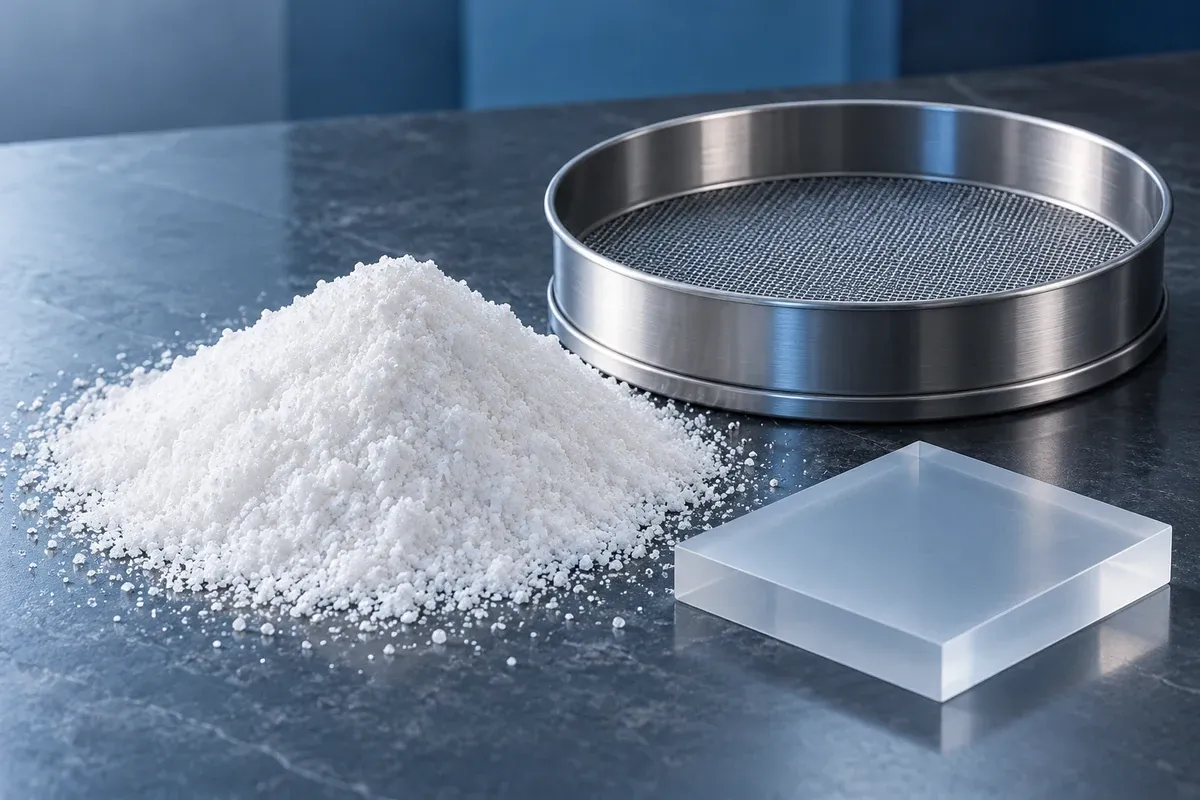
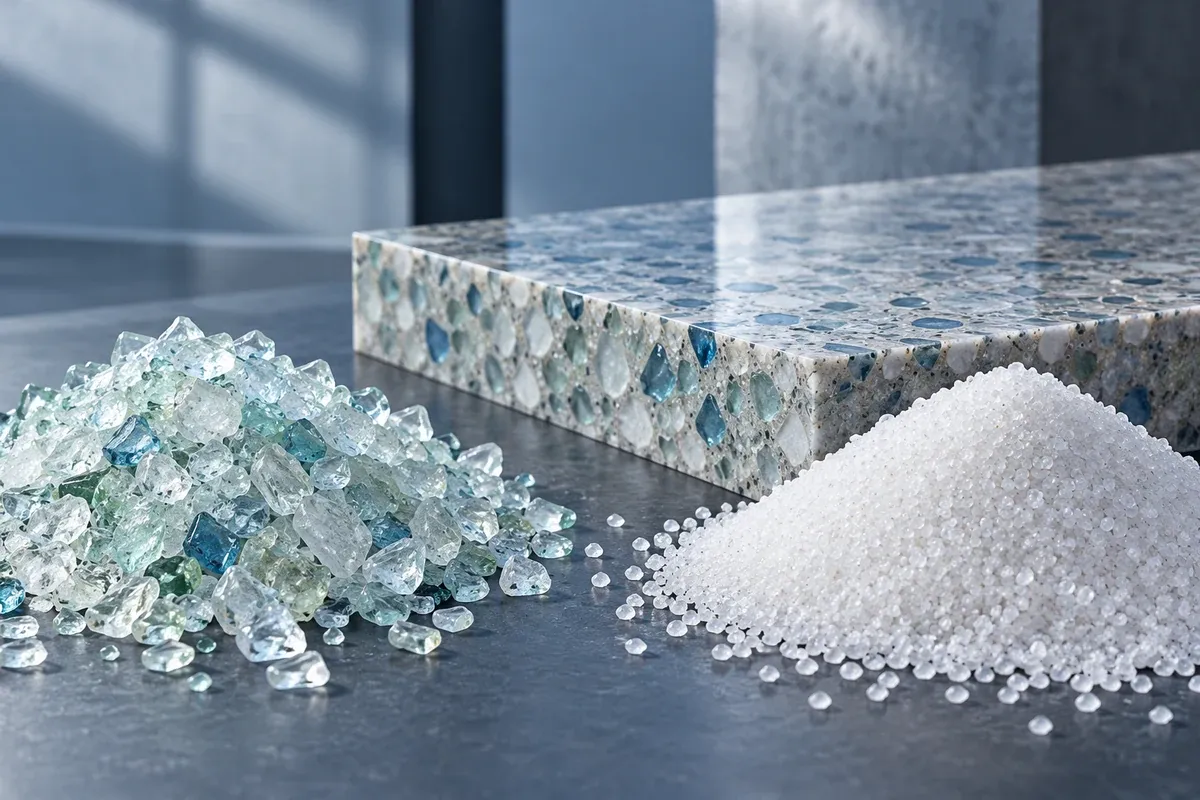
Keep material identity clear. High-purity quartz sand is a granular crystalline quartz feedstock. It is not the same as fused quartz sand, quartz tube, calcined cristobalite, precipitated silica or fumed silica. Those materials can appear in the same project vocabulary but follow different phase, process and acceptance logic.
Changtong’s high-purity quartz sand product page describes selected natural crystal or premium quartz, application-specific grading, SiO₂ of 99.9–99.999% and Fe₂O₃ up to 0.001%, subject to the confirmed specification. Treat those values as published product scope, not as a substitute for a lot-specific approval report.
Which Application Is the Sand Intended to Serve?
Before comparing suppliers, write one sentence describing the intended product and process. “Quartz glass” can refer to transparent tubing, laboratory ware, optical components, crucibles or other silica-rich products. Each route may use a different feed preparation, heating profile, atmosphere and defect-control strategy.
| Application question | What to record | Why it changes the review |
|---|---|---|
| What is being melted? | Quartz glass body, tube, crucible or another component | Defines the relevant purity and defect concerns |
| What is the melting route? | Batch preparation, feed system, heating method and atmosphere | Links sand behavior to process handling and gas release |
| What is the critical defect? | Colour, bubbles, inclusions, dimensional variation or electrical performance | Prevents an unrelated certificate value from becoming the sole criterion |
| How is approval made? | Incoming inspection, melt trial, finished-glass test and lot release | Turns a supplier claim into a repeatable acceptance plan |
Which Chemistry Values Belong in the Specification?
SiO₂ is a starting point, not the complete specification. Request the impurity elements that can affect the intended glass route and state the test method, reporting basis and lot scope. If the customer has a strict alkali or aluminium limit, place that requirement in the RFQ instead of assuming that a general “high-purity” label covers it.
| Evidence area | Buyer wording | Review boundary |
|---|---|---|
| SiO₂ | Required range and test method | Confirms the principal silica content; does not identify every trace impurity |
| Iron | Fe₂O₃ limit, lot basis and method | Important where colour, optical transmission or contamination sensitivity is critical |
| Alkali and aluminium | Named elements and individual limits where applicable | Use application-specific limits; do not infer a universal threshold |
| Phase and mineral identity | Required quartz phase evidence or XRD scope | Separates crystalline quartz feedstock from fused or calcined silica materials |
| Moisture and volatiles | Incoming limit, conditioning and packaging expectation | Must be reviewed with the customer's feed and melting procedure |
How Should Particle Size Be Specified?
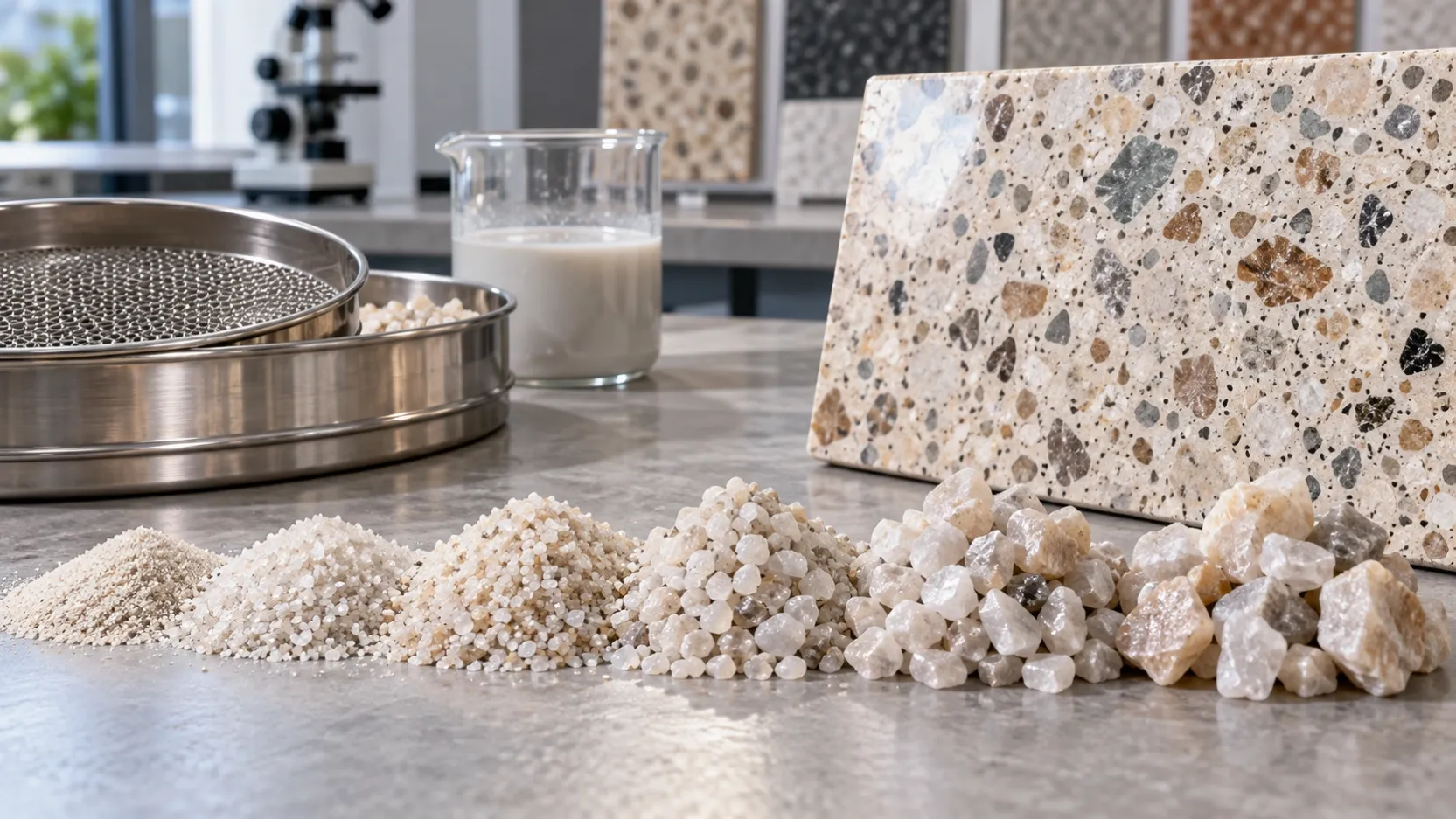
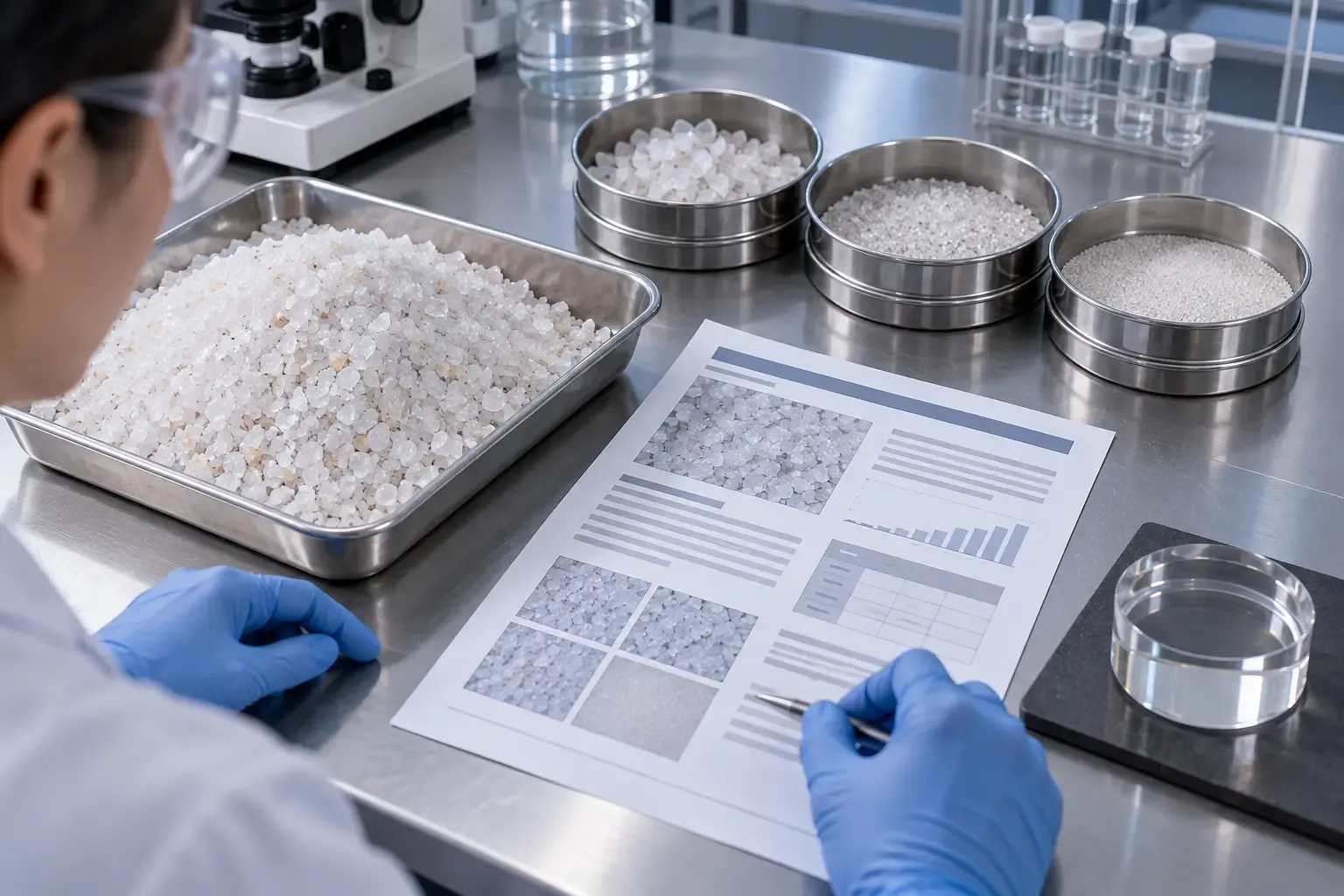
Particle size affects feeding, packing, dust generation, surface area and heat transfer, but no single size range is correct for every quartz-glass process. State the required size basis—sieve, mesh, micron range or a full distribution—and identify the fraction that controls the process.
Avoid copying a mesh label from a different material family. The same label can be interpreted differently when suppliers use different sieve series, test portions or reporting conventions. Changtong’s published high-purity quartz sand scope includes application-specific grading; the final size window should be agreed against the buyer’s feed system and melt trial.
1. Define the feed equipment
Record hopper, screw, chute or manual charging conditions, together with any screen, filter or blending step before melting.
2. Identify the controlling fraction
State whether oversize, fines, a nominal fraction or a broader distribution is the main process concern. Ask for the test method and sample basis.
3. Confirm the handling consequence
Review flow, segregation, dust control and packing integrity. Do not treat a finer powder as automatically better for a granular glass feed.
What Quality Evidence Should Accompany the Sample?
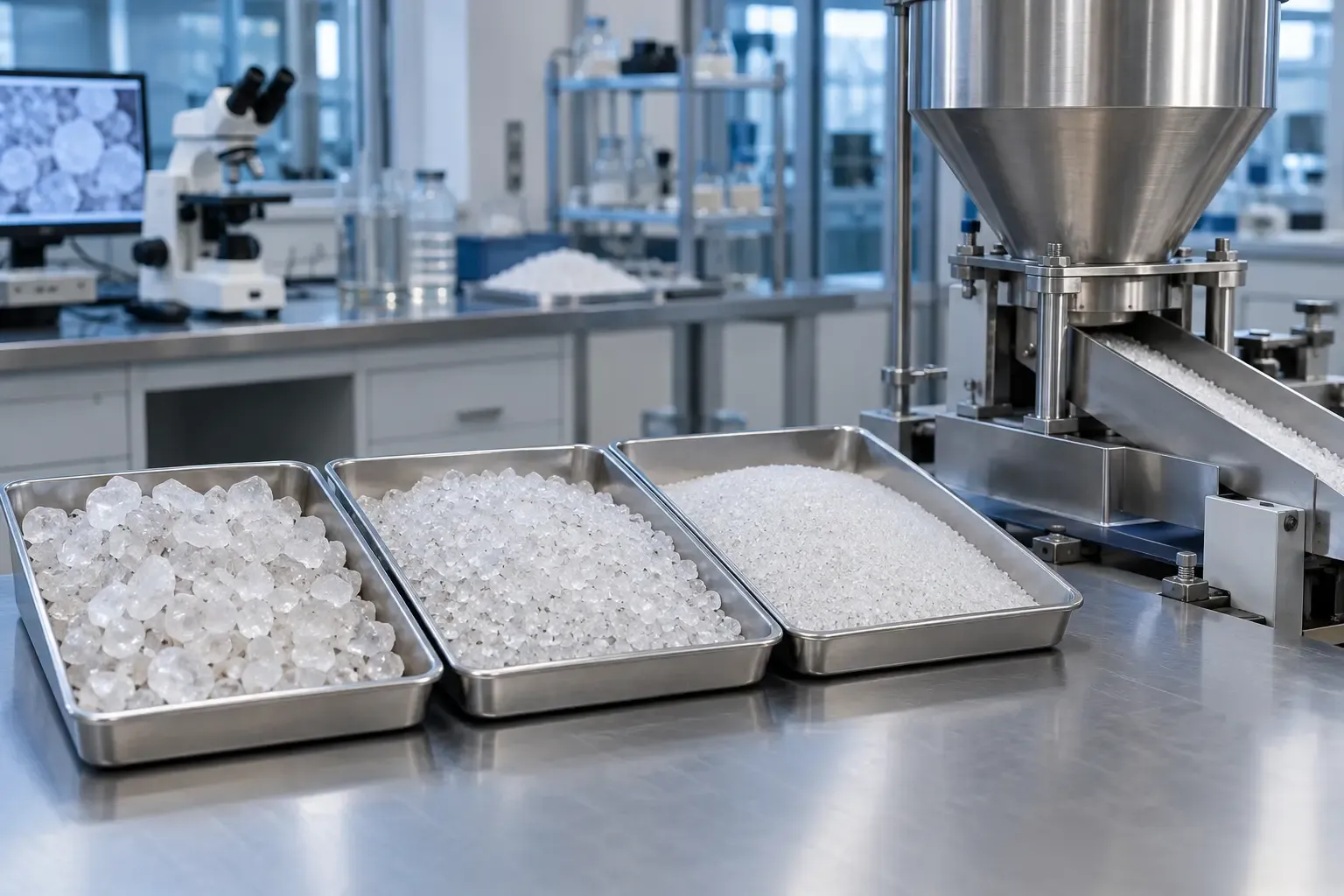
Ask for a sample that can be traced to a defined lot and a document set that explains what was tested. A certificate without a lot number, revision, method or sampling scope is difficult to use in a production decision. The goal is not to collect every possible document; it is to connect the required evidence to the approval gate.
| Approval gate | Evidence to request | Buyer decision |
|---|---|---|
| Identity | Material name, source description, lot and packing mark | Is the sample the same material described in the quotation? |
| Chemistry | SiO₂, Fe₂O₃ and agreed trace-element scope | Does the lot fit the application limits? |
| Physical form | Size method, moisture, appearance and sample condition | Can the customer feed and handle it consistently? |
| Process trial | Batch recipe, melt conditions and finished-glass observations | Does the material work in the actual process window? |
For a broader view of how natural quartz is converted into crystalline silica powder, see Changtong’s silica powder manufacturing and quality-control guide. It is background on processing logic, not a replacement for the grade-specific evidence required for quartz glass.

How Can a Buyer Write a Better RFQ?
A useful RFQ makes the supplier review the same problem the customer is trying to solve. Put the application, material identity, chemistry limits, particle-size basis, packaging, sample quantity and acceptance test in one request. If a value is still open, label it as a discussion item rather than leaving it implicit.
Engineering boundary: Published SiO₂ or Fe₂O₃ ranges do not guarantee transparent glass, bubble-free melting or a specific finished-glass property. Those outcomes require the customer’s equipment, recipe, process controls and validation results.
- Describe the quartz-glass product and the intended melting route.
- List the critical chemistry elements and the required test basis.
- Define particle size, moisture, packing and lot traceability.
- Request a representative sample and agree the trial protocol.
- Set acceptance criteria before comparing price or repeating an order.
Frequently Asked Questions
Is 99.99% SiO₂ enough for every quartz-glass product?
No. Suitability depends on the product, melting route, impurity sensitivity, test method and customer acceptance criteria. A purity number should be reviewed with the element-by-element scope and a process trial.
Should I buy quartz sand or fused quartz sand?
They are different material identities. Choose based on the required phase, process, thermal behavior and specification. Do not substitute one for the other because both contain silica.
Does a finer particle size always improve quartz-glass melting?
Not necessarily. Fines can change feeding, dust, packing and gas-release behavior. The appropriate size distribution must be matched to the customer’s equipment and trial conditions.
What should I send with a request for quotation?
Send the application, chemistry limits, size basis, moisture and packing requirements, annual or trial quantity, destination, sample expectations and the test or melt-trial plan.
Source and Review Boundary
Product scope is based on Changtong’s published high-purity quartz sand description. Public search review on September 4, 2026 found recurring buyer questions about purity, iron, alkali, particle size and quartz-glass feed suitability. Industry references were used only for topic framing; no third-party specification has been presented as Changtong’s test result.
Request a High-Purity Quartz Sand Review
Send the glass application, melting route, chemistry limits, particle-size basis, sample quantity, packing requirement and acceptance plan. Changtong can review the request against the confirmed grade scope and the evidence needed for a customer-side trial.
Send your quartz-sand specification