
Terrazzo Aggregate Specification: Grading, Colour and Binder Compatibility
Learn how to specify quartz sand for terrazzo and decorative stone by grading, color, moisture, cleanliness, binder fit and sample-panel approval.

This guide covers quartz sand selection for terrazzo and decorative-stone sample development. Color, grading, cleanliness and moisture must be evaluated in the intended binder and finishing process; supplier data alone cannot establish the appearance or performance of a finished surface.
Start with the terrazzo or decorative-stone system
The same quartz aggregate can behave differently in cementitious terrazzo, epoxy terrazzo, resin-bound decorative stone and precast architectural panels. Before discussing a grade, identify the binder, placing method, topping thickness, grinding sequence, target finish and service environment. Epoxy systems may have different moisture and substrate constraints from cementitious systems, while outdoor exposure introduces a different approval question from an indoor decorative panel.
Use the material identity precisely. Natural crystalline quartz sand is different from fused silica sand, cristobalite sand and ultra-high-purity quartz. For a natural-sand starting point, review Changtong natural quartz sand, then define the decorative application and required grading rather than borrowing a foundry or glass specification unchanged.
Grading controls more than the largest particle
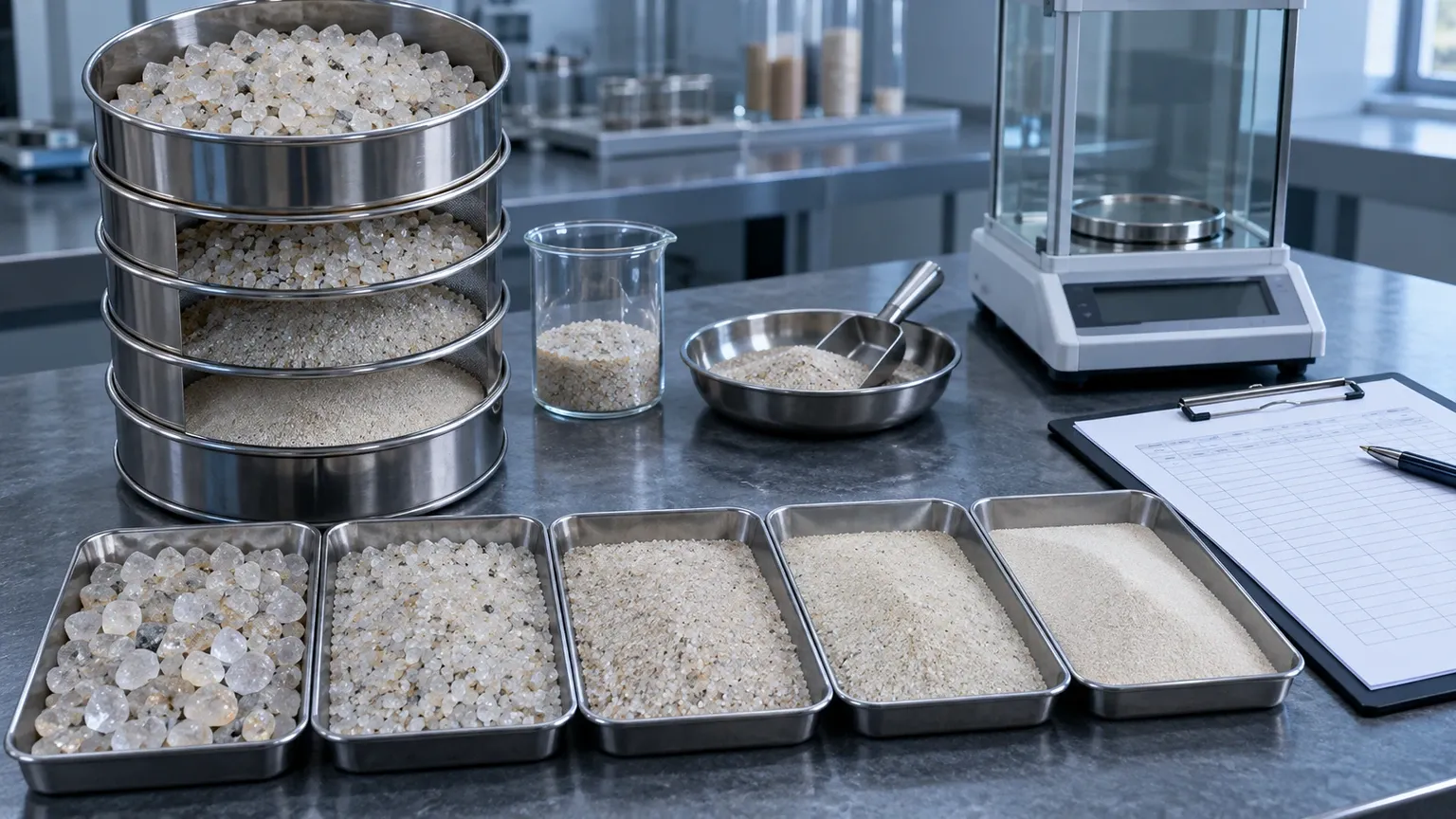
A top-size statement cannot show how much material sits in each intermediate fraction or how much very fine material is present. ASTM C136/C136M describes sieve analysis for determining aggregate particle-size distribution; its significance section also notes that grading data can support work on packing and porosity. For material finer than the 75 µm sieve, ASTM points to a separate washing method rather than assuming dry sieving is sufficient.
For terrazzo and decorative stone, the practical grading discussion should cover:
- top size in relation to topping thickness and finishing allowance;
- distribution across size fractions for packing and visual balance;
- fine and dust fraction that may change binder demand or surface appearance;
- oversize and foreign-particle limits that can create isolated defects;
- lot-to-lot tolerance tied to an agreed sieve method.
Colour needs a physical acceptance method
“White,” “milky white” and “translucent” are descriptive starting points, not complete acceptance criteria. Perceived colour changes with particle size, wetting, binder colour, lighting and the depth of the ground surface. A dry loose-sand photograph cannot predict the exact finished panel.
Agree on a retained reference sample or approved panel and define the viewing conditions. If instrumental colour data is important, align the specimen preparation, illuminant, geometry and tolerance with the customer’s quality method. Do not turn an image-generation mock-up or screen colour into a supply guarantee.
Moisture and cleanliness affect batching
Surface moisture changes the actual mass of dry aggregate delivered into a formulation and can affect wetting in resin systems. ASTM C566 covers determination of evaporable moisture in aggregate by drying and notes its use for adjusting batch quantities. A purchaser may use that method or another agreed procedure, but the quotation and incoming inspection must name the chosen method.
Cleanliness should also be defined in observable terms: unwanted dark particles, clay-like contamination, excess dust, organic material or packaging debris. The relevant limits depend on the visual finish and binder system. A decorative surface can reject a contaminant that would be insignificant in a non-visible bulk application.
Use sample panels to connect aggregate data with appearance
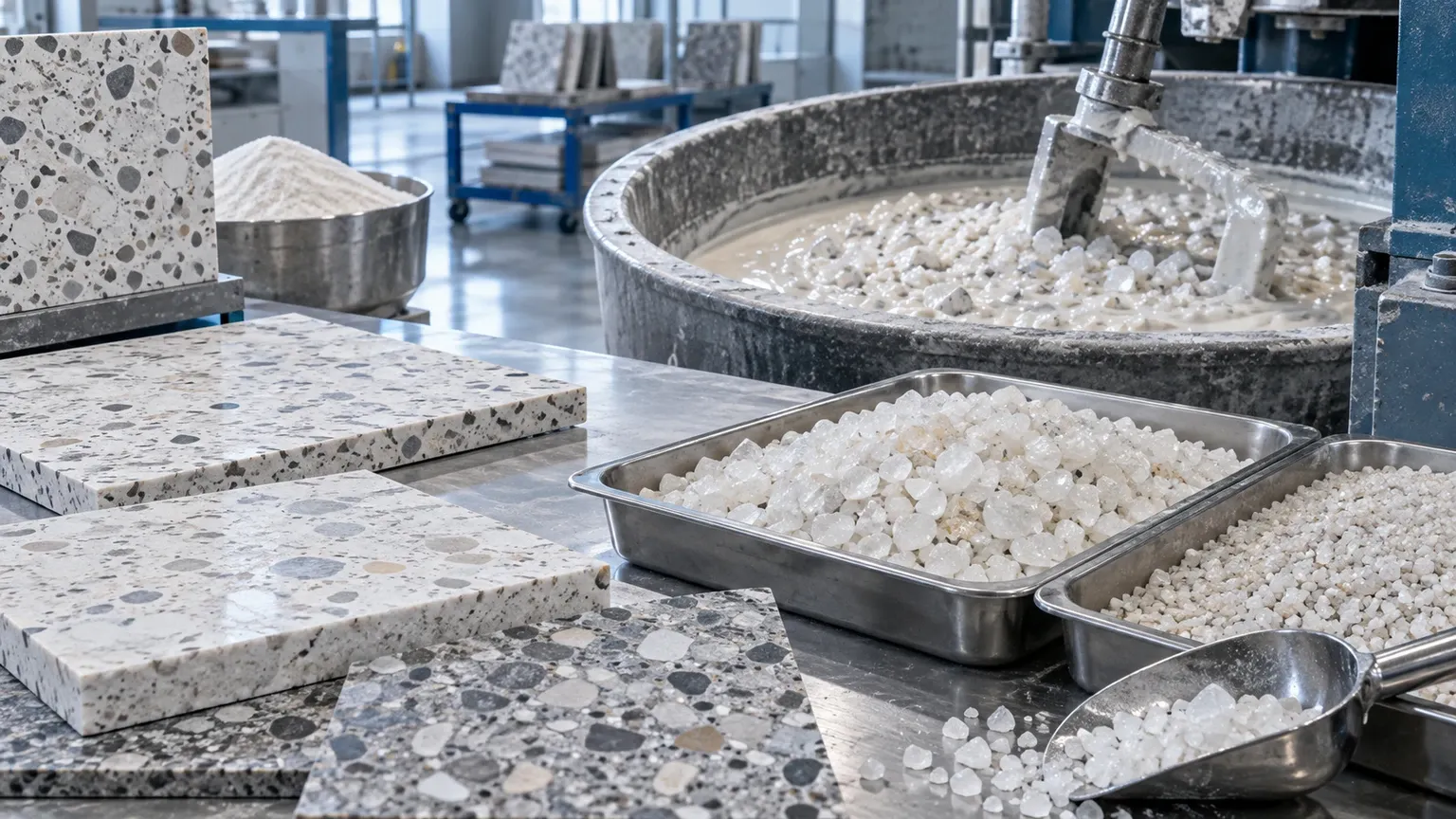
Begin with the approved binder and process. Make a control panel and candidate panels using the same batch size, aggregate-to-binder ratio, pigment, mixing energy, compaction, cure and grinding sequence. Record actual moisture correction and any resin or water adjustment.
| Panel observation | Possible contributor | Next check |
|---|---|---|
| Uneven visual distribution | Grading gap, segregation, placement or compaction | Compare retained sieve fractions and repeat the placement method |
| Unexpected dark points | Natural colour variation, foreign particles or processing contamination | Inspect the retained sample and agree a visual defect limit |
| Resin-rich or paste-rich areas | Packing, fine fraction, binder ratio or consolidation | Hold the binder ratio fixed and adjust only the aggregate grading |
| Pinholes after grinding | Entrapped air, wetting, mixing, cure or finishing sequence | Review the full process before changing aggregate alone |
| Shade shift after sealing | Binder/sealer optics, particle wetting or lighting | Approve the complete finished system under defined lighting |
The National Terrazzo & Mosaic Association publishes system guidance and customary aggregate-size information. Use that material to frame the system discussion, then follow the designer’s specification and resin or cement supplier instructions for the actual project.
Write a purchasing specification that can be inspected
A useful RFQ should state:
- application and binder system;
- target top size and complete sieve distribution or named commercial size;
- maximum fines, oversize and foreign-particle criteria;
- appearance standard, reference sample or approved panel;
- moisture test method and limit;
- packing, lot size, retained-sample and change-notification requirements;
- trial quantity, annual demand and destination.
The supplier’s TDS and COA should use the same grade name and test method as the quotation. If the buyer uses a different sieve stack or moisture procedure, both sides should reconcile the methods before setting a contractual tolerance. The article How to Read a Silica Powder COA provides a general document-review sequence that can be adapted to quartz aggregate.

Safety remains part of material selection
Natural quartz is crystalline silica. Dust can be generated during dry transfer and especially when silica-containing finished materials are cut, ground or polished. The workplace should evaluate exposure and use appropriate engineering controls, work practices and protective equipment under the rules that apply in its jurisdiction. The current SDS and site process must guide handling.
References and scope
- ASTM C136/C136M — sieve analysis of fine and coarse aggregates.
- ASTM C566-25 — total evaporable moisture content of aggregate by drying.
- NTMA Terrazzo Reference Guide — terrazzo systems and customary aggregate-size context.
- OSHA crystalline silica resources — general workplace exposure-control context.
These sources provide industry methods and general context. They do not constitute Changtong product data or guarantee performance in a particular binder. Final acceptance should be based on the current grade documents and a customer-approved sample panel.
Prepare a quartz-aggregate trial
Send the terrazzo or decorative-stone system, binder, topping thickness, requested grading, colour reference, moisture limit, packing and trial quantity. Changtong can review a natural quartz sand sampling scope and the documents needed for an interpretable comparison.