
How to Specify a Quartz Tube for a High-Temperature Furnace
Learn how to specify a custom quartz tube for a high-temperature furnace using dimensions, end finish, thermal cycle, atmosphere, pressure, supports and inspection requirements.
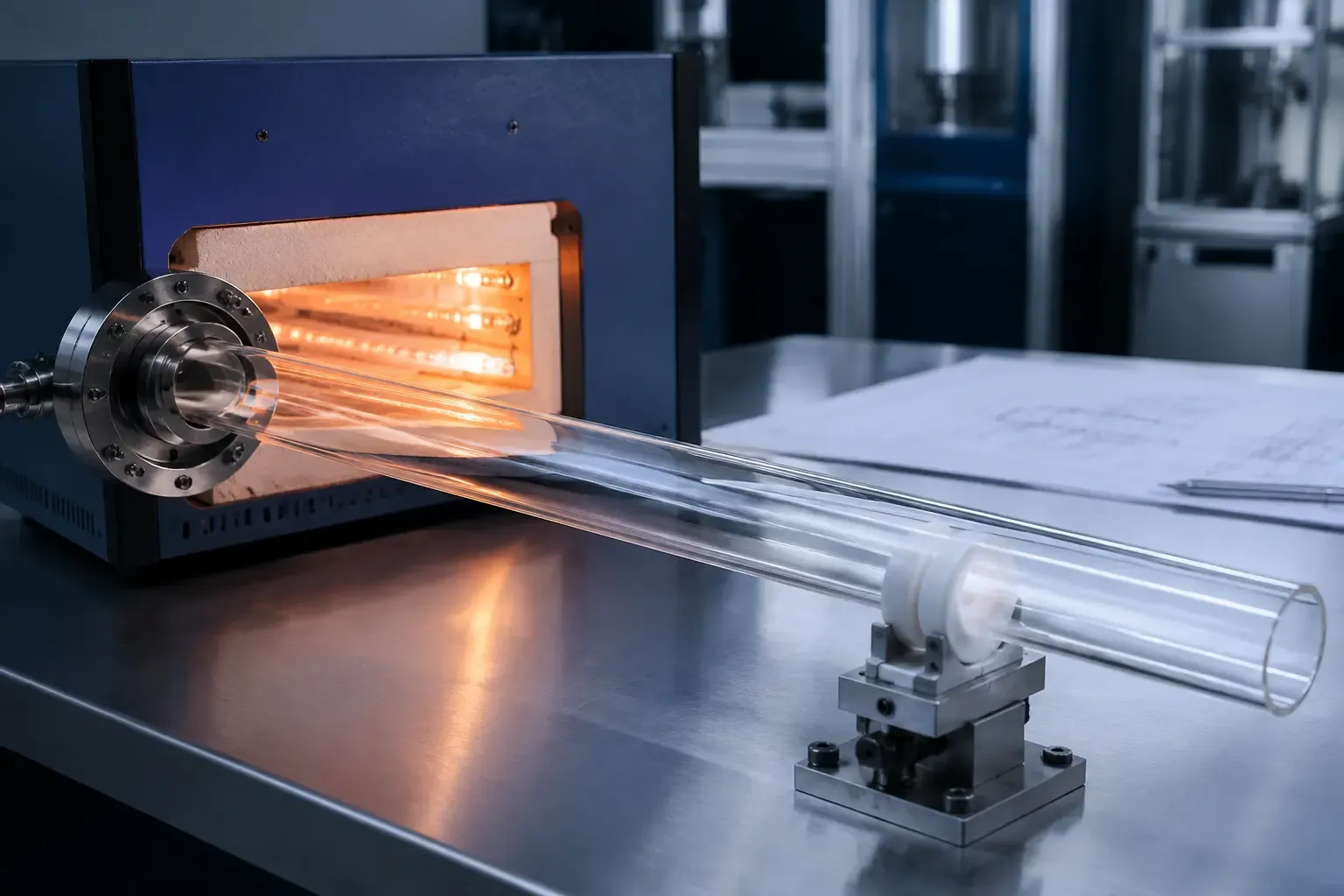
A usable quartz-tube request defines the furnace interface and service conditions before it asks for a price.
Outer diameter and length are only the beginning. Wall thickness, end finish, heated length, ramp profile, atmosphere, pressure, supports and inspection points determine whether a supplier can review the part against the actual equipment.
Last updated: · Scope: custom quartz tube inquiry and drawing review
Why “Quartz Tube, 50 mm × 1 m” Is Not a Complete Specification
Two tubes can share the same nominal outside diameter and length yet behave differently in an assembly. The bore may be too small for a carrier, the wall may not match the support, an unpolished end may damage a seal, or a tight tolerance may be unnecessary and expensive.
A quotation becomes more reliable when the request separates three questions: what must fit, what the tube will experience and how acceptance will be checked. This also prevents a material-property claim from being treated as a guarantee for an assembled furnace.
Changtong's high-temperature quartz tubes and rods product page describes custom dimensions, application-specific finishing, dimensional inspection and protective export packing. The final drawing and service review still control the supplied configuration.
Which Dimensions Must Appear on the Drawing?
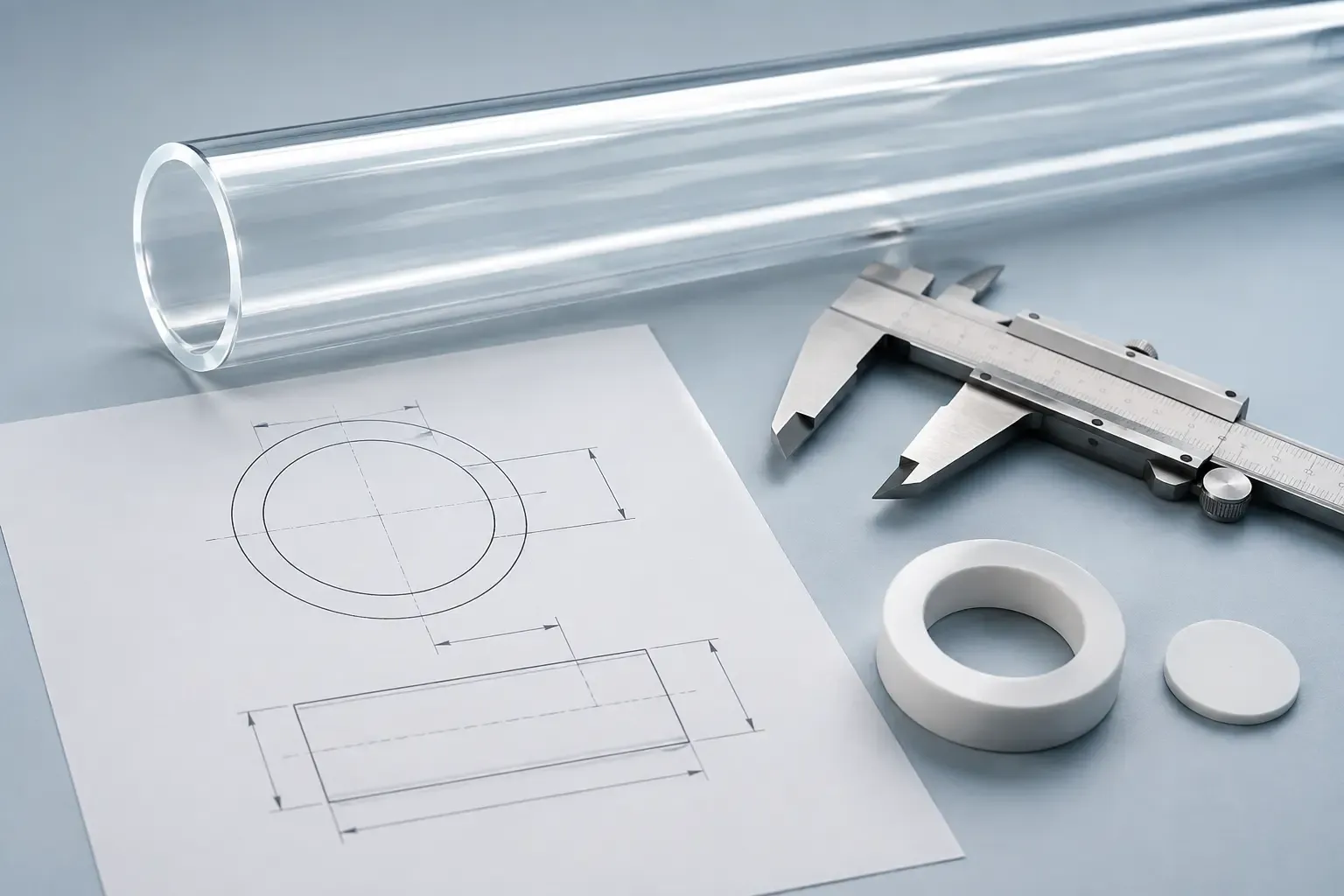
Use one unit system throughout the drawing and state whether dimensions are nominal or acceptance limits. For a tube, two of the three values—outside diameter, inside diameter and wall thickness—define the basic section, but the drawing should show which dimension is functionally critical.
| Drawing item | Why it matters | Useful note |
|---|---|---|
| OD | Interfaces with seals, supports and furnace openings | Identify the fitted zones rather than applying one tight tolerance everywhere |
| ID or wall | Controls usable bore and section thickness | State which value is the acceptance dimension |
| Total length | Positions ends outside the hot zone and equipment frame | Show usable length separately when required |
| Straightness | Affects rotation, alignment and seal contact | Define the measurement span and support condition |
| End geometry | Changes sealing, handling and assembly | Call out cut, ground, fire-polished, flanged or custom ends |
How Should the Thermal Cycle Be Described?
“High temperature” is not an operating profile. A supplier needs the normal setpoint, short peak, dwell time, ramp and cooling rates, number of cycles and the length exposed to heat. Local heating can matter as much as the nominal setpoint because it creates a temperature gradient along the tube.
Do not copy a generic maximum temperature into an RFQ and treat it as an application guarantee. The acceptable cycle depends on the selected quartz grade, dimensions, support layout, load and atmosphere. Ask for a review against the declared profile.
| Operating detail | Record in the RFQ | Decision supported |
|---|---|---|
| Normal and peak temperature | Setpoint, peak and duration at peak | Material and geometry review |
| Ramp and cooling | Rate, holds and emergency-cooling scenario | Thermal-gradient risk review |
| Hot-zone length | Heated length and transition zones | Support and end-position review |
| Cycle count | Cycles per day and expected service period | Maintenance and inspection planning |
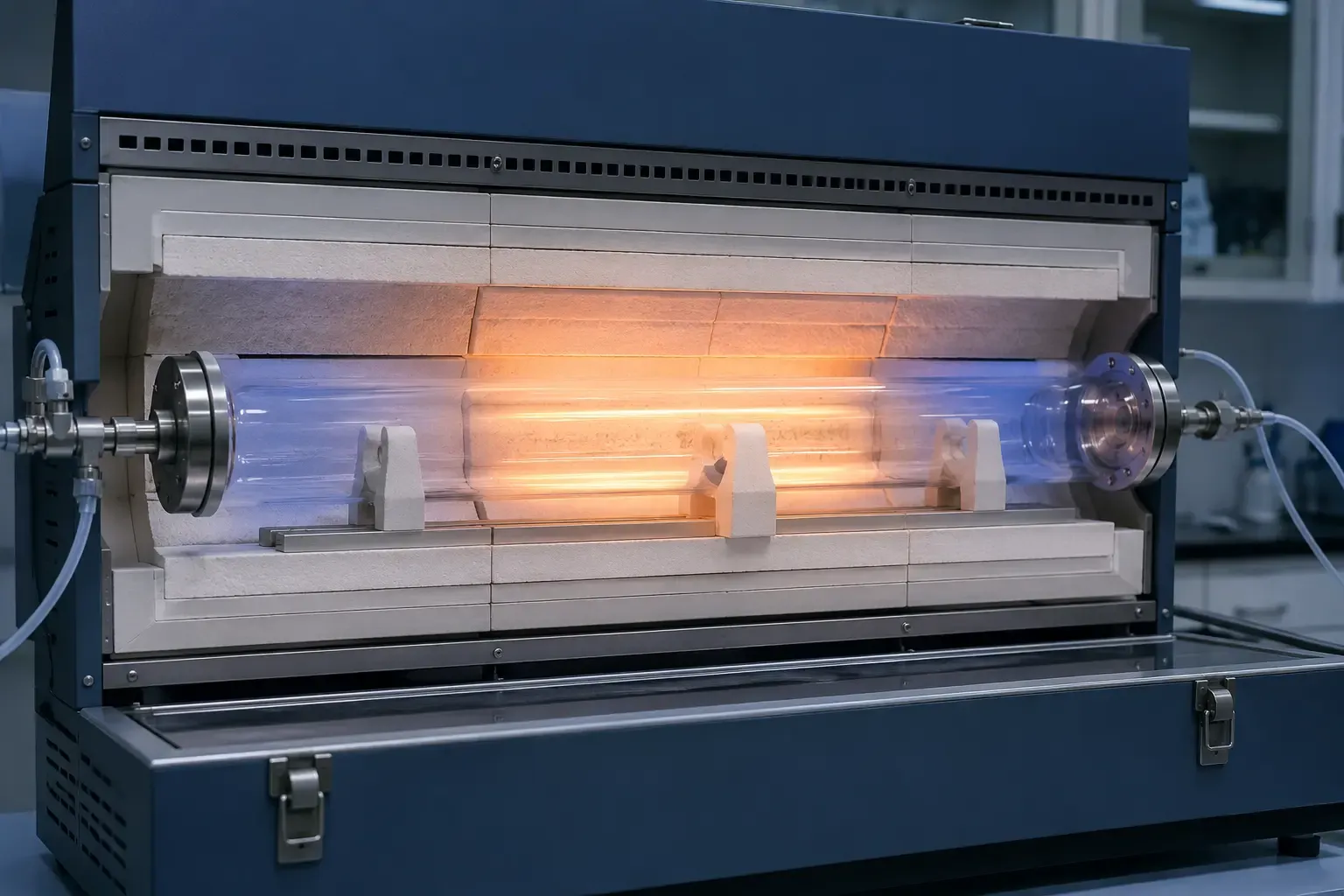
What Process Conditions Change the Selection?
Describe what is inside and outside the tube during each process step. State whether the tube sees air, inert gas, oxygen, vacuum or another controlled atmosphere. If pressure differs across the wall, identify which side is higher and the maximum differential. Also list deposits, cleaning chemicals and contact materials.
1. Map the furnace interface
Provide the opening diameter, seal type, clamp or flange arrangement, support spacing and any rotating or sliding contact. A photograph can clarify the assembly, but it should accompany—not replace—a drawing.
2. Define the process envelope
Record temperature, time, atmosphere, pressure differential, inserted load and cycle frequency. Flag any rapid transition or local flame, heater or cooling jet.
3. Identify contamination controls
State the cleanliness level, permitted handling marks, cleaning method, packaging expectation and whether certificates or inspection records must travel with the shipment.
4. Agree the acceptance plan
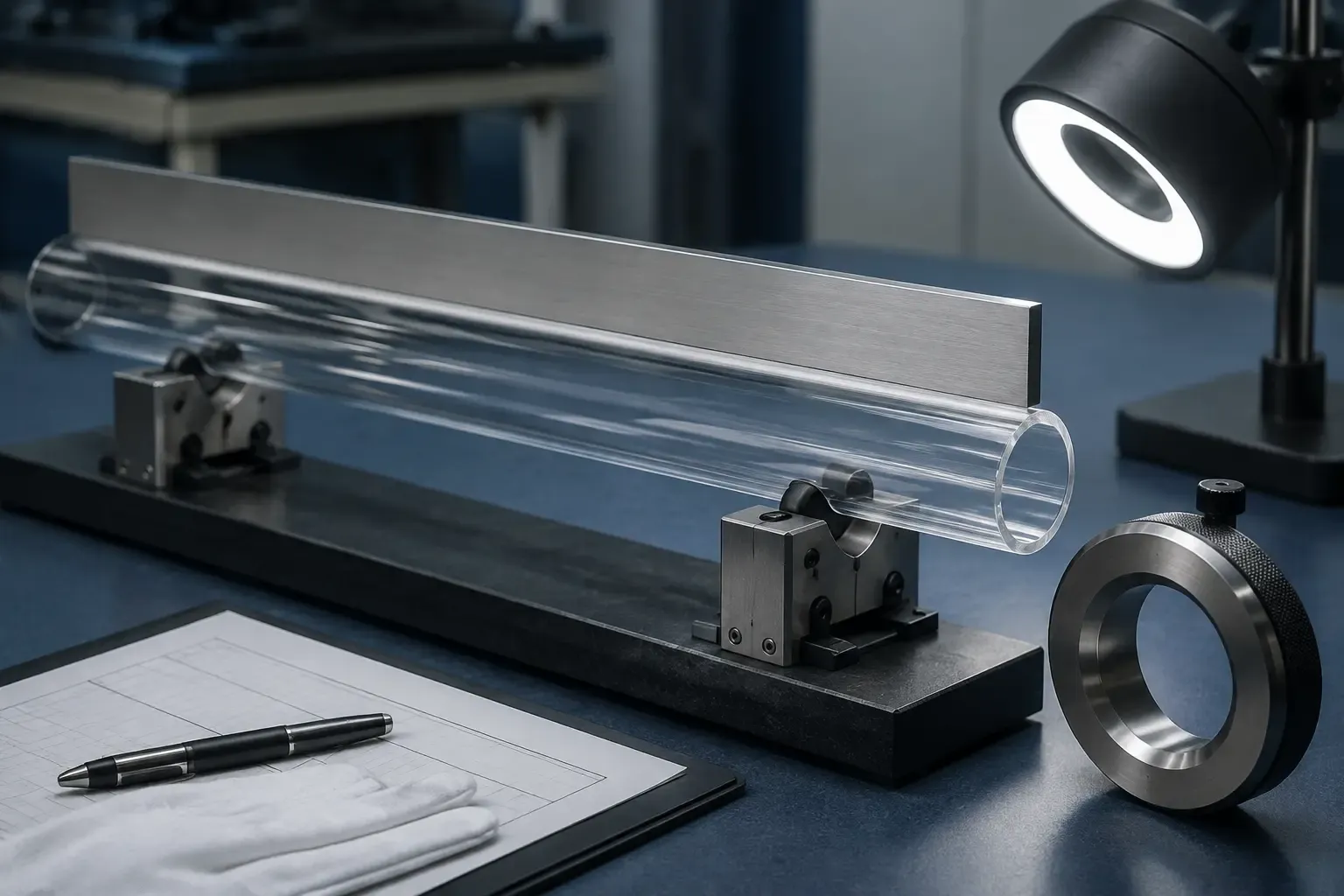
List the dimensions and visual conditions to be checked, the sampling rule and the drawing revision. Avoid requesting a generic “perfect” surface when the functional zone can be defined more precisely.
How Do Supports, Loads and Seals Affect the Request?
A tube used as an empty process chamber is a different mechanical case from one carrying boats, samples or fixtures. Show the load mass, its position, whether it moves and how the tube is supported when hot. Unsupported spans and point contacts should be visible on the assembly drawing.
Seal zones deserve their own dimensions and finish notes. If an O-ring, compression seal or flange contacts the tube, state the contact length and hardware specification. The supplier can then discuss manufacturability without extending a sealing tolerance across the entire part.
Engineering boundary: A material data sheet does not establish the pressure rating of a finished tube assembly. Pressure or vacuum service must be reviewed using the actual tube geometry, flaws, supports, seals, temperature distribution and applicable equipment rules.
What Should Be Included in the RFQ Package?
| File or field | Minimum content | Reason |
|---|---|---|
| Dimensioned drawing | OD, ID/wall, length, tolerances, ends and revision | Defines the manufactured part |
| Service statement | Temperature cycle, atmosphere, pressure and load | Defines the application review boundary |
| Inspection plan | Critical dimensions, visual zones and sampling | Prevents acceptance disputes |
| Commercial scope | Trial quantity, annual demand, packing and destination | Supports production and shipping review |
| Change control | Drawing approval and notification expectations | Keeps repeat orders tied to the agreed revision |
When several quartz or silica families appear in one project, use the fused silica, cristobalite and quartz comparison to keep powder phases separate from finished quartz-glass components. For broader purchasing preparation, the silica RFQ checklist shows the same principle: connect every requested value to a decision.
Frequently Asked Questions
Should I specify OD and ID or OD and wall thickness?
State the two dimensions that control fit and function, and identify the acceptance dimension. If both bore clearance and wall are critical, show each requirement and ask the supplier to confirm manufacturability.
Can one maximum temperature be used for every quartz tube?
No. A useful review considers grade, dimensions, heated length, temperature gradient, duration, cycling, atmosphere, supports and load. Request confirmation against the actual profile.
What end finish should I request?
Describe the function first: handling, sealing, joining or gas flow. Then define cut, ground, fire-polished, flanged or custom geometry together with the critical dimensions.
Is a photo enough for a custom quotation?
A photo helps explain the assembly, but a dimensioned drawing should control the order. Include units, tolerances, end details, material expectation and drawing revision.
Source and Review Boundary
Product scope is based on Changtong's published quartz tubes and rods description. Application acceptance must be confirmed from the buyer's drawing, operating conditions and equipment requirements. No universal temperature, pressure or service-life value is asserted in this guide.
Request a Quartz Tube Drawing Review
Send the drawing, furnace interface, temperature cycle, atmosphere, pressure condition, support layout, trial quantity and inspection points. Changtong can review the request against available quartz-tube manufacturing and finishing options.
Send your specification to Changtong