Ultrafine Silica Powder Qualification for Precision Ceramic Bodies
Learn how to qualify ultrafine crystalline silica powder for precision ceramic bodies through evidence review, mixing, forming, firing and finished-part trials.
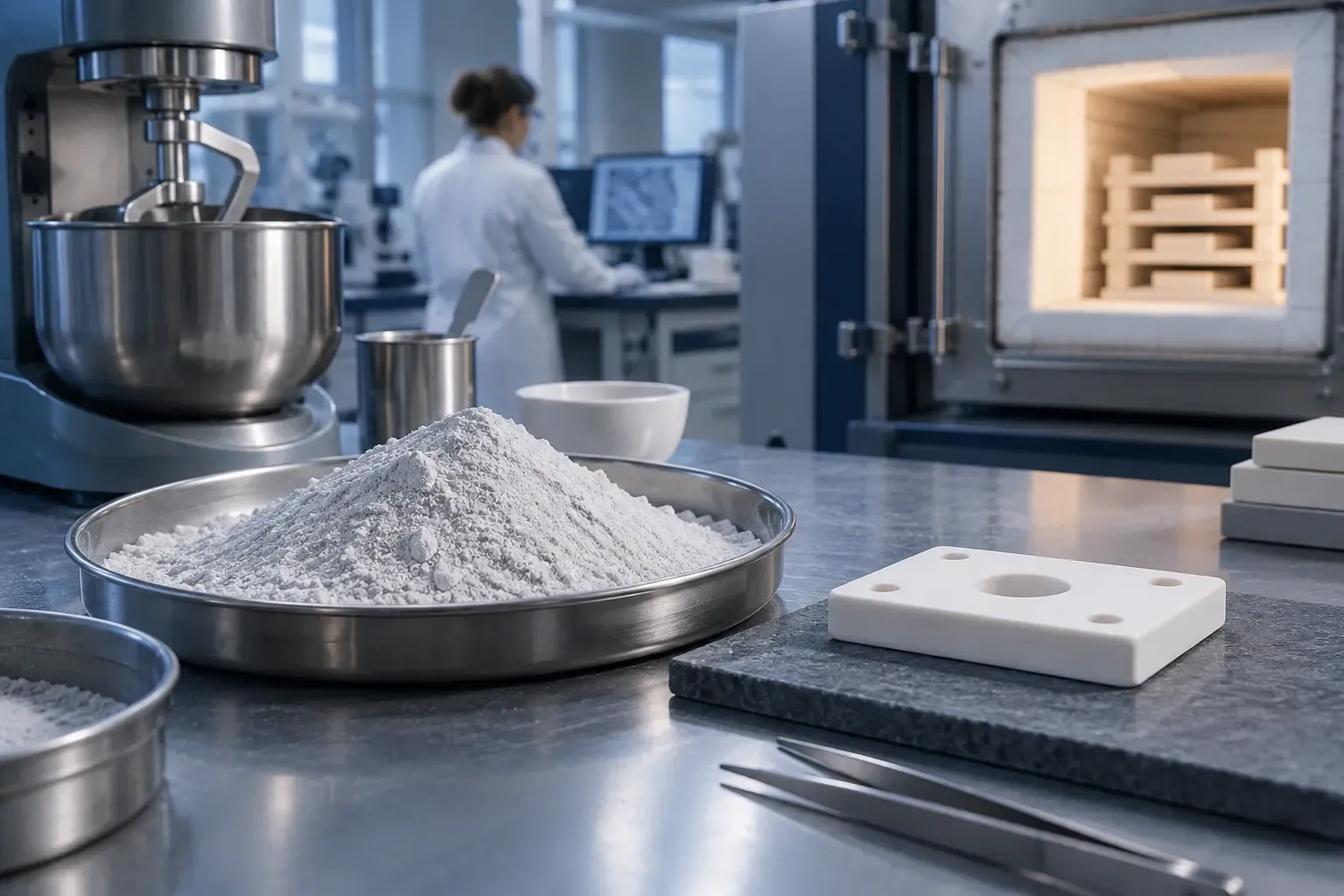
An ultrafine silica powder should be qualified inside the intended ceramic body—not approved from a mesh label alone.
A useful trial connects material identity and supplier evidence with batching, dispersion, forming, drying, firing and finished-part inspection. This guide shows how to build that evidence chain without assuming that one powder specification suits every ceramic formulation.
Last updated: · Scope: raw-material qualification and customer-side process trials
Define the Ceramic Body Before Selecting the Powder
The same silica powder can behave differently when the surrounding clay, alumina, feldspathic component, binder, dispersant, forming method or firing cycle changes. Start with a written definition of the current body and the problem to be solved. A request such as “make the body more stable” is too broad to guide a material decision.
Instead, identify the observable issue: inconsistent slurry handling, poor compact uniformity, drying distortion, fired dimensional drift, surface defects or lot-to-lot variation. Record the reference recipe and processing window that produced the observation. This keeps the supplier discussion tied to a measurable decision.
| Question | Evidence to record | Decision it supports |
|---|---|---|
| What part is being made? | Geometry, section thickness, surface requirement and critical dimensions | Defines where process variation becomes unacceptable |
| How is the body formed? | Pressing, casting, extrusion or another documented route | Sets the relevant flow, packing and binder interactions |
| What is the baseline? | Current recipe, powder lot, mixing sequence and approved firing cycle | Creates a valid control for comparison |
| What is the acceptance gate? | Named green-body, fired-body and finished-part checks | Prevents approval from resting on appearance alone |
Confirm Material Identity and Supplier Evidence
“Silica” is a chemical family word, not a complete purchasing specification. Confirm whether the offered material is ground crystalline quartz, fused silica, calcined cristobalite or a synthetic silica. These materials should not be interchanged because their phase history, particle form and role in a formulation differ.
Changtong’s ultrafine silica powder for precision ceramics and technical glass is presented as a selected silica raw material produced through controlled grinding, with particle-size options and low-iron chemistry for application review. Final suitability still requires confirmation against the customer’s body, forming route and firing conditions.
Build an Evidence Sheet That Matches the Trial
A certificate is useful when it identifies the lot, method and reporting basis. Ask for the evidence that can influence the intended trial; collecting unrelated values adds paperwork without improving the decision.
| Evidence area | What to verify | Why it matters |
|---|---|---|
| Material identity | Product name, silica type, source description and lot code | Stops different silica families from being compared as equivalents |
| Chemistry | Agreed SiO₂, iron and any application-critical impurity scope | Connects the supplier report to colour and contamination concerns |
| Particle-size evidence | Method, sample preparation and full reporting basis where required | Makes results comparable across samples and repeat lots |
| Moisture and packing | Condition on receipt, liner, seal and storage expectations | Separates material variation from handling history |
| Traceability | Sample-to-lot link, document revision and retention sample | Allows a successful result to be reproduced later |
Design a Bench Trial With Controlled Variables
A supplier sample cannot be judged fairly if the recipe, water addition, mixing energy and firing cycle all move at once. Use the current approved body as the control. Prepare a comparison sample with the proposed silica powder while holding the rest of the trial as constant as practical.
1. Lock the reference condition
Document raw-material lots, dry-batch mass, liquid additions, mixing equipment, sequence, time and ambient conditions that matter to the process.
2. Define one material change
Change the candidate silica source or agreed grade while keeping the comparison basis visible. If the addition level also changes, treat that as a separate trial variable.
3. Use enough test pieces
Prepare repeat specimens from both the control and candidate batches. One visually acceptable piece is not evidence of process consistency.
4. Preserve the trial record
Link every observation and specimen to the powder lot, body batch and firing run. Retain representative samples when the project moves to production review.
Read Mixing and Forming Behavior Before Firing
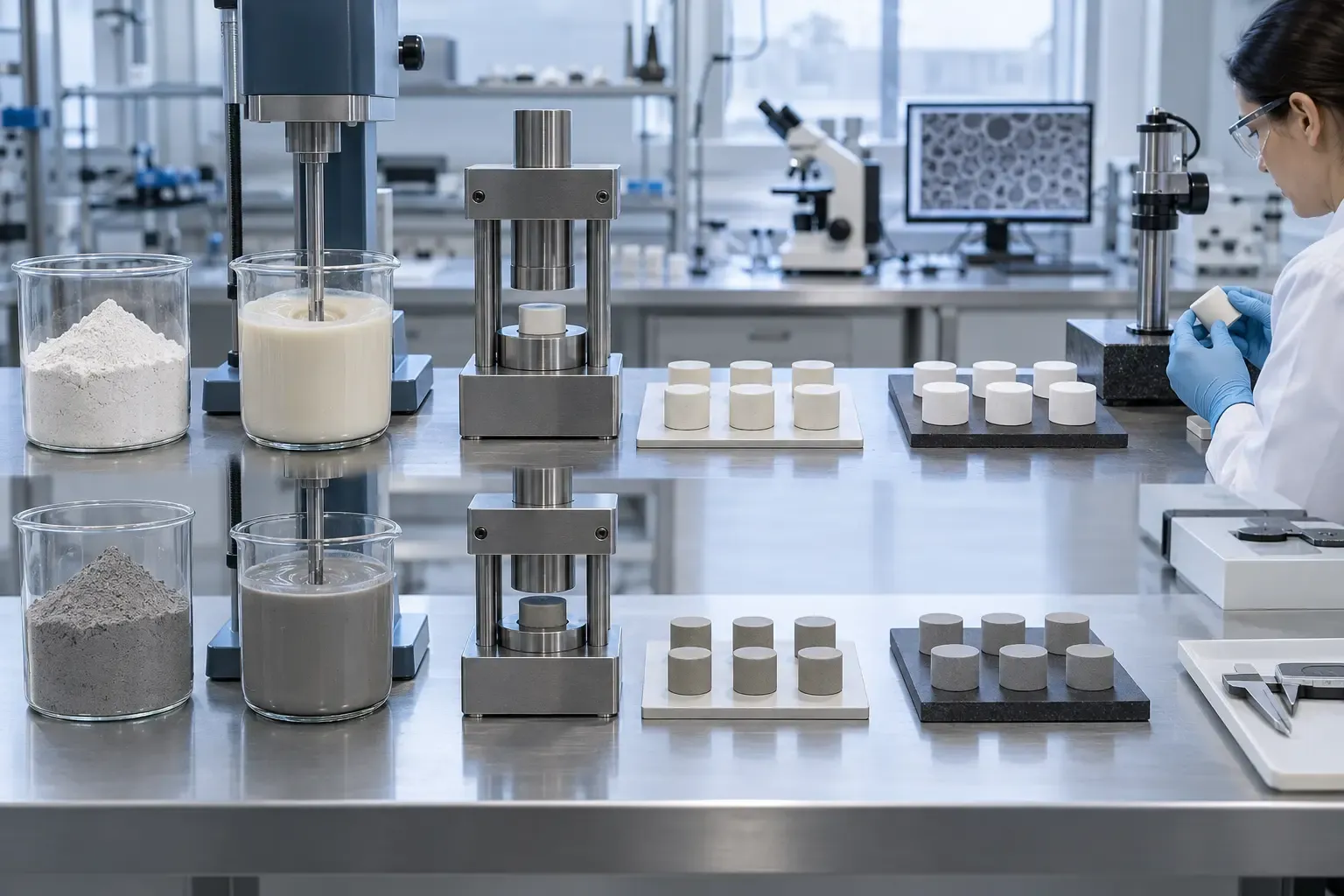
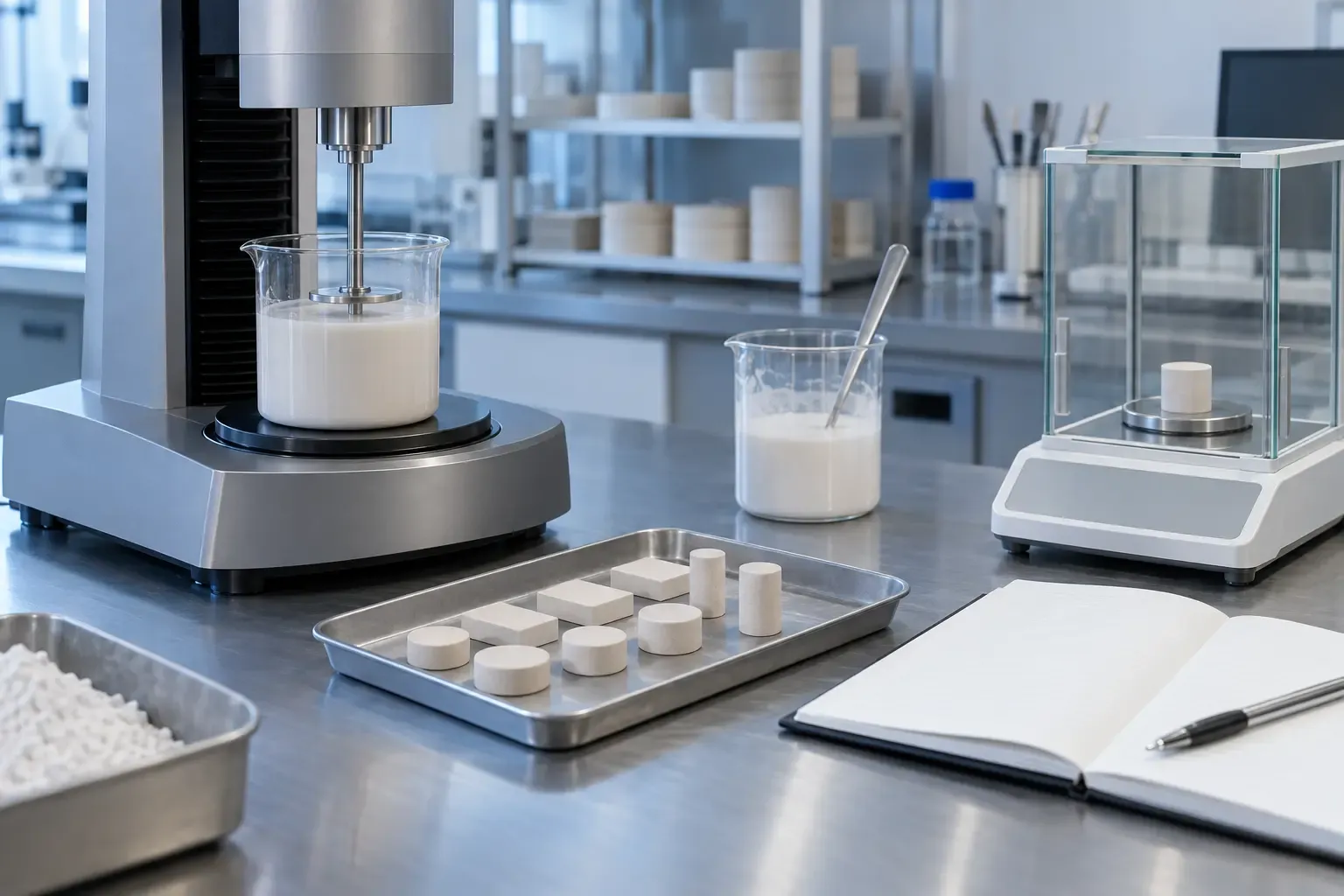
Upstream observations can reveal problems that a fired specimen hides. During wet mixing, note addition response, agglomerate breakdown, settling tendency and any change in the process adjustments required to reach the normal working condition. For dry routes, examine blending uniformity, dusting, feed consistency and compaction response.
Measure only what the plant can reproduce. Depending on the forming route, that may include slurry viscosity under a defined procedure, casting rate, green density, press fill, green strength or dimensional spread. Record the measurement method and timing; otherwise two values from the same batch may not be comparable.
Evaluate Drying and Firing as a Whole System
Silica content and particle characteristics interact with the complete ceramic body. Drying and firing results therefore belong to the formulation-and-process system, not to the powder alone. Compare control and candidate specimens using the same measurement locations, support method, loading pattern and firing record.
Engineering boundary: Do not claim that an ultrafine crystalline silica powder will universally reduce shrinkage, prevent cracking or increase strength. Published ceramic studies describe formulation-specific effects. The customer’s body composition, particle packing, forming route and thermal cycle determine the observed result.
Review drying distortion and cracking separately from firing shrinkage, fired density, porosity, warpage, colour and surface condition. If the part has a functional requirement, include that property in the agreed validation plan rather than inferring it from dimensional data.
Inspect Finished Parts and Repeat the Lot Check
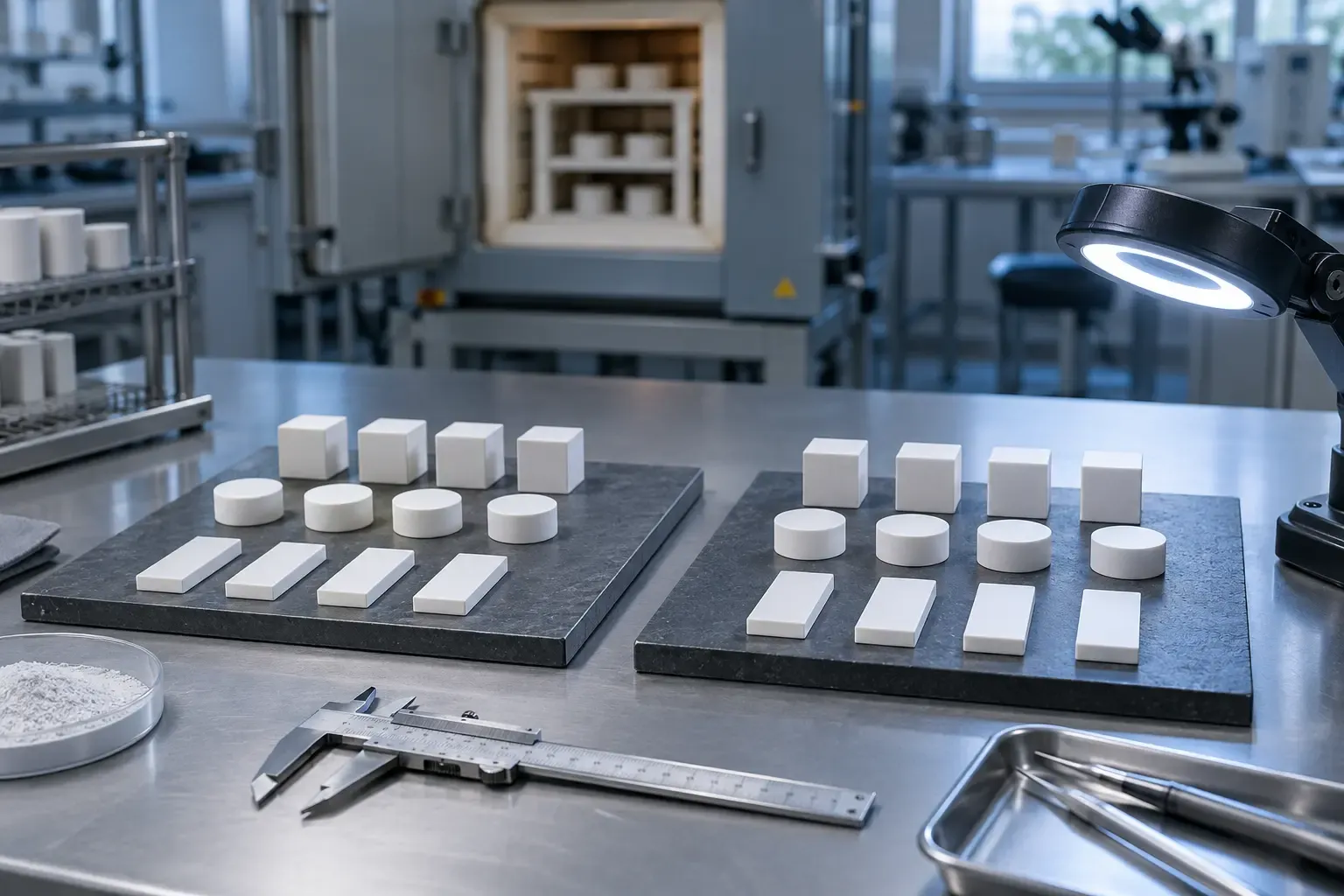
A successful bench trial is a gate, not the end of qualification. Inspect critical surfaces and dimensions using the same criteria applied to production parts. Where appropriate, section representative samples to look for internal defects that are not visible externally.
Then repeat the comparison with a new candidate lot. This distinguishes a promising one-off result from a reproducible supply condition. Changtong’s guide to crystalline silica powder manufacturing and quality control provides background on grinding, classification and lot review; the customer’s qualification plan remains the final acceptance basis.
Prepare an RFQ That a Supplier Can Review
A good RFQ lets the supplier identify a realistic starting grade and the documents needed for a controlled sample trial. Separate mandatory limits from discussion points, and state which customer-side test will decide approval.
| RFQ field | Information to provide | Common ambiguity to remove |
|---|---|---|
| Application | Ceramic body type, part function and forming route | “For ceramics” without a process description |
| Material identity | Natural-quartz-derived crystalline silica powder | Using “silica” without naming the material family |
| Specification | Critical chemistry, size-test basis, moisture and lot evidence | Copying an unverified mesh number from another supplier |
| Trial | Sample quantity, control recipe and planned acceptance checks | Requesting a sample without a decision method |
| Supply | Trial and annual demand, packing, destination and schedule | Comparing price before confirming grade and logistics |
Frequently Asked Questions
Is ultrafine silica powder the same as fumed silica?
No. This guide concerns ground crystalline silica derived from natural quartz. Fumed and precipitated silicas are synthetic materials with different particle structures and formulation roles.
Can a mesh value select a ceramic grade by itself?
No. Mesh or a nominal size label does not describe material identity, the complete distribution, chemistry, moisture, lot condition or behaviour in the customer’s process.
What should be measured before firing?
Choose reproducible checks that fit the forming route, such as mixing response, slurry condition, settling, press filling, green density, green strength or dimensional consistency. Define the method before comparing batches.
When is a candidate powder ready for production?
After it passes the agreed evidence review, controlled body trial, finished-part inspection and repeat-lot confirmation. A certificate or single test piece alone is not sufficient.
Source and Review Boundary
Product scope is based on Changtong’s current ultrafine silica powder description. Topic framing was checked on September 5, 2026 against current search results and technical references on ceramic powder processing, raw-material composition and firing evaluation. Third-party findings are treated as industry context only; no external test result or universal performance value has been presented as Changtong data.
Request an Ultrafine Silica Grade Review
Send the ceramic body type, forming route, critical chemistry, particle-size test basis, current process concern, sample quantity and acceptance plan. Changtong can review the inquiry against the available crystalline silica powder scope and prepare a traceable starting sample for customer-side validation.
Send your ceramic-body requirements