How to Select Crystalline Silica Filler for Epoxy Electrical Insulation
Learn how to select crystalline silica filler for epoxy electrical insulation by checking phase, particle size, moisture, chemistry, flow, void risk and customer-side validation.

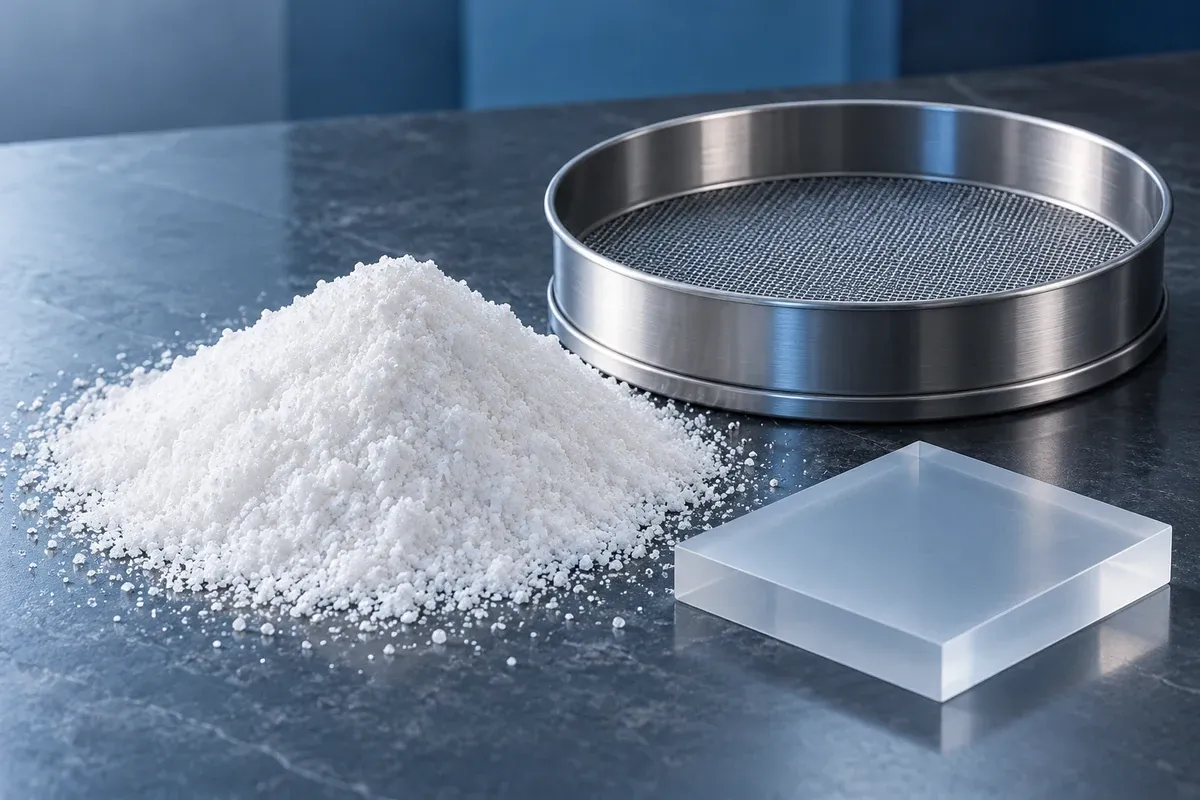
Choosing a crystalline silica filler for epoxy insulation starts with the package process, not a mesh label alone.
A useful filler specification connects material identity, particle-size evidence, moisture, chemistry, flow behavior and the customer’s electrical and thermal validation plan. This keeps the purchasing discussion practical without turning published grade data into a universal performance guarantee.
Last updated: · Scope: filler screening, RFQ preparation and customer-side validation
Why Does Filler Selection Affect Epoxy Insulation?
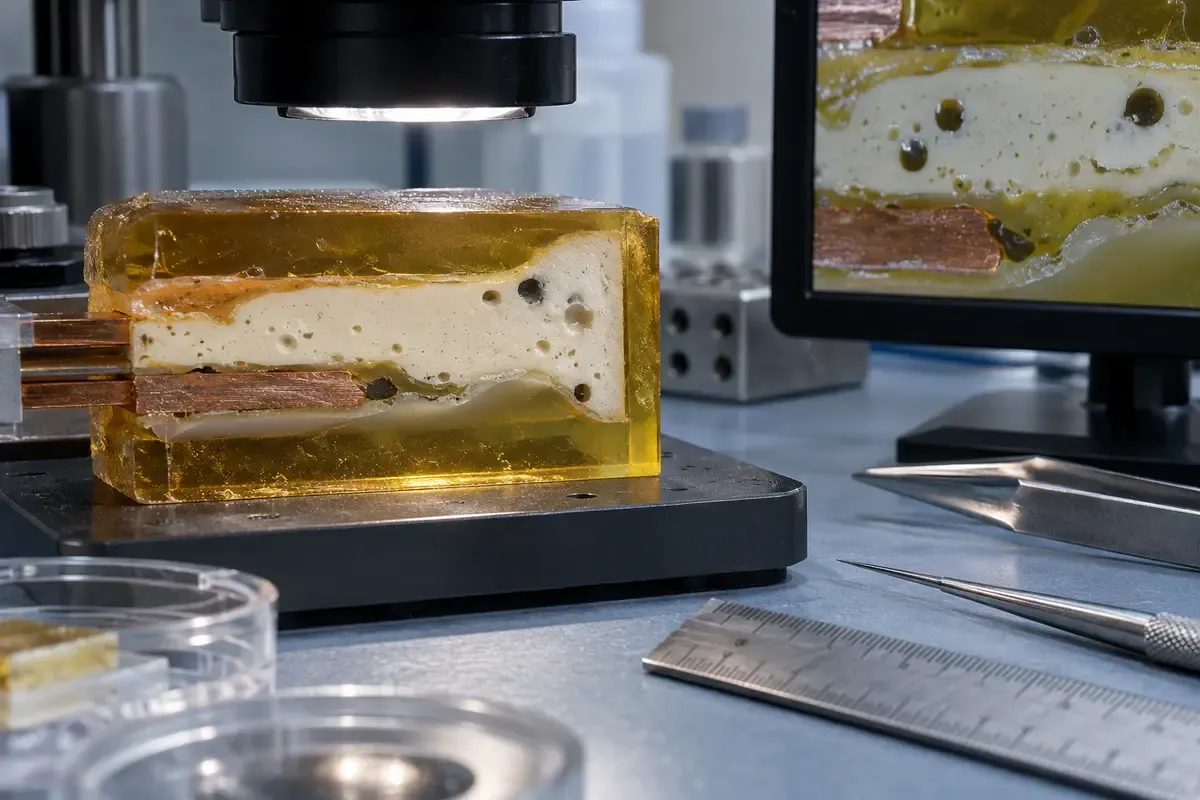
Silica filler changes more than the mineral fraction of an epoxy compound. It can influence viscosity, flow into a package, shrinkage, dimensional stability, thermal response, surface finish and the risk of trapped voids. The direction and size of the change depend on the resin, filler geometry, particle-size distribution, surface condition, loading level and processing sequence.
Published studies on silica-based epoxy molding compounds have examined thermal, rheological and mechanical behavior across different silica types. Those studies are useful for framing a trial, but they are not Changtong test results and should not be copied into a customer specification without checking the actual resin and process.
What Should “Silica Filler” Mean in the RFQ?
Use the material-family name explicitly. Natural-quartz-derived crystalline silica is a ground mineral feedstock with a crystalline quartz phase. Fused silica has a different phase history. Cristobalite is a different silica phase produced through calcination. Precipitated and fumed silicas are synthetic materials with different particle structures and surface behavior.
These distinctions matter because a customer may be comparing flow, shrinkage or electrical insulation while unknowingly changing the filler family. A technically clear RFQ should state the required phase, whether a surface treatment is allowed, the target size basis and the evidence required for lot release.
Changtong’s electronic-packaging crystalline silica filler page lists a 2000–5000 mesh reference and separate grade information for electronic packaging and epoxy encapsulation. Treat that page as the published starting scope; the final grade must still be matched to the buyer’s formulation.
How Should Particle Size Be Reviewed?
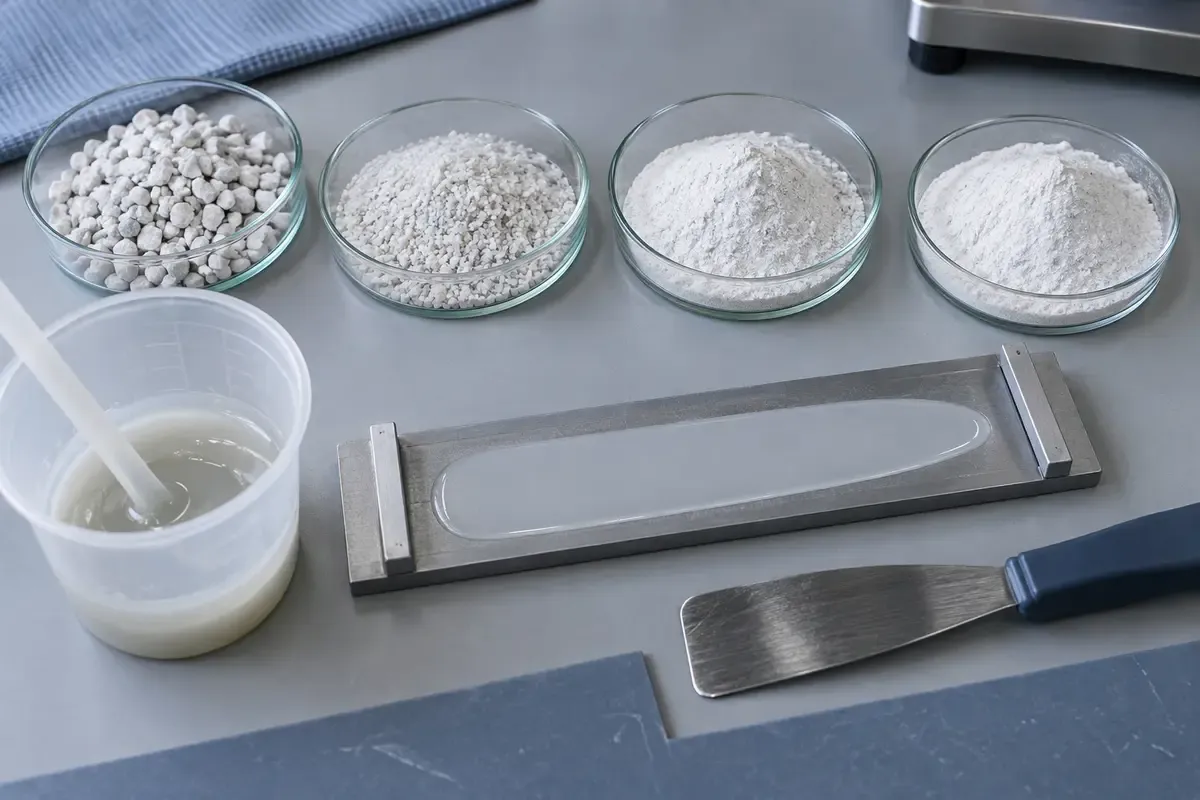
Particle size should be reviewed as a distribution and a process variable, not as one attractive number. Fine material may support surface coverage and packing, but it can also increase viscosity or demand more dispersion energy. Coarser material may improve flow in one system while increasing settling, surface defects or local particle-size sensitivity in another.
| Question | Evidence to request | Why it matters |
|---|---|---|
| What is the size basis? | Sieve, micron range, laser-diffraction method or full PSD | Prevents mesh labels from being compared as if they used the same test basis |
| What controls filling? | Package gap, gate, cavity, target loading and mixing equipment | Connects PSD to flow and the risk of incomplete filling |
| What is the fine fraction? | Lower-tail data, agglomerate check and sample preparation | Helps explain viscosity changes and dispersion demand |
| What is the acceptance gate? | Flow, void inspection, cure response and electrical test plan | Turns the size review into a decision rather than a catalogue comparison |
Which Chemistry and Moisture Values Belong in the Review?
Electrical-insulation buyers often need a chemistry and moisture screen before they discuss performance. The exact limits belong to the customer’s resin, cure chemistry, package design and reliability plan. Avoid presenting a general mineral specification as proof of dielectric performance.
Published Product Scope for Initial Discussion
The current Changtong product page publishes the following reference scope. These values are presented here as product-page information for screening and RFQ preparation, not as a lot-specific certificate or a guarantee for a finished epoxy compound.
| Item | Published reference | How to use it |
|---|---|---|
| Material family | Crystalline silica derived from natural quartz | Confirm phase identity before comparing with fused or synthetic silica |
| SiO₂ | 99.3–99.7% | Review with the customer’s impurity and electrical-insulation limits |
| Fe₂O₃ | <0.015% page-level reference; grade table varies by grade | Use the selected grade and lot document for approval |
| Moisture | <0.1% page-level reference | Confirm method, sampling basis, storage and resin sensitivity |
| Hardness | Mohs 7 | Consider alongside equipment wear and the required finished-part surface |
| Size range | 2000–5000 mesh reference with grade-specific PSD data | Request the selected grade, method and full distribution before sampling |
How Should the Customer-Side Trial Be Designed?
A filler trial is strongest when the control resin, mixing equipment, cure schedule and inspection method are fixed. Change the candidate filler or grade as one main variable first. If loading, coupling agent, vacuum time or cure temperature also changes, record that as a separate experimental factor.
1. Freeze the package and resin definition
Record the component or insulation geometry, resin family, hardener or curing package, target filler content and the filling method.
2. Record the dry-filler condition
Link the sample to a lot, packing mark, storage history, moisture check and selected particle-size report. This prevents handling history from being confused with grade behavior.
3. Measure processing behavior
Record addition order, mixing time, shear or planetary settings, vacuum response, flow into the test geometry, settling and visible voids using a repeatable method.
4. Validate the cured compound
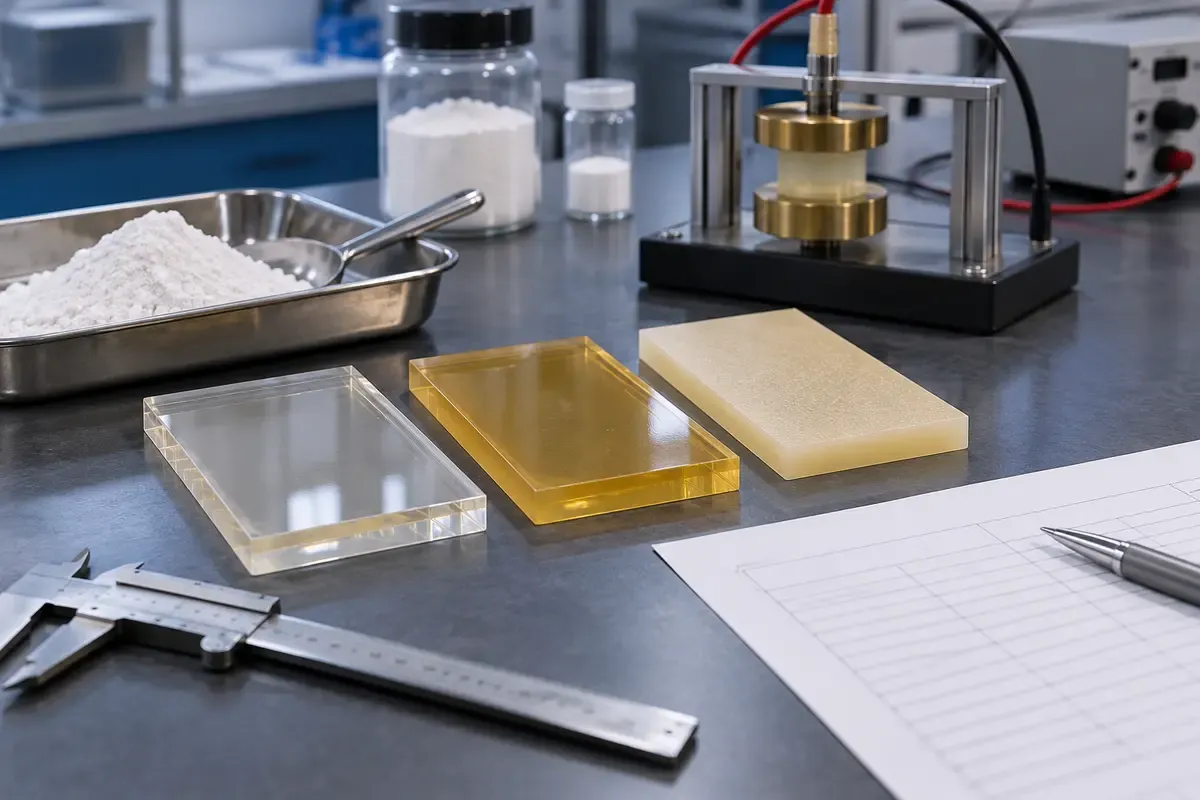
Use the customer’s agreed dimensional, thermal, mechanical and electrical tests. Do not infer dielectric reliability from appearance, whiteness or viscosity alone.
What Should Not Be Inferred From a Filler Datasheet?
Engineering boundary: A silica filler specification does not by itself prove dielectric strength, partial-discharge resistance, thermal cycling life, adhesion, void-free filling or long-term insulation reliability. Those results belong to the complete epoxy formulation and the customer’s validated process.
Likewise, a grade that flows well in one resin may not behave the same way in another. Surface treatment, resin polarity, cure kinetics, mixing energy, filler loading and package geometry can change the result. A supplier discussion is most useful when the buyer shares the actual acceptance gate instead of asking for a universal “best” silica powder.
For background on how crystalline silica powder is produced and quality-controlled, see Changtong’s crystalline silica powder manufacturing guide. For a structured request, use the silica powder RFQ checklist.
What Should an RFQ Include?
- State the package or electrical-insulation application and the epoxy system.
- Name the required silica phase and clarify whether surface treatment is permitted.
- Define the particle-size method, target distribution, moisture basis and chemistry limits.
- Describe mixing, filling, vacuum, cure and inspection conditions that affect approval.
- Request a representative sample, lot-linked documents and a customer-side trial plan.
Frequently Asked Questions
Is crystalline silica the same as fused silica for epoxy insulation?
No. Both are silica-based materials, but their phase history and physical behavior differ. The buyer should specify the required material family and evaluate the selected grade in the actual resin system.
Does a finer silica powder always reduce epoxy viscosity?
No. Finer fractions can increase surface demand and dispersion energy. Flow depends on the complete particle-size distribution, shape, surface condition, loading and resin chemistry.
Can product-page moisture data replace incoming inspection?
No. Published values are a starting reference. Incoming inspection should use the agreed method, lot scope, storage history and customer acceptance limit.
What should I send when requesting an electronic-packaging silica filler sample?
Send the resin and cure system, package geometry, target loading, size basis, flow or void concern, electrical tests, sample quantity, packing requirement and destination.
Source and Review Boundary
Product facts are based on Changtong’s published electronic-packaging crystalline silica filler page. Industry framing was checked on September 6, 2026 against the peer-reviewed studies The Effects of Silica-Based Fillers on the Properties of Epoxy Molding Compounds and The Effects of Filler Shape, Type, and Size on the Properties of Encapsulation Molding Components. The studies are reference context only; their formulations and results are not Changtong test data.
Request an Electronic-Packaging Filler Review
Send the epoxy system, package geometry, target particle-size basis, chemistry and moisture limits, mixing conditions, electrical test plan and sample quantity. Changtong can review the request against the published crystalline silica filler scope and prepare a customer-side validation starting point.
Send your epoxy insulation requirements