Silica Fume vs Ground Silica Powder in Repair Mortars: Material Identity Before Mix Design
Separate silica fume from ground crystalline silica powder in repair mortars. Compare material identity, test evidence, fresh-mix behavior and trial boundaries.
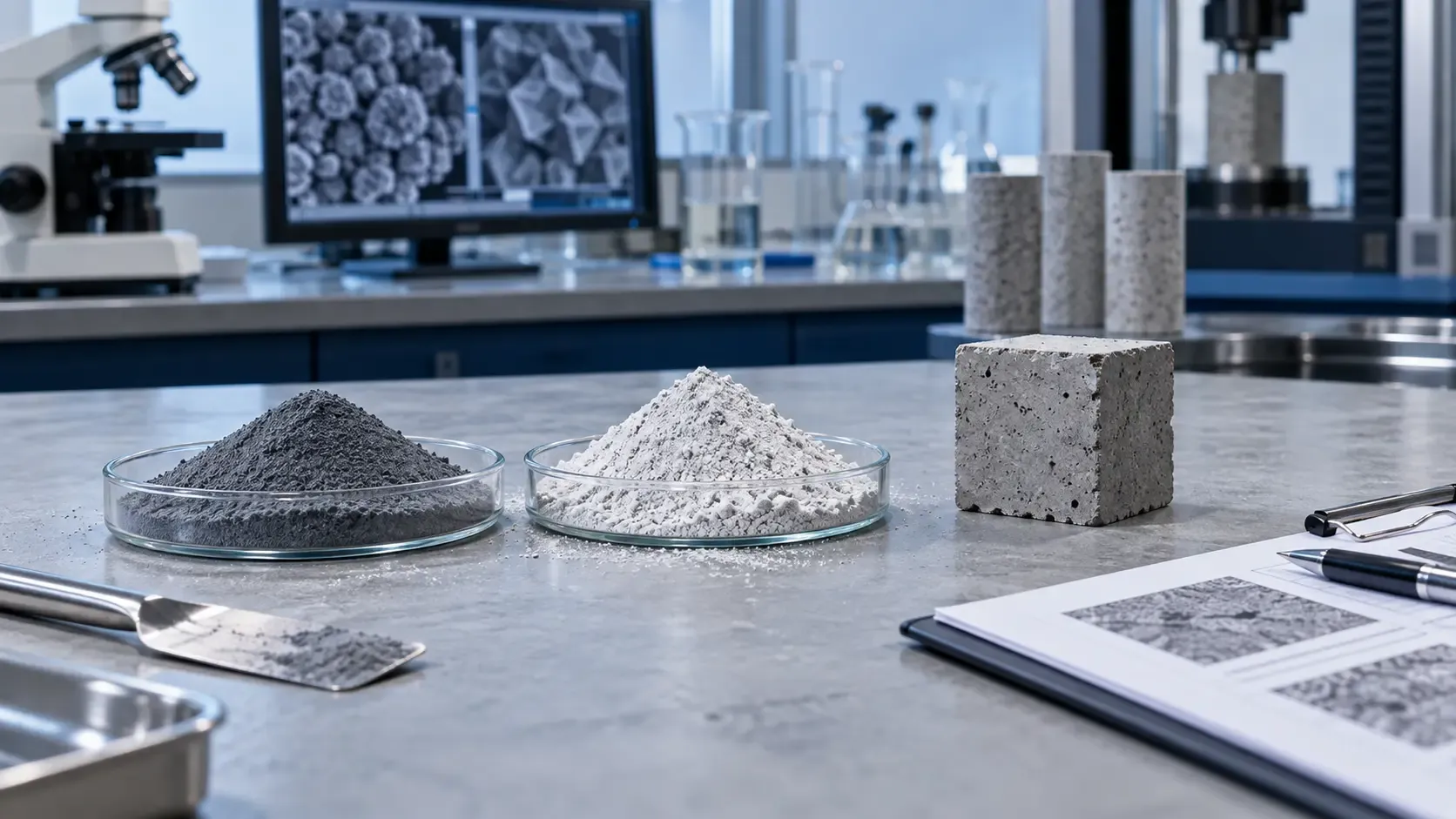
This guide is a material-identity and trial-planning reference. It does not claim that Changtong supplies silica fume, and it does not present generic industry values as Changtong test data. Changtong crystalline silica powders are discussed as a separate material family from silica fume, precipitated silica, fumed silica, fused silica and cristobalite. Final use must be verified against the customer’s cement, binder, admixture, curing and repair specification.
Why the material names create a selection problem
Repair-mortar discussions often group several silicon-dioxide materials under the same short label. That shortcut can hide the most important engineering difference: what the powder is expected to do inside the cementitious system. A reactive ultrafine addition, a graded mineral filler and a coarse aggregate fraction affect water demand, paste volume, packing, workability and early-age behavior in different ways.
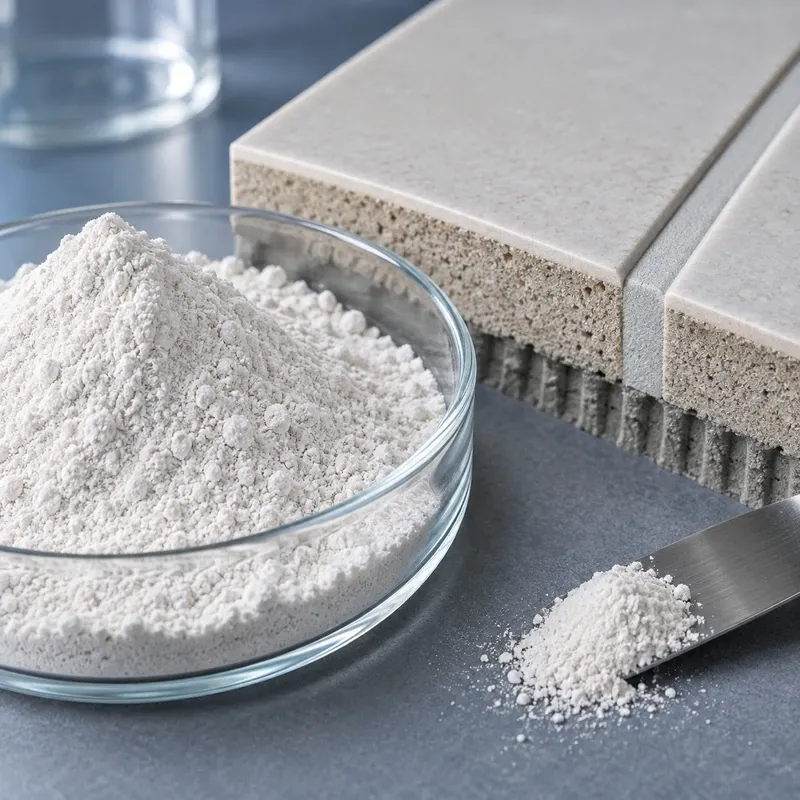
Silica fume is generally associated with the very fine amorphous by-product collected during silicon or ferrosilicon production. Ground crystalline silica powder is produced from quartz-based mineral feedstock through size reduction and classification. These descriptions are not interchangeable, and neither material should be approved only because a supplier lists a high SiO2 value.
For a customer comparing candidates, the first decision is functional: is the material intended to modify the binder reaction, fill a selected size fraction, adjust packing, or support surface finish and dimensional control? Write that function into the trial plan before comparing price or mesh labels.
A practical identity check before formulation work
| Question | Silica fume | Ground crystalline silica powder |
|---|---|---|
| Primary selection logic | Very fine reactive mineral addition in a cementitious binder | Mineral filler or graded silica fraction matched to packing and workability |
| Material identity | Typically amorphous silica fume; confirm source and handling form | Crystalline silica from selected quartz feedstock; confirm phase and grade |
| Useful evidence | Supplier identity, fineness method, densification, moisture and mix response | Phase, chemistry, particle-size method, moisture, appearance and mix response |
| Substitution risk | Can change water demand, rheology and binder reaction | Can change packing, paste demand, finish and segregation behavior |
Three observations that separate function from marketing language
1. Record what the powder is expected to change
Write one measurable role for the candidate: lower void content, change fresh-mortar flow, improve surface finish, support a target packing structure, or contribute to binder reactivity. Avoid a trial brief that asks one powder to deliver every benefit. If the intended role is unclear, the final result cannot show whether the material succeeded.
2. Compare test methods, not isolated numbers
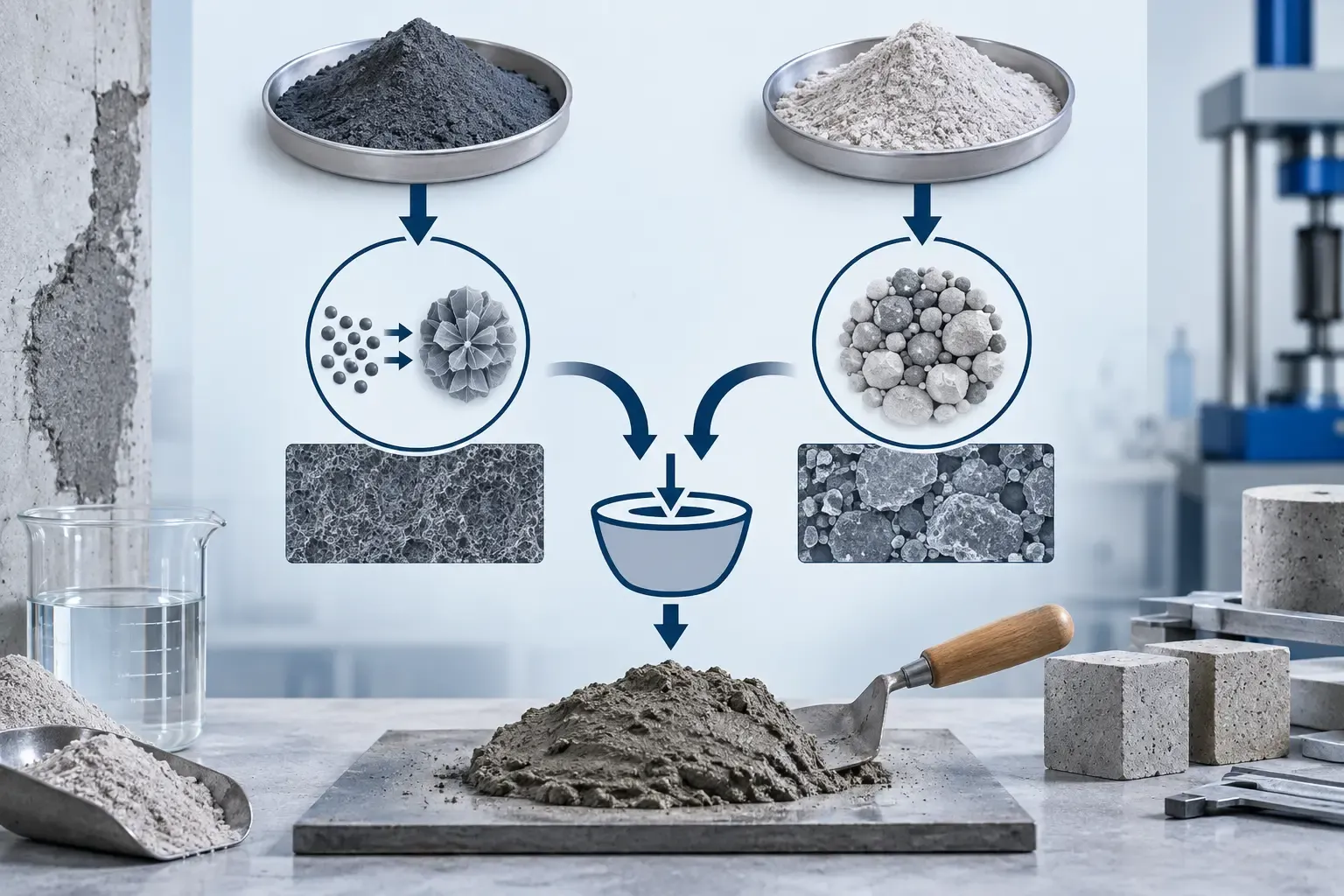
“Fineness,” “particle size” and “moisture” are method-dependent descriptions. Before comparing a supplier document with an internal result, record the method, sample conditioning, reporting basis and whether the value describes a loose powder, a densified form or a dispersion. A number without its method can create a false equivalence between material families.
3. Watch the fresh-mortar response
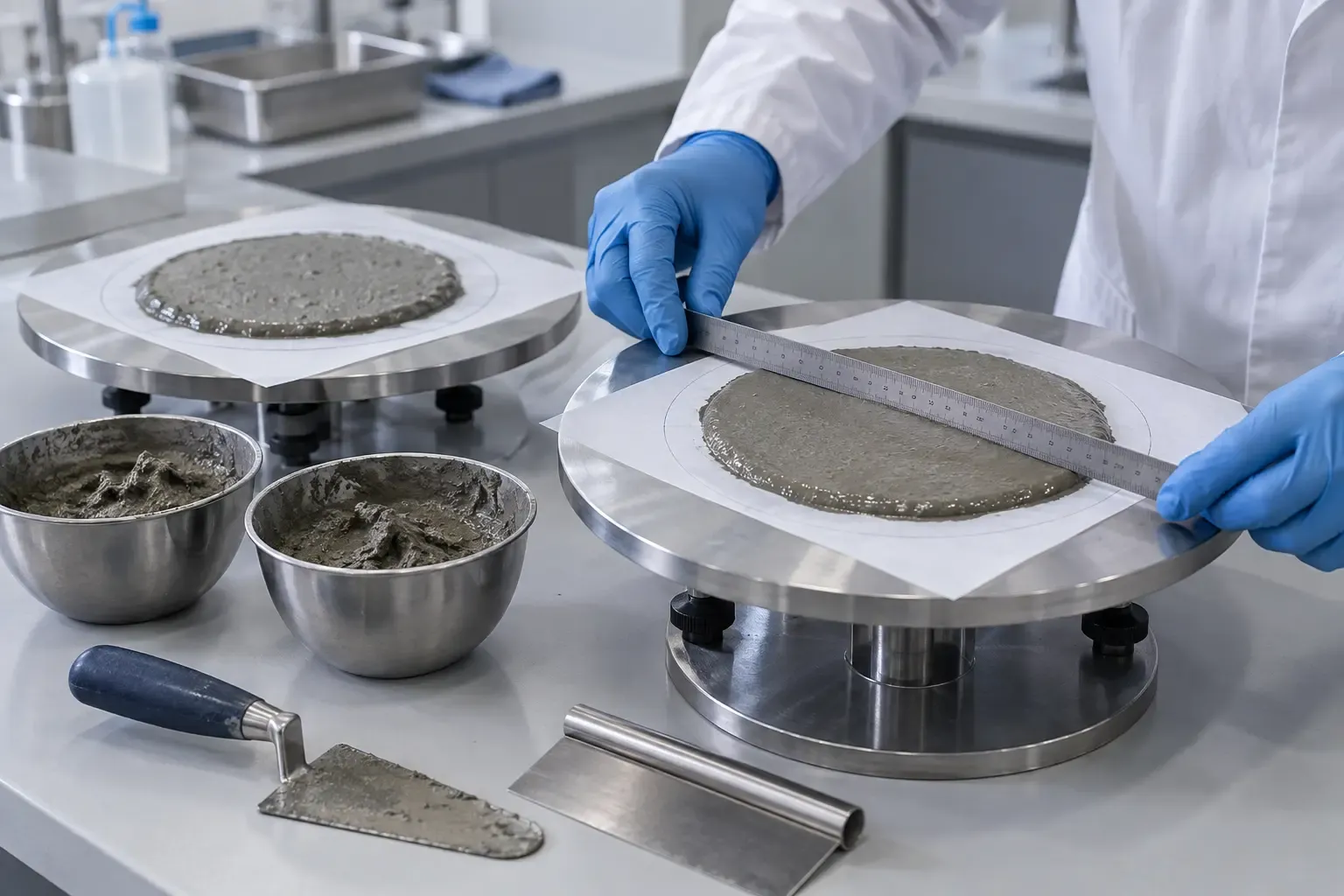
During a controlled bench trial, record water addition, mixing sequence, mixer energy, flow or spread method, open time, segregation, bleeding and placement feel. A candidate that appears fine may increase water or admixture demand. A coarser mineral fraction may improve packing but still fail the surface or pumpability requirement. The useful result is a documented process window, not a single visual impression.
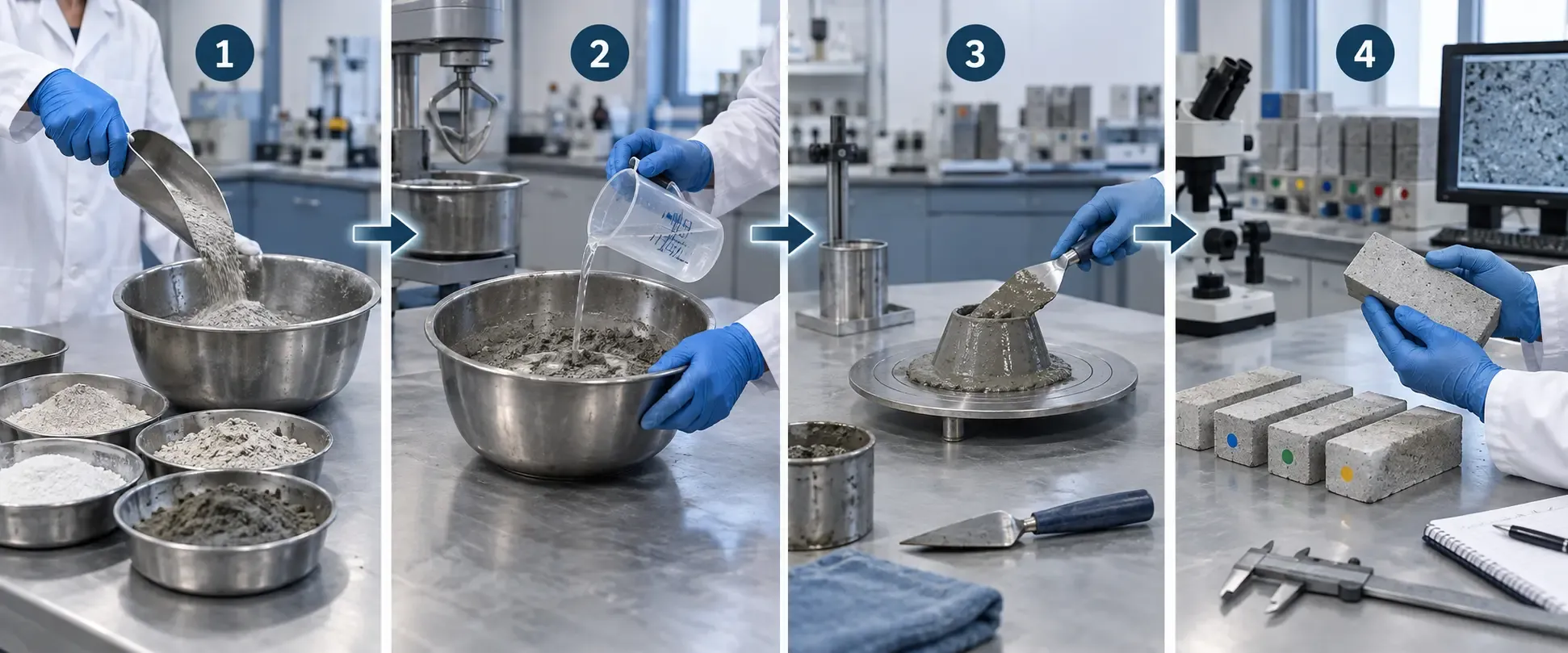
A trial sequence for repair-mortar screening
- Freeze the base formula. Keep cement, sand, admixture, water temperature and mixing equipment constant. Change one silica material variable at a time.
- Confirm powder handling. Record bag condition, visible agglomerates, moisture condition, addition order and dust-control measures before weighing.
- Measure fresh behavior. Use the customer’s normal flow, spread, pump or trowel method. Record the result with the test geometry and conditioning.
- Check hardened performance. Use the customer’s defined cure schedule and relevant repair tests. Record surface integrity, cracking, bond or strength only within the applicable method and age.
Where ground silica powder may fit
Ground crystalline silica powder may be relevant when the formulation needs a mineral fraction with a specified phase, chemistry, appearance or particle-size behavior. The customer may be trying to adjust packing, reduce coarse texture, support a consistent finish or balance a blend of mineral fractions. Those are formulation questions, not proof that the powder can replace a reactive pozzolan.
Changtong’s general-purpose crystalline silica powder is a separate mineral raw-material option. Review the current grade documents and confirm the phase, chemistry, size method and moisture scope before requesting a repair-mortar sample.
A buyer’s evidence checklist
| Evidence | What to confirm | Why it matters |
|---|---|---|
| Material family | Amorphous silica fume, crystalline silica powder or another silica material | Prevents invalid substitution |
| Phase and chemistry | Declared phase, SiO2 basis, relevant impurity limits and test methods | Connects the document to the intended formulation |
| Handling form | Powder condition, densification, moisture and packaging | Explains addition and dispersion differences |
| Application trial | Mixing, flow, placement, cure and finished-repair checks | Shows whether the material works in the real system |
For the purchasing handoff, use the silica powder RFQ specification checklist. It helps separate the requested application, grade evidence, testing scope, packaging and shipment details. For manufacturing context, the crystalline silica powder manufacturing guide explains why feedstock, grinding, classification and testing should be read together.
Boundaries that should remain explicit
Silica fume is not precipitated silica, fumed silica, fused silica or ground crystalline quartz powder. Ground silica powder is not automatically a reactive cement addition. A high SiO2 result does not by itself establish phase, fineness, pozzolanic activity, rheology or repair performance. Keep those claims separate in the specification and in the trial report.
Workplace controls also remain essential when handling respirable crystalline silica-containing materials. Follow the applicable local exposure-control requirements, safety data sheet and site procedures. This article is a material-selection guide, not a substitute for a task-specific risk assessment.
FAQ
Do not assume so. The materials can serve different functions, so any substitution requires a reformulated mix and customer-side fresh and hardened performance tests.
No. SiO2 is only one part of the evidence. Phase, test method, particle-size behavior, moisture, handling form and the complete mortar trial also matter.
Fix the base cement and aggregate blend, water method, admixture, mixing energy, test geometry, conditioning and cure schedule. Otherwise several variables move at once.
Request the TDS, SDS and lot-specific COA, then confirm material identity, phase, chemistry, particle-size method, moisture scope, packaging and the customer tests used for acceptance.
Request a Repair-Mortar Material Review
Send the intended repair application, binder system, aggregate blend, target fresh behavior, curing conditions, required documents and sample quantity. Changtong can review whether a crystalline silica powder discussion fits the stated mineral-filler function without presenting it as a silica-fume substitute.
Contact Changtong