Silica Powder for Brake Friction Materials: A Trial Plan for Filler Selection
Build a controlled silica-powder trial for brake friction materials by separating material identity, handling, mixing, particle-size evidence and finished-pad testing.
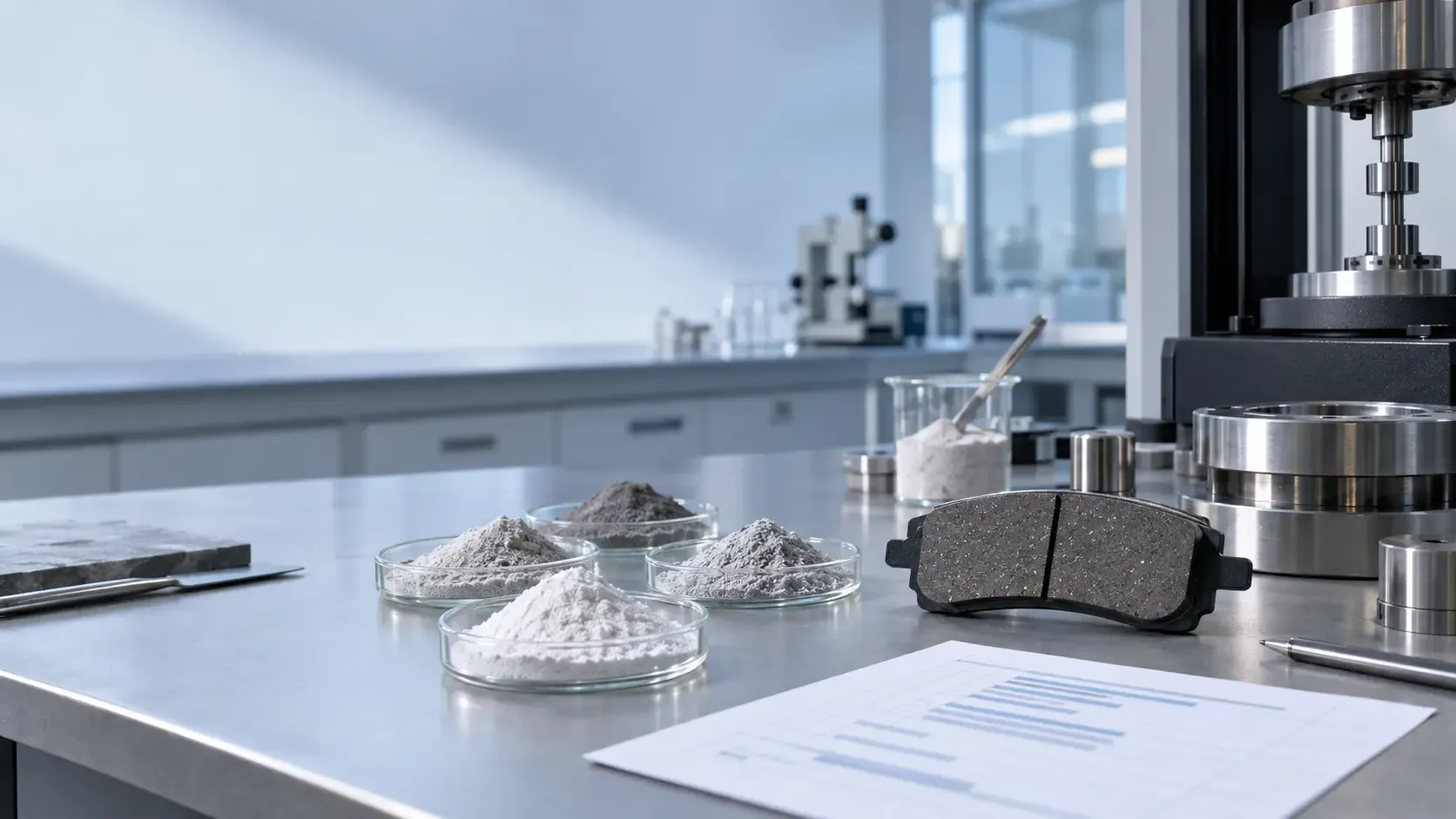
A silica-powder trial for brake friction materials should connect mineral identity, abrasive behaviour, mixing control, and finished-pad evidence.
This guide is a material-screening framework, not a brake-pad formulation or safety certification. It does not promise a friction coefficient, wear rate, noise result, fade resistance, or regulatory approval. Final performance depends on the complete friction composite, mating counterface, compaction and cure history, test method, and application requirements.
Why silica powder is a formulation variable, not a standalone answer
Brake friction materials are engineered composites. A mineral powder is evaluated alongside the binder, fibres, lubricants, abrasives, modifiers, porosity, cure history, and the disc or drum used in the test. Silica can be considered as an inorganic filler or abrasive-phase variable, but its role must be defined by the formulator rather than assumed from the word “silica.”
Published friction-material reviews describe the influence of composition, transfer layers, abrasive particles, porosity, and test conditions on friction and wear behaviour. That evidence supports a controlled screening plan, not a universal grade recommendation. The practical decision is whether one defined powder changes the complete composite in a useful and repeatable direction.
| Material question | Why it matters | Evidence to request |
|---|---|---|
| What kind of silica is it? | Phase and source affect how the powder should be interpreted | Material identity, chemistry, phase scope, and current specification |
| How does it enter the batch? | Feeding, wetting, dispersion, and packing can change process stability | Addition sequence, mixing record, moisture check, and retain sample |
| What does the finished pad show? | Friction, wear, noise, and thermal behaviour belong to the composite | Matched specimens, defined test method, and counterface record |
Lock the material identity before comparing grades
“Silica powder” can refer to different material families. A buyer should distinguish ground crystalline silica derived from natural quartz from fused silica, precipitated silica, fumed silica, silica fume, and other engineered powders. These are not interchangeable descriptions. A screening plan becomes difficult to interpret when a mineral filler is compared with a reactive ultrafine material without recording the difference.
Record phase, source, and chemistry separately
Ask for the declared material identity, SiO₂ basis, relevant impurity limits, phase evidence where applicable, and the test methods used. Do not infer phase from colour or particle size. Do not copy a specification for fused silica or silica fume into a request for ground crystalline silica powder.
Use current documents for the actual lot
For procurement, the useful evidence chain is the current product specification plus the lot-level certificate and safety information. If the customer requires XRD, moisture, particle-size, or other testing, state the method and reporting basis in the RFQ. A generic data sheet cannot replace a lot-specific acceptance record.
Choose the screening window around the complete formulation
Particle size is important, but it should not be treated as the only selection lever. A change in powder fineness can alter packing, surface area, binder demand, feeding behaviour, and the way the composite develops a friction layer. The direction and size of the effect must be measured in the customer’s formulation.
- Define the control. Keep the current mineral package, binder, fibres, lubricants, compaction route, and cure schedule as the baseline.
- Change one powder variable. Compare one identified grade or lot at a time; avoid changing mineral identity, binder level, and pressing conditions together.
- Record process behaviour. Note weighing, dust control, feeding, mixing time, apparent uniformity, compaction response, green strength, and cure observations.
- Carry the same identifiers forward. Link each specimen to the powder lot, formulation revision, operator record, and test sequence.
A particle-size result explains what was supplied. It does not, by itself, explain how a brake composite will friction, wear, or sound during service.
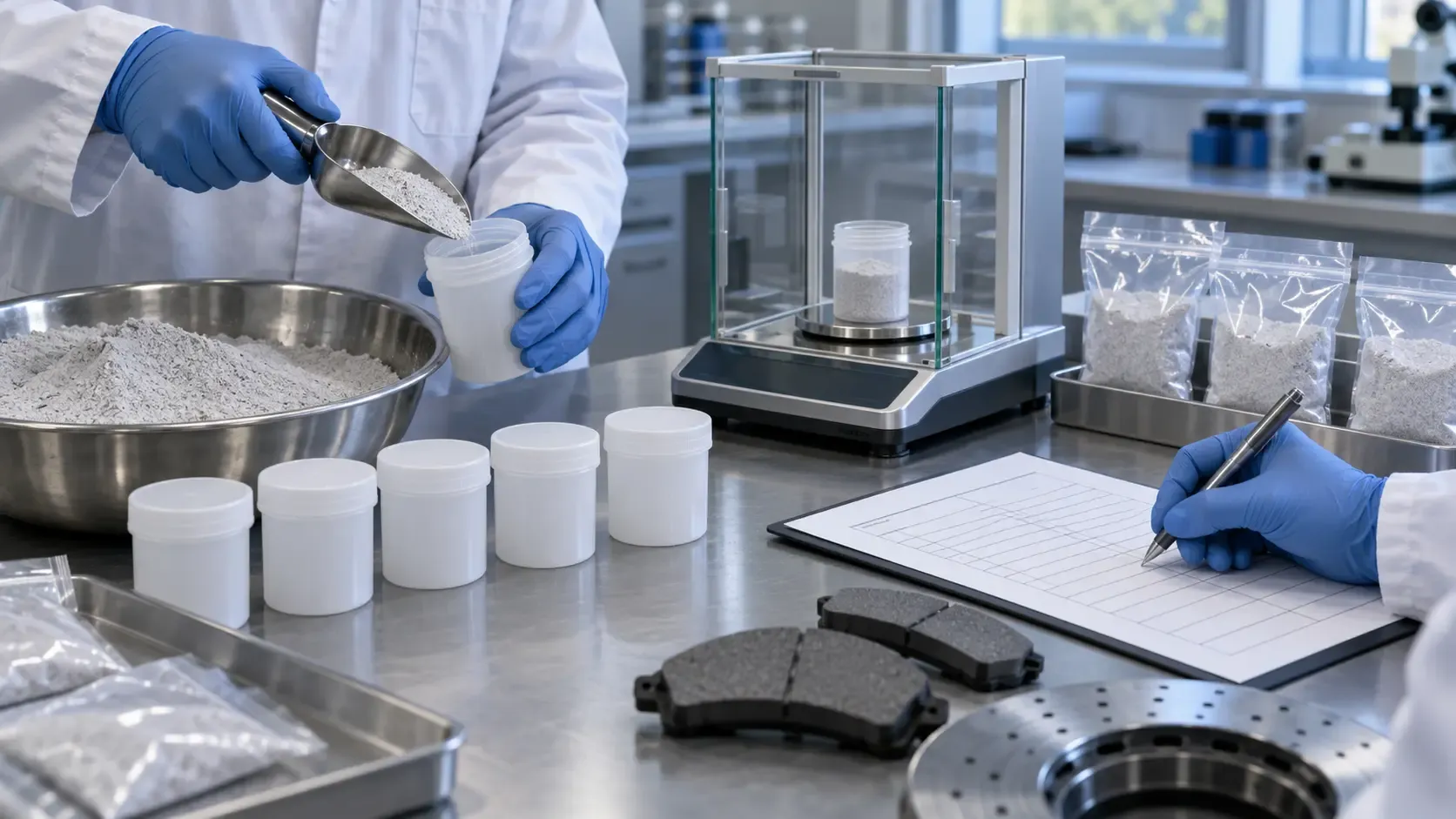
Separate powder handling checks from tribology checks
Powder handling failures can create misleading formulation results. Moisture pickup, segregation, poor feeding, agglomeration, or an inconsistent mixing sequence may be blamed on the mineral when the real cause is process control. Check the powder before interpreting finished-pad data.
| Trial observation | Possible process explanation | Useful follow-up |
|---|---|---|
| Uneven powder distribution | Segregation, poor addition sequence, or insufficient mixing | Review loading order, mixing energy, sampling points, and retained blend |
| Unexpected pressing response | Packing, moisture, binder distribution, or bulk-density change | Compare moisture, bulk handling, green density, and compaction records |
| Different wear track or noise | Composite composition, transfer layer, counterface, or test history | Repeat matched tests and document disc condition and run-in procedure |
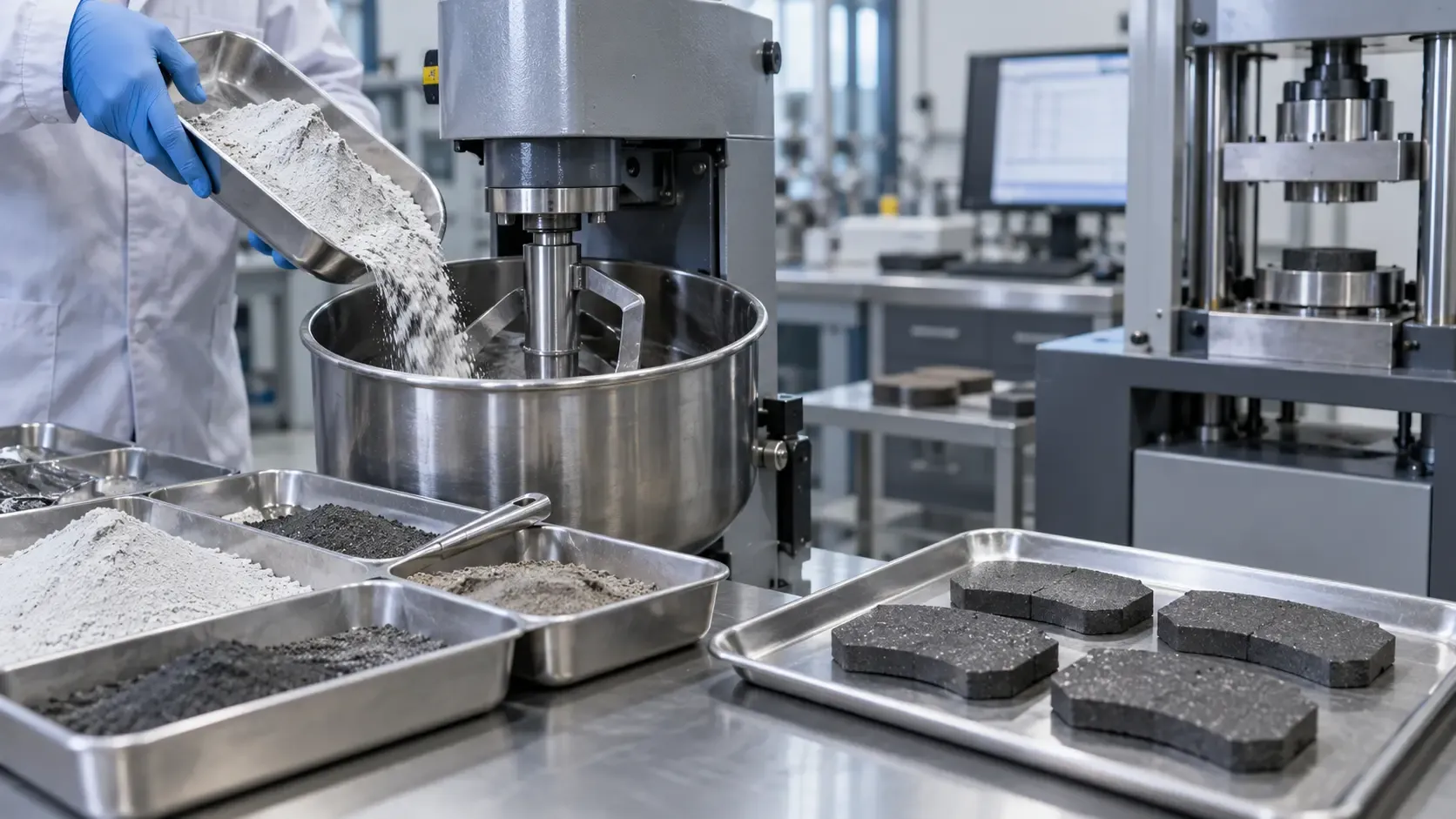
Define the finished-pad evidence before the first trial
A customer may care about friction stability, wear, fade and recovery, noise, compressibility, thermal response, or dimensional behaviour. These are different questions. The trial plan should specify which are screening indicators and which are release criteria.
Use the same specimen geometry, counterface, conditioning, load, speed, temperature history, and evaluation method when comparing powders. Brake-friction research also shows why test method and friction-layer development matter; a single number from one run should not be presented as a product-wide result.
Build a decision matrix
Record the powder lot and formulation beside each result. Mark each criterion as pass, fail, or requires confirmation. If a result changes, first ask whether the mineral changed, the process changed, or the test surface changed.
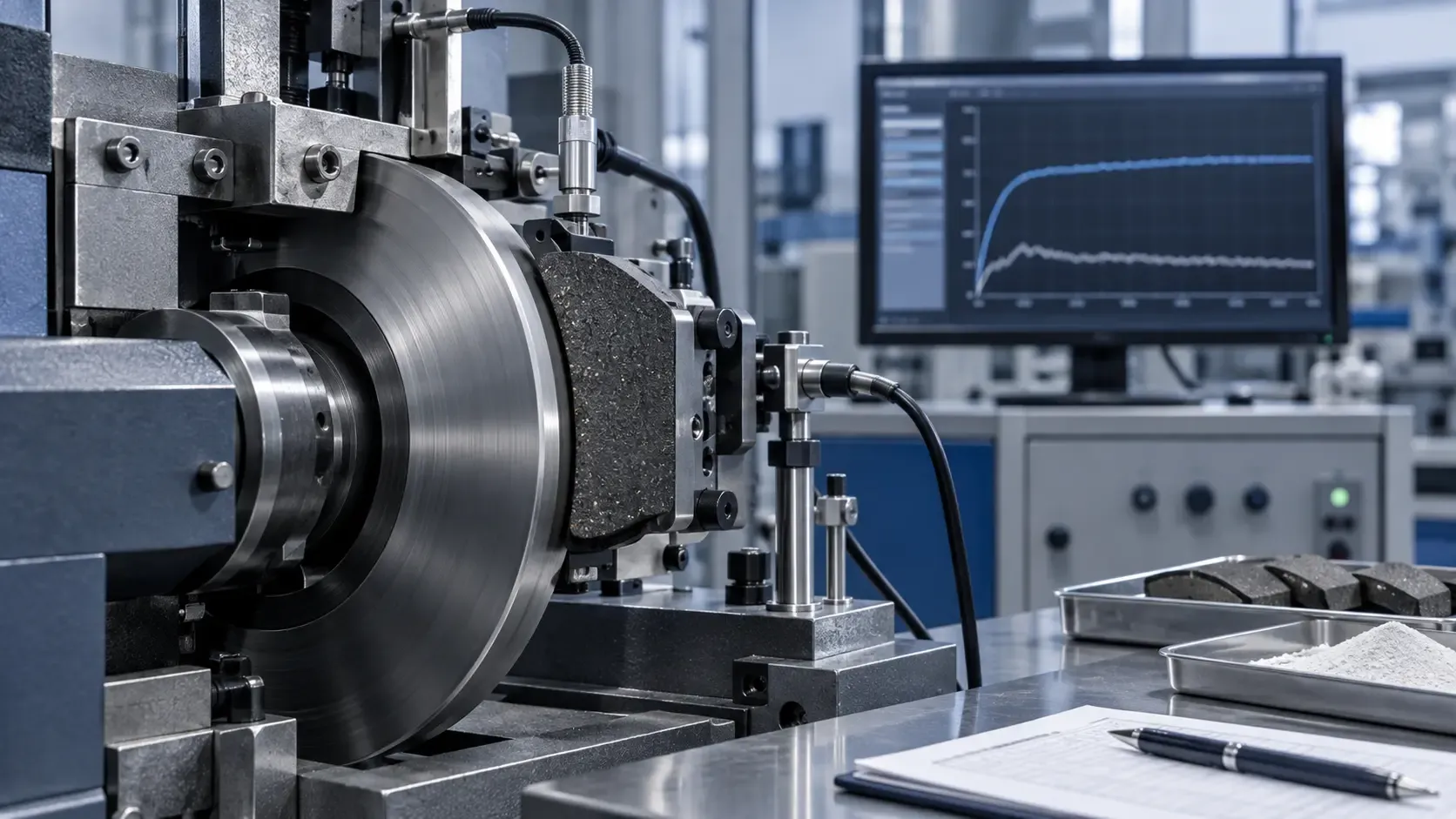
Prepare an RFQ that a silica supplier can answer
A useful RFQ describes the intended friction-material system without asking the supplier to guess the formulation. Include the application type, binder family, current mineral role, target addition route, particle-size method, chemistry requirements, moisture limit, packaging, annual demand, sample quantity, and the customer-side tests.
Changtong’s general-purpose crystalline silica powder can be reviewed against the required material identity and test scope. Before requesting a quotation, use the site’s silica powder RFQ checklist and the COA reading guide to define the evidence you need. For sample and document coordination, contact Changtong’s technical team.
FAQ
Can silica powder alone determine brake-pad friction?
No. Friction is a property of the complete composite and test interface. Silica powder can be one controlled material variable, but it cannot replace formulation and finished-specimen testing.
Is ground crystalline silica the same as silica fume?
No. They have different material identities and should be specified, tested, and interpreted separately. The RFQ should name the intended material family explicitly.
Which particle size is best for friction materials?
There is no universal answer. Compare the available grade or lot within the customer’s formulation, pressing route, cure schedule, and defined friction and wear tests.
What should be sent with a sample request?
Send the application, binder family, current filler role, target particle-size method, moisture and chemistry requirements, sample quantity, packaging needs, and the customer-side acceptance tests.
Request a friction-material filler trial discussion
Share the material identity, formulation role, particle-size method, sample requirement, and finished-pad test plan. Changtong can use those details to clarify grade scope and supporting documents.
Request a QuoteReference note: publicly available friction-material literature is used only to frame the testing logic. It does not represent Changtong’s measured brake-pad data, a product guarantee, or regulatory approval. See the Oak Ridge National Laboratory friction-material survey and the review of automotive brake-lining materials for background.