Silica Powder for Paints and Coatings: Selection Guide
Learn how silica powder affects coating viscosity, gloss, texture, sedimentation and film quality, with a practical trial and specification method.
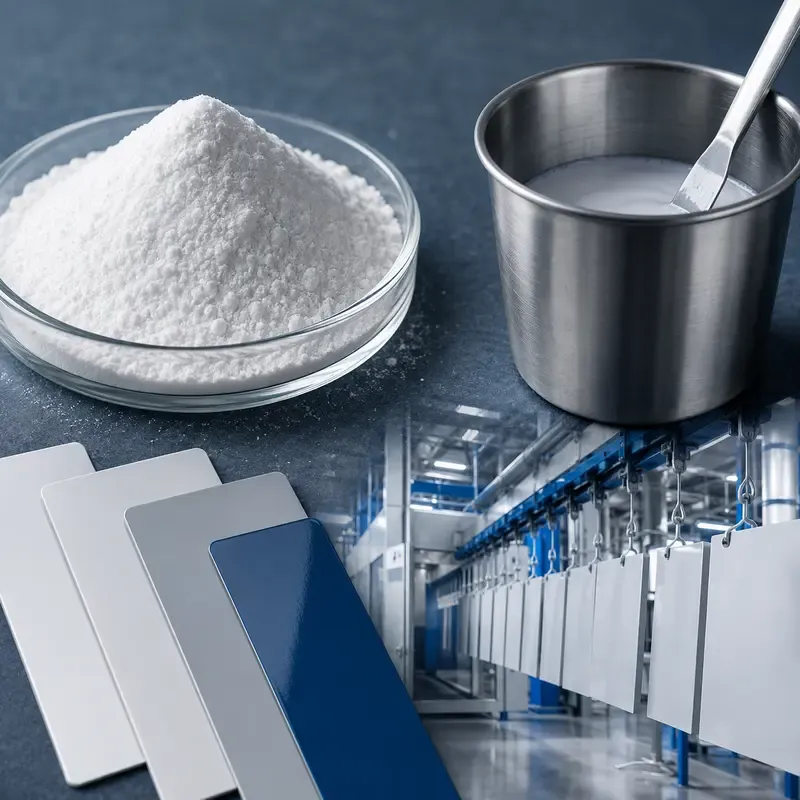
In coatings, silica powder is a formulation variable: it can change rheology, surface appearance and process stability at the same time.
The right grade depends on binder chemistry, solids loading, particle-size distribution, surface treatment, application method and the required film result. This guide focuses on coating trials, not a universal performance promise.
Last updated:
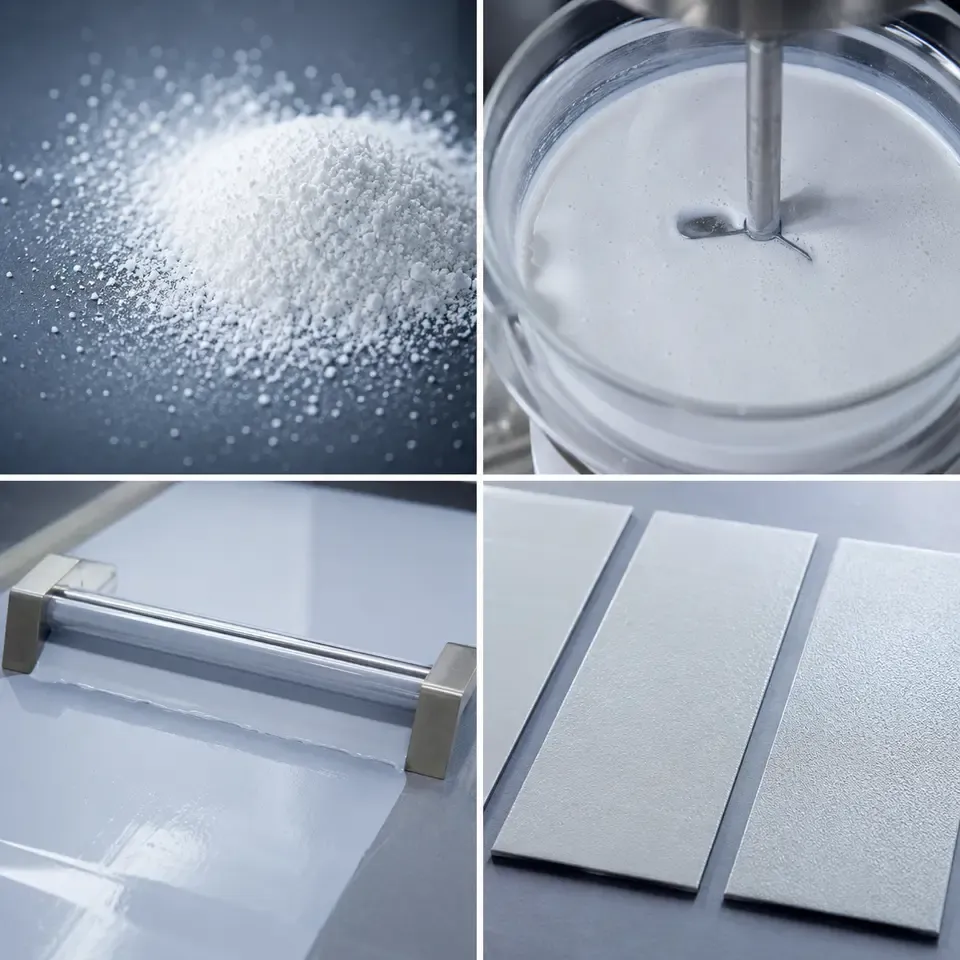
Which Coating Result Are You Trying to Control?
| Coating objective | Powder-related variable | Trial observation |
|---|---|---|
| Viscosity and application | Surface treatment, fine fraction, loading and wetting. | Viscosity at the process shear rate, leveling and application force. |
| Gloss and texture | Particle-size distribution, surface roughness and dispersion. | Gloss, film texture, haze and visible agglomerates. |
| Sedimentation control | Particle density, size distribution, binder interaction and storage time. | Settling profile, ease of remixing and hard pack formation. |
| Film integrity | Contamination, moisture, dispersion and cure compatibility. | Pinholes, craters, adhesion and cure appearance. |
Particle Size Is a Film-Design Decision
A mesh number does not describe the full distribution. A coarse tail may affect surface texture or defects, while a fine fraction can raise surface area and binder demand. The same grade should therefore be compared using the same sieve or laser-diffraction method, not by changing between mesh and D-values during the discussion.
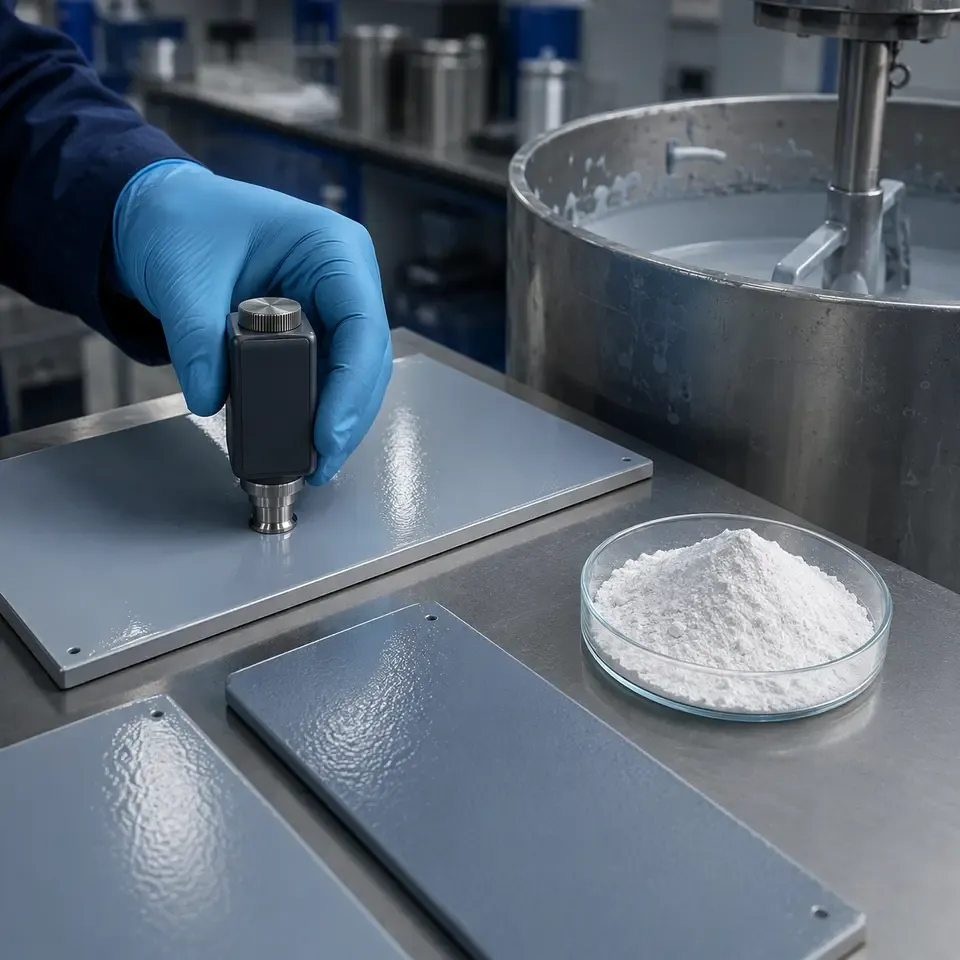
A Controlled Coating Trial
| Stage | Hold constant | Measure or inspect |
|---|---|---|
| Premix | Binder batch, temperature and addition order. | Wet-out, foam and initial viscosity. |
| Dispersion | Equipment, speed, time and loading. | Fineness, agglomeration and viscosity curve. |
| Application | Substrate, film thickness and drying/curing schedule. | Gloss, leveling, texture, defects and adhesion. |
| Storage | Container, temperature and observation interval. | Settling, remixing and viscosity drift. |
Changtong’s company introduction lists paint and epoxy among silica powder application contexts and describes broad size ranges. Those statements establish application scope only. The coating grade, treatment status and current particle-size/chemistry data must be confirmed for the actual formulation.
Frequently Asked Questions
Does finer silica always improve coating smoothness?
No. Finer material can increase surface area and binder demand. The best result depends on the target texture, dispersion and rheology.
Can a coating trial use only a mesh number?
It can be a starting point, but the acceptance plan should also define the test method, pass rate or distribution and the final film criteria.
Why can the same powder behave differently in two coatings?
Binder polarity, loading, dispersant, shear, temperature and cure conditions can change the result.
Related Changtong Product
For a coating-grade starting point, review Crystalline Silica Powder for Paint & Coatings 600–2500 Mesh, then validate dispersion, oil absorption, viscosity and film appearance in the intended formulation.
References
- ISO 13320 particle-size analysis by laser diffraction.
- Why particle-size distribution matters in silica powders.
- Hydrophobic silica selection for resin systems.
Discuss a Coating-Grade Trial
Send the binder, loading, application method, target film result and particle-size method.
Contact Changtong technical sales