What Silica Powder Is Used in Welding Electrode Coatings?
Learn how to screen silica powder for welding electrode coatings by material identity, chemistry, particle-size evidence, moisture, documentation and complete formulation trials.
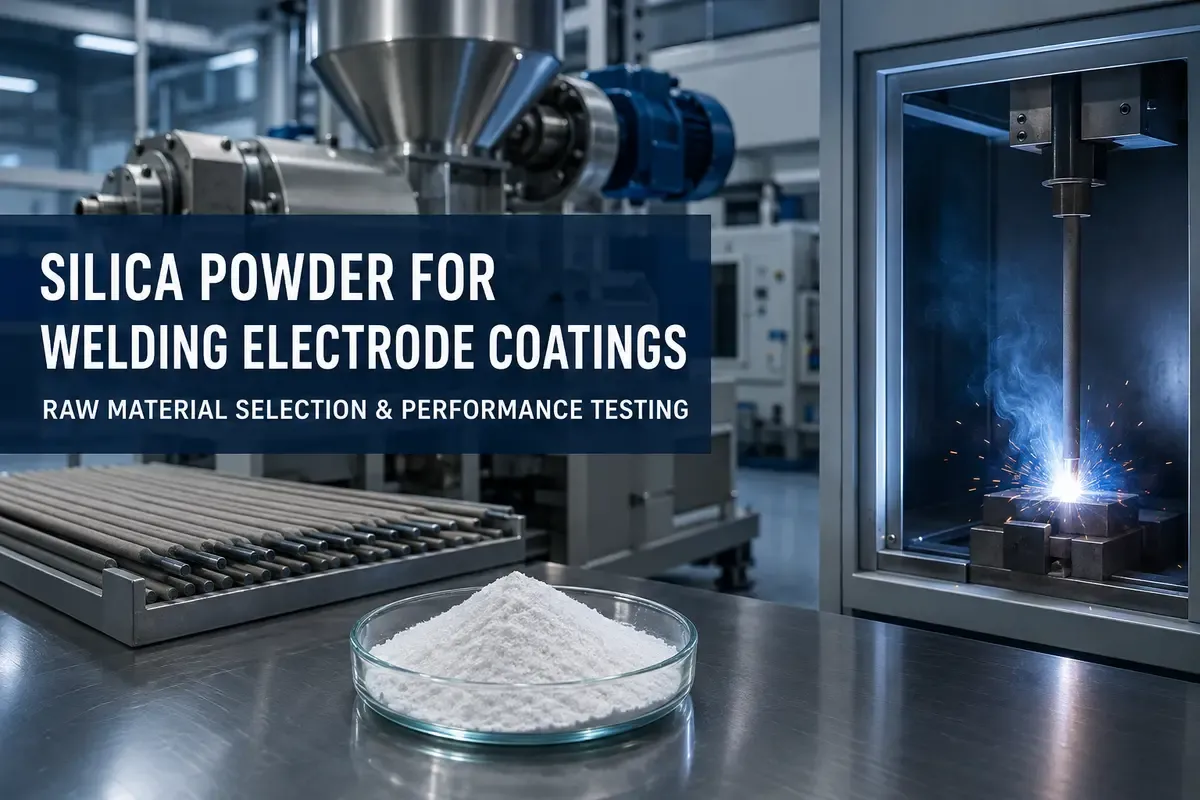
Silica powder used in welding electrode coatings is an application-matched crystalline silica raw material, not a finished electrode ingredient that can be approved by mesh number alone.
For buyers comparing silica powder for welding electrode coatings, a practical selection starts with material identity, chemistry, particle-size evidence and moisture control. The powder must then be checked inside the complete coating or flux formulation, because arc behavior, slag formation and weld-metal results belong to the finished system.
Last updated: · Scope: silica powder screening for electrode-coating and welding-flux formulations
What Does Silica Powder Do in an Electrode Coating?
In an electrode coating, silica powder is one part of a multi-material recipe. Its practical role depends on the binder, mineral additions, alloying materials, moisture condition, extrusion or pressing route and final baking schedule. That is why a supplier should describe the powder as a formulation raw material rather than promise a single arc or slag result.
The first purchasing question is therefore not “Which mesh is best?” It is “Which material identity and measurable limits can be tested in our coating system?” That wording keeps the material review separate from the qualification of the complete electrode.
The current electrode-grade ultrafine silica powder product page describes the available grade scope and its application boundary. Use that page as a starting point, then confirm the lot-specific values and the complete coating recipe during technical review.
For a broader view of how Changtong separates crystalline quartz powder from other silica families, see the silica material family selection guide. The distinction matters here because different silica routes should not be substituted by name alone.
Which Silica Powder Characteristics Should Be Screened First?
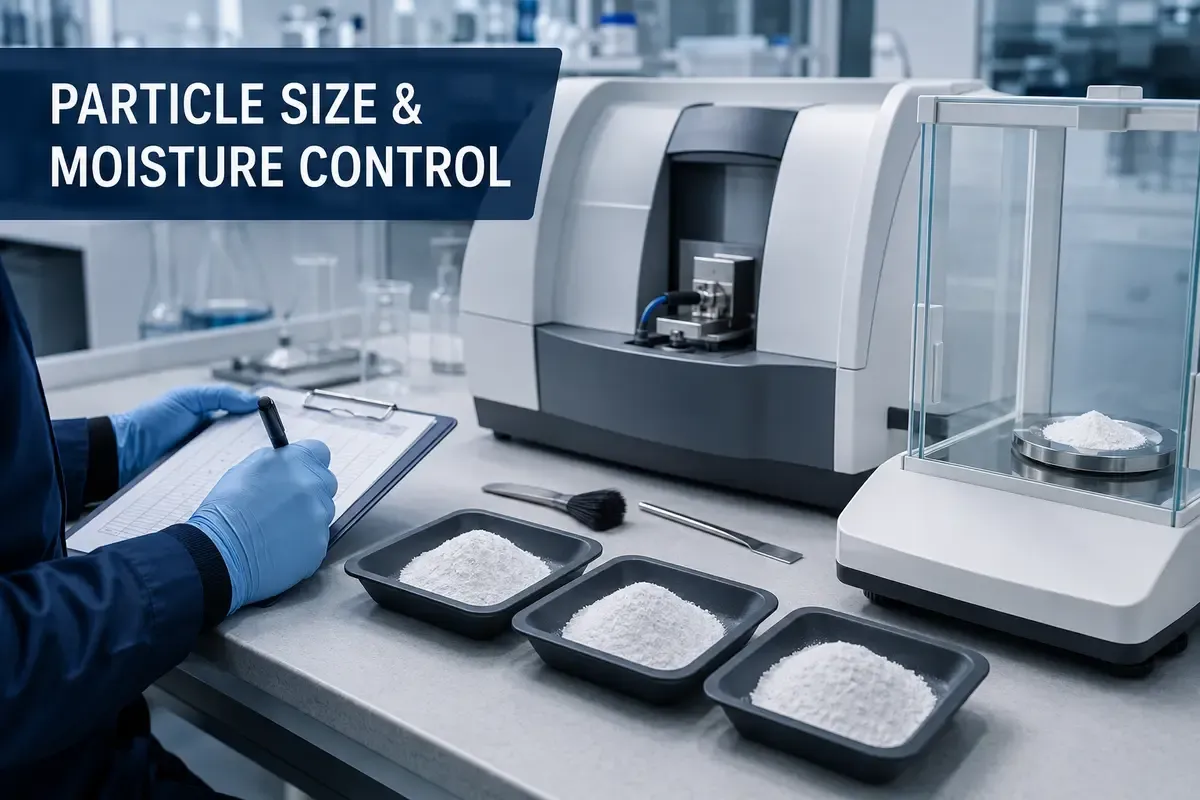
Early screening is most useful when each requested value has a clear reason. Chemistry helps control impurity risk; particle-size information helps describe the powder entering the mix; moisture helps anticipate storage and handling variation; and the lot certificate connects the result to the shipment under review.
| Screening point | What to request | How it supports a trial |
|---|---|---|
| Material identity | Crystalline silica/quartz description and intended grade | Prevents substitution with a different silica family |
| Chemistry | SiO₂ and relevant impurity limits with method or COA reference | Sets a comparable chemical baseline between lots |
| Particle size | Mesh or sieve limit, plus D-values when required | Clarifies coarse-particle control and distribution needs |
| Moisture | Limit, test method and lot result | Helps keep mixing and storage comparisons meaningful |
| Traceability | Lot number linked to the certificate of analysis | Allows an unexpected result to be investigated |
How Should 1000–3000 Mesh Be Interpreted?
“1000–3000 mesh” is useful as a commercial grade range, but it is not a complete particle-size distribution. A mesh description does not automatically provide D10, D50, D90, particle shape or the percentage in the coarse tail. Those details matter when the coating process is sensitive to flow, segregation, surface area or retained oversize.
For a buyer-ready request, specify whether the acceptance rule is a sieve residue, a laser-diffraction distribution, or both. The particle-size distribution guide explains why mesh and D-values answer different questions. The product's nominal 1000–3000 mesh range should be treated as a starting grade description until the final test method and limits are agreed.
| Evidence | Useful decision | Do not infer |
|---|---|---|
| Mesh or sieve residue | Whether coarse particles exceed a defined opening or retained limit | Complete PSD or median particle size |
| D10, D50 and D90 | How the measured distribution is positioned under a stated method | Coating performance without a formulation trial |
| Microscopy or visual check | Whether agglomerates or visible foreign matter need investigation | A release specification by itself |
How Can a Small Coating Trial Separate Material Effects?
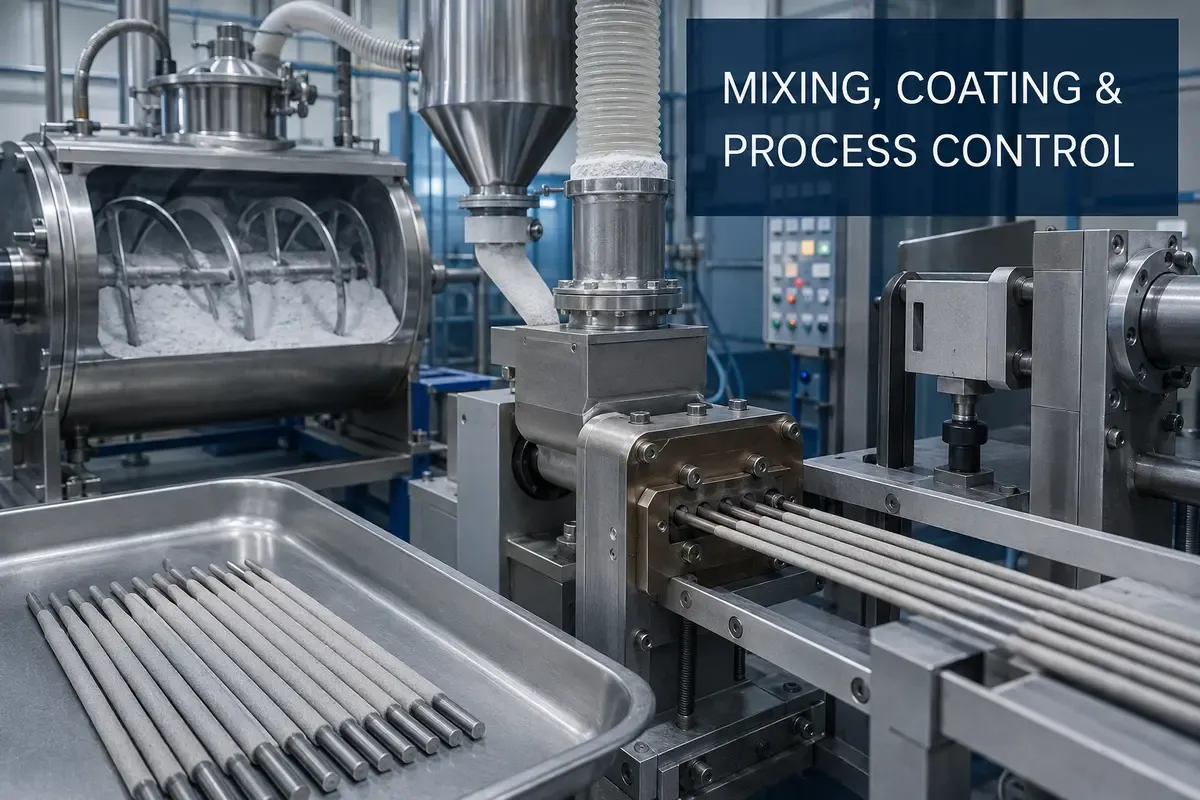
A useful trial changes one material question at a time. Keep the binder, mixing order, liquid addition, batch size, forming pressure and baking schedule fixed wherever possible. Compare the candidate powder with the incumbent or a retained reference lot rather than comparing two uncontrolled laboratory batches.
1. Define the comparison
Record the electrode or flux type, the candidate loading, the reference material, the planned batch size and the observations that will decide the next step. Include the powder lot number so the sample and documents cannot be separated later.
2. Condition and weigh
Use the same storage and conditioning practice for each comparison. Weigh the powder with the other dry additions under the site's dust-control procedure, and note any caking, poor flow or visible segregation before mixing.
3. Mix and form
Follow the normal sequence used by the electrode maker. Record mixing time, order of addition, liquid or binder addition and forming observations. A smooth laboratory blend does not by itself prove extrusion stability at production scale.
4. Bake and inspect
Apply the agreed drying or baking schedule, then compare the physical condition of the coating, dimensional consistency and any visible defects. Keep these observations tied to the material record.
Which Results Should Be Connected to Welding Performance?
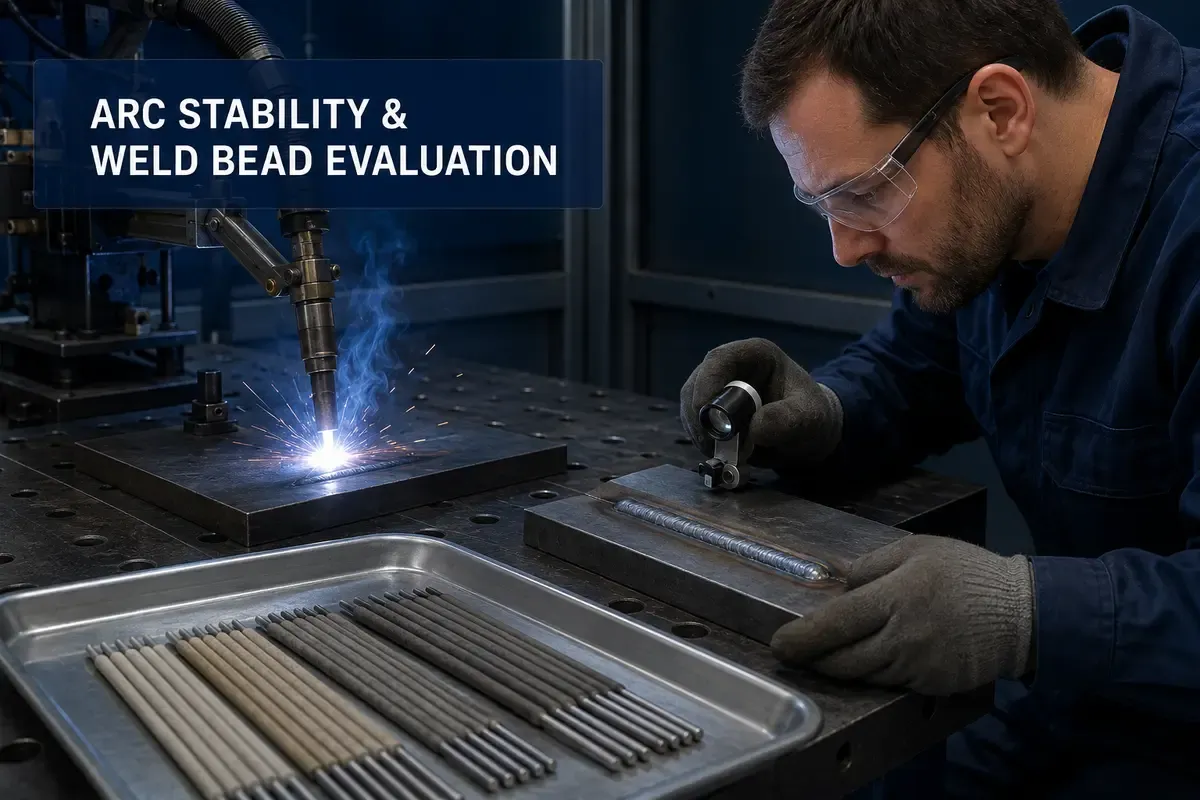
Raw-powder data and finished-electrode results should be reported as two linked but separate evidence sets. Chemistry, moisture and size describe the incoming material. Arc stability, slag behavior, bead appearance, deposition behavior, weld-metal chemistry and mechanical results describe the completed formulation and process.
That boundary avoids a common purchasing error: assigning an electrode-level result to silica powder alone. If the trial changes more than one raw material or process condition, the result cannot identify the cause with confidence.
| Stage | Record | Interpretation boundary |
|---|---|---|
| Incoming powder | Material identity, chemistry, size evidence, moisture and lot | Describes the raw material received |
| Coating preparation | Recipe revision, mixing sequence, forming and baking conditions | Shows how the raw material entered the process |
| Welding trial | Arc observations, bead inspection and agreed test results | Evaluates the complete electrode or flux system |
What Documents Should Accompany a Silica Powder Sample?
Before a sample becomes a production candidate, ask for a document set that can be matched to the actual grade and lot. A specification describes the intended range; a TDS explains the product context; an SDS supports handling review; and a COA records the result for a particular lot. None of these documents replaces the customer's formulation validation.
- grade name and material identity;
- agreed chemistry and moisture limits with test methods;
- mesh, sieve-residue or PSD method and acceptance rule;
- lot number and certificate of analysis;
- packing, storage and shelf-condition information;
- change-control expectations if source, equipment or grade description changes.
For a more detailed document workflow, review the silica powder quality-document checklist. Buyers who also need to understand how natural quartz is processed can read the crystalline silica powder manufacturing guide. Asking for method and lot context is more useful than collecting a generic brochure without a comparison rule.
Frequently Asked Questions
Is silica powder the same as welding flux?
No. Silica powder can be a raw-material component in selected coating or flux formulations. A welding flux or electrode is a complete manufactured system with its own formulation, process and qualification requirements.
Is 3000 mesh automatically better than 1000 mesh?
No. Finer is not automatically better. The suitable grade depends on the recipe, mixing behavior, forming route, moisture condition, coarse-particle limit and the finished electrode maker's validation results.
Can the COA prove arc stability?
No. A COA can document agreed raw-material results such as chemistry, moisture or particle-size evidence. Arc stability must be assessed in a controlled trial of the complete electrode or flux formulation.
What should be sent when requesting a matching grade?
Send the electrode or flux type, binder system, target loading, size method, chemistry limits, moisture requirement, annual quantity, packing format and the tests used for approval. This gives the supplier a defined technical question instead of a mesh number alone.
Technical References
Match the Silica Grade to the Full Coating System
Send the electrode or flux type, formulation context, size method, chemistry limits, moisture requirement, sample quantity and approval tests. Changtong can review the request against the documented grade scope.
Contact our technical sales team