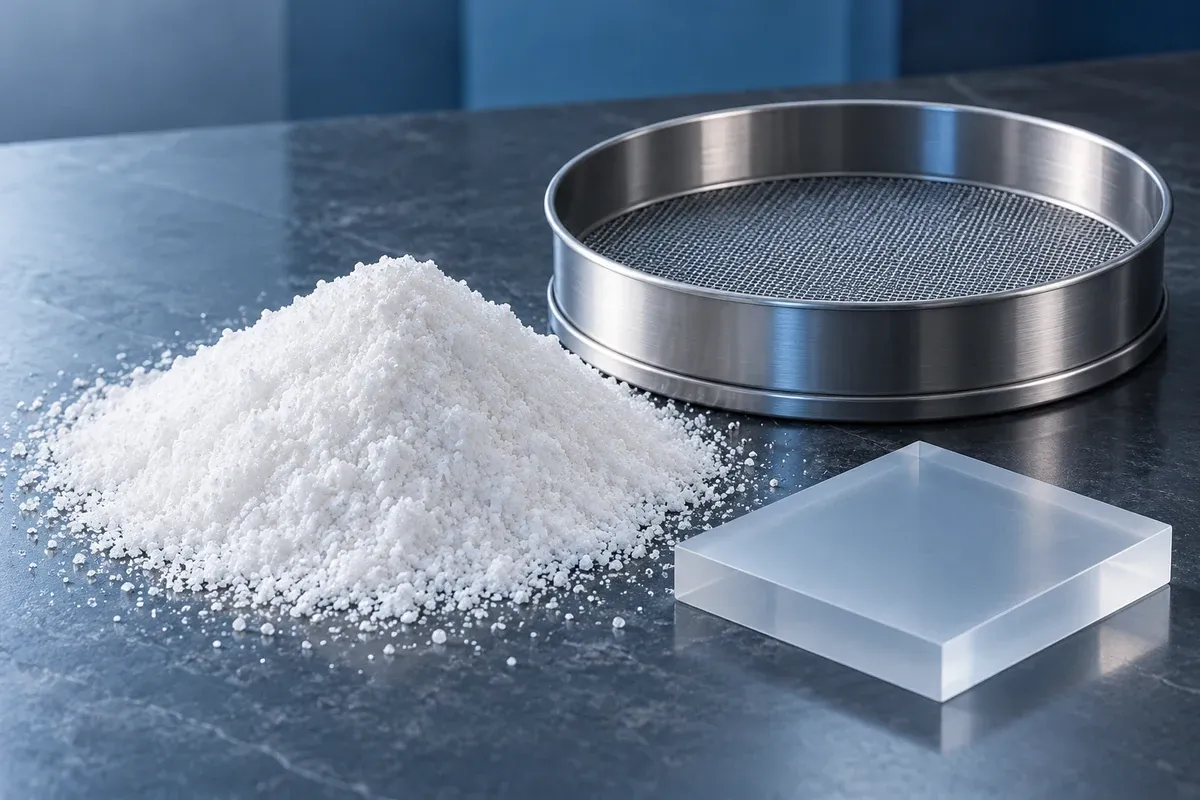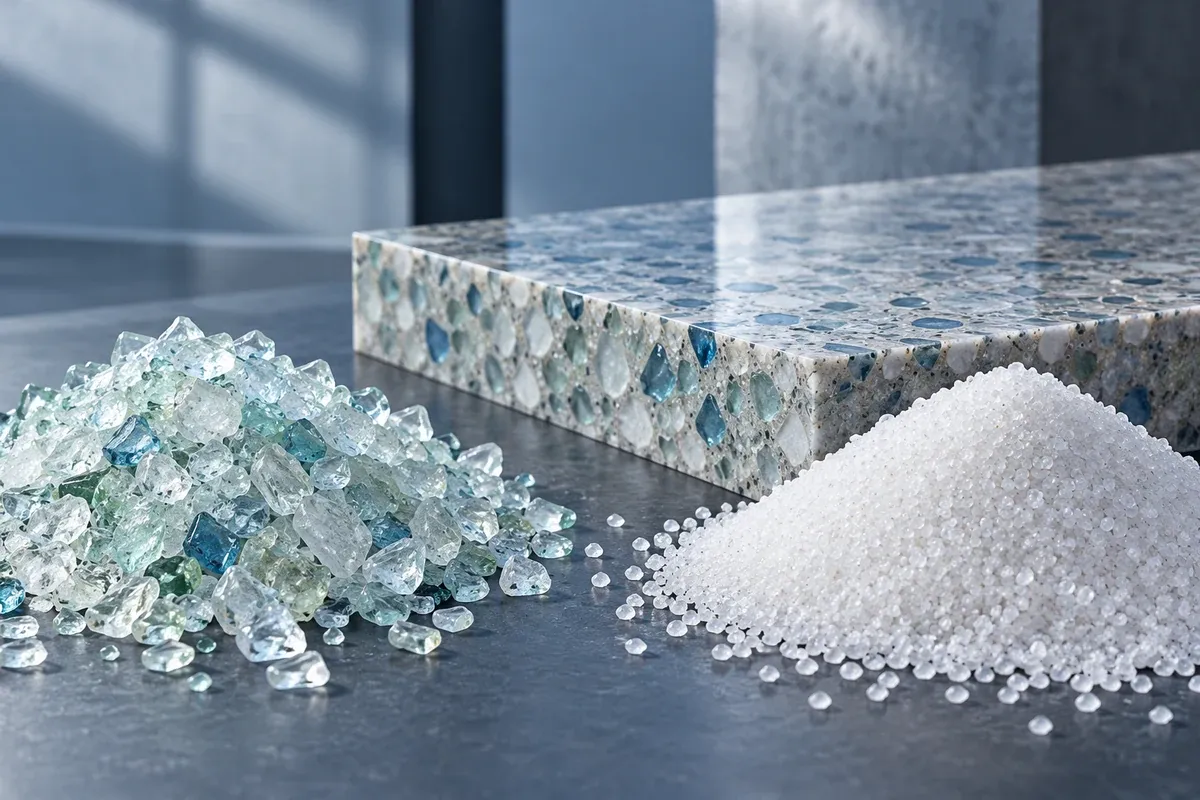
Silica Powder Mesh Size Chart: Mesh to Microns
Compare silica powder mesh sizes with micron ranges, understand sieve limits, and write clearer specifications for industrial purchasing.
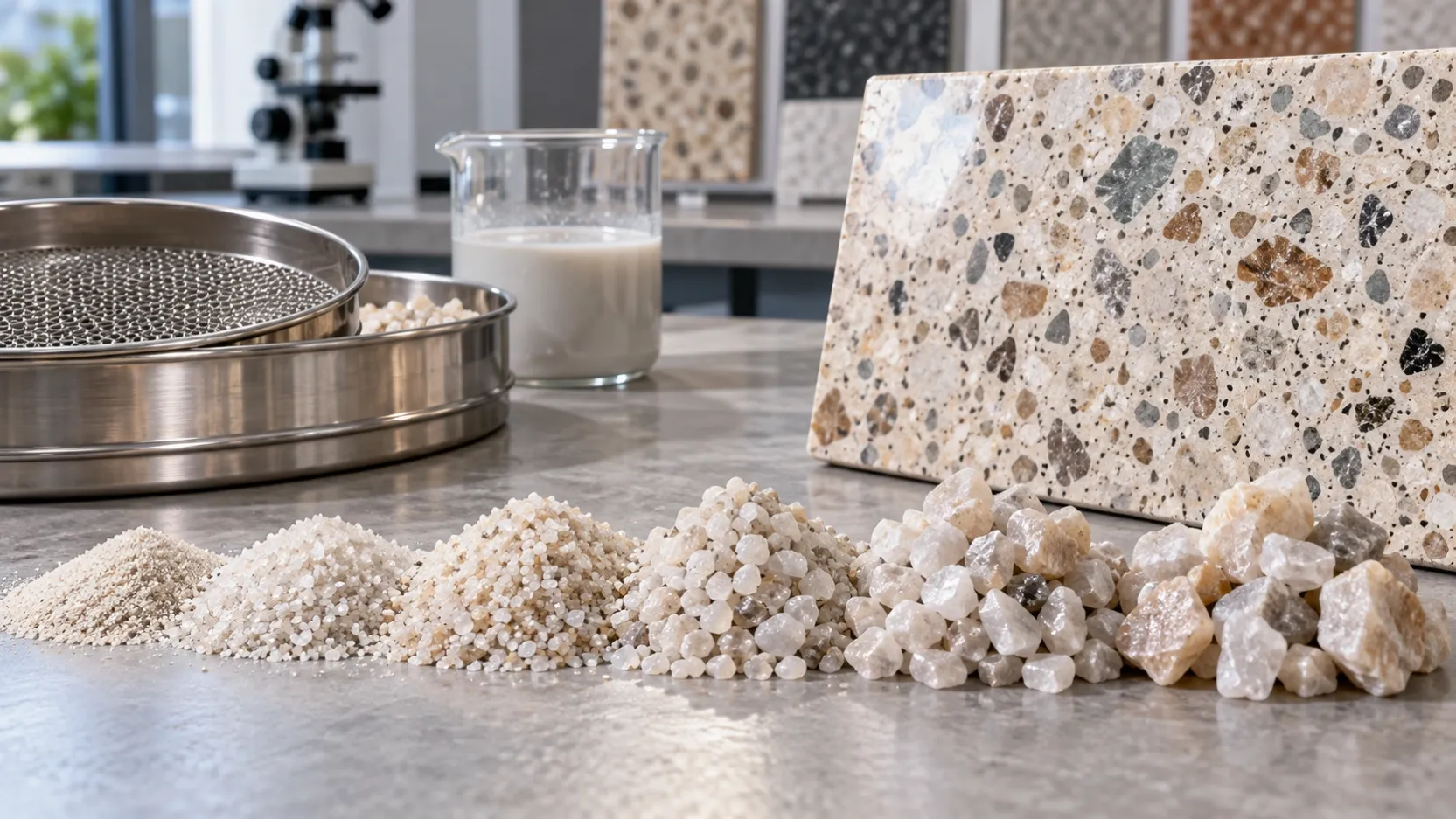
Mesh and microns are related, but they are not interchangeable product specifications.
A mesh number normally refers to a sieve designation or nominal sieve opening. Microns describe length. For an industrial silica powder RFQ, state the sieve standard, passing or retained percentage, test method, and—when fine-powder behavior matters—the required D10, D50, and D90.
Last updated:
Silica Powder Mesh-to-Micron Chart
| Mesh designation | Nominal opening (µm) | Nominal opening (mm) | Typical purchasing description |
|---|---|---|---|
| 8 mesh | 2,360 | 2.360 | Coarse granule fraction |
| 12 mesh | 1,700 | 1.700 | Coarse granule fraction |
| 16 mesh | 1,180 | 1.180 | Coarse granule fraction |
| 20 mesh | 850 | 0.850 | Coarse sand fraction |
| 30 mesh | 600 | 0.600 | Medium sand fraction |
| 40 mesh | 425 | 0.425 | Fine sand fraction |
| 50 mesh | 300 | 0.300 | Fine sand or coarse powder |
| 70 mesh | 212 | 0.212 | Coarse powder fraction |
| 80 mesh | 180 | 0.180 | Coarse powder fraction |
| 100 mesh | 150 | 0.150 | Powder fraction |
| 140 mesh | 106 | 0.106 | Fine powder fraction |
| 200 mesh | 75 | 0.075 | Fine powder fraction |
| 325 mesh | 45 | 0.045 | Very fine sieve fraction |
These values are nominal sieve-opening references. The actual commercial acceptance rule may be expressed as percent passing, percent retained, or a full multi-sieve distribution. Confirm the applicable sieve standard before comparing suppliers.
Changtong COA reference: RG400/RG600 fused silica
The December 2025 Changtong COA uses 200 mesh and 325 mesh as sieve references. The values below are nominal opening references, not D10, D50 or D90 measurements.
| COA reference | Nominal opening | How to interpret it |
|---|---|---|
| 200 mesh | 75 µm | Use with the COA's pass-range or retained-percentage fields and stated sieve method. |
| 325 mesh | 45 µm | Use with the COA's pass-range or retained-percentage fields; do not infer a median size. |
Source: Changtong fused silica COA, December 2025, grade scope RG400/RG600. Confirm the current revision before writing a purchase limit.
Why a Mesh Number Does Not Equal D50
Opening versus particle size
A sieve opening is a geometric boundary. Irregular particles can pass in different orientations, and agglomerates can behave differently from primary particles. A 325-mesh reference therefore does not prove that D50 is 45 µm.
One cut versus a distribution
“Minus 200 mesh” generally means material passes a nominal 75 µm sieve. It does not reveal the median size, the fine tail, or how much material is close to the upper boundary.
Label versus test result
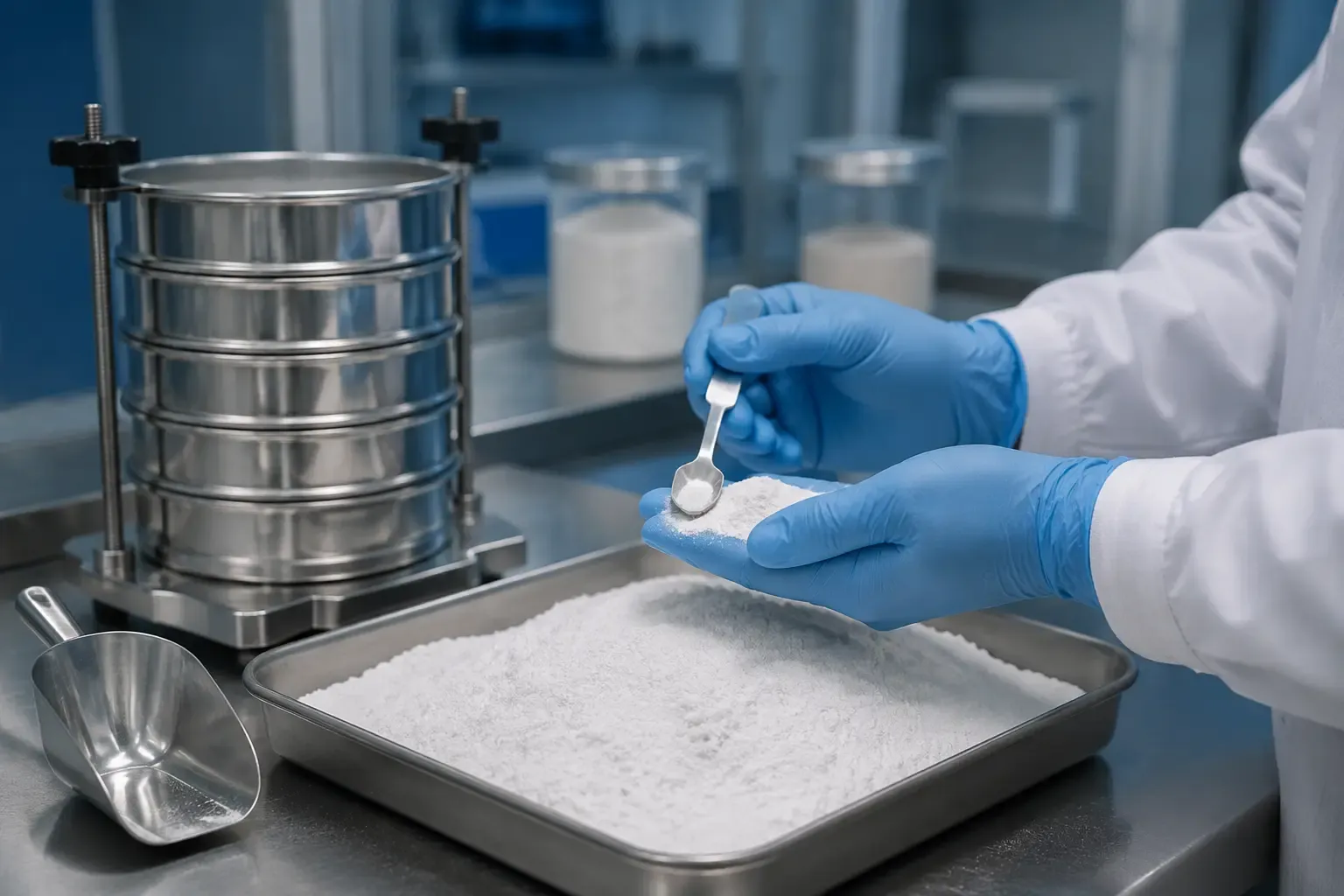
Dry sieving, wet sieving, laser diffraction, and image analysis answer different questions. The method, sample preparation, dispersion condition, and acceptance rule belong in the specification.
Which Particle-Size Method Should a Buyer Request?
| Buyer question | Useful method | What the result supports | What it does not prove alone |
|---|---|---|---|
| Is there coarse oversize? | Defined sieve analysis | Mass retained above a specified opening | Complete fine-particle distribution |
| What is the distribution profile? | Laser diffraction PSD | D10, D50, D90 or other reported percentiles | Chemistry, particle shape, or end-use performance |
| Will the powder meet a slurry or resin process? | Method plus application trial | Links powder behavior to the buyer's formulation | Universal performance across all formulations |
ISO 13320 provides guidance for particle-size analysis by laser diffraction. ASTM E11 and ISO 3310-1 define requirements for test sieves. A supplier comparison is meaningful only when the same method and reporting basis are used.
How to Write a Buyer-Ready Silica Powder RFQ
- Name the material family and intended application.
- State the mesh designation and the agreed sieve standard.
- Specify minimum passing or maximum retained percentage.
- Request D10, D50, and D90 when packing, flow, dispersion, or surface finish depends on the full distribution.
- State chemistry, moisture, packaging, lot identification, and document requirements separately from particle size.
For example, replace “325 mesh silica” with “fused silica powder, sieve result reported against the agreed 325-mesh test sieve, required passing percentage shown on the lot COA, plus PSD by the agreed method.” The exact limits must come from the buyer's process and the current grade specification.
Material-Specific Selection Notes
Changtong's product families include crystalline silica powder, fused silica powder and granules, and cristobalite flour. The correct particle-size request depends on the job: 1–3 mm fused silica granules need a coarse-cut distribution; 325-mesh fused silica powder needs a defined sieve rule and may also need PSD; and High-Whiteness Cristobalite Powder for Epoxy and Refractory Applications should be evaluated against the current technical data sheet and application trial.
Frequently Asked Questions
Does 325 mesh mean 45 µm?
It refers to a nominal sieve opening commonly referenced as 45 µm. It does not mean every particle is 45 µm or that D50 equals 45 µm.
Should a fine silica powder specification use mesh or microns?
Use the term that matches the test. A sieve limit controls a boundary or oversize fraction; a PSD in microns describes distribution percentiles. Many applications benefit from both.
Why do two suppliers quote different results for the same mesh?
They may use different sieve standards, sampling procedures, conditioning, reporting bases, or grade definitions. Ask for the method and raw retained/passing basis.
References
- ASTM E11 — Test sieve cloth and test sieves.
- ISO 3310-1 — Test sieves, technical requirements and testing.
- ISO 13320 — Particle size analysis by laser diffraction.
Define the Particle-Size Requirement Before Comparing Prices
Send the material family, application, sieve or PSD target, chemistry limits, packaging, and required documents for a focused grade discussion.
Contact our technical sales team