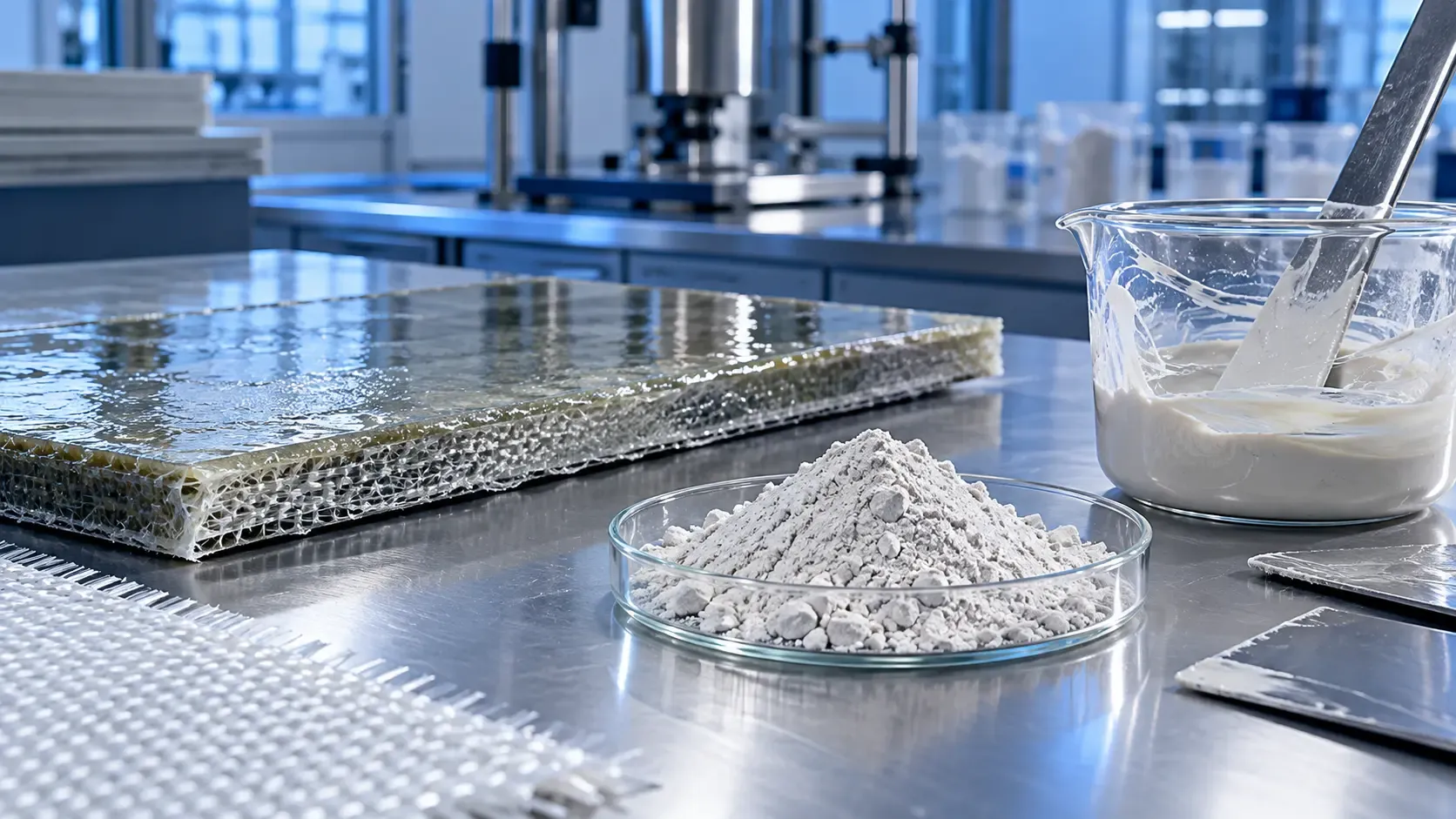
How to Run a Silica Powder Trial When You Have No Materials Lab
A low-equipment screening route for silica powder buyers without a full lab, using a control sample, repeatable observations and clear escalation limits.
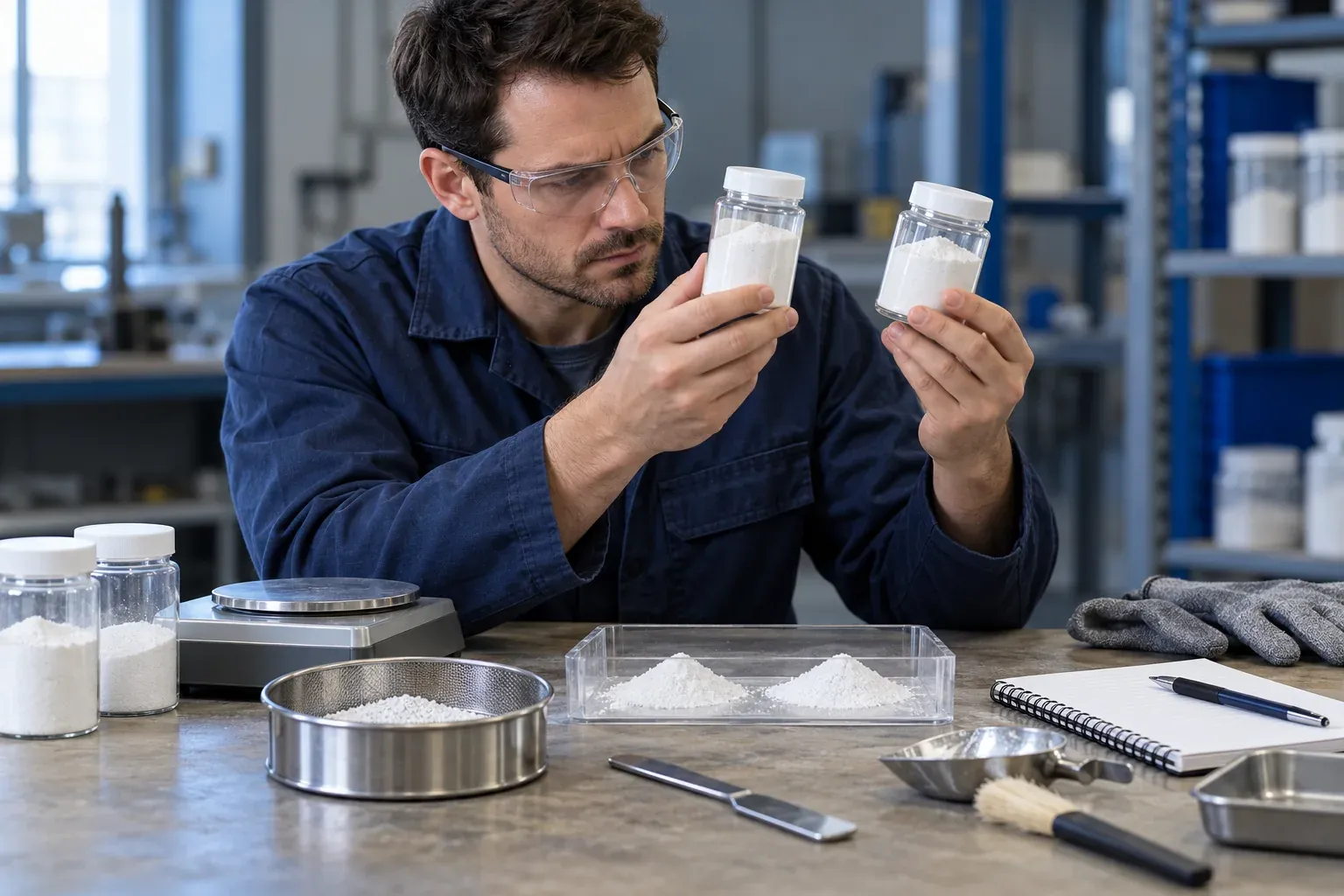
You do not need a full materials laboratory to decide whether a silica powder sample deserves a controlled trial. You do need a clear question, a retained control, a written observation method and a point where an external laboratory or supplier document becomes necessary.
A simple shop-floor screen cannot replace a formal qualification, safety assessment or application-specific test. It is a filter for deciding what to test next.
A new buyer may receive a sample of silica powder without having a laser diffraction instrument, XRD system or rheology lab. That does not make the trial impossible. It changes the decision: the first trial should identify obvious handling and application differences, while any claim that depends on a controlled instrument method should remain open.
The safest approach is to compare one candidate with one known control under the same small-scale conditions. Do not compare a new powder on Monday with an old formula tested months earlier.
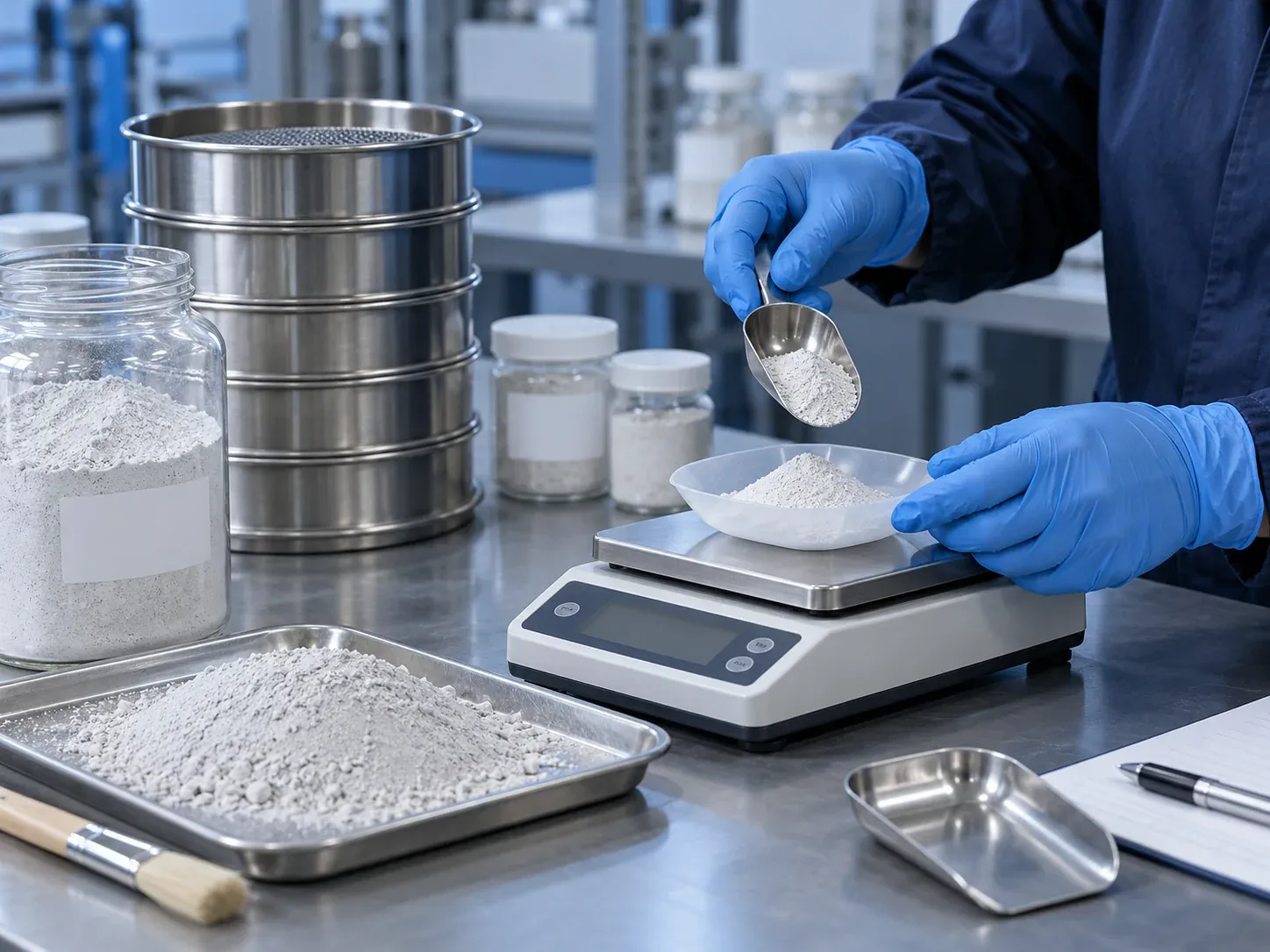
1. Write the trial question in one sentence
Examples include: “Can this grade be handled consistently in our dry blend?” or “Does the candidate wet into our resin without visible agglomeration?” The question should name the process stage, not promise the final product result.
Also write what the trial cannot prove. A visual check cannot establish chemical purity, phase identity, final electrical performance or long-term durability. This boundary protects a small company from turning a useful screen into an unsupported claim.
2. Keep the control and candidate comparable
| Keep constant | Change only one item | Record |
|---|---|---|
| Batch size and mixing time | Candidate powder | Start/end time and operator |
| Binder, liquid or resin amount | Loading within the agreed trial plan | Exact weighed amount |
| Application tool and substrate | Material identity | Photos and visible defects |
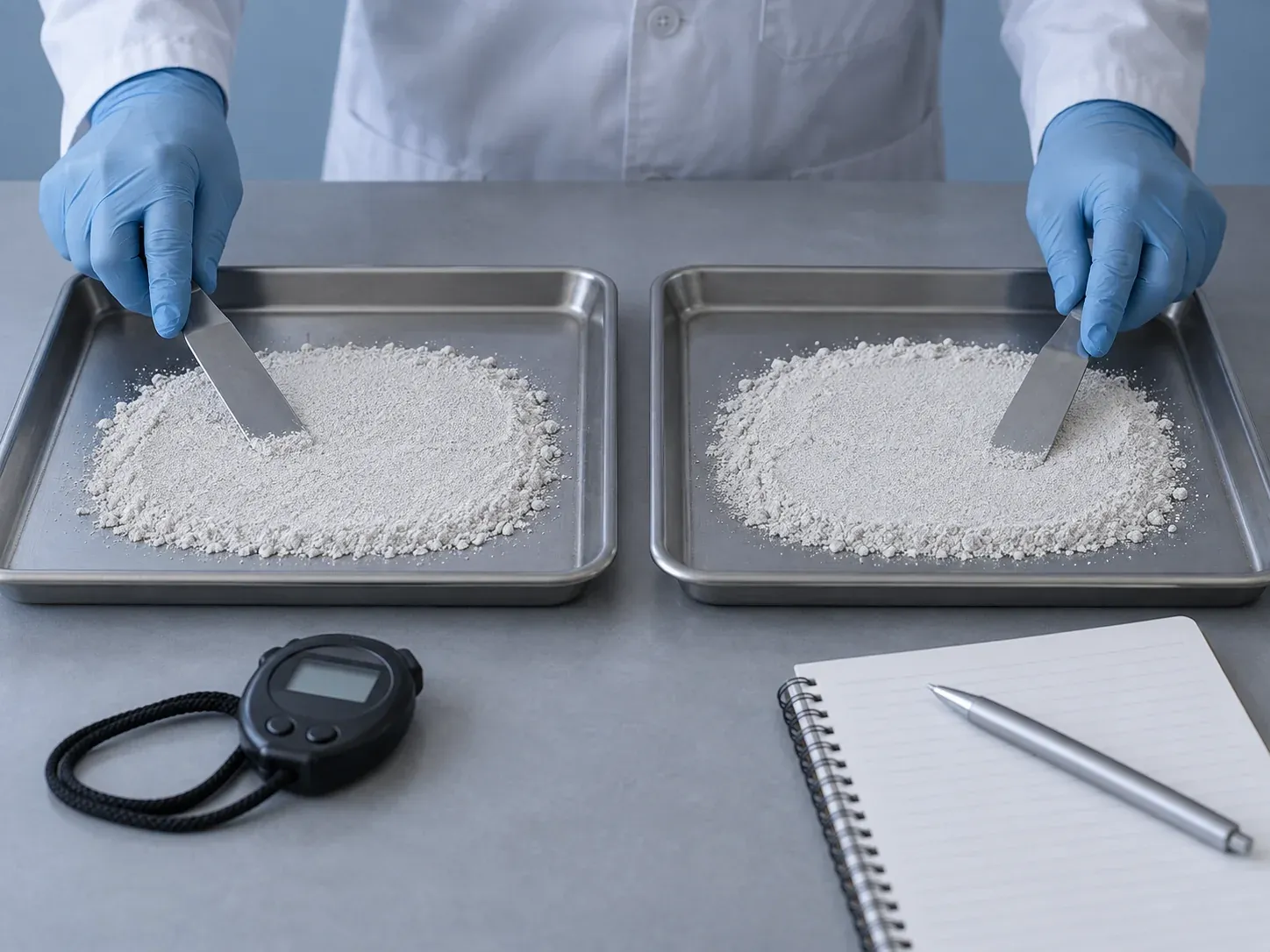
Use the same container, scraper, mixer or application tool for both samples when possible. A different tool can create more variation than the filler itself.
3. Use observations that a small team can repeat
- Package condition and visible contamination.
- Ease of weighing and transfer.
- Dry-blend appearance and obvious agglomerates.
- Wet-out time, visible lumps and settling tendency.
- Application appearance after the same waiting and cure period.
Use a five-point observation scale only if the team defines it. “3” should mean the same thing to the owner, operator and customer. Photographs help, but lighting and camera settings should remain as consistent as practical.
4. Know when to stop the simple screen
Escalate when the result depends on a measured property that the team cannot verify, when the two samples behave differently but the reason is unclear, or when the material will enter a regulated or safety-critical product. Ask the supplier for the relevant TDS, COA, SDS and test method, then decide whether an external lab is needed.
Do not use a simple appearance check to claim a specific purity, PSD, phase, electrical or mechanical value. Those claims need evidence matched to the method.
5. Send the supplier a useful trial report
A short report can include application, control material, candidate grade, lot number, weighed amounts, mixing time, observation photos, unexpected results and the next question. This is more useful than writing “sample good” because it lets the supplier recommend a focused next step without guessing.
FAQ
Can a no-lab trial approve a powder for production?
It can support a screening decision, but production approval should follow the customer’s formal specification and required tests.
What should a first-time buyer request?
Request the exact material identity, grade documents, sample lot reference, storage guidance and the supplier’s recommended trial conditions.
Turn a small sample into a clear next step
Send the application, control material, observation method and unanswered question to the Changtong technical team.
Contact Changtong Technical TeamGeneral sampling reference: Nebraska Department of Transportation Materials Sampling Guide. The referenced sampling examples are not Changtong product specifications.
Related Changtong resources: ultrafine silica powder options, crystalline silica powder process guidance, and Contact Us.