How to Specify Natural Quartz Sand for Foundry Molds
Learn how to specify natural quartz sand for foundry molds by reviewing grain size, distribution, shape, cleanliness, moisture and trial evidence.
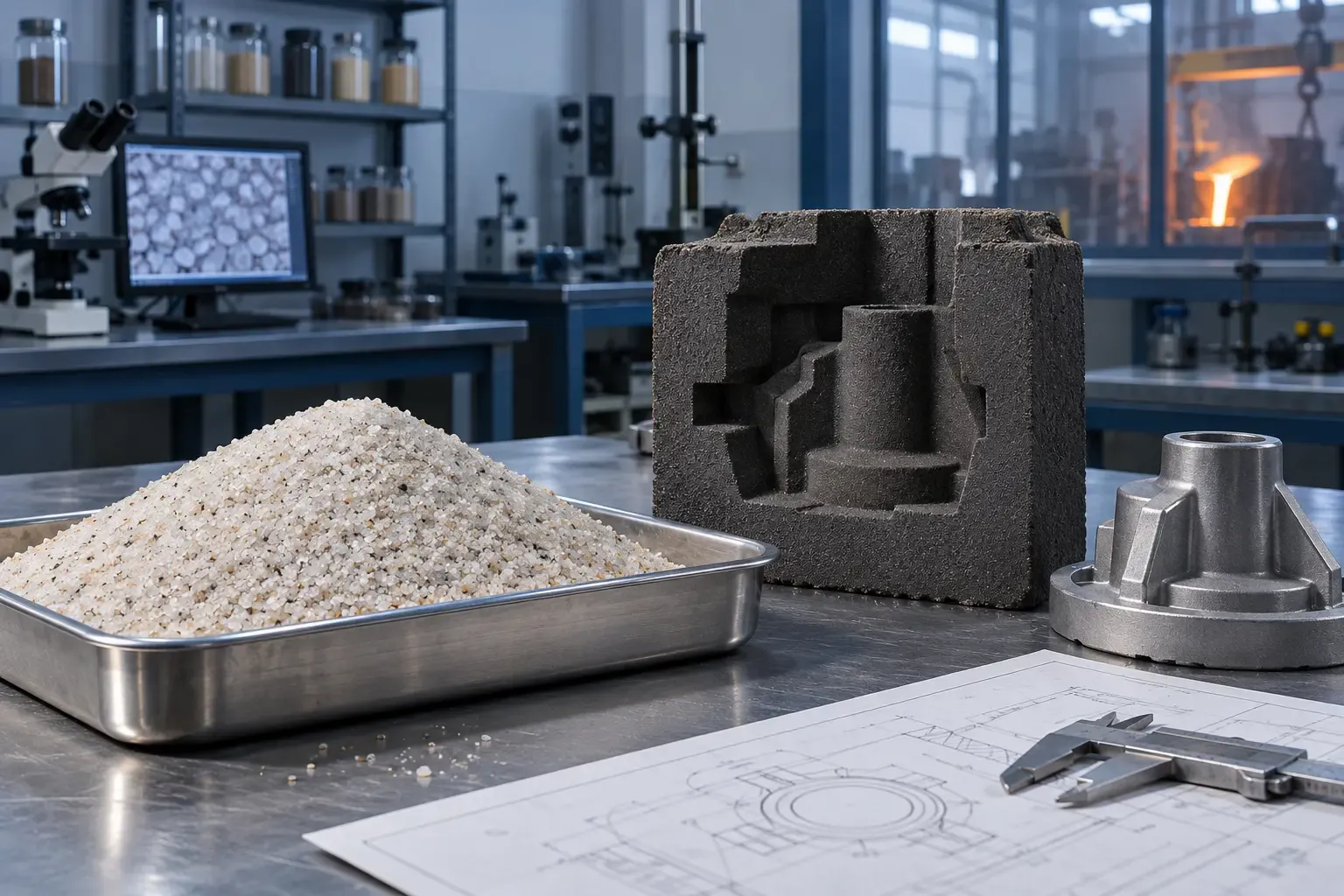
Specify natural quartz sand for the mold process, not by the word “silica” alone.
A useful foundry-sand inquiry connects grain size, distribution, shape, cleanliness and moisture with the mold method, binder system, casting alloy and required surface. That makes supplier comparison practical without turning a general sand grade into a guaranteed casting result.
Last updated: · Scope: natural quartz sand specification, trial planning and RFQ preparation
Why Is Natural Quartz Sand Used in Foundry Molds?
Natural quartz sand is a mineral molding material whose behavior comes from the grains and the surrounding binder system. Grain size and distribution influence packing, permeability and the texture transferred to the casting. Grain shape affects how the sand moves during mixing and compaction. Cleanliness and moisture affect the consistency of the mold process rather than simply changing the appearance of the raw material.
Changtong’s public product page describes its natural quartz sand as processed from selected quartz stone for glass, ceramic and foundry formulations. It lists Mohs hardness 7, a milky-white to translucent appearance and particle-size grading available to agreed requirements. These are product-scope facts for an initial review; they do not replace a grade-specific COA, agreed test method or customer-side casting trial.
Keep the material identity clear in the RFQ. Natural quartz sand is not the same material as fused silica or calcined cristobalite, even when all are discussed as silica-based minerals. A supplier comparison should therefore begin with phase or material description, intended application and evidence for the selected grade.
Which Foundry-Sand Details Should the RFQ State?
“Foundry silica sand” is too broad for a reproducible quotation. The request should describe the mold route and the evidence needed to compare one grade with another. Use the natural quartz sand product page as the application starting point, then add the process details below.
| RFQ field | What to state | Why it matters |
|---|---|---|
| Mold process | Green sand, chemically bonded sand, core making or another defined route | Different binders and compaction methods place different demands on the sand |
| Nominal size | AFS or AGS basis, sieve range, micron range and test method | Prevents unlike size labels from being compared as if they were identical |
| Distribution | Required retained fractions, fines limit and acceptable spread | Connects packing, permeability, surface finish and binder demand |
| Cleanliness | Moisture, clay or friable material, visible contamination and chemistry evidence | Defines what must be checked before the sand enters the mold process |
| Casting target | Alloy, part geometry, minimum feature, surface requirement and trial quantity | Turns a general material request into a process-specific qualification |
How Do Grain Size and Distribution Change Mold Behavior?
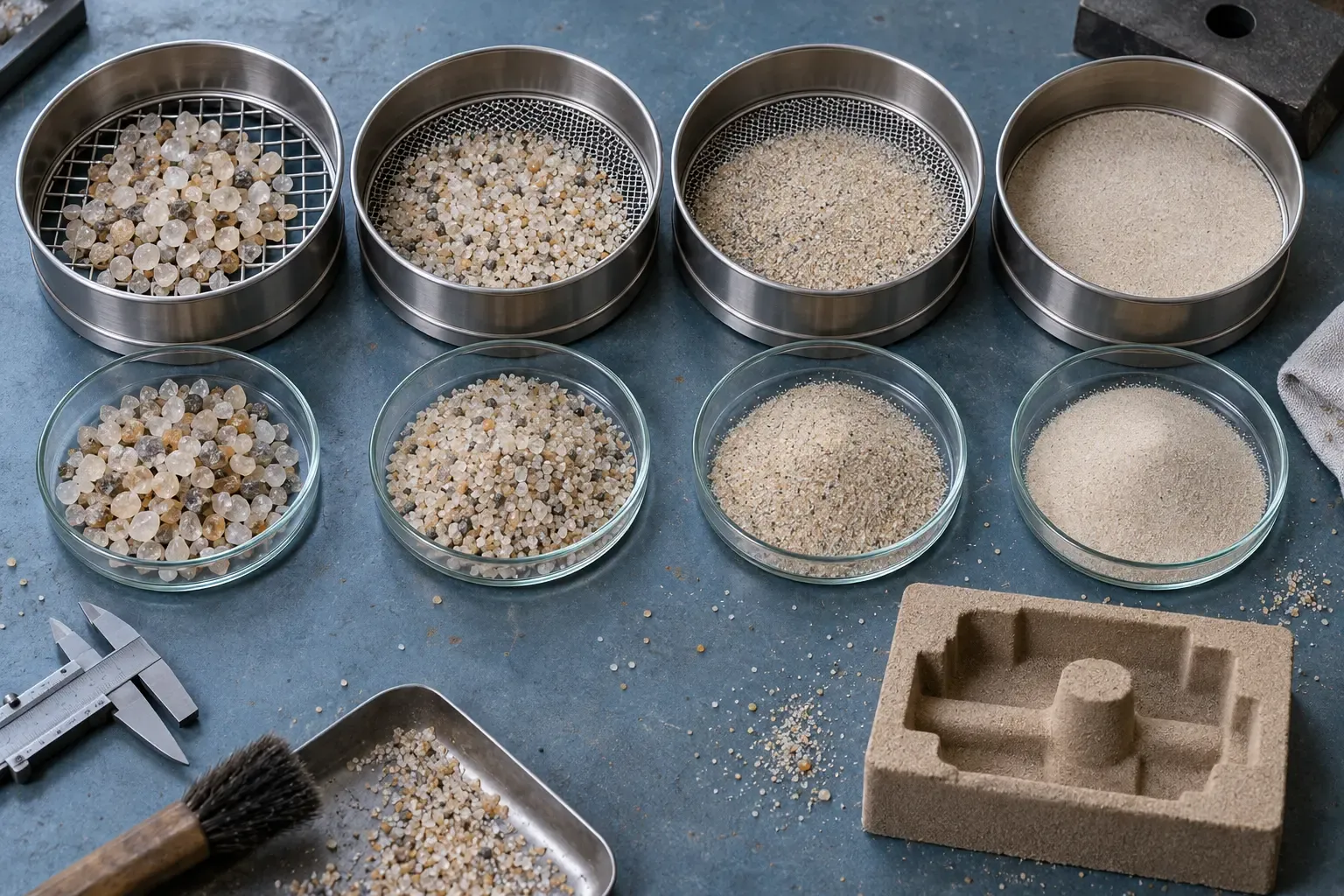
Nominal size is only one part of the grading. A sand with a similar headline size can behave differently if its retained fractions, fines or spread are different. Finer material can support a smoother surface but may raise binder demand and reduce flow through intricate areas. Coarser material may improve permeability or reduce binder demand while leaving a more pronounced grain impression.
Industry guidance from the Silica and Moulding Sands Association identifies grain shape, nominal particle size, particle-size distribution, composition and thermal stability as critical foundry-sand requirements. It also distinguishes the trade-off between finer surface finish and the flow or binder implications of fine sand. Treat that guidance as an engineering reference, not as a Changtong lot specification.
A Practical Grading Review
| Observation | Possible process effect | Evidence to record |
|---|---|---|
| Fines are higher than expected | Higher binder demand, reduced permeability or different surface transfer | Sieve residue, test method, compactability and gas or venting observations |
| Distribution is very narrow | Different packing and mold strength response than a broader grading | Full retained-fraction table, not only a nominal mesh name |
| Grains are more angular or rounded | Changed flow, compaction response and binder contact area | Microscope or supplier description plus the customer’s compaction trial |
| Moisture changes between lots | Unstable binder addition, storage behavior or mold consistency | Lot moisture, packing date, storage condition and pre-use conditioning |
What Should Be Checked Before Mixing?
Before adding sand to a binder system, identify the lot and confirm the material has been stored in a way that protects the agreed condition. Record bag or bulk-container identity, visible wet spots, caking, foreign matter and the moisture result when moisture is a controlled variable. If the customer uses reclaimed sand, keep new and reclaimed fractions separate during the first qualification so the result can be traced.
The current product page provides a starting application and grading discussion, while the selected grade’s technical documents should control purchasing. Do not copy a generic moisture limit, chemistry value or grading table into a purchase order unless the test method and acceptance basis are agreed with the supplier.
How Should a Foundry Qualification Trial Be Structured?
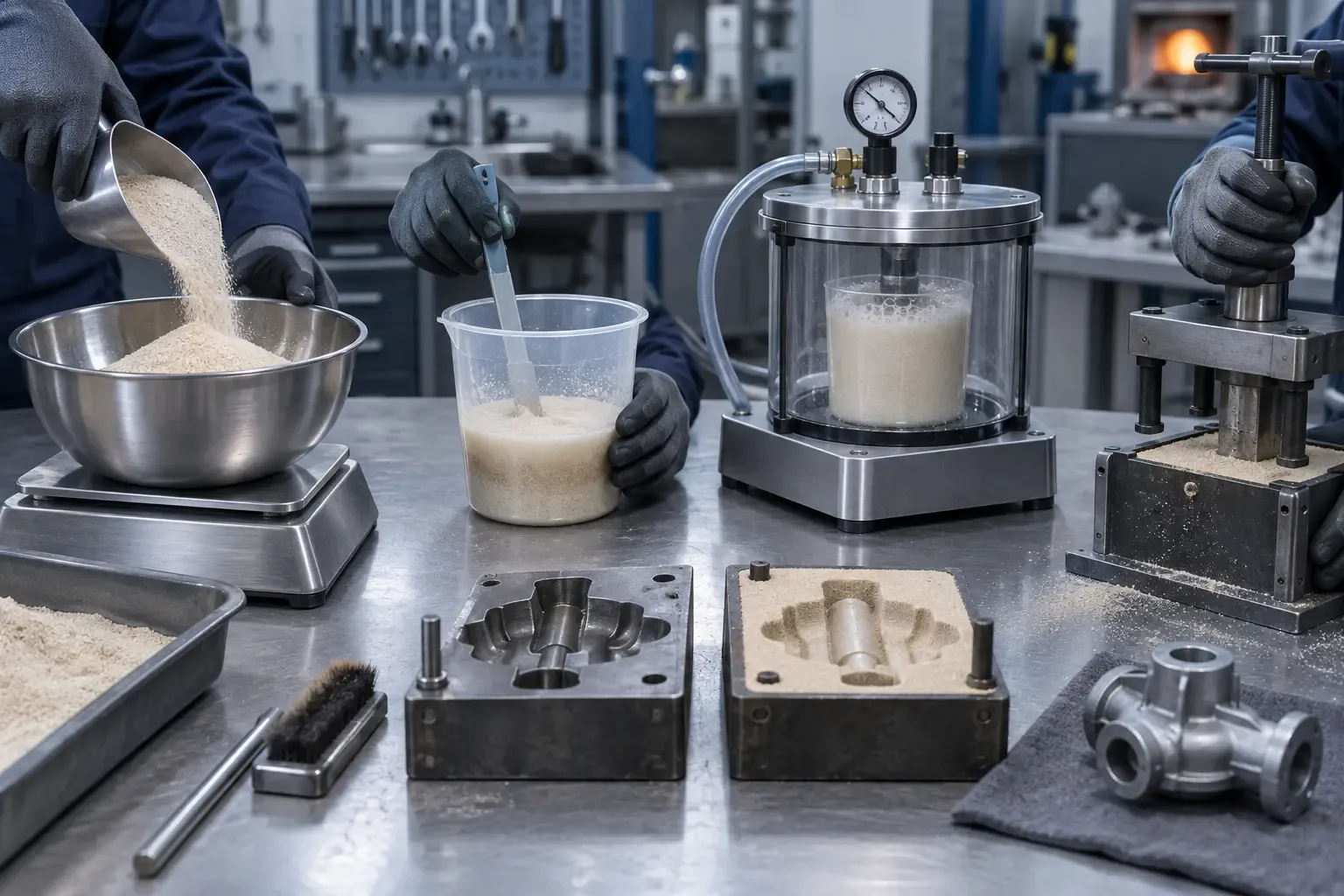
The purpose of a trial is to isolate sand behavior from operator and equipment changes. Hold the binder, addition order, mixing time, compaction method, pattern, mold size and casting conditions constant. Change one sand grade or grading basis at a time, and record both the mold result and the casting result.
1. Define the acceptance target
Write down the alloy, pattern geometry, target surface condition, dimensional checks, mold strength requirement and the point at which the trial is accepted or rejected.
2. Confirm the incoming sand
Record product identity, lot, packing mark, nominal size, full distribution, moisture and any agreed chemistry or cleanliness evidence before mixing.
3. Observe the mold stage
Note flow, mixing response, compaction, permeability or venting behavior, edge retention, core or mold defects and the repeatability of the working window.
4. Inspect the casting
Compare surface transfer, inclusions, dimensional stability, repair work and other customer-defined criteria. Keep the observations tied to the same sand lot and process record.
Which Documents Should Accompany the Purchase Review?
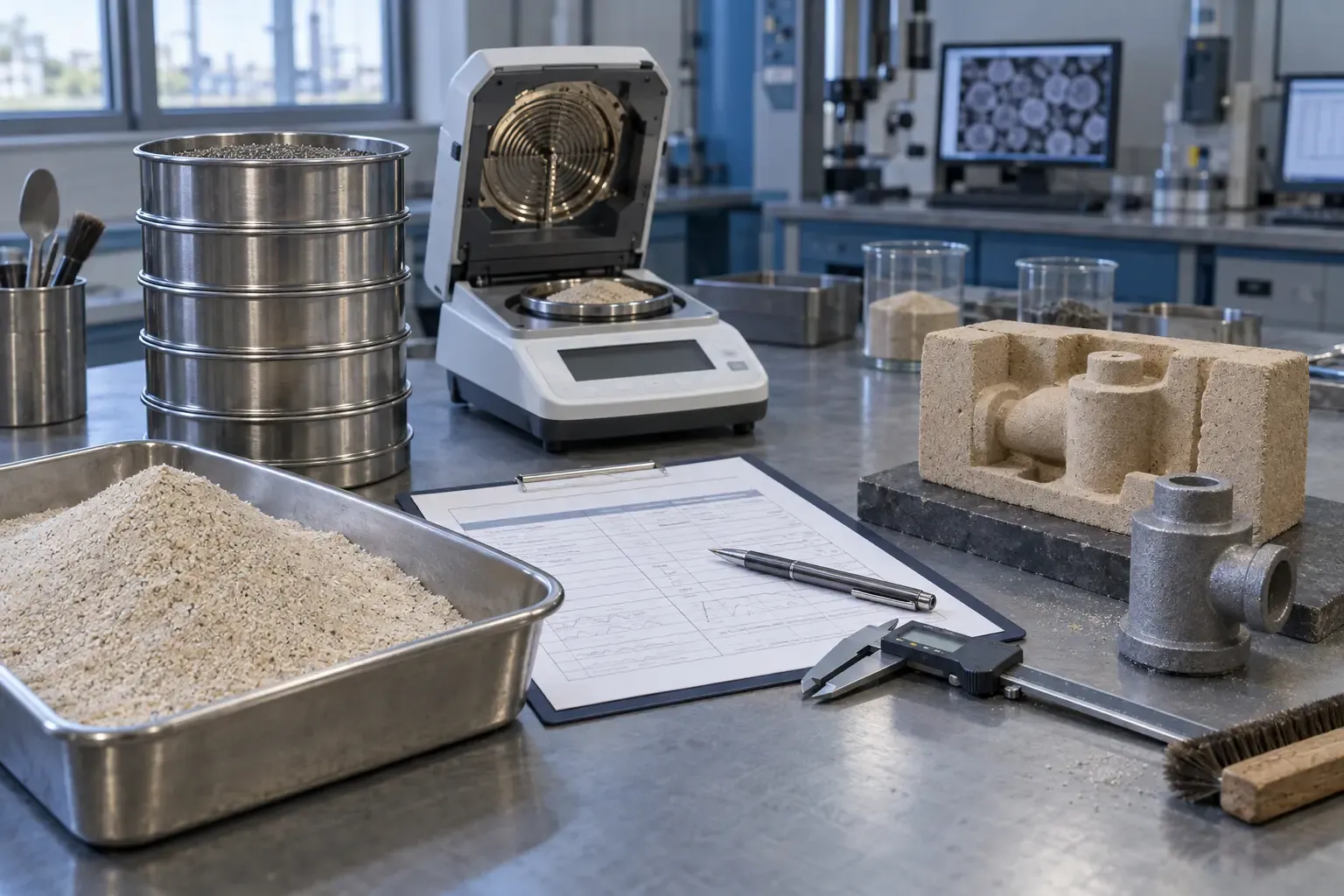
A document request should be narrow enough to be useful and broad enough to protect traceability. Changtong’s silica powder RFQ checklist provides a related structure for application, sizing, chemistry, testing, packing and shipment information. For foundry sand, adapt it with the mold method and casting acceptance fields.
- Product identity and intended foundry-mold role.
- Nominal size, complete particle-size distribution and test method.
- Moisture, fines, cleanliness and any customer-required chemistry evidence.
- Grain-shape description or agreed observation method where shape affects compaction.
- Lot identity, packing format, storage guidance and sample quantity.
- Customer acceptance criteria for mold preparation and casting inspection.
What Are the Main Selection Mistakes?
Engineering boundary: A natural quartz sand label does not guarantee a specific mold strength, permeability, surface roughness, gas result, casting yield or dimensional tolerance. Those outcomes depend on the sand, binder, additives, moisture, compaction, venting, pattern and casting conditions together.
Three shortcuts cause avoidable confusion: choosing by mesh name alone, treating a supplier summary as a lot certificate and comparing natural quartz sand with a different silica phase without defining the formulation role. Replace each shortcut with a test method, a traceable lot and a customer-side trial.
Frequently Asked Questions
Is natural quartz sand the same as fused silica sand?
No. They have different material histories and should not be substituted by name alone. Confirm phase, chemistry, grading and the intended mold role before comparison.
What particle size is best for foundry molds?
There is no universal answer. Balance surface requirement, permeability, binder demand, pattern detail and the mold method, then verify the complete distribution in a controlled trial.
What should I request from a natural quartz sand supplier?
Request the material identity, nominal size, full grading basis, moisture and cleanliness evidence, lot traceability, packing information and a sample for your own mold and casting evaluation.
Can the product-page description replace a COA?
No. The public page is an application and product-scope starting point. Use the current grade-specific technical documents and agreed test methods for purchasing and release decisions.
Source and Review Boundary
Product scope and application information were checked against Changtong’s public natural quartz sand product page on September 8, 2026. Foundry-sand selection context was checked against the Silica and Moulding Sands Association foundry guidance and the FHWA foundry sand material description. External sources provide general engineering context only and are not Changtong lot data, a Changtong recipe or a performance guarantee. For contrast with the glass-making search intent, see Changtong’s high-purity quartz sand selection guide.
Request a Natural Quartz Sand Foundry Review
Send the mold method, alloy, pattern detail, target grading basis, binder system, sample quantity, destination and acceptance criteria. Changtong can review the inquiry against the natural quartz sand product scope and prepare a practical sample discussion.
Send your foundry requirements