Waterborne Electrode Coatings: Linking Silica Filter Residue to Streaks and Dry-Film Uniformity
Screen natural crystalline silica in waterborne electrode coating trials using filter-residue checks, streak diagnosis and dry-film uniformity measurements.

A narrow line appears along the coated web. The mixer record looks normal, the slurry still passes the routine viscosity check, and the powder specification shows an acceptable median particle size. Should the next trial use a finer silica, a different filter, or a slower dryer? Before changing any of them, keep the retained filter material and find out when the line first appears.
For teams considering natural crystalline silica as an experimental filler or additive in a waterborne electrode formulation, this sequence matters. A powder can pass a purchasing specification without being suitable for the actual binder, active material, filter and coating window. The useful question is whether a particular batch can be incorporated reproducibly without unacceptable processing or electrode-property changes—not whether silica automatically improves a battery.
Start with the residue, not the powder label
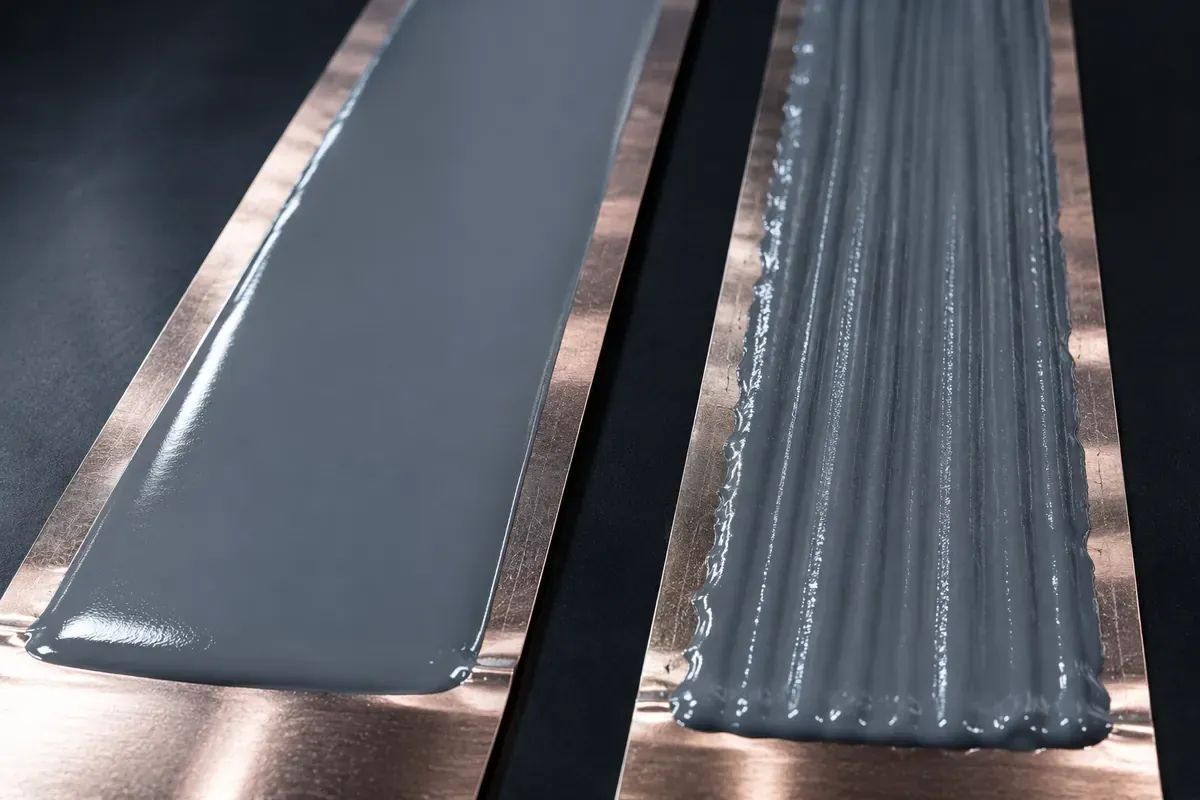
Solventum’s official electrode-slurry filtration brief explains that oversized particles and gel-like contaminants can interrupt coating, and that particles obstructing a slot-die opening can create an uncoated streak. It also stresses retaining unwanted large material while allowing intended slurry constituents through.[1] This supports investigating filtration; it does not establish a silica grade, addition level or universal filter rating.
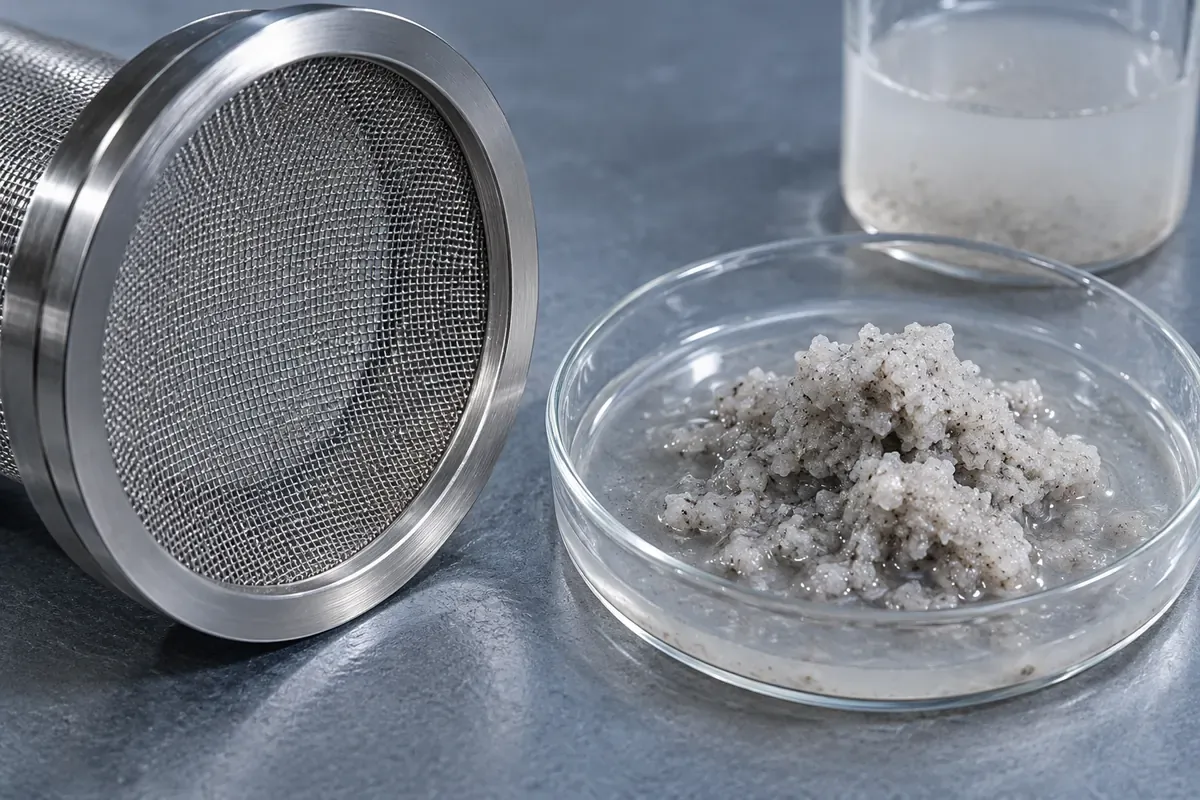
Collect representative slurry immediately before and after the filter, plus a retained-residue sample using an agreed recovery procedure. Record the processed slurry mass, filter identity, flow, pressure differential, slurry temperature and elapsed time. Normalize recovered dry residue to the processed sample mass on a clearly stated basis. Otherwise, a larger residue sample may simply reflect more slurry being filtered.
Separate identification from measurement. Inspect representative retained particles microscopically; where needed, use appropriate elemental or phase analysis. A retained particle could be a mineral grain, a mixed agglomerate, binder-rich gel, dried slurry or foreign material. Do not call all pale residue “silica,” or all dark residue “carbon,” from appearance alone. Keep a blank recovery check so cleaning, drying or filter handling does not become the apparent contamination source.
Give each defect a testable explanation
Schoo and colleagues documented a battery-electrode defect catalogue including agglomerates, pinholes, cracks and stripes. Their work connects lengthwise stripes with obstructing material and identifies insufficient dispersion or dried slurry as possible sources of agglomerates.[2] Use this as a diagnostic starting point, not proof that the silica caused a particular defect.
| Observation | Working hypothesis | Discriminating check | Avoid concluding |
|---|---|---|---|
| Persistent machine-direction streak | Local die obstruction or lip condition | Locate onset; inspect lip and retained particles; compare with an unchanged control | Every streak requires a finer silica |
| Rising differential pressure | Accumulating solids, gels or changing slurry condition | Compare at matched flow and temperature; identify residue; check feed aging | Pressure rise alone identifies mineral oversize |
| Intermittent raised specks | Agglomerates, dried fragments or foreign particles | Match defect microscopy with residue and vessel-wall samples | A satisfactory D50 excludes a coarse tail |
| Circular bare spots | Entrained air or local wetting difficulty | Observe wet film; compare controlled deaeration and substrate condition | Filtration alone resolves every pinhole |
| Uniform wet film but uneven dry coating | Drying, redistribution or adhesion issue | Compare wet/dry maps, drying history, adhesion and cross-sections | A smooth surface proves uniform internal composition |
These checks are proposed screening steps, not validated acceptance limits. First separate defects already present in the wet film from those detected after drying or downstream handling. That division prevents a dryer adjustment from masking a feed-system issue, or a powder change from being credited for a simultaneous equipment correction.
Build a silica fingerprint that survives slurry preparation
Begin with documented material identity: natural-quartz-derived crystalline silica, rather than fused, fumed or precipitated silica. These names do not describe interchangeable products. Request current TDS, SDS, batch COA and, when phase identity is important, XRD evidence. Changtong’s guide to COA, TDS, SDS and XRD provides a useful documentation framework.
Specify particle-size results in μm with the measurement and dispersion method. D50 describes the middle of a distribution; it is not the largest particle present. Ask for the relevant upper-tail information and a separately agreed residue check. A supplier’s dry-powder measurement and the effective particle population in a binder-containing slurry answer different questions. State whether the laboratory disperses weak agglomerates during analysis.
Also agree on moisture reporting, relevant elemental impurities and any surface treatment. Review treatment compatibility with the aqueous formulation rather than assuming a hydrophobic grade will disperse readily in water. Determine application-specific contamination limits with the electrode developer; a broad industrial purity statement is not a battery-grade qualification.
Run a controlled comparison before choosing a filter
Keep the original formulation as the reference. Introduce one candidate silica at a clearly recorded dry-solids basis, and document which component, if any, it replaces. Adding powder without correcting the solids balance changes the experiment. Do not adopt a generic addition percentage from an unrelated coating application.
Hold water quality, binder preparation, addition sequence, mixing history, temperature, aging time and deaeration consistent. Record any deliberate adjustments rather than silently correcting one trial until its single-point viscosity matches the control. Where practical, compare a flow curve and recovery behavior using the same procedure. Similar viscosity at one shear condition need not mean identical behavior during pumping and coating.
Evaluate filtration as part of that comparison. Check residue composition alongside pressure history and feed/filtrate solids; investigate whether filtration selectively removes intended formulation components. Do not copy a filter’s nominal rating from another line without checking its retention behavior, compatibility and operating conditions. A cleaner-looking filtrate is not useful evidence if the recipe has unintentionally changed.
Measure dry-film consistency in more than one way
Use a repeatable map covering defined cross-web positions and multiple down-web intervals. Compare dry coating mass per area, thickness, visible defects and adhesion under agreed conditions. State whether measurements occur before or after calendering. Match each specimen to its slurry batch and position; a single attractive coupon cannot represent a full run.
Check whether a thickness difference reflects loading, density or both. When calculating coating mass, account for the current-collector contribution consistently. Define conditioning and residual-water assessment with the battery-development team, and ensure that sample preparation does not obscure the difference being investigated.
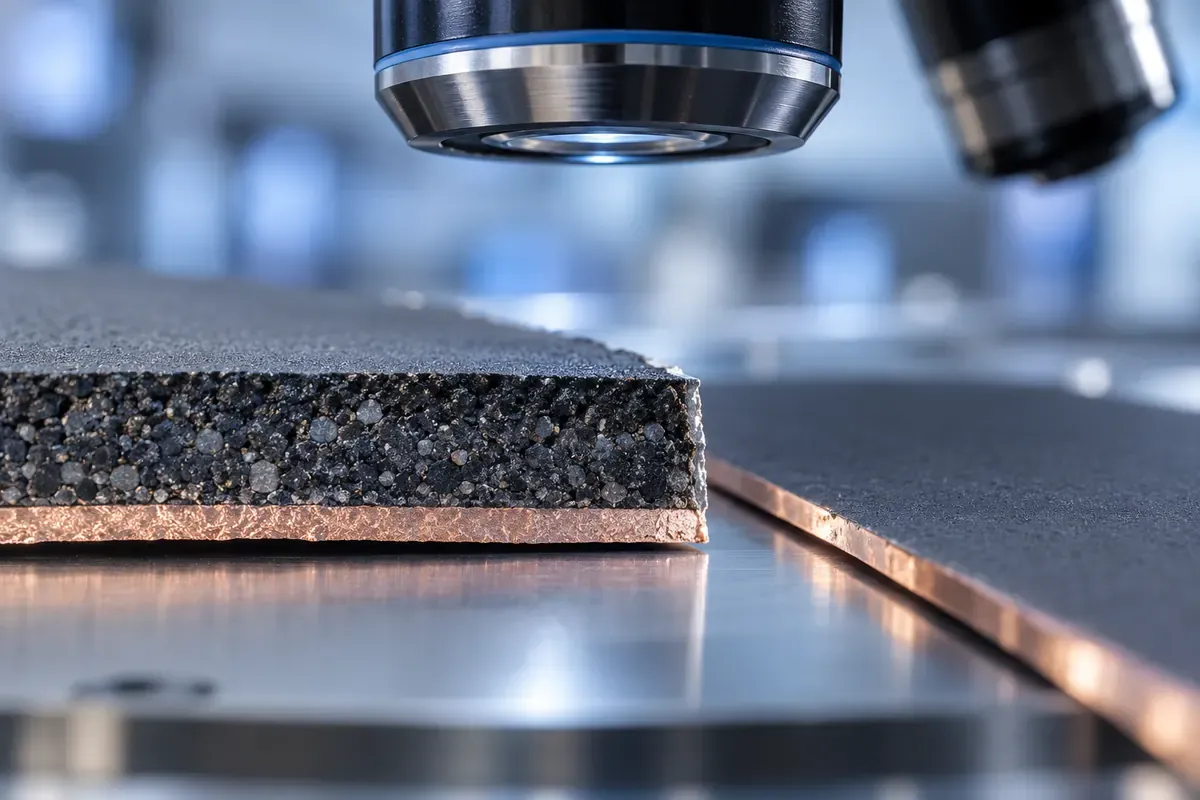
Internal uniformity needs its own evidence. A primary study of aqueous SBR/CMC anodes developed cross-sectional SEM image analysis to quantify binder distribution.[3] It illustrates why surface appearance alone cannot establish binder distribution; it does not show that adding natural silica improves that distribution.
Where drying is implicated, change the drying program separately from the powder specification. Compare the original and candidate formulations under the same program before investigating a different temperature or airflow profile. Predetermine stop criteria for unacceptable contamination, defects, adhesion loss or electrical-property changes. Only then consider whether a candidate merits separate electrochemical evaluation.
FAQ
Does lower filter residue always mean a better silica?
No. First confirm comparable sampling, throughput and recovery. Then identify what was retained and whether intended ingredients were removed. Evaluate residue together with coating results and the unchanged control.
Can finer particle size guarantee streak-free coating?
No. A finer median does not rule out agglomerates, dried slurry, die damage, air or unstable coating conditions. The relevant evidence is the prepared slurry and actual coating behavior.
Is natural silica equivalent to fumed silica or silicon anode material?
No. Natural crystalline SiO2 powder is distinct from fumed silica and from elemental silicon. Neither a shared name nor findings for another silica type establish suitability for this trial.
Can a uniform dry film establish battery performance?
No. Processability and film consistency are screening gates. Electrical, electrochemical, aging and safety requirements remain separate qualification work. No capacity or cycle-life benefit is claimed here.
Prepare a reviewable sample request
Review the scope of our natural silica powder for waterborne battery-electrode coating trials. For a targeted discussion, share the binder system, intended experimental role, solids basis, particle-size and impurity limits, filter arrangement, coating method and observed defect. Define required documents and sample acceptance criteria before ordering.