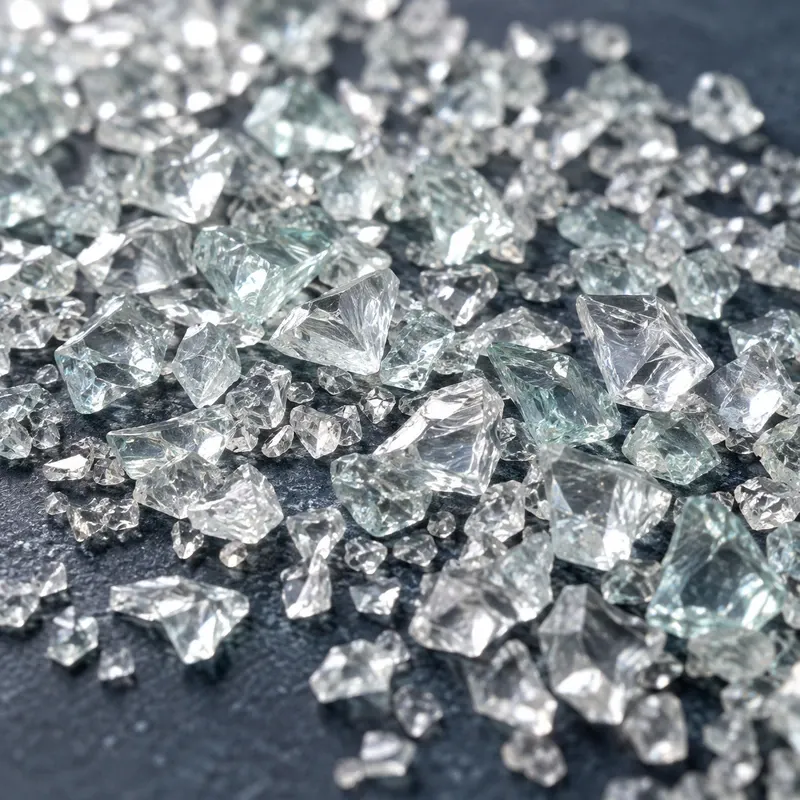
Low-Crystalline-Silica Slab Aggregate: Amorphous Glass Sand
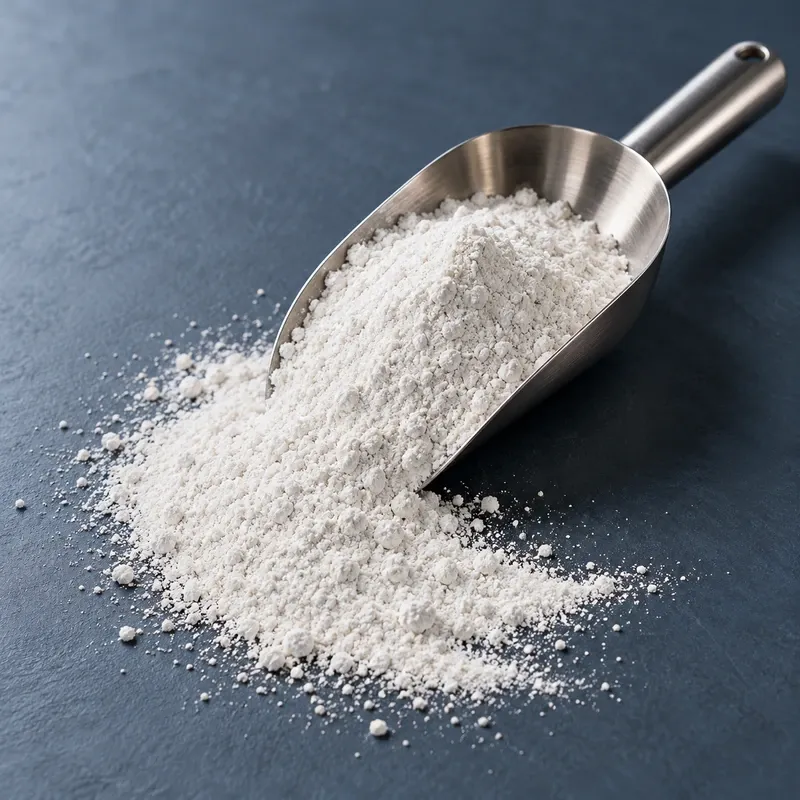
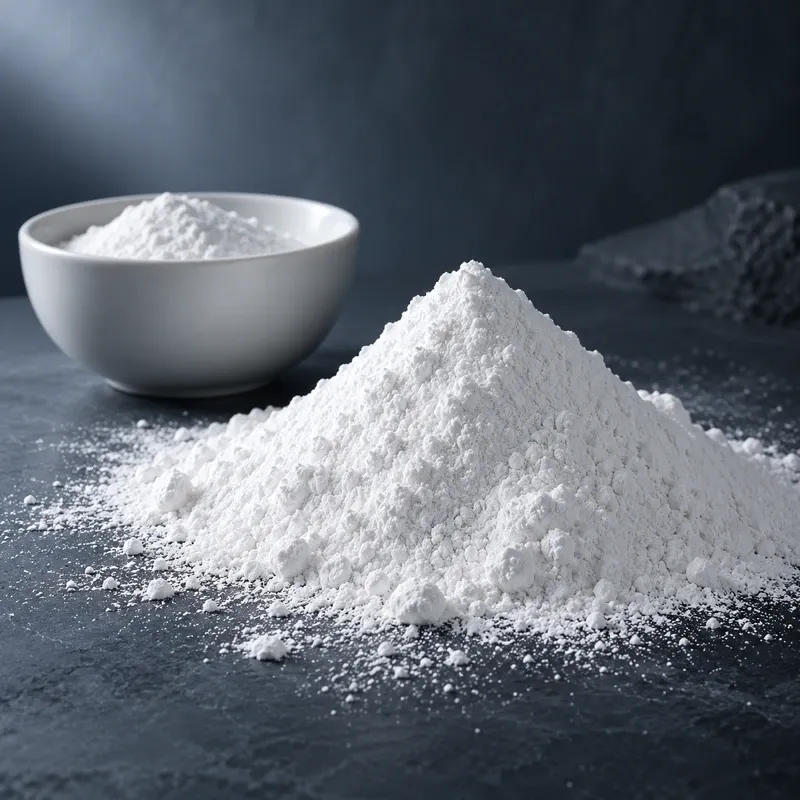
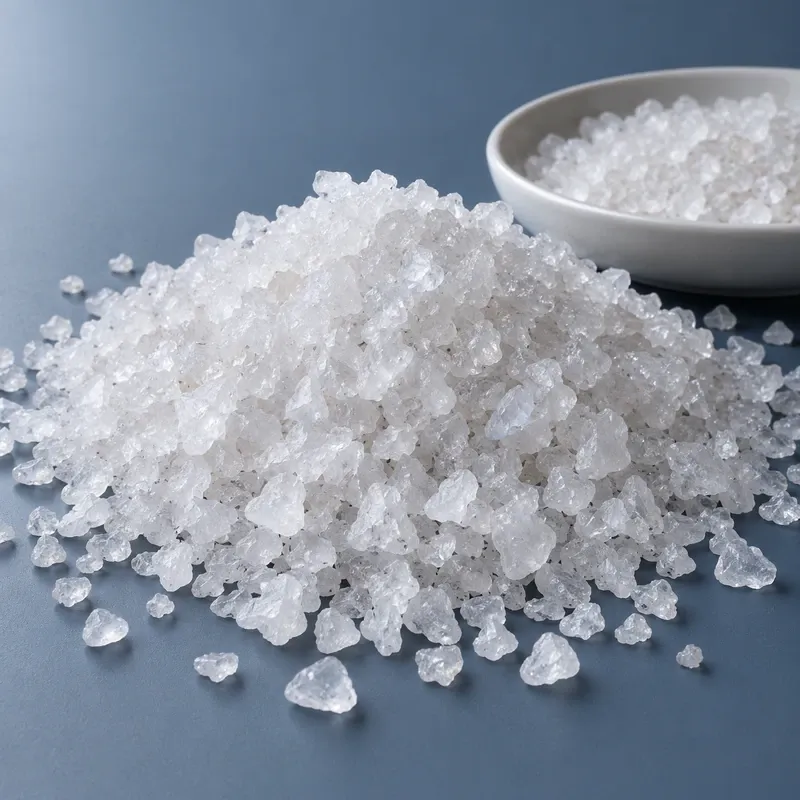
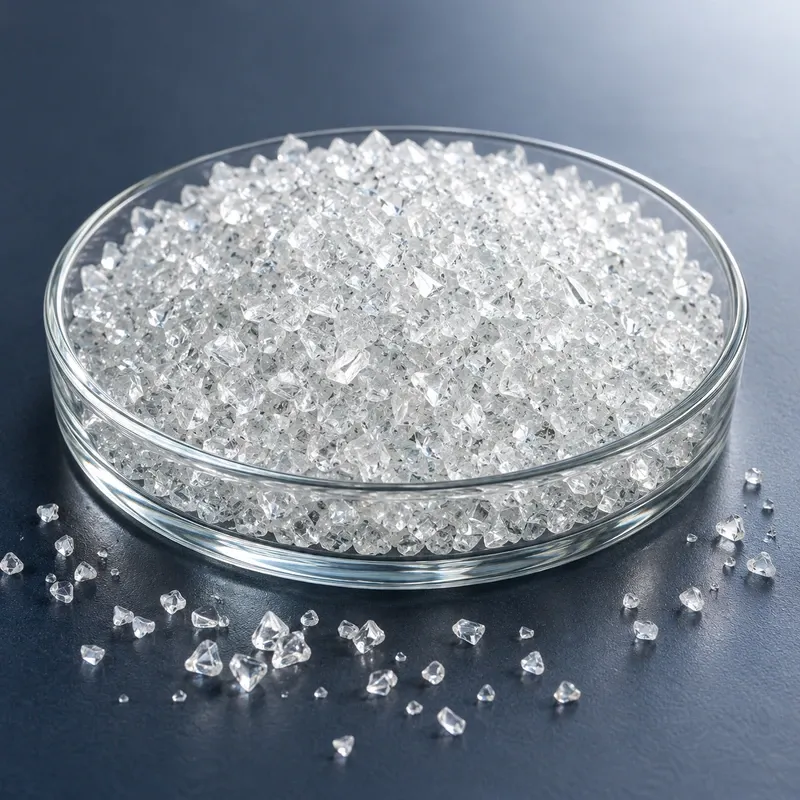
Amorphous glass sand aggregate for low-crystalline-silica slab development. Compare fine and mid-size cuts for grain pattern, grading and resin wet-out; agree application-specific acceptance limits.
Specifications
- Mesh Size
- 120mesh,200mesh,325mesh,600mesh,800mesh,1250mesh,2000mesh,2500mesh,3000mesh,5000mesh
- Particle Size
- 3-5mm,1-3mm,1-0.5mm,0.5-0.2mm,0.1-0.2mm,0.1-0mm(120mesh),0.075mm(200mesh)
- SiO₂ Content
- 70-75%
- Bulk Density
- 1.0~1.5 g/cm³
- Specific Gravity
- 2.30 g/cm³
- Moh's hardness
- 5.5
- Crystal structure
- Amorphous
Fused glass grit for engineered-stone slab texture
Choose a glass aggregate fraction by the grain pattern you want on the finished surface. Two historical evaluated cuts—fine and mid-size—provide a practical starting point for sample selection, blend design and a focused slab trial.
Select a particle cut
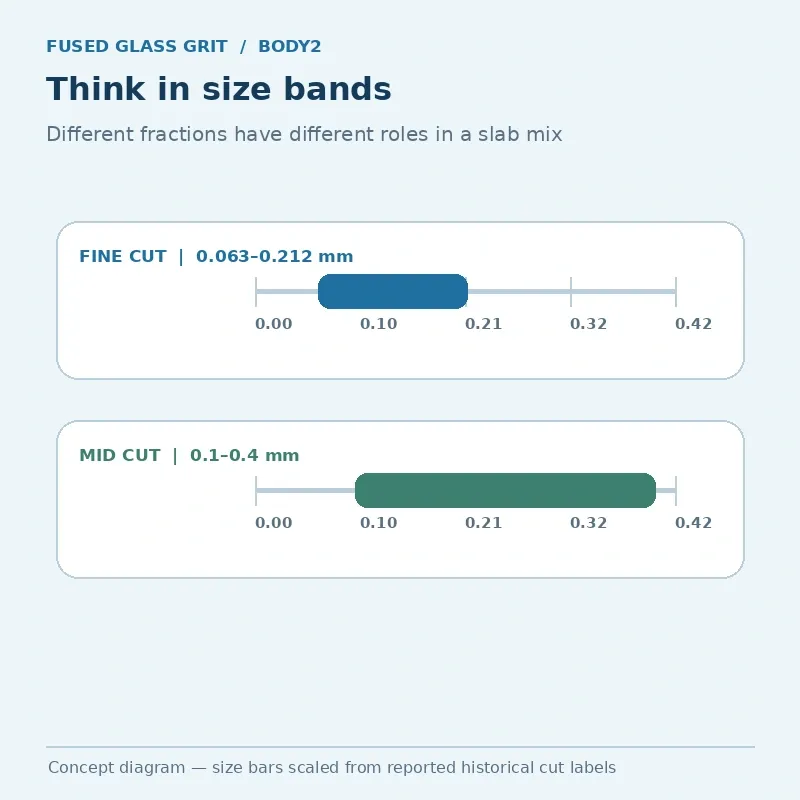
The fine cut supports a closer grain pattern, while the mid cut creates more visible aggregate. Both can be considered in resin-bound engineered-stone designs where the glass particle is part of a broader mineral blend. The right choice depends on the target look, neighboring fractions, binder wet-out and the finish schedule.
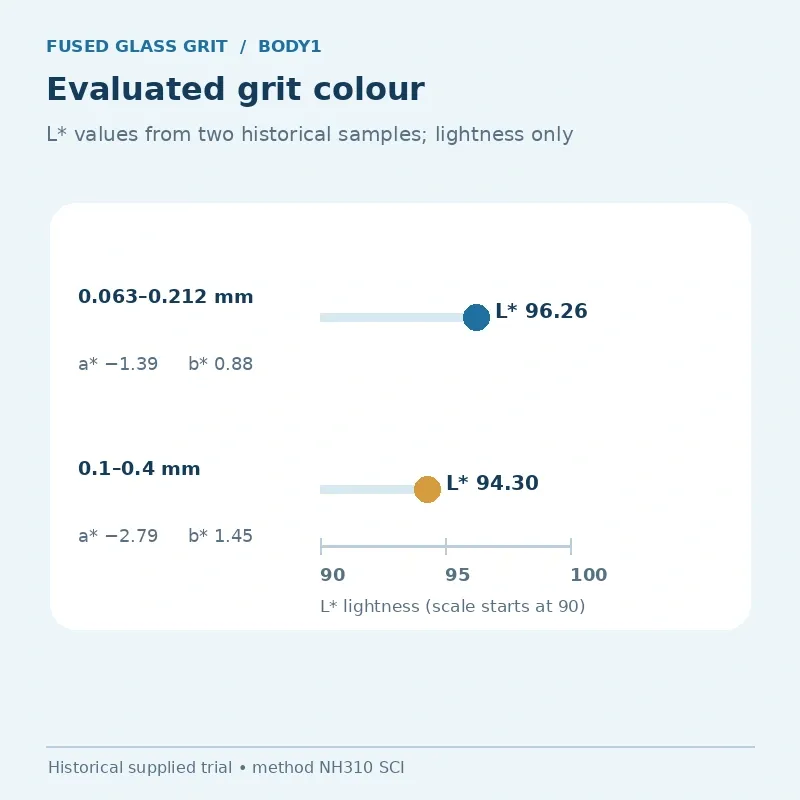
| Evaluated fraction | Color L*a*b* | Moisture | Sieve on / in / under |
|---|---|---|---|
| Fine · 0.063–0.212 mm | 96.26 / −1.39 / 0.88 | 0.04% | 0 / 99.53 / 0.47% |
| Mid · 0.1–0.4 mm | 94.30 / −2.79 / 1.45 | 0.04% | 0 / 99.25 / 0.75% |
The test record also noted zero visible black and other colored particles per 100 g for each evaluated sample. The two nominal size bands overlap from 0.1 to 0.212 mm, so define the aperture pair and retained/passing fractions in the purchase specification rather than relying on a grade name alone.
Plan the slab around the finish
| Design direction | Fraction to evaluate | What to compare in a trial |
|---|---|---|
| Fine, closely spaced grain | Fine · 0.063–0.212 mm | Packing, resin wet-out, visible grain and polish response. |
| More pronounced mineral texture | Mid · 0.1–0.4 mm | Surface exposure, blend uniformity and edge/face appearance. |
| Mixed grain pattern | Both cuts in a controlled blend | Segregation, voids and appearance after the same cure and polish. |
For a meaningful comparison, keep resin, pigment, mix sequence, compaction, cure and polishing consistent. Record the blend proportions internally and compare the finished sample with an agreed reference panel. The grit contributes to the look and packing; the complete formulation governs the slab’s finished properties.
Request a quote
Request the desired cut, sieve apertures, on/in/under limits, color reference and method, moisture method, sample quantity, expected volume, packaging preference and destination. Ask for separate lot data when comparing fine and mid fractions. Send your requirements through Contact Us.
Frequently asked questions
Are these two cuts standard supply grades?
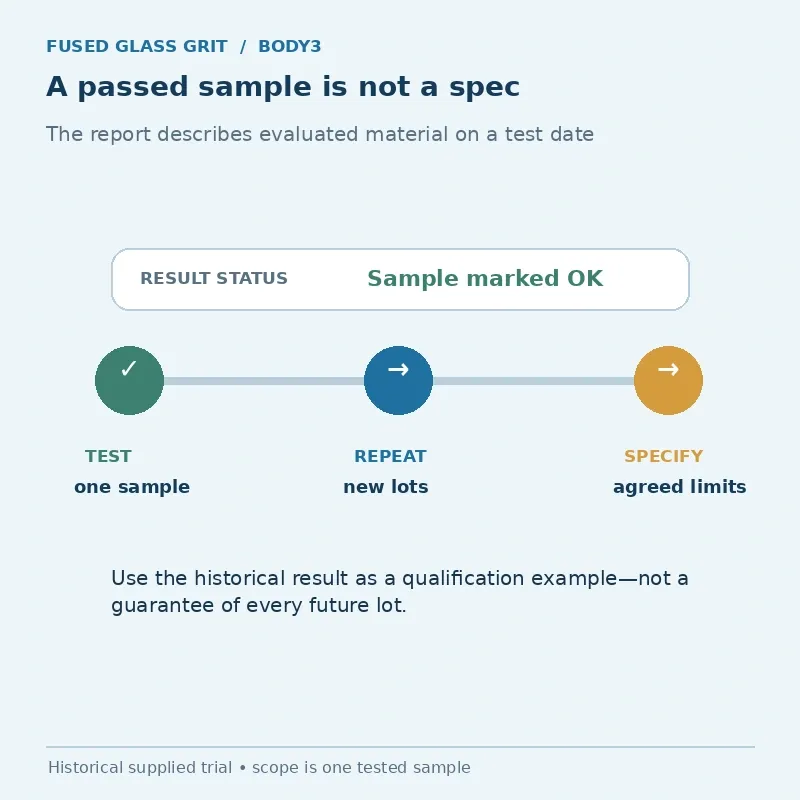
They are the fractions evaluated in the historical report. Confirm current saleable grades, aperture definitions and lot-specific acceptance limits before ordering.
What does zero counted visible particle mean?
It describes the 100 g visual count for those samples only. It is not a zero-contamination guarantee for other samples, lots or inspection methods.