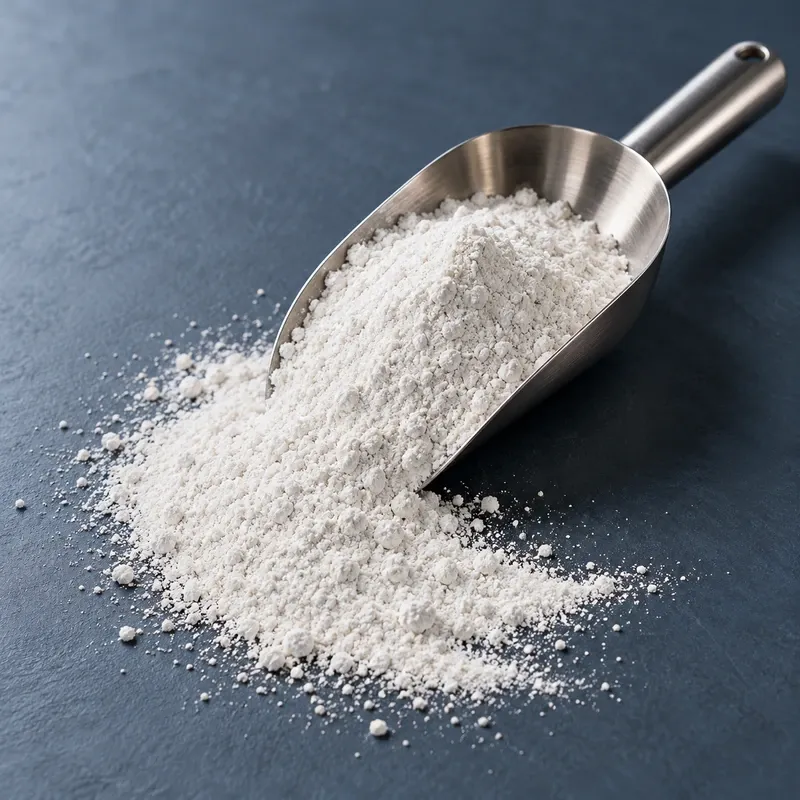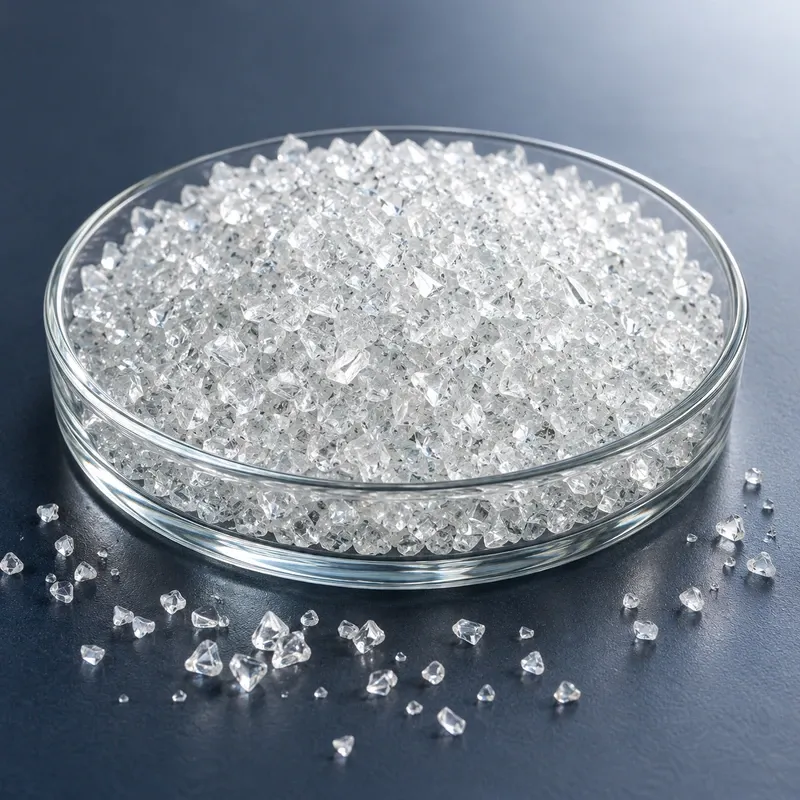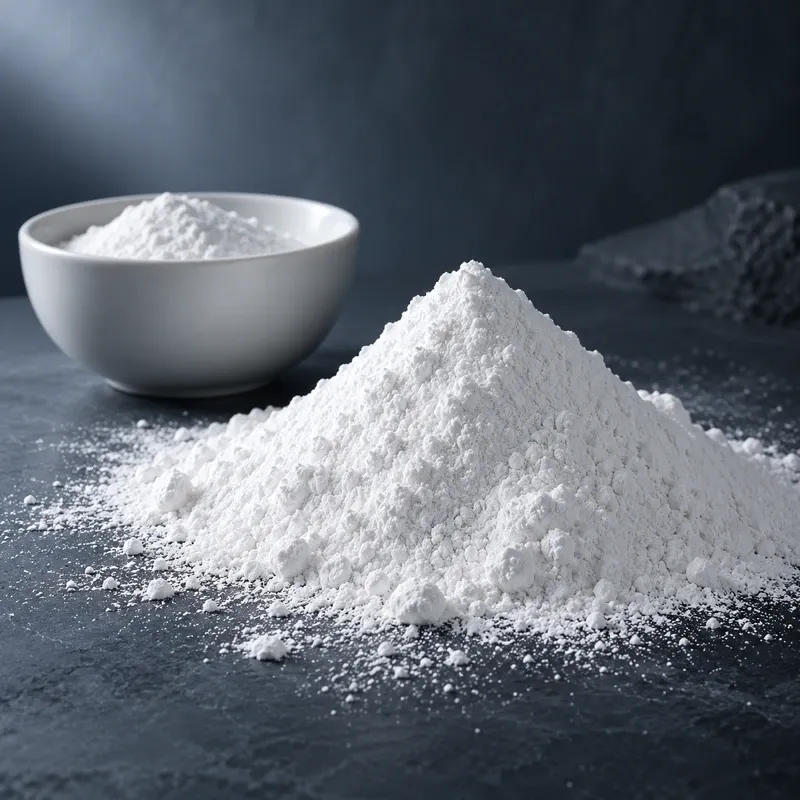
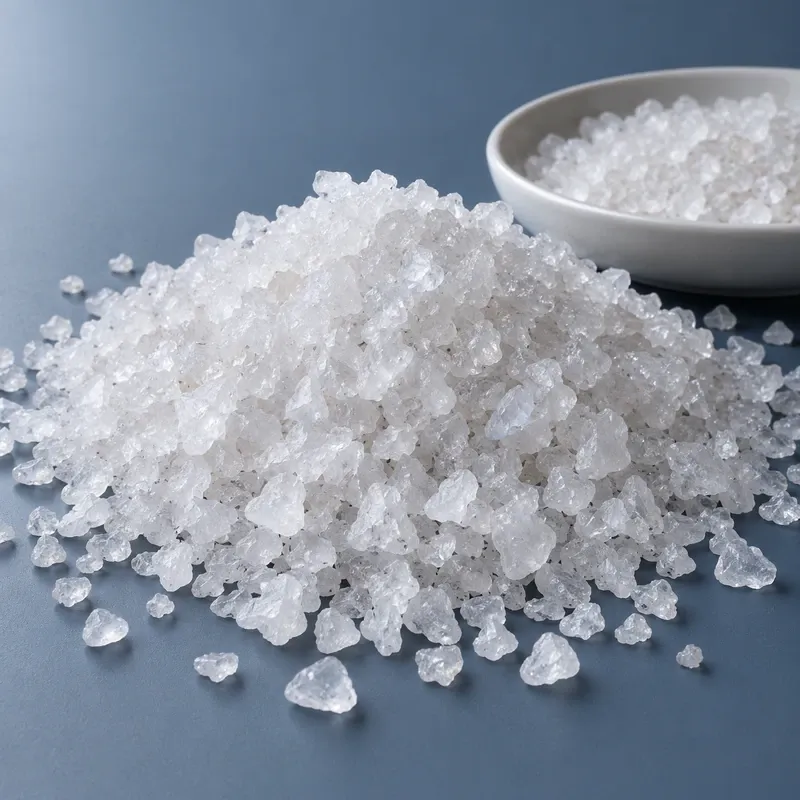
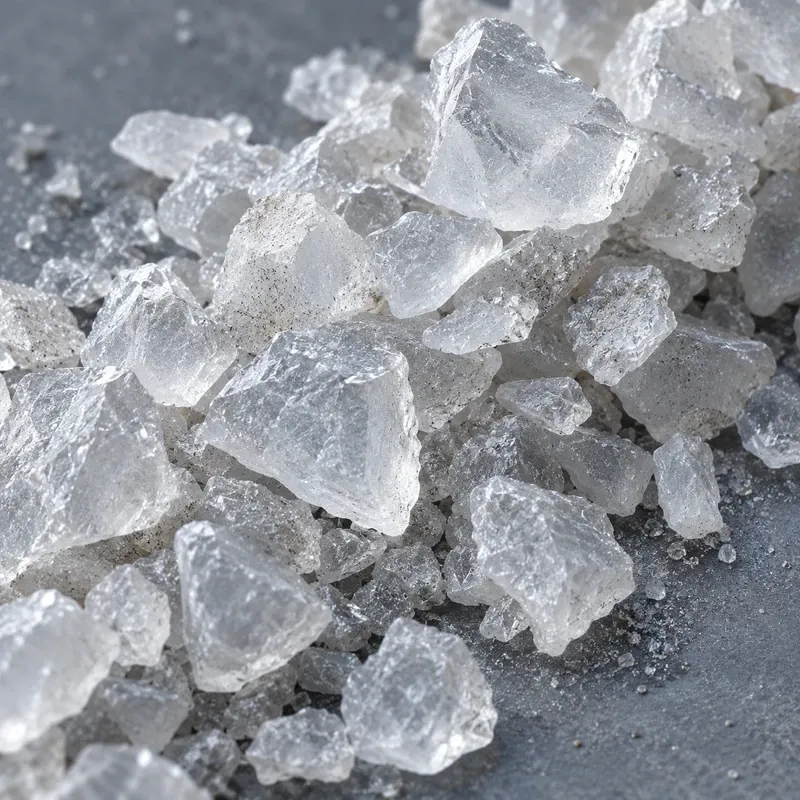
Amorphous Fused Quartz Sand for Resin-Bound Mineral Slabs
Amorphous fused quartz sand for resin-bound mineral slabs and low-crystalline-silica building-material development. Discuss fine, medium and coarse fractions, color targets and current-lot phase data.
Specifications
- Mesh Size
- 120mesh,200mesh,325mesh,600mesh,800mesh,1250mesh,2000mesh,2500mesh,3000mesh,5000mesh
- Particle Size
- 3-5mm,1-3mm,1-0.5mm,0.5-0.2mm,0.1-0.2mm,0.1-0mm(120mesh),0.075mm(200mesh)
- SiO₂ Content
- 99.8-99.99%
- Bulk Density
- 1.0~1.5 g/cm³
- Specific Gravity
- 2.20 g/cm³
- Thermal Expansion
- 0.5*10⁻⁶
- Moh's hardness
- 7
Fused quartz sand in three slab-design fractions
Build a resin-bound slab blend around the grain scale you want. Discuss fine, medium and coarse fused-quartz sand fractions, then match each cut to a sample plan for color, grading, resin wet-out and polished appearance.
Choose the grain scale
| Fraction | Nominal size band | Historical sample L* | Typical design role |
|---|---|---|---|
| Fine | 0.1–0.3 mm | 95.19 | Closer grain spacing and a more even visual field. |
| Medium | 0.3–0.7 mm | 93.71 | Balanced aggregate visibility for a mixed mineral pattern. |
| Coarse | 0.7–1.2 mm | 89.22 | Larger visible grains and stronger surface-scale contrast. |
The recorded sample lightness steps down across the three fractions, a useful selection cue when the slab design uses different grain sizes. The coarse sample also showed sensitivity to subsampling, so take representative increments before confirming appearance against a target panel.
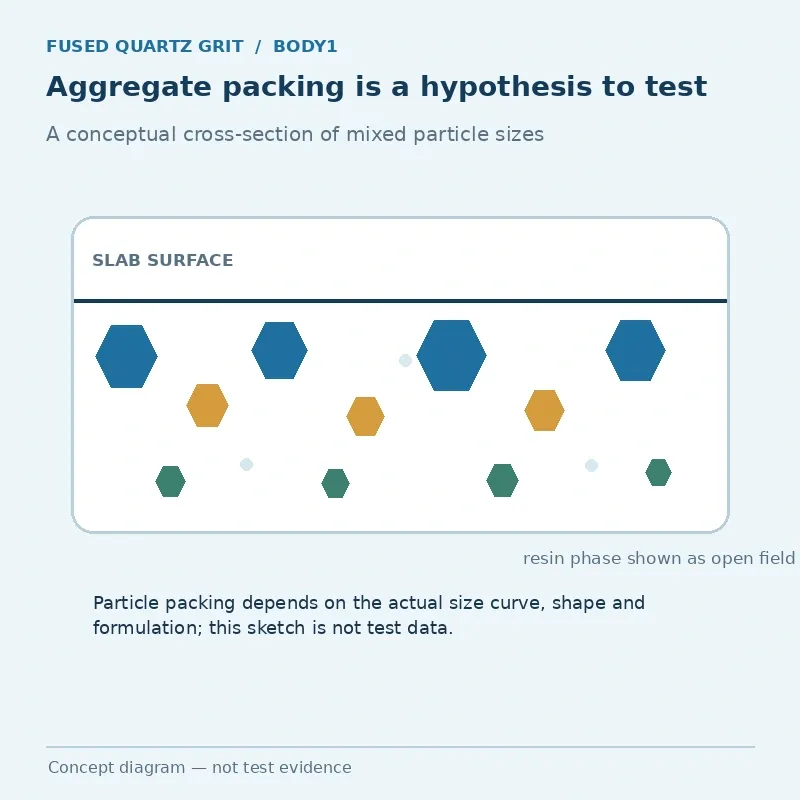
Match each fraction to the application
| Slab design | Fraction to start with | Buyer checks |
|---|---|---|
| Fine-grain background | Fine · 0.1–0.3 mm | Color consistency, packing, resin wet-out and polished smoothness. |
| Visible mixed aggregate | Medium · 0.3–0.7 mm | Grain distribution, blend uniformity and surface appearance. |
| Coarse decorative pattern | Coarse · 0.7–1.2 mm | Repeat color subsamples, surface exposure, voids and finishing response. |
During selection, compare the sand fractions within the same resin and mineral blend. Keep pigment, mixing order, forming, curing and polishing constant to see how particle size changes visual character and processing. Use the trial to decide which fraction or combination fits the slab design, then write an aperture-specific receiving plan.
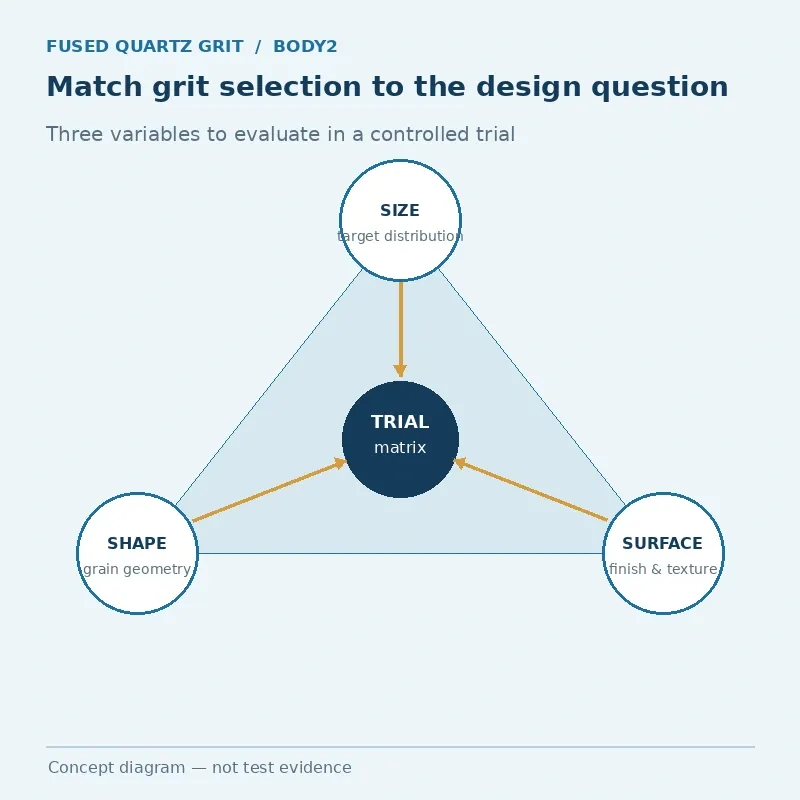
Specify the cut, not just the name
For each requested band, confirm the sieve apertures, passing and retained limits, sampling mass, color method and reference. A nominal range does not state the fraction yield or undersize/oversize tolerance. If color is critical, define sample preparation and repeat readings, especially for the coarse cut. If phase content is required, request a sand-specific test; historical XRD on powder does not cover sand.
Request a quote
Tell us the target fraction or blend, aperture pair, color method, moisture requirement, phase-test need, sample quantity, estimated volume, packaging preference and delivery destination. Ask which bands are currently available and request separate lot records for each. Send your requirements through Contact Us.
Frequently asked questions
Are all three size bands available as standard stock?
Ask the sales team to confirm current supply and lot-specific tolerances for each requested fraction before placing an order.
Can 2014 fused-silica powder XRD be applied to this sand?
No. The historical XRD report is for two powder samples. A sand fraction requires separate representative sampling and phase analysis if that evidence is needed.