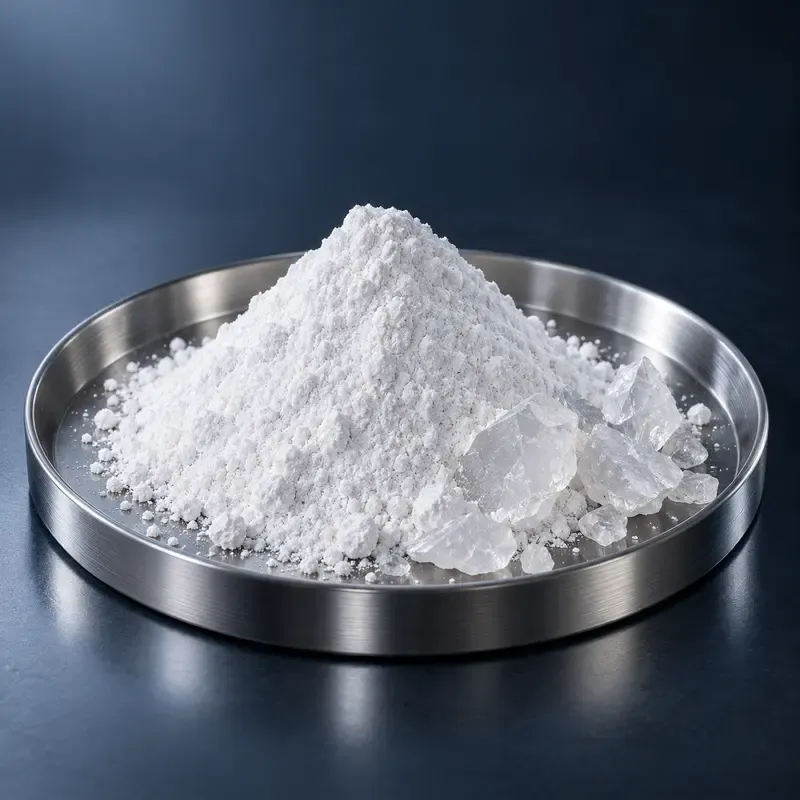
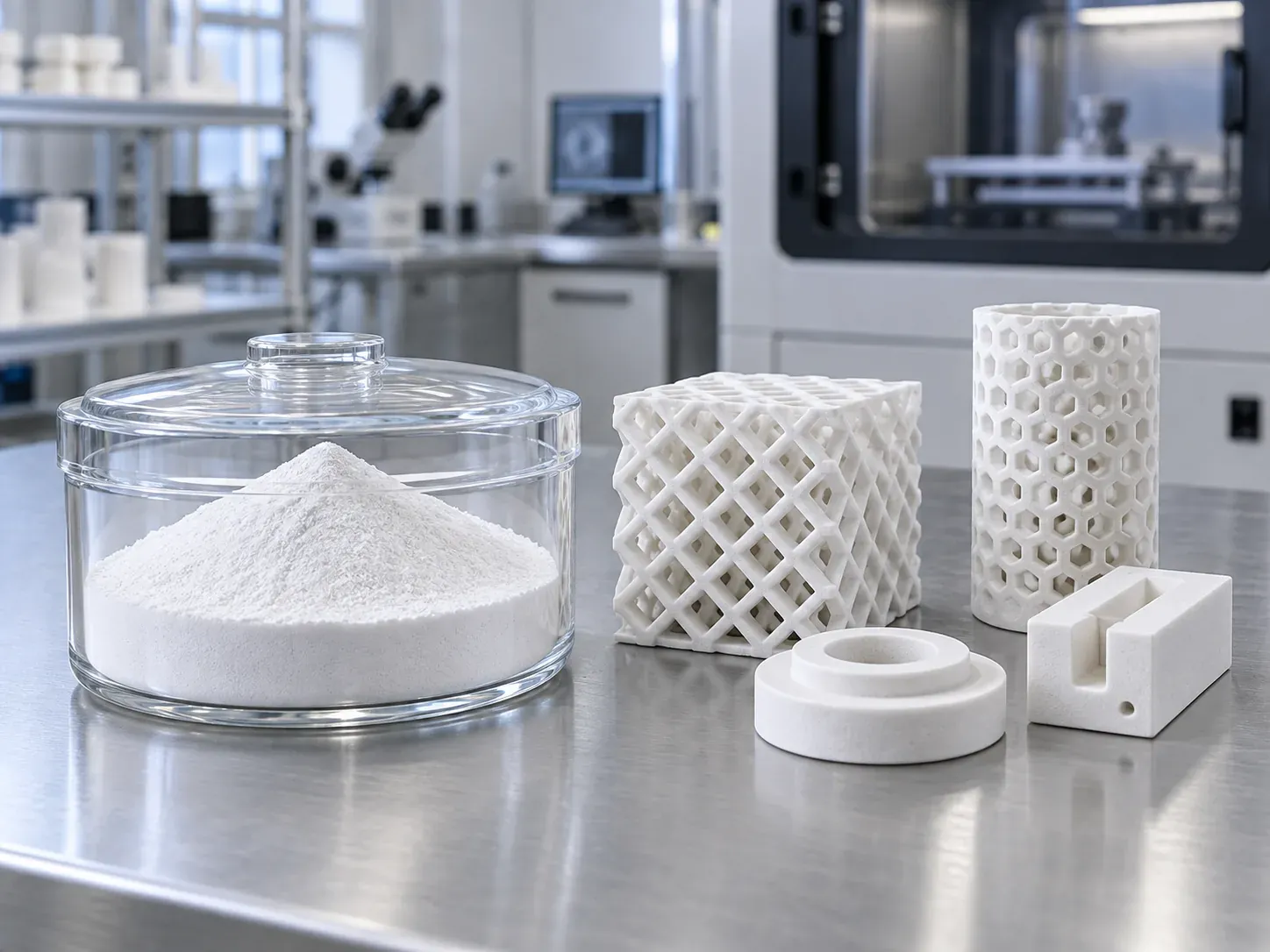
Amorphous Fused Quartz Flour for Ceramic Additive Manufacturing Trials
Amorphous fused quartz flour for ceramic additive-manufacturing feedstock trials, including binder-based printing routes that require controlled powder data and a defined debinding and firing program. Printability and final properties remain formulation- and process-specific.
Specifications
- Material identity
- Amorphous fused quartz/fused silica; confirm current phase statement
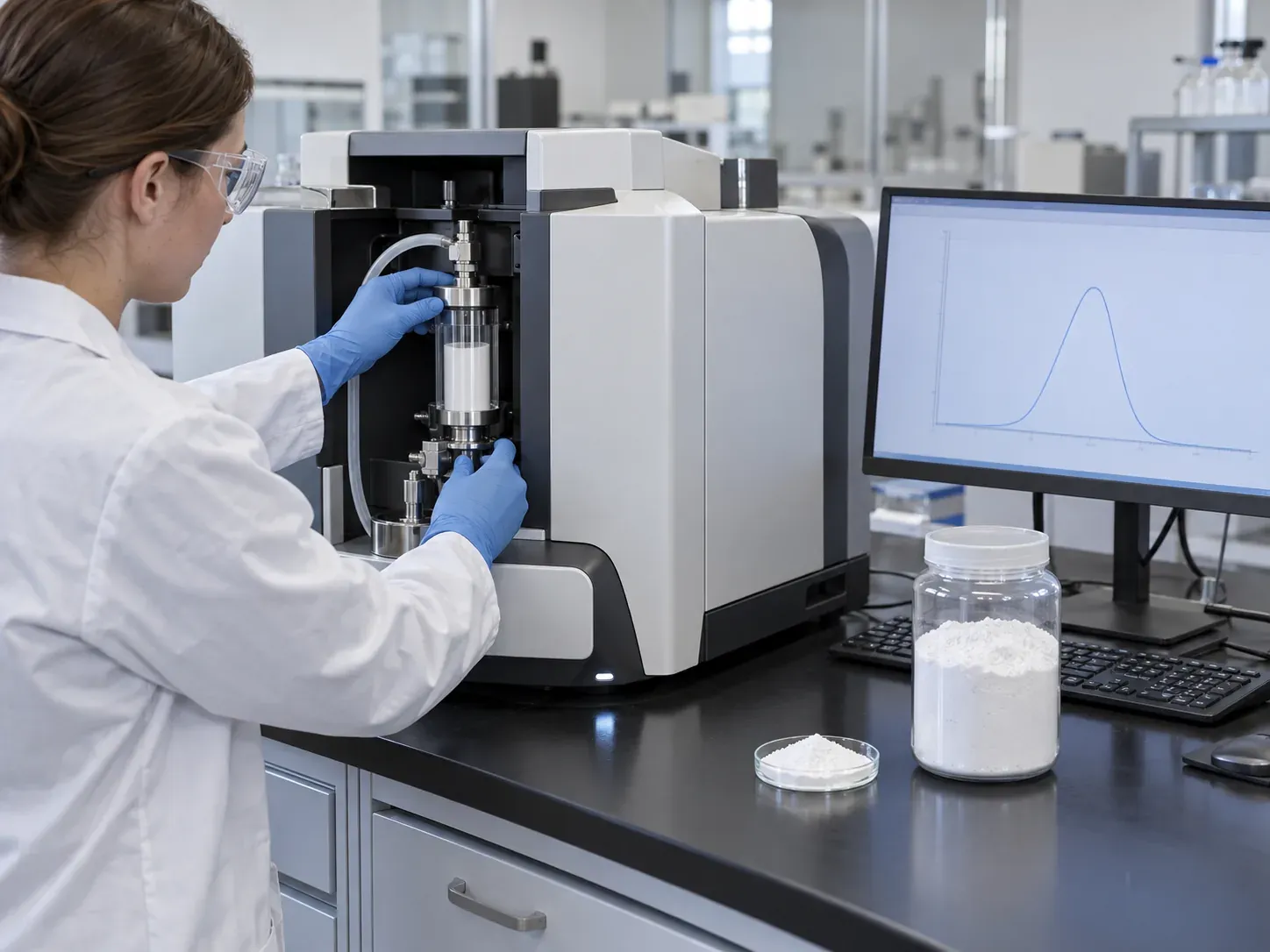
- Particle-size distribution
- Grade-specific; agree D10/D50/D90, oversize and test method
- Particle morphology
- Grade-specific; review microscopy or supplier statement if required
- Chemistry and trace elements
- Current TDS/COA; customer-defined analytes and limits
- Surface treatment
- Untreated unless the quoted grade states otherwise
- Feedstock compatibility
- Subject to customer binder, solids loading, rheology and printing trial
- Debinding / firing
- Customer-developed cycle; trial required for geometry and binder system
Amorphous fused quartz · Ceramic AM feedstock development
Amorphous Fused Quartz Flour for Ceramic Additive Manufacturing Trials
A characterized mineral-powder input for binder-based printing studies—not a ready-to-print feedstock or a universal machine recipe.
Material and Process Scope
This product direction covers amorphous fused quartz, also described as fused silica, in flour form for ceramic additive-manufacturing feedstock trials. It is not natural crystalline quartz, cristobalite, precipitated silica, colloidal silica, a finished slurry, a filament or a qualified printer parameter set.
The first selection gate is the intended printing route. Binder jetting, vat photopolymerization, material extrusion and other binder-based methods do not share one feedstock requirement. The buyer should state the machine class, binder family, solids-loading target, layer or nozzle constraint, green-part handling requirement and downstream thermal process before choosing a powder grade.
Technical Information to Confirm
| Field | Quotation basis | AM relevance |
|---|---|---|
| Material / phase | Amorphous fused quartz/fused silica; current statement | Prevents confusion with crystalline quartz or cristobalite |
| PSD and oversize | D10/D50/D90 or sieve data with method | Affects dispersion, recoating, nozzle passage and feature resolution |
| Morphology | Grade-specific supplier statement or microscopy | Influences packing and binder demand |
| Chemistry / moisture | Current TDS/COA; methods stated | Supports controlled feedstock and thermal-process comparison |
| Surface treatment | Untreated unless quoted otherwise | Treatment can change binder compatibility and rheology |
Qualification Workflow
- Screen the powder. Confirm phase, PSD, oversize, morphology, chemistry, moisture and treatment status on the quoted grade.
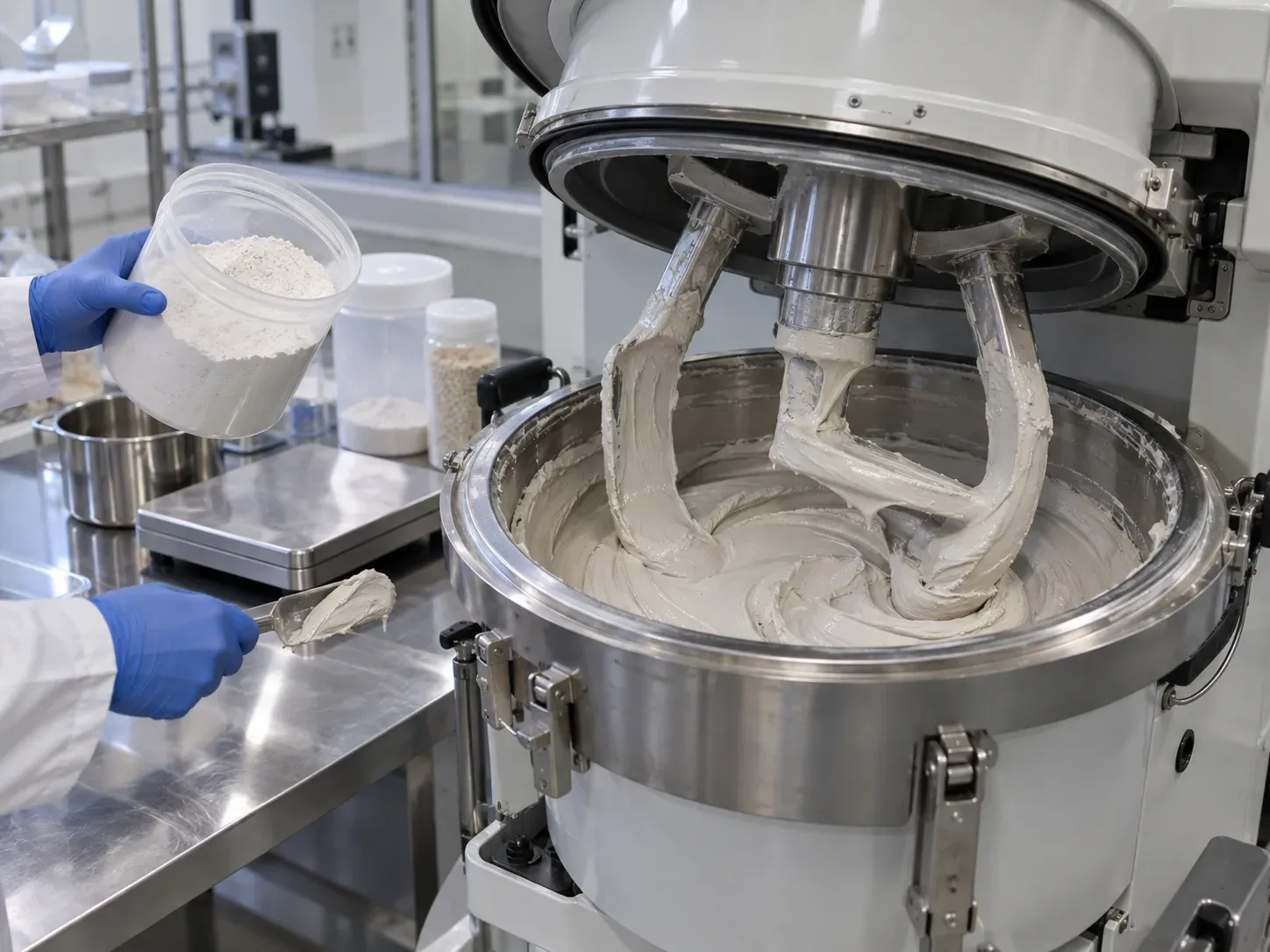
- Build the feedstock window. Compare solids loading, dispersion, viscosity or flow, stability and de-airing using the customer’s binder.
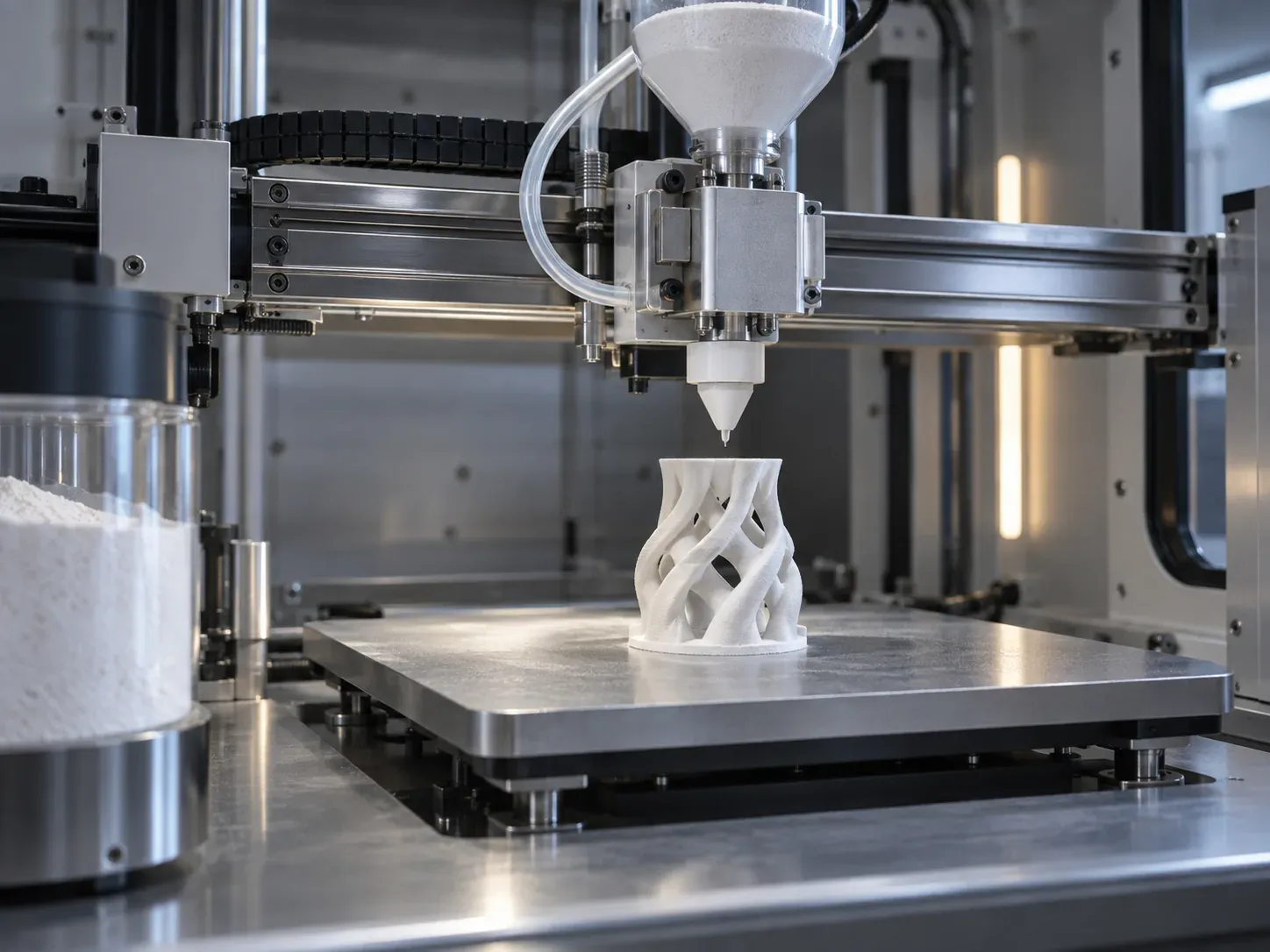
- Print standard coupons first. Record machine settings and evaluate layer quality, green strength, dimensional repeatability and defects before complex geometry.
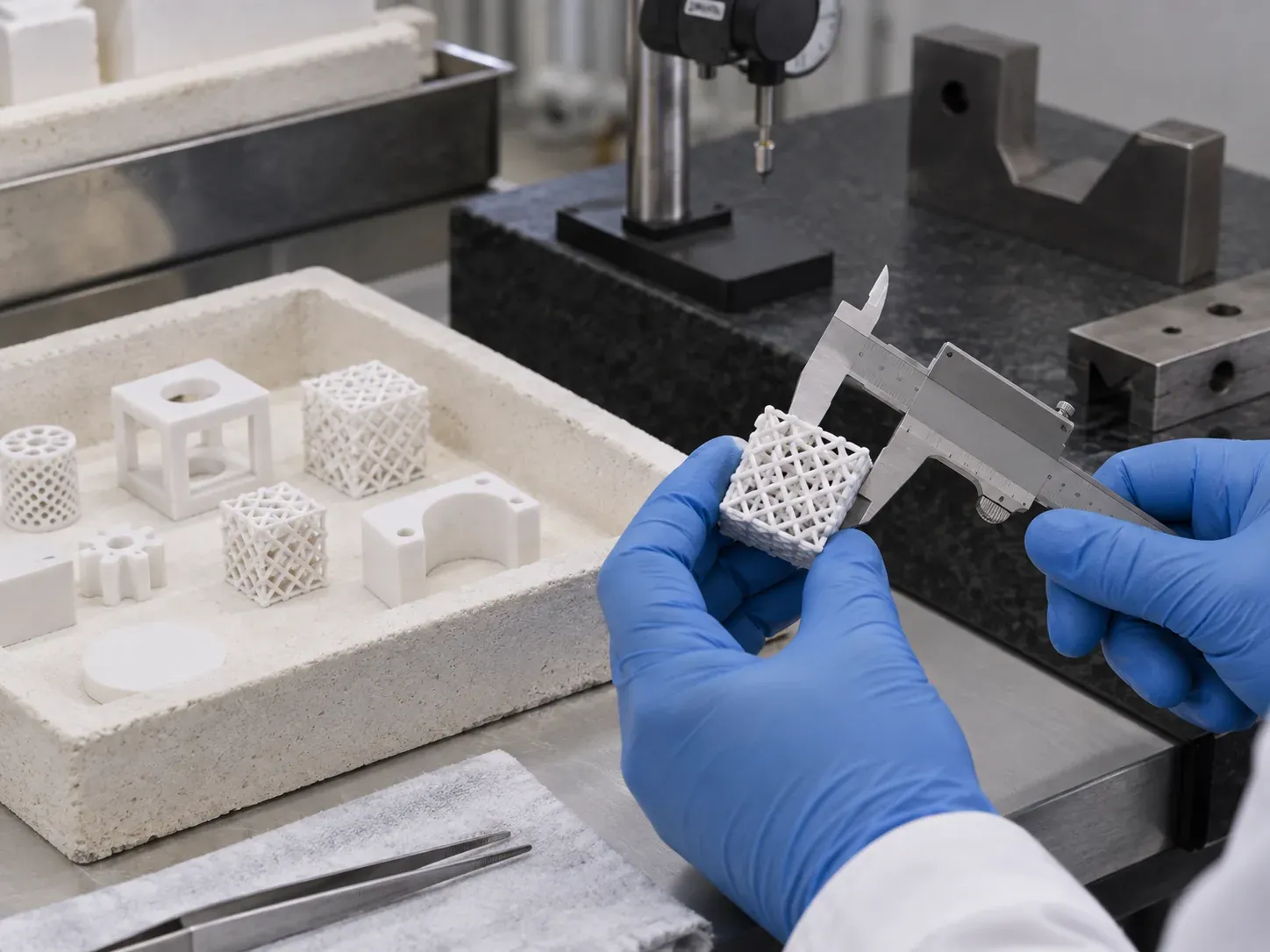
- Develop debinding and firing separately. Track mass loss, cracking, distortion, shrinkage and final phase or density using a geometry-appropriate cycle.
Frequently Asked Questions
Is this a ready-to-print ceramic feedstock?
No. It is a powder input. The customer develops and qualifies the binder system, solids loading, rheology, printer settings, debinding and firing cycle.
Can one PSD work for every ceramic AM process?
No. The acceptable distribution and oversize depend on the machine, layer or nozzle constraint, binder, feature size and handling route. Confirm a method-specific window.
Does amorphous fused quartz remain unchanged after firing?
Do not assume that from the powder name. Final phase and properties depend on the thermal history, impurities, additives and process. Include phase verification when the application requires it.
Related Changtong Products and Next Steps
For fine fused-silica powder comparison, review fused silica powder 325 mesh and fused silica powder for refractory castables. If the ceramic formulation requires a crystalline phase instead, compare controlled-phase cristobalite powder for technical ceramic bodies before defining the feedstock trial.
Request a Fused Quartz AM Trial Quote
Send the printing route, binder family, solids-loading target, PSD method, oversize limit, chemistry needs, debinding/firing concept, sample quantity and document requirements. The response will identify the available grade and current evidence scope.
Request a Quote