Cristobalite Powder for Acrylic Mineral-Cast Sanitaryware
Cristobalite powder candidate for acrylic mineral-cast sink and basin trials. Confirm lot phase, PSD and treatment, then qualify flow and surface properties in the complete part.
Material application brief ·
Match cristobalite to the acrylic casting system
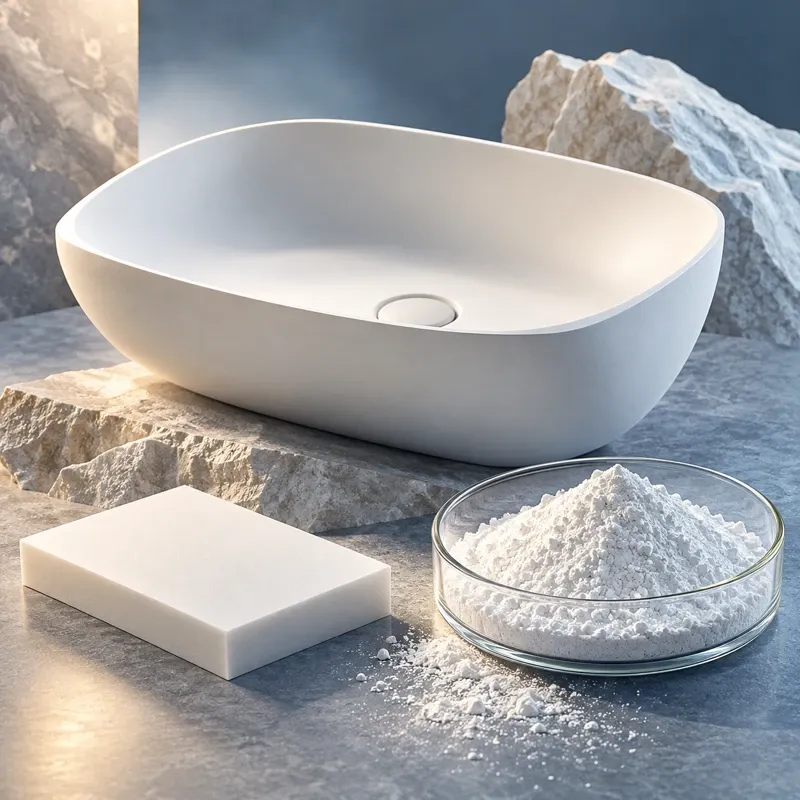
Cristobalite powder for acrylic mineral-cast sanitaryware screening. A cast basin or sink presents a different design problem from an engineered quartz slab: the mineral must disperse in a reactive acrylic syrup, flow into a shaped mold and produce acceptable exposed and reverse surfaces. Changtong can review a cristobalite candidate, but the requested particle-size window and any surface treatment must be confirmed for an actual offered grade. No finished sink performance is claimed for powder alone.
What an application example can tell buyers
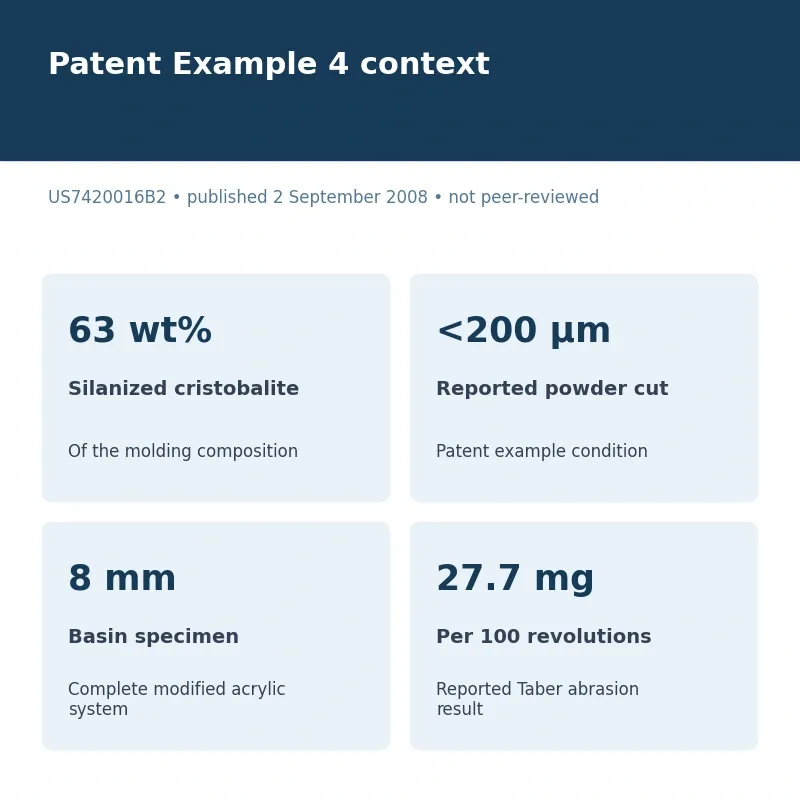
A published U.S. patent on mineral-cast sanitaryware describes a kitchen-sink example using silanized cristobalite particles all below 200 μm at 63% by weight of the complete molding composition. Its Example 4 also includes MMA/PMMA syrup and a silicone elastomer modifier; the reported final properties therefore belong to the entire patented composition, processing and molded part. The patent is useful evidence that cristobalite has been studied in this application. It is neither peer-reviewed grade validation nor proof that Changtong offers the same silanized distribution. The patent background notes that fine cristobalite-filled compositions may require formulation work to meet scratch and abrasion needs. Read U.S. Patent 7,420,016 B2.
Properties to confirm for the proposed mineral
| Property | Why a casting buyer needs it | Current evidence to request |
|---|---|---|
| Cristobalite phase and mineral chemistry | Phase, impurities and color can affect appearance and process consistency. | Grade TDS, batch COA and phase/XRD record with stated methods. |
| Fine/coarse size distribution | Controls syrup viscosity, mold filling, sedimentation and surface texture. | D10/D50/D90, coarse-tail/sieve residue in μm, method and lot ID. |
| Whiteness and moisture | Relevant to shade control, storage and the selected acrylic formulation. | Measured lot values and methods, with buyer-approved limits. |
| Surface-treatment identity | Untreated and silane-treated minerals are not interchangeable in an acrylic syrup. | Written confirmation of availability, treatment chemistry and lot evidence; do not assume a silanized Changtong grade. |
Company sample reference: an existing M4000 silicone-rubber page cites sample 260820-1 (20 August 2026), D50 6.15 μm and whiteness 94%. This establishes neither a sanitaryware grade nor its treatment status. The patent's 63 wt% and <200 μm are external experimental inputs, not proposed Changtong acceptance limits. Set purchasing values from a matched current TDS/COA and the buyer's molding trial.
Applications and material distinction
| Part or process | Specific qualification question |
|---|---|
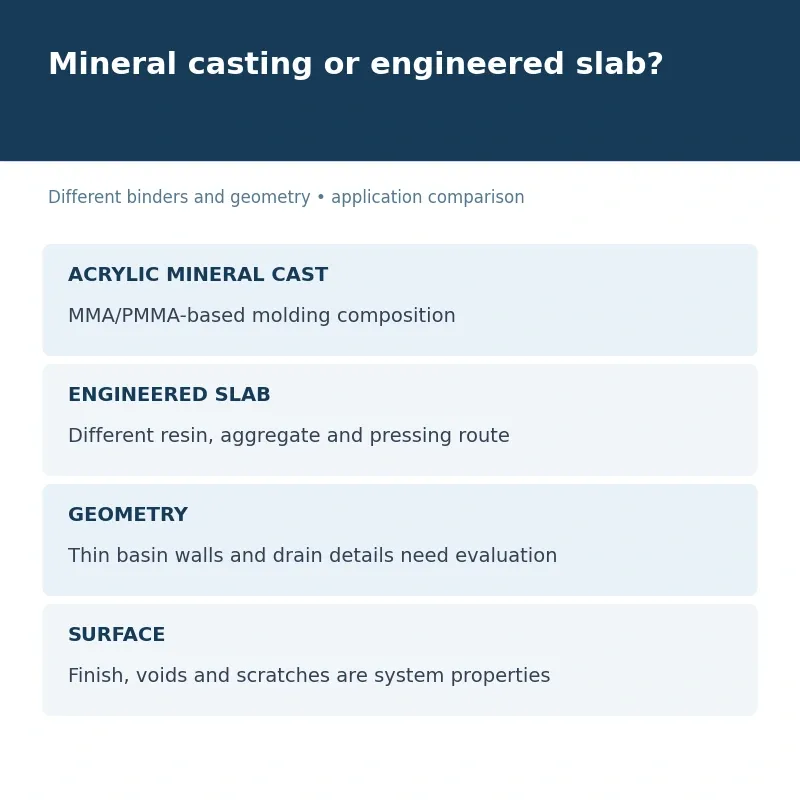
| Acrylic mineral-cast basin or sink | Does the filled syrup wet out, fill curved cavities, cure without problematic voids and meet visible/reverse-side finish criteria? |
| Shower-base or sanitary molded part | Are wall thickness, drainage feature and impact, stain and abrasion methods representative of service? |
| Engineered quartz slab | Its slab geometry, filler packing and surface process differ; see the existing slab filler page. |
From powder sample to molded-part evidence
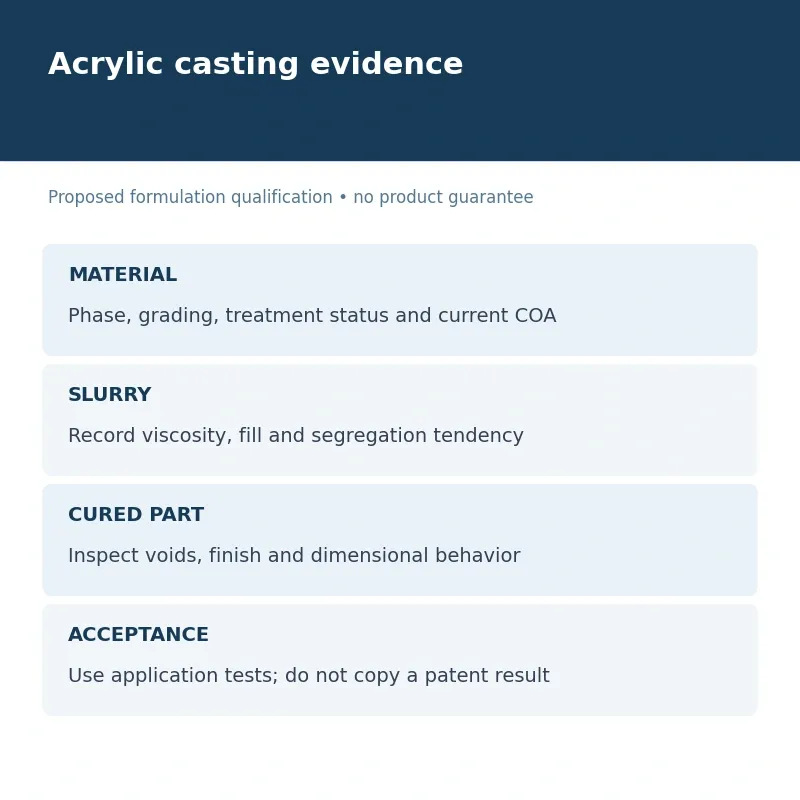
Tell the supplier whether the mineral must be untreated or surface-modified and identify the resin, initiator system, color target, target loading and largest permitted particle. On a controlled series of coupons or prototype basins, record mixing viscosity, pot life, filling pressure and time, settling, voids and finished surface appearance. Test abrasion, scratch response, impact and stain resistance using the end customer's methods. Compare equal binder/modifier recipes; otherwise a change attributed to filler could actually arise from the polymer formulation or cure. For a visible surface, document both the polished face and the underside or drainage detail.
Frequently asked questions
Is the patent's silanized powder a Changtong product?
The patent does not establish that. Ask Changtong which phase, size distribution and treatment are currently available before selecting a grade.
Does fine cristobalite alone make a scratch-resistant sink?
No. The patent's formulation also changed the acrylic syrup and elastomer modifier; test the complete cast part against a control.
What is useful in an RFQ?
Provide the acrylic formulation, mold/part drawing, target size limits in μm, treatment requirement, desired shade, loading range, annual demand, lot-document needs and finished-part acceptance methods.
Share your binder, part geometry, PSD and treatment requirements for a documented candidate and sample discussion.
Request a technical quotationTechnical source and image context
Hajek, A.; Heck, T.; Harke, S.; Wilhelm, T. Moulding compositions for the production of sanitary-ware components. US7420016B2, published 2 September 2008. Original assignee: Blanco GmbH & Co. KG. Example 4. Source record. Patent example, not peer-reviewed research. The published example concerns a modified acrylic composition and complete molded specimen; treatment availability must be confirmed. Source checked 15 October 2026. This is background evidence, not a newly published October 2026 study.
Main and detail images are conceptual AI-generated application illustrations, not photographs of Changtong production or tested customer parts. Body figures are original summaries of the stated research and proposed evaluation comparisons; they are not Changtong measurements.