Washed and Graded Quartz Sand Aggregates for Engineered Stone Slabs
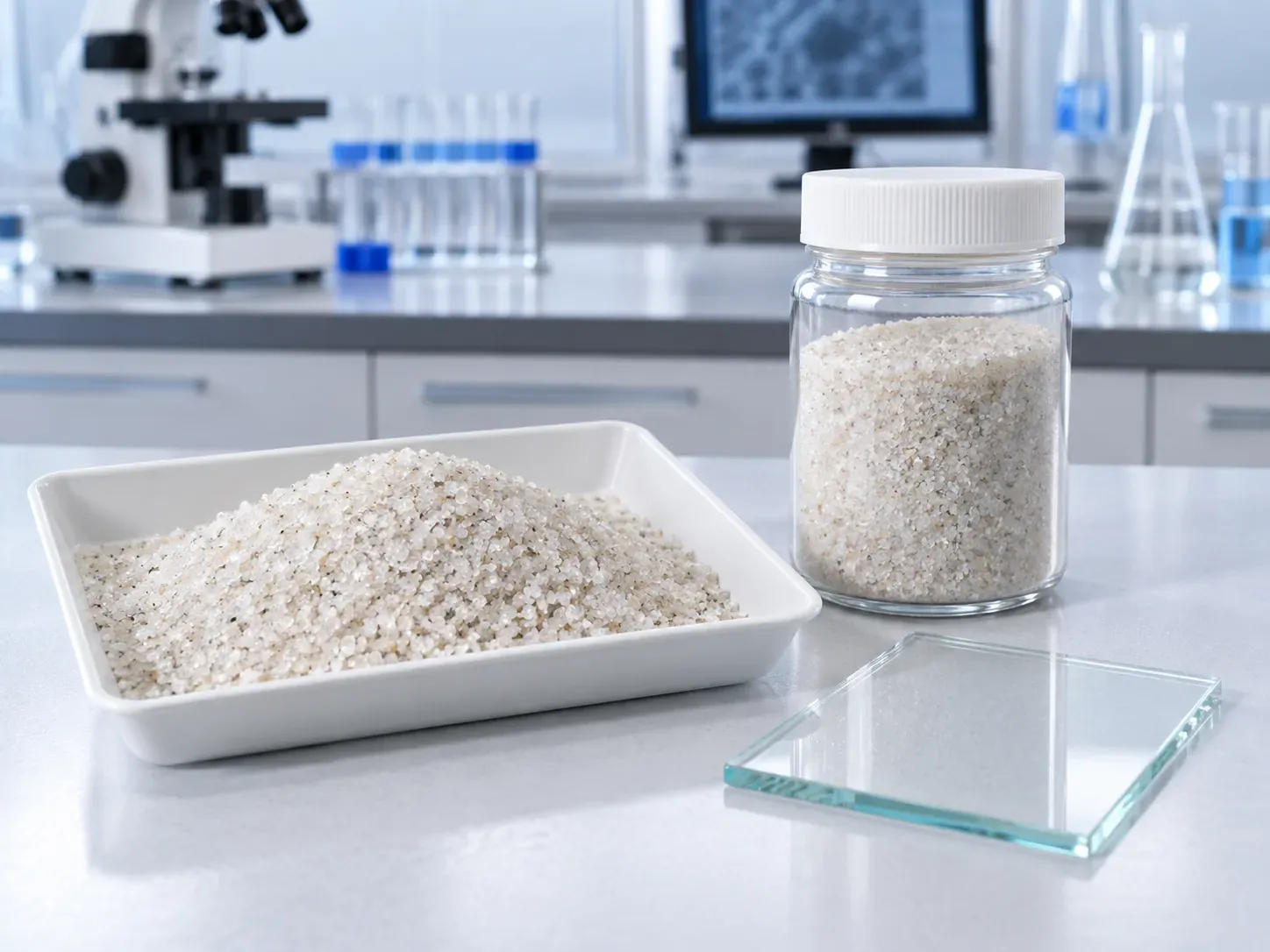
Washed and graded quartz sand aggregates for engineered stone slabs, offered in controlled size windows for packing, texture and surface design.
Specifications
- SiO2
- ≥99.0–99.5%
- Fe2O3
- ≤0.03–0.08%
- Typical size range
- 6–140 mesh
Product overview
Our washed and graded natural quartz sand aggregates are designed for engineered quartz stone manufacturers that need a repeatable coarse-to-medium particle framework in the slab body. The aggregate fraction influences visual grain, packed-bulk behavior, surface exposure and the way the fine filler and resin system are balanced.
This product is not a single universal sand size. It is a range of classified cuts and blended windows that should be selected against the buyer’s slab recipe. The following values are typical reference ranges; the final grade, particle-size distribution and shipment quality are confirmed by the applicable technical data sheet and batch COA.
Typical specification range
| Property | Typical reference | What to confirm before approval |
|---|---|---|
| SiO₂ content | ≥ 99.0–99.5% | Current grade COA and test method |
| Fe₂O₃ | ≤ 0.03–0.08% | Color-sensitive limit for the slab series |
| Moisture | ≤ 0.1% after washing and drying | Packing and storage condition |
| Aggregate size | 6–140 mesh | Cut window, sieve residue and oversize |
| Grain shape | Angular to sub-angular | Crushed, washed and classified grade |
| Bulk density | Approximately 1.5–1.7 g/cm³ | Grade- and packing-dependent result |
Specification note: The figures above are typical reference data for grade discussion, not a universal guarantee. The quoted size window and chemistry must be checked against the customer’s formulation and the current batch COA.
What the aggregate controls in a quartz slab
Surface texture and visual grain
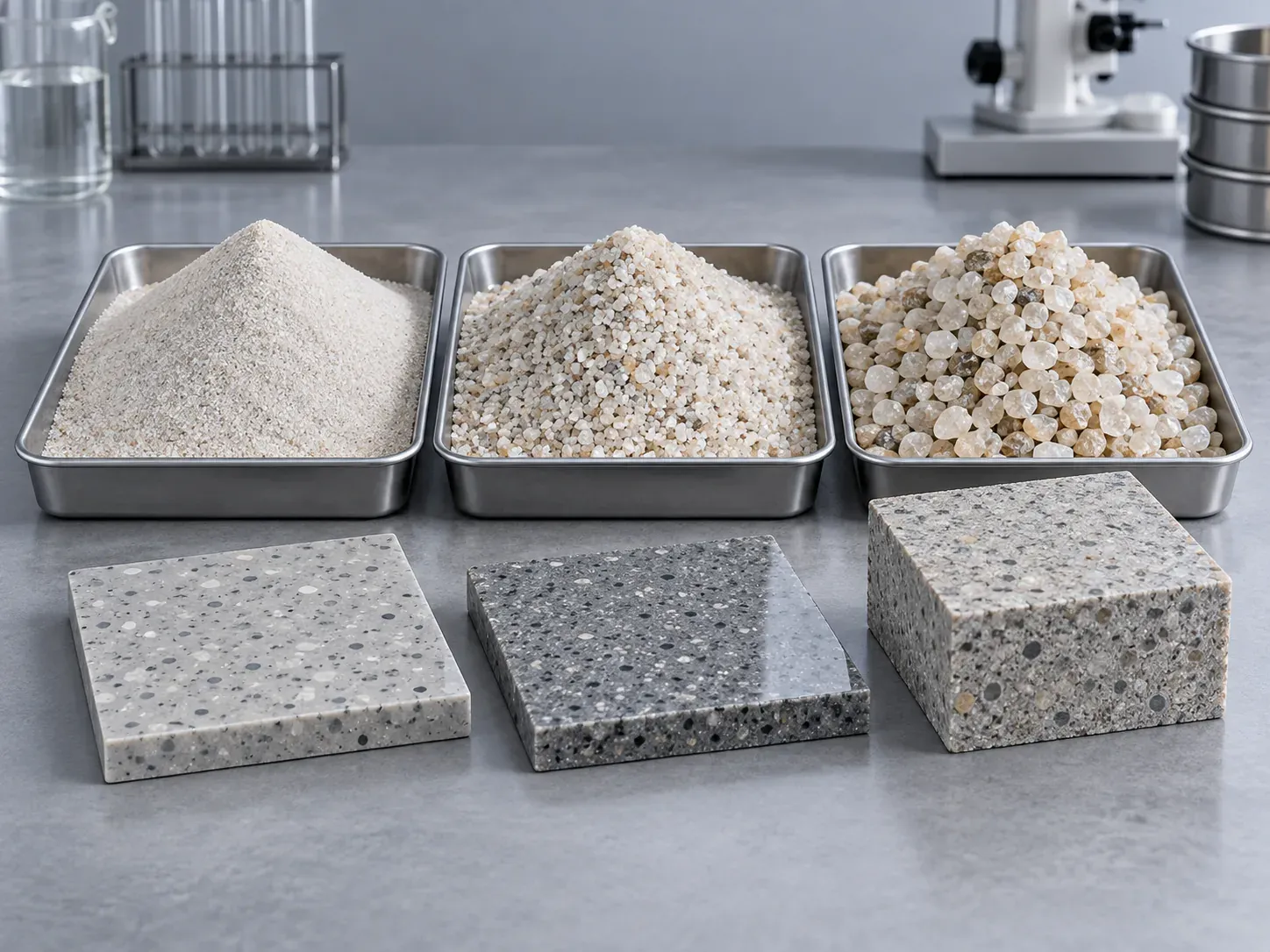
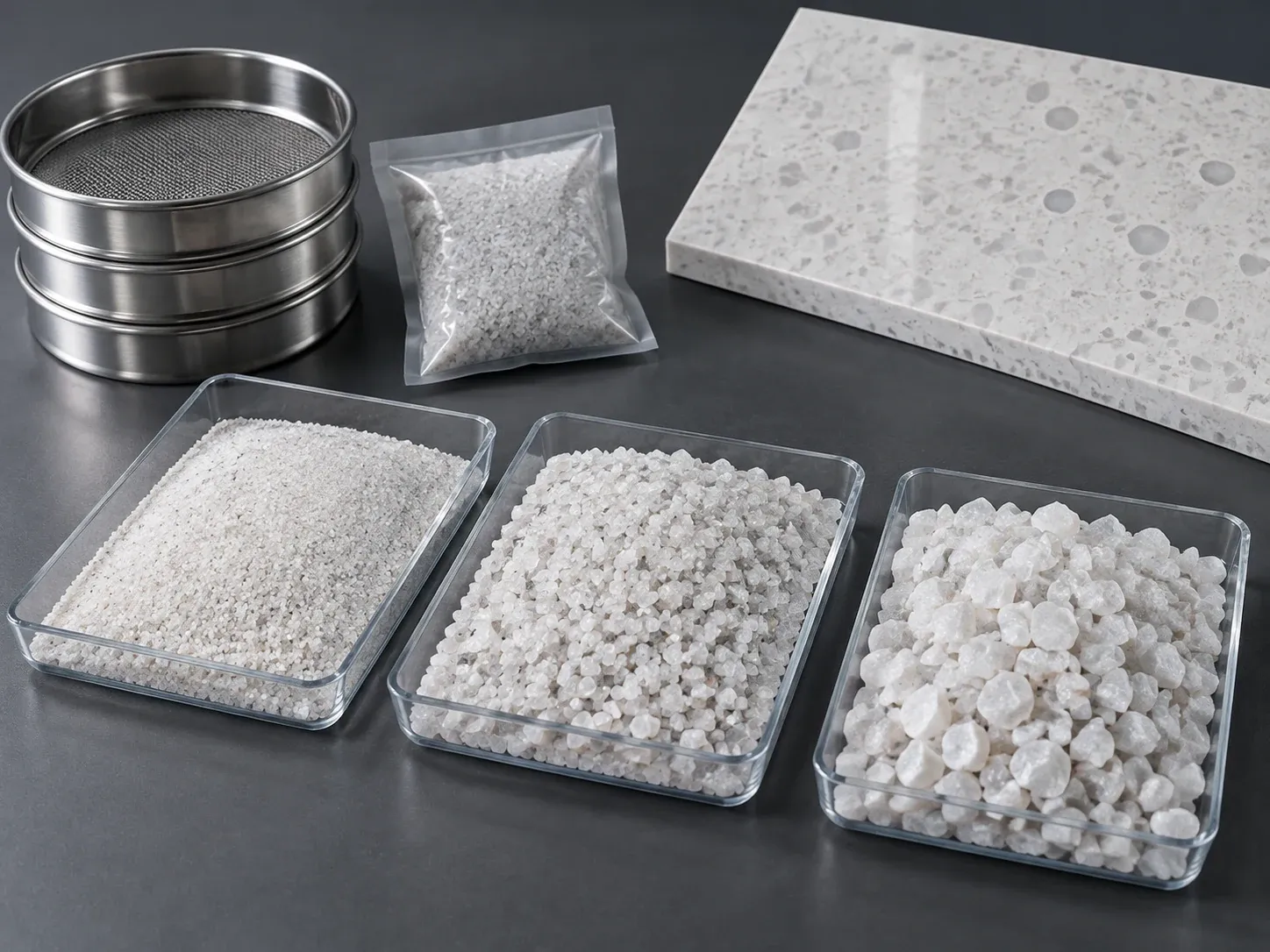
Fine, medium and coarse particles create different visual scales after pressing, curing and polishing. A narrow cut window makes it easier to compare a fine-grain solid color, a medium-grain marble-look design or a coarser sparkle surface without an uncontrolled blend of neighboring fractions.
Packing behavior of the mineral skeleton
Aggregates form the larger-particle framework of the slab. Their size distribution interacts with the fine filler, pigment, resin viscosity, vacuum and pressing conditions. The useful buying decision is therefore a complete blend window, not only a headline mesh number.
Moisture and repeatability
Washed and dried material helps the buyer control the moisture contribution entering the resin mix. Storage, transport and packing can still change the final condition, so moisture should be checked at receiving and compared with the agreed acceptance range.
Recommended aggregate windows
| Slab design direction | Starting aggregate cut | Main qualification focus |
|---|---|---|
| Fine-grain solid colors | 40–140 mesh | Background uniformity, dispersion and polish |
| Medium-grain marble-look slabs | 20–70 mesh | Grain balance, vein definition and segregation |
| Coarse-grain or sparkle surfaces | 6–30 mesh | Particle exposure, surface finish and distribution |
Custom cuts and blended windows can be discussed against a physical sample, target sieve analysis or the buyer’s current COA. A proposed blend should be approved through a controlled slab trial before repeat ordering.
From raw sand to a controlled aggregate grade
- Wash and clean: remove visible surface contamination and prepare the material for drying and classification.
- Dry and protect: reduce moisture to the agreed grade range before packing; keep the shipment protected from re-wetting.
- Classify: separate the material into target mesh fractions and check neighboring cut carryover.
- Blend when required: combine selected fractions to match the buyer’s recipe and visual target.
- Verify by lot: review chemistry, moisture and particle-size distribution and issue the applicable COA.
Pairing with fine filler
The aggregate does not replace the fine matrix filler. For a complete engineered-stone mineral package, it can be evaluated with high-whiteness cristobalite filler for engineered quartz slabs. The buyer should compare the combined filler-and-aggregate system at the target mineral loading, resin ratio and curing process rather than approving the two materials independently.
Information needed for a quotation
Please provide the target aggregate window, slab series, surface appearance, monthly tonnage, packing preference, destination port and required documentation. A sieve-analysis report, current COA or retained sample is especially helpful when the goal is to keep one cut window across repeated container orders.
Packaging and MOQ are confirmed for the selected grade and shipment plan. Generic bag sizes or container quantities should not be treated as fixed commercial terms until they are confirmed in the quotation.
FAQ
Can you keep the same aggregate cut for repeat orders?
We can work to an agreed cut window and lot-control method. Each shipment should still be checked against its COA and the buyer’s receiving procedure, because consistency is demonstrated by the agreed data rather than by the product name alone.
Which size should be used for a quartz slab?
That depends on the visual design and the rest of the mineral blend. Fine-grain solid colors commonly start with a finer window, while marble-look and sparkle designs may need medium or coarse fractions. The final choice should be made through the customer’s slab trial.
Can the aggregates be supplied with cristobalite filler?
Yes. A matched aggregate-and-filler package can be discussed when the buyer wants coordinated chemistry, color range, PSD windows and shipment documentation.
What should be tested on arrival?
Check package condition, moisture, particle-size distribution, visible contamination and the COA fields agreed in the purchase specification. For a new grade, also compare mixing, pressing, curing, polish and finished-surface appearance.
Request a quote
Use the Request a Quote form with your target mesh range, slab design, monthly requirement and current specification. We will confirm the closest aggregate grade, trial route and documentation before quoting.