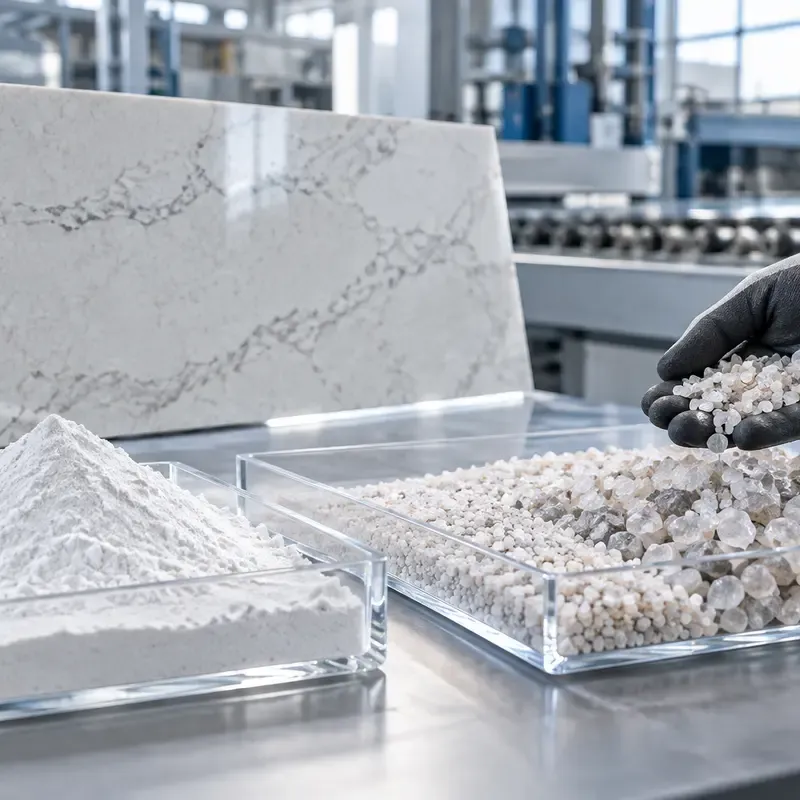
Cristobalite for Refractory Insulation Coatings: A Plant Buyer's Thermal-Cycling Checklist
A plant-buyer checklist for qualifying cristobalite in refractory insulation coatings, linking phase identity, PSD, adhesion, thermal cycling and lot evidence.

A cristobalite purchase should be approved as a controlled coating input, not as a mineral name alone. The useful buying file connects phase identity, particle-size evidence, coating compatibility, thermal cycling and lot release.
This checklist supports plant qualification. It does not promise a universal service temperature, coating adhesion, thermal-shock life or insulation value. The final window depends on the binder, substrate, cure schedule and furnace conditions.
A plant buyer usually has two jobs at once: keep the coating line running and prevent an incoming mineral change from becoming a field failure. That is why the strongest RFQ asks for evidence that can be checked at receiving, in the laboratory and during production—not a broad statement that the powder is “high temperature.”
For a cristobalite refractory insulation coating, the approval question is practical: can this lot be identified, dispersed, applied and cycled under the plant’s own conditions with a controlled record?
1. Define the coating duty before comparing grades
Record the substrate, wet application method, dry-film target, binder family, curing route and thermal exposure. A brush-applied repair coating may need a different flow and settling balance from a sprayable insulation coating. The same powder name cannot replace a process description.
Ask the production team to identify the failure they actually see: cracking after a heat cycle, pinholes, poor coverage, settling in the pail, weak adhesion, dusting or a change in surface texture. Each failure points to a different trial observation.
2. Put phase identity at the front of the incoming check
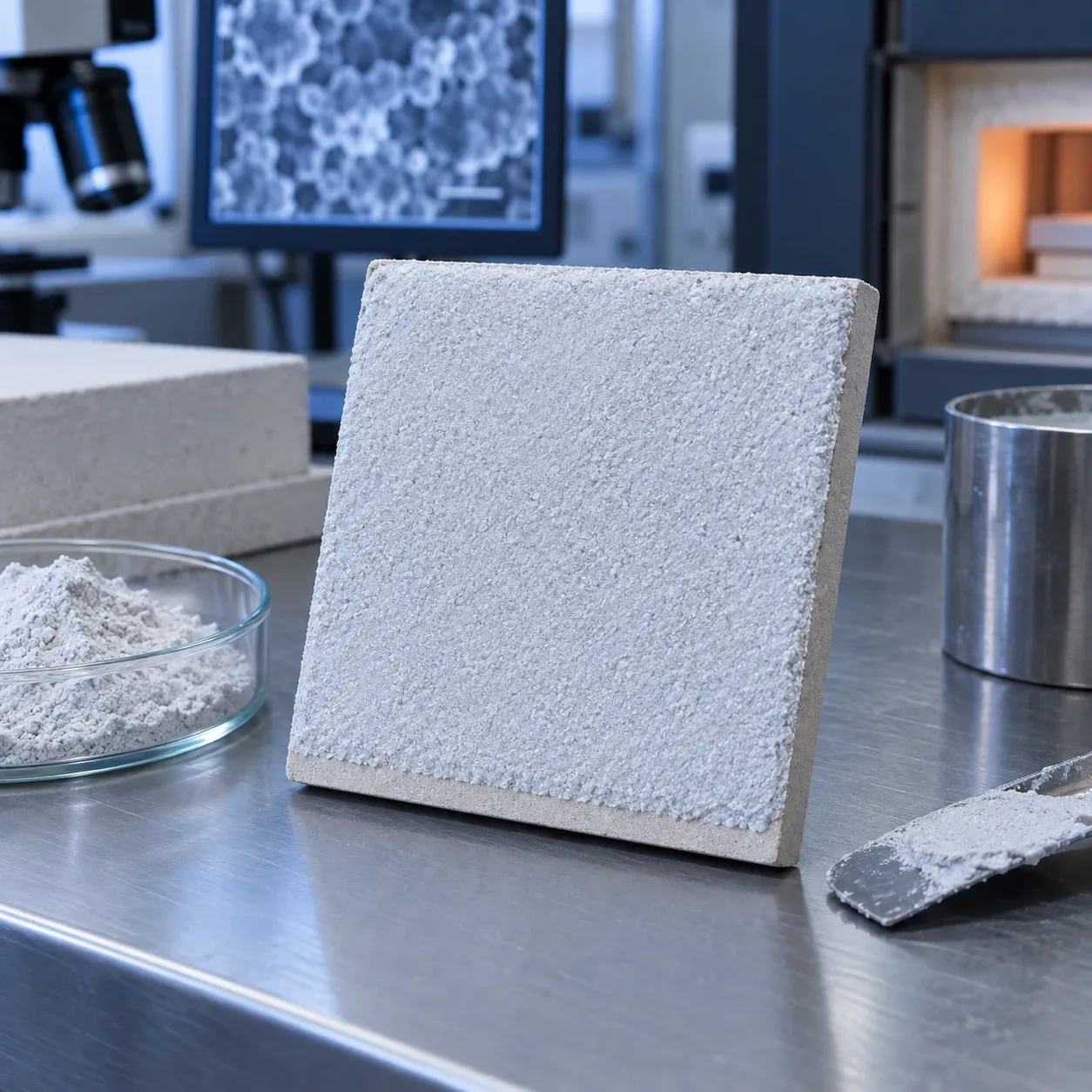
Do not approve cristobalite from a label or a visual sample. Keep the lot number, supplier grade, sampling method and phase evidence together. XRD is useful when the plant needs to confirm the intended crystalline phase or investigate a change between lots. Read the result as identification evidence; do not turn a single diffraction record into an unsupported performance guarantee.
The buyer should also state which materials are outside the request. Cristobalite, natural-quartz-derived powder, fused silica, silica fume and fumed silica are not interchangeable by name. Their processing history and application behavior can be different.
3. Ask for particle-size evidence that matches the process
| RFQ field | Plant question | Release evidence |
|---|---|---|
| Particle size | Will the grade pass through the application route without abnormal settling or blockage? | Agreed test method, result format and retained sample |
| Moisture and packing | Can the powder be opened and sampled without avoidable humidity exposure? | Lot code, packaging description and storage instruction |
| Phase and chemistry | Does the identity fit the approved coating formulation? | TDS/COA fields and, where needed, XRD or laboratory confirmation |
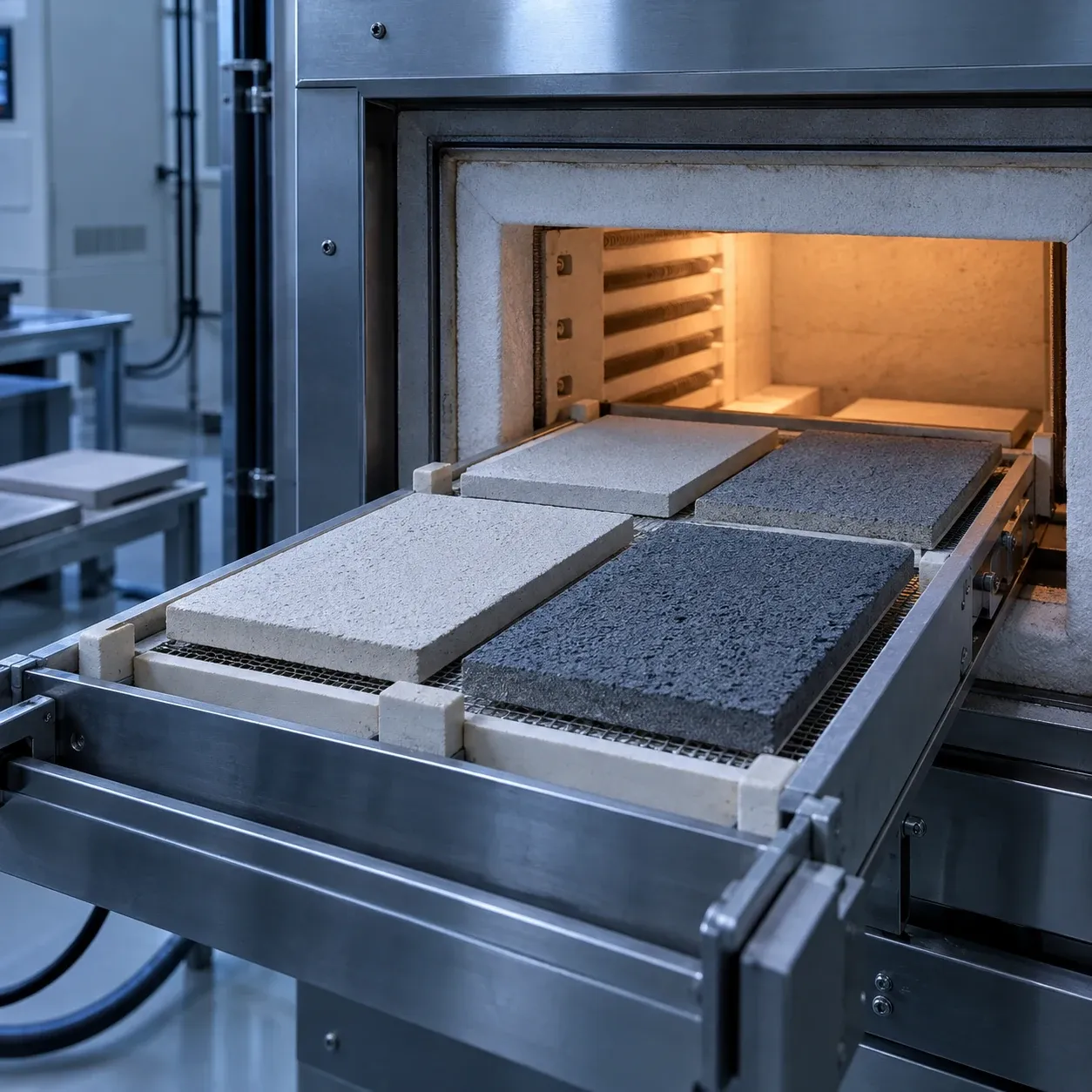
Particle-size data become useful only when the method and sample preparation are known. A sieve result, laser-diffraction result and production observation may answer different questions. Keep the method stable across the comparison so the plant is not comparing unlike measurements.
4. Use a small coating trial before a full-line change
Prepare a control and one candidate using the plant’s normal binder, mixing sequence and cure. Record addition order, wetting time, mixing energy, viscosity observation, settling interval, application method and dry-film appearance. If the objective is thermal cycling, define the cycle count, ramp or hold conditions and inspection points before the first panel enters the furnace.
Keep one variable at a time where possible. Changing the binder, solids loading and powder grade together makes the result difficult to defend to production or to a customer.
5. Build the supplier file for repeat orders
- Approved material identity and excluded material families.
- Agreed TDS and COA fields, test methods and lot numbering.
- Retained sample and change-notification route.
- Packing, storage and sampling instructions suitable for the plant.
- Lead-time communication that is realistic for the expected order pattern.
For experienced buyers, this file reduces the risk of an unannounced grade substitution. For newer buyers, it creates a step-by-step path from sample request to production release.
FAQ
Can a cristobalite grade be approved from color alone?
No. Color may be a useful visual check, but phase identity, particle-size evidence, formulation compatibility and lot records still need to be controlled.
Does XRD prove the coating will survive thermal cycling?
No. XRD supports phase identification. Thermal-cycling performance must be checked in the actual binder, substrate, thickness and cycle schedule.
Request a plant-specific qualification file
Share the coating duty, substrate, application route, trial quantity and documentation fields with the Changtong technical team.
Contact Changtong Technical TeamRelated: cristobalite product reference and cristobalite XRD incoming-inspection guide.