Why Low-Iron Cristobalite Matters in White Silicone Rubber
Learn how low reported iron, powder whiteness, clean handling and controlled colour measurement support M4000 trials in white and light-coloured silicone rubber.
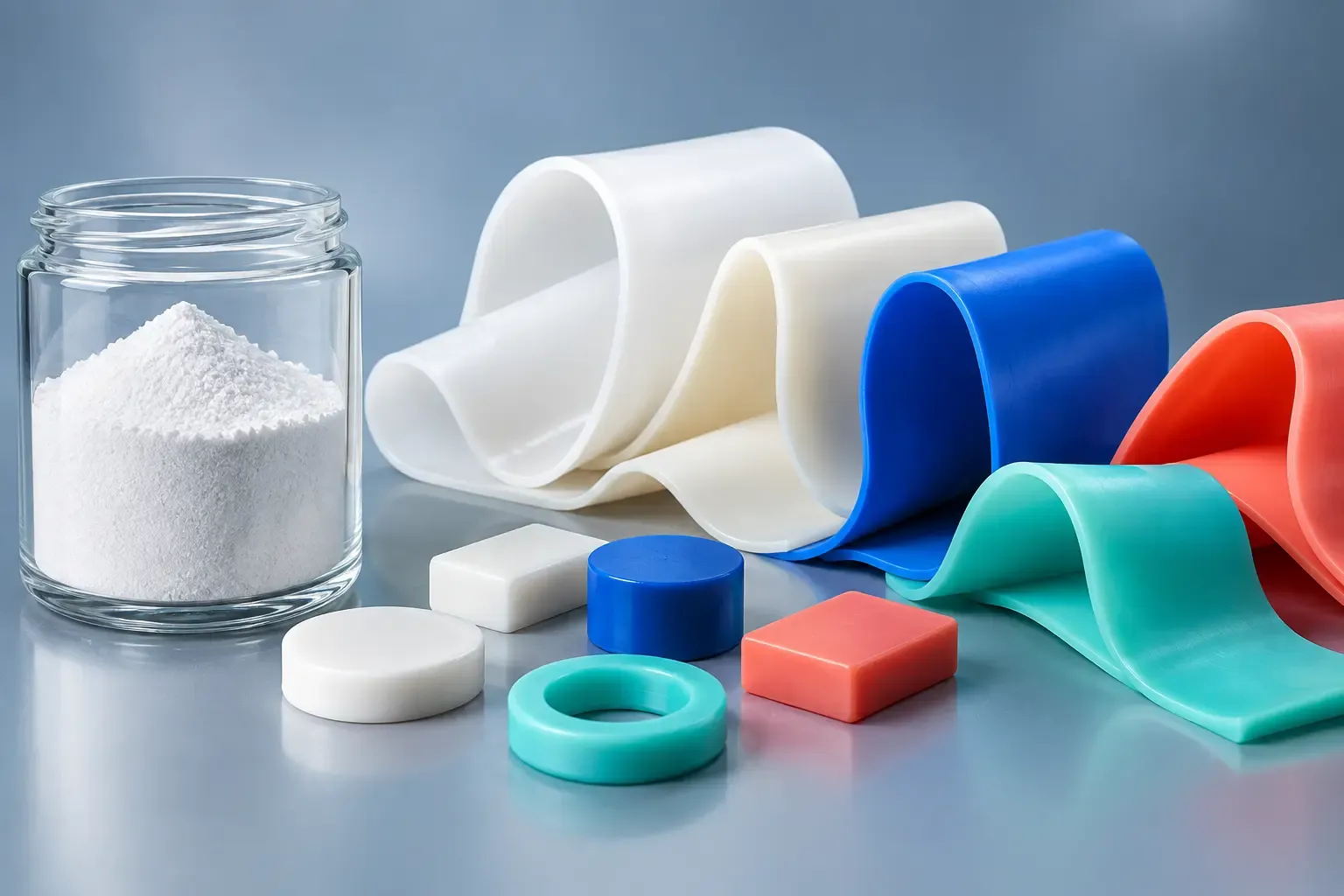
A white silicone compound can pass hardness and tensile tests yet still be rejected for a faint grey cast, dark specks or a colour shift after post-cure. Those problems are expensive because they often appear after mixing, moulding or extrusion has already consumed the higher-value ingredients.
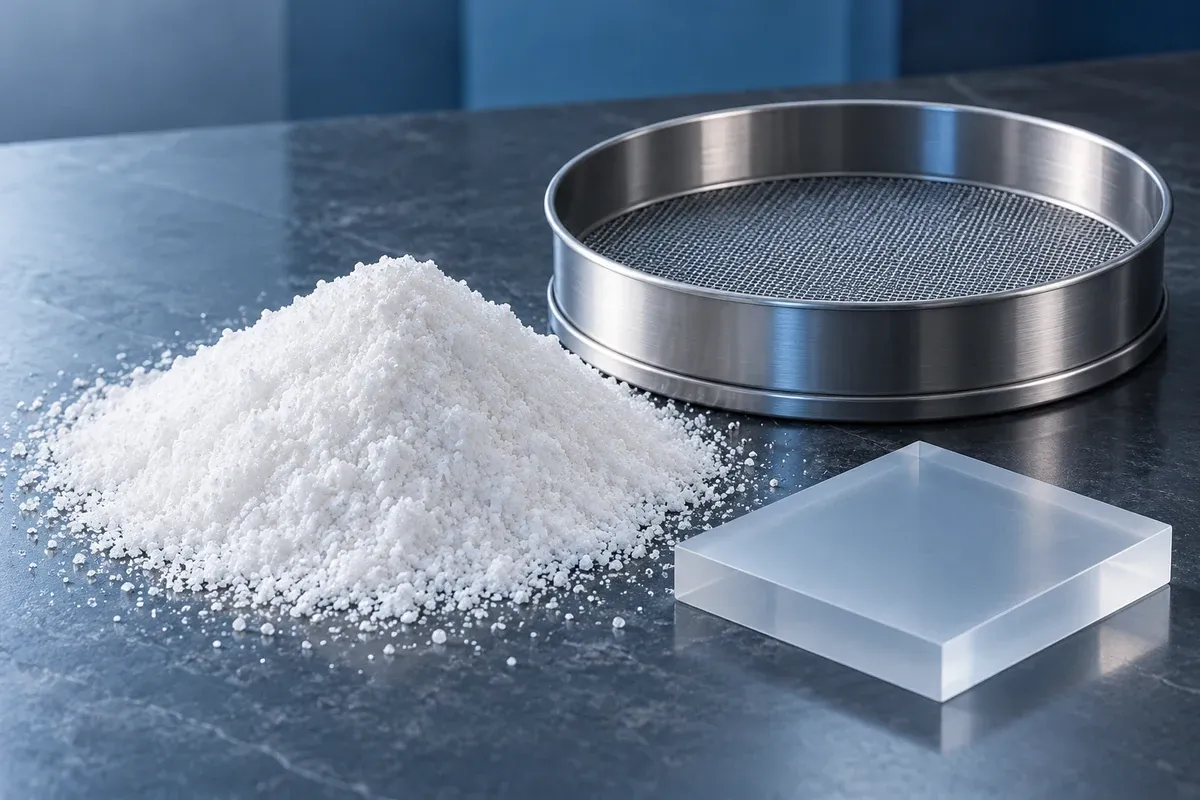
For buyers evaluating low-iron cristobalite for white silicone rubber, the useful job is not to chase one impressive whiteness number. It is to connect powder identity, iron level, moisture, handling cleanliness and a repeatable colour method to the finished compound. Changtong's M4000 report supplies several concrete starting values, but the customer still has to define and verify the colour window in the actual silicone system.
All four values above come from Changtong inspection report sample 260820-1 dated 20 August 2026. They describe that sample only. Current lot acceptance requires the current COA and an agreed method.
Why “white powder” is not a complete colour specification
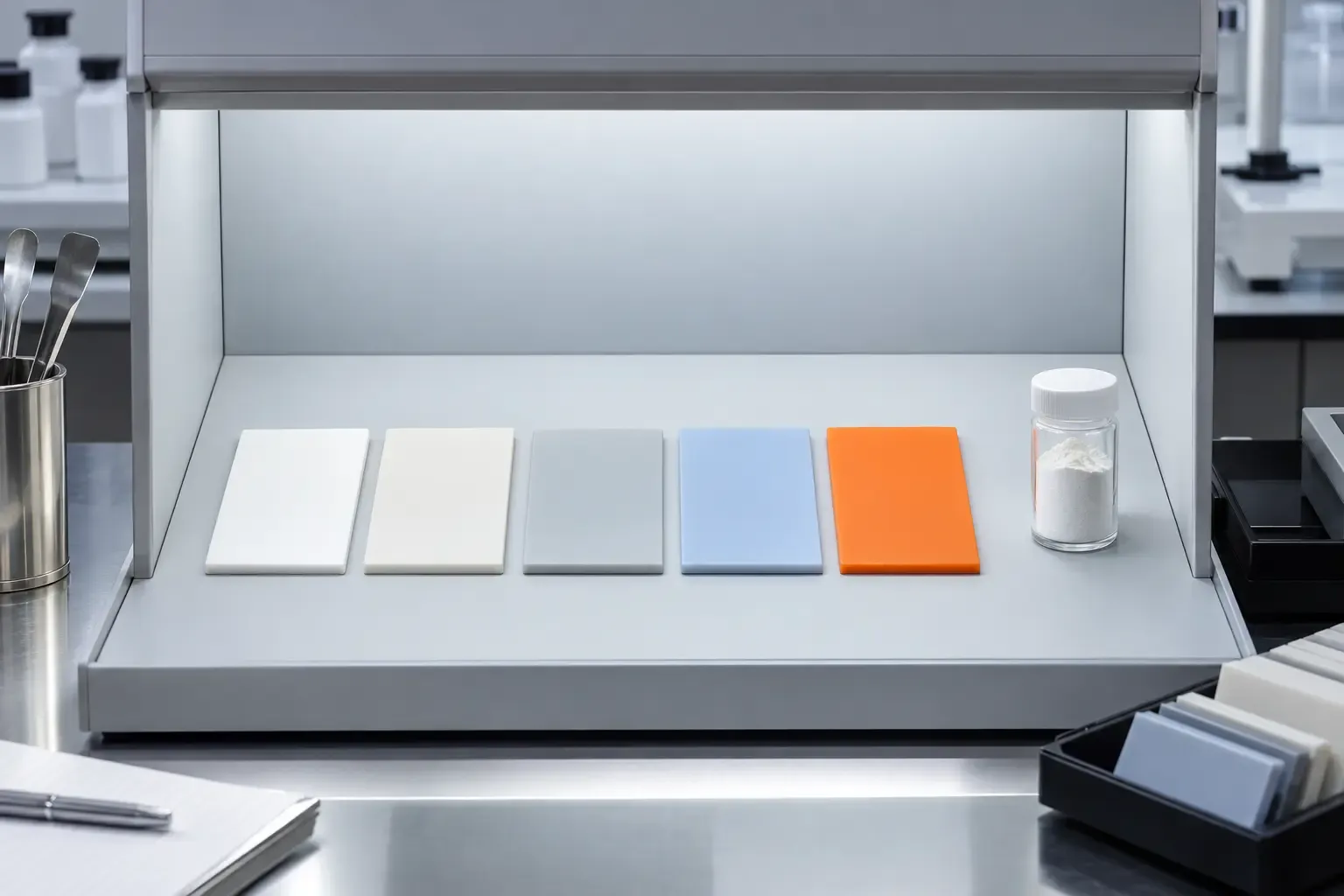
Powders that look equally white in a bag can behave differently after wet-out, mixing, pigmentation and cure. Visual inspection changes with illumination, observer, sample thickness and background. A thin translucent silicone sheet may reveal colour differences that are hidden in a thick test button. Gloss and surface texture can also change the way light is perceived.
Iron is relevant because even a small change in mineral contamination can influence the base tone of a light compound. It is not the only colour variable. The silicone gum, reinforcing silica, process aids, peroxide residues, platinum-cure inhibitors, pigments, oven cleanliness and post-cure cycle can all move the final colour. Low reported Fe2O3 therefore reduces one uncertainty; it does not guarantee a white finished article.
The same caution applies to “whiteness.” A value cannot be compared fairly unless the preparation, instrument, illuminant, observer angle and calculation are known. ISO/CIE 11664-4 defines calculations for the CIE L*a*b* colour space, including lightness, chroma, hue and colour differences. ASTM E313 covers calculated whiteness and yellowness indices for appropriate white or near-white specimens. Either framework can support internal control, but the customer and supplier must agree on one method and sample preparation.
Read the M4000 report as an incoming-material baseline
The M4000 inspection report identifies sample 260820-1, dated 20 August 2026, and cites SJ/T 10675-2002. For a white or pastel silicone project, the most relevant entries are shown below. The interpretation column is deliberately narrow: it states what each value can help control, not what the cured compound will automatically achieve.
| M4000 report item | Result | Useful interpretation | What it cannot prove |
|---|---|---|---|
| SiO2 | 99.63% | Supports mineral chemistry and batch-comparison review. | It does not identify all colour bodies or establish finished-rubber purity. |
| Fe2O3 | 0.009% | Provides a low reported iron baseline for colour-sensitive screening. | It does not guarantee zero dark specks, neutral undertone or no post-cure yellowing. |
| Al2O3 | 0.21% | Helps characterise the tested mineral sample and monitor chemistry consistency. | It is not a standalone predictor of silicone colour or cure behaviour. |
| Whiteness | 94% | Gives a report-specific powder appearance reference. | It should not be compared with another whiteness value until methods and preparation agree. |
| Moisture | 0.1% | Supplies an incoming baseline for storage and processing review. | It does not describe moisture pickup after packaging is opened. |
Control four different kinds of colour failure
Keeping these failure modes separate makes root-cause work faster. A uniform colour shift is unlikely to be solved by screening the powder for single black specks; a local streak is unlikely to be explained by an average Fe2O3 value.
Set up a colour trial that purchasing can repeat
The best trial uses the approved production compound as a control and changes one material variable at a time. If M4000 is being introduced alongside a change in pigment masterbatch or cure package, run a small factorial plan so the effects are not confused.
| Control item | What to standardise | Reason |
|---|---|---|
| Powder conditioning | Sealed storage, opening time, room conditions and preconditioning if used | Prevents handling history from being mistaken for a supplier-lot difference. |
| Recipe basis | Mass and volume calculations, actual weights and batch size | M4000's reported specific gravity is 2.35 g/cm3; mass-only substitution can change filler volume. |
| Mixing | Equipment, roll gap or mixer settings, order, time, temperature and cuts | Unequal dispersion can create tone and speck differences even when powder chemistry is unchanged. |
| Plaque geometry | Mould, thickness, surface finish and backing | Colour readings and visual opacity change with thickness and surface. |
| Cure and post-cure | Temperature profile, time, ventilation and sample location | Separates filler colour from thermal or cure-related yellowing. |
| Measurement | Instrument, geometry, illuminant, observer, aperture, background and number of readings | Makes L*a*b*, colour difference or whiteness results comparable. |
How to turn colour readings into an acceptance rule
A customer does not need the most complicated colour formula; it needs a method that is appropriate, documented and repeatable. For white or near-white plaques, one route is to record L*, a* and b* under fixed CIELAB conditions and calculate colour difference against an approved control. Another is to use an agreed whiteness or yellowness index when the specimen falls within the method's applicable range.
Do not set a numerical tolerance by copying a value from another industry. Establish it from production capability, customer visual acceptance and gauge repeatability. Run several approved baseline batches first. Then decide whether the limit applies to an average, a maximum individual reading, or both.
| Record | Good practice | Common mistake |
|---|---|---|
| Reference standard | Retain an approved plaque with batch, recipe, cure and date. | Comparing every new batch with a photograph or an ageing loose sample. |
| Instrument conditions | Save illuminant, observer, geometry, aperture and calibration status. | Reporting “Delta E” without stating how it was calculated. |
| Sampling | Measure multiple locations and note visible defects separately. | Using an average to hide one unacceptable dark speck or streak. |
| Post-cure result | Measure after the specified cooling and conditioning time. | Comparing a hot new plaque with a conditioned control. |
| Lot traceability | Link the rubber batch to M4000 lot, pigment lot and cure-package lot. | Investigating a colour shift without knowing which inputs changed. |
Low iron helps, but cleanliness closes the gap
When the colour target is white, pale grey, translucent pastel or a clean bright shade, handling discipline can be as important as the average chemistry. Use dedicated or fully cleaned scoops and containers. Inspect bag liners before emptying. Keep dark pigments, carbon black and rusty steel away from the transfer route. Record screen condition and magnets if they are part of the process.
Request the current M4000 COA for each commercial lot and retain both powder and cured-compound samples. If a customer wants the reported activation value used in a specification, first confirm the current surface-treatment declaration and test method. The 95% value in sample 260820-1 should not be converted into a universal compatibility or dispersion claim.
Where M4000 fits in the purchasing conversation
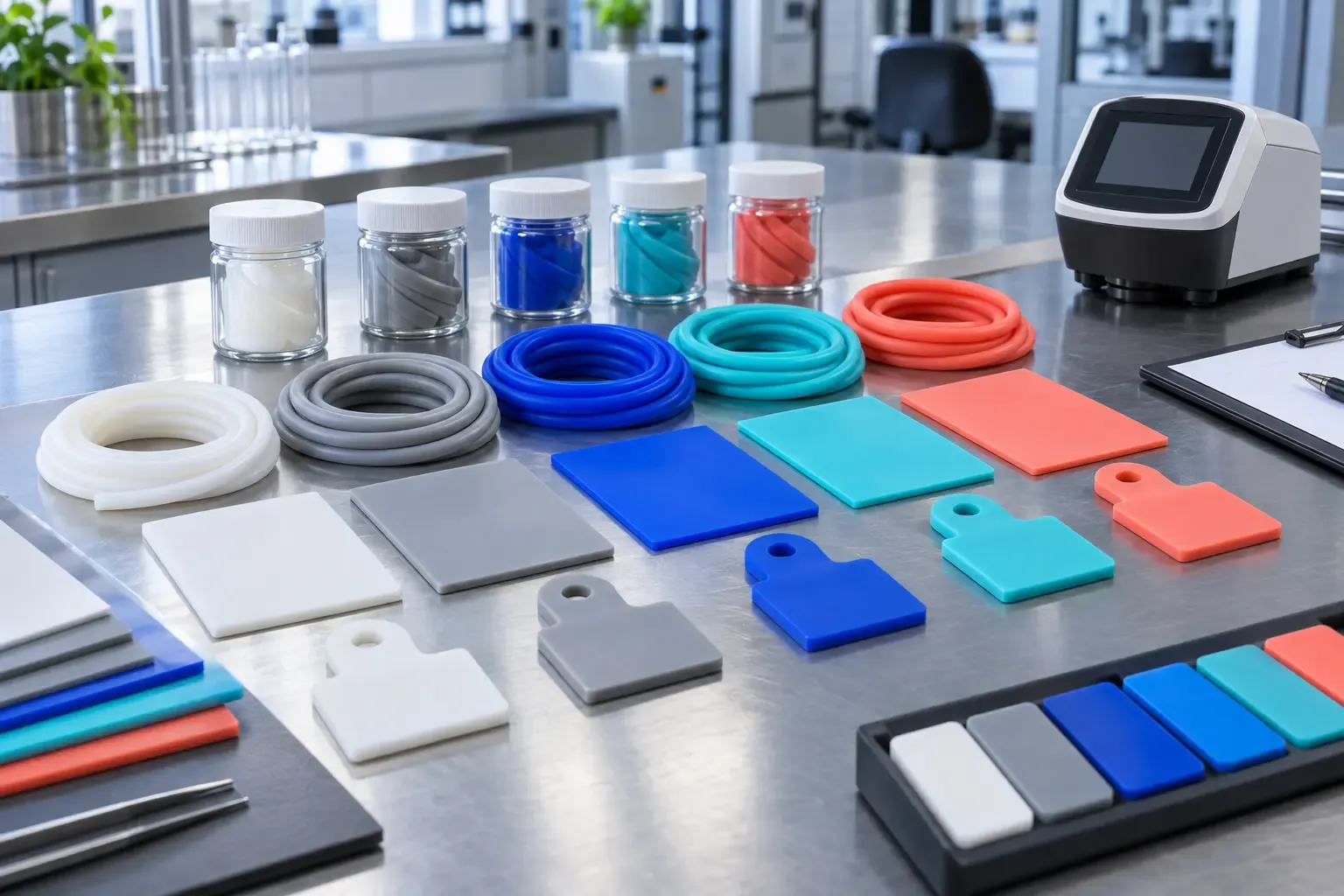
M4000 may be considered when a compounder wants a documented, high-silica crystalline mineral filler for a white, grey or coloured silicone formulation. It is not the same material as precipitated silica or fumed silica and should not be sold as their automatic one-for-one replacement. Reinforcement, rheology, cure and mechanical retention remain formulation-level decisions.
Review the M4000 product page for silicone rubber for the product scope. Buyers comparing colour-sensitive mineral options can also see Changtong's high-whiteness cristobalite overview. If the project also involves reinforcement substitution, read the separate cristobalite and precipitated silica qualification guide rather than assuming equivalent filler roles.
Frequently asked questions
Does 0.009% Fe2O3 guarantee white silicone rubber?
No. It is the reported iron value for sample 260820-1 and is useful for incoming-material screening. Final colour also depends on the complete formulation, contamination control, sample thickness, cure and measurement conditions.
Can Changtong's 94% whiteness be compared directly with a supplier's L* value?
Not without method details. Whiteness and CIELAB lightness are different quantities. Confirm specimen preparation, instrument geometry, illuminant, observer and calculation before comparing numbers.
Should colour be approved before or after post-cure?
Use the state in which the customer receives or uses the part. Recording uncured and initial-cure colour helps troubleshooting, but a post-cured product should be released against a conditioned post-cure reference.
What should a colour-sensitive RFQ include?
State the silicone type, white or target shade, plaque or part thickness, cure/post-cure cycle, current filler system, colour method and tolerance, contamination limits, required COA items and the finished properties that cannot change.
Evidence and claim boundary
The Changtong values in this guide come from the M4000 inspection report dated 20 August 2026, sample 260820-1. They are powder data for that sample, not measured L*a*b*, yellowness, dispersion or post-cure colour results in a customer's silicone compound. Public standards are cited only to support a reproducible colour-control method.
- ISO, ISO/CIE 11664-4:2019, CIE 1976 L*a*b* colour space.
- ASTM International, ASTM E313-20, Yellowness and Whiteness Indices.
- Changtong M4000 inspection report, 20 August 2026, sample 260820-1, supplied product evidence.
Request M4000 Data for a Colour-Control Trial
Share the silicone type, target shade, cure cycle, sample thickness, colour method and current filler system. We can prepare the current lot documentation and sample scope for a controlled comparison. Your cured-compound specification remains the final approval standard.
Request a QuoteDiscuss the Application