Quartz-Filled Polyurethane: Trace Moisture and Trapped Air
Trace bubbles in quartz-filled polyurethane by separating water-related gas from mixing air. Check sampling, treatment compatibility and controlled casting trials.
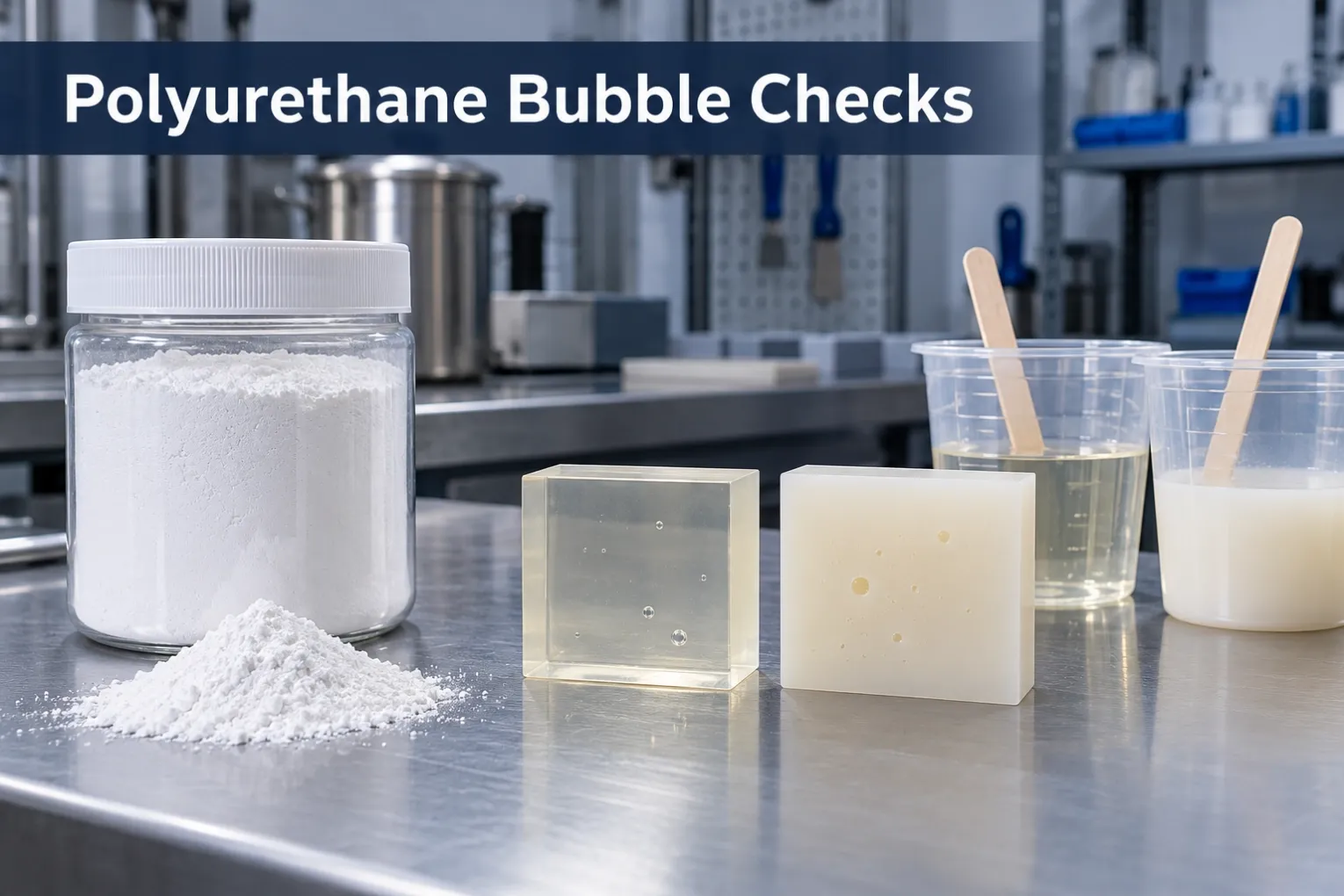
A cast polyurethane part can look sound at the surface yet reveal cavities when sectioned. Before rejecting the quartz filler or adding more defoamer, establish whether gas was generated during reaction, air entered during mixing, or both happened together. The investigation needs a retained powder sample and a record of the casting process.
Changtong technical guide · · Industrial Application Guides
Begin with the bubble timeline
Record when bubbles first appear: during powder wetting, after the components meet, during vacuum release, or after the cast has started to gel. Photograph the same locations and retain an unfilled resin control. Appearance alone cannot identify the gas source.
For a non-foamed polyurethane, unwanted water can react with isocyanate and release carbon dioxide. Mechanically entrained air is a separate route. A 2022 primary study of water-blown polyurethane foams examined the interaction of mixing air and reaction-generated gas; it supports distinguishing these mechanisms, but its foam results do not qualify a mineral-filled casting formulation.
| Observation | Separate check | What it can establish |
|---|---|---|
| Bubbles during powder wetting | Observe the pre-reaction blend and mixing geometry | Evidence of air entry; not proof that water is absent |
| Bubbles develop during cure | Compare sealed sampling and an agreed water analysis | A moisture pathway to investigate; not a diagnosis from appearance |
| Fewer voids after degassing | Repeat at matched temperature and elapsed time | Process sensitivity, subject to cure and flow acceptance |
| A recently opened bag performs differently | Check exposure, transfer and retained samples | Whether handling may be contributing to the change |
A water-repellent surface is not a moisture certificate
Surface treatment describes the particle interface. It does not establish the water content of a delivered lot, an opened bag, or a filled polyol blend. Ask what moisture method was used, when sampling occurred, and whether the result represents the material at the mixer.
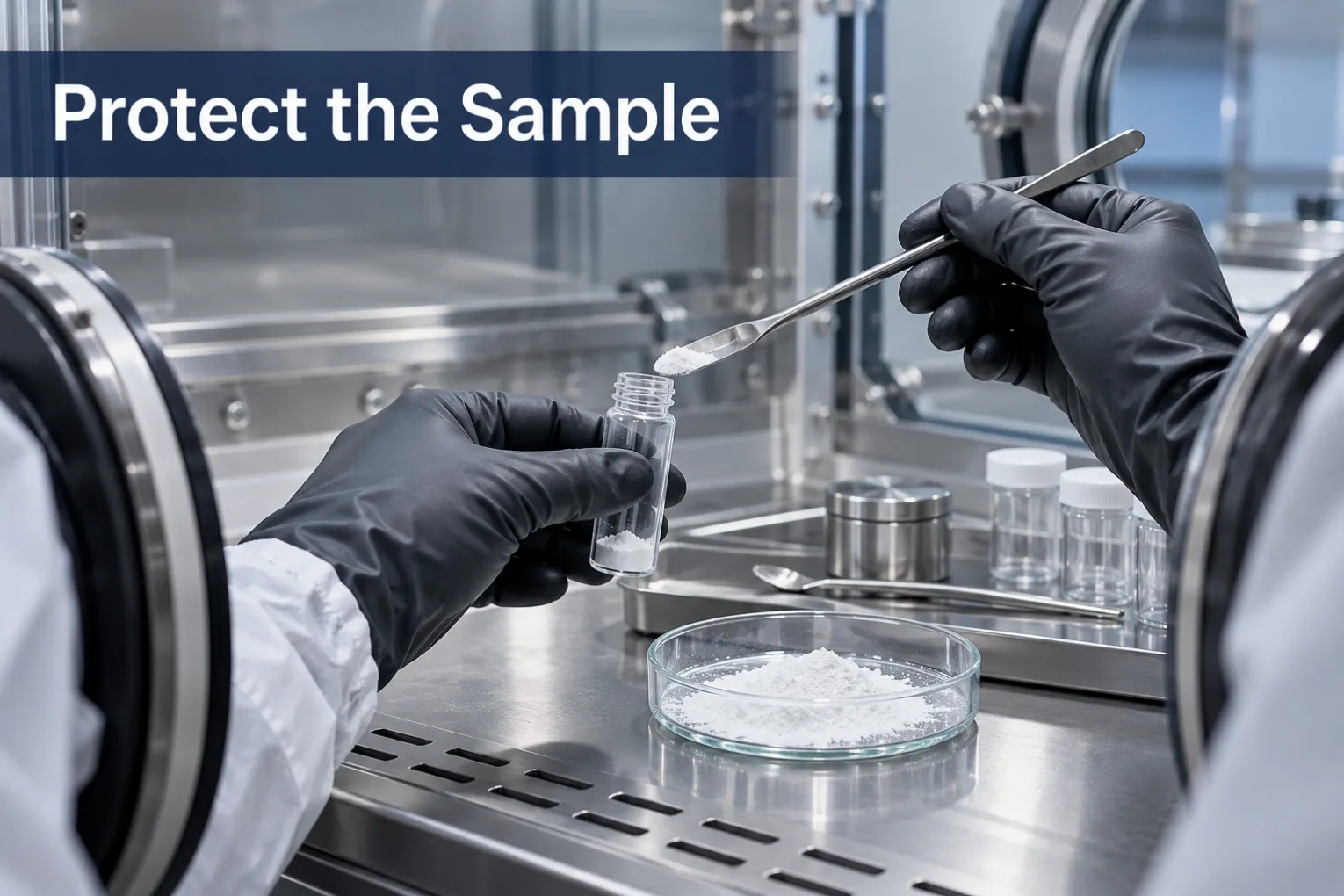
Take a representative sample into a suitable sealed container promptly. Record the bag opening, transfer exposure and storage conditions. Compare the original retained sample with powder collected at the point of use; otherwise, a handling change may be mistaken for a supplier change. Select the analytical method with the laboratory, including whether it measures water specifically or broader mass loss.
Build a small trial that can distinguish causes
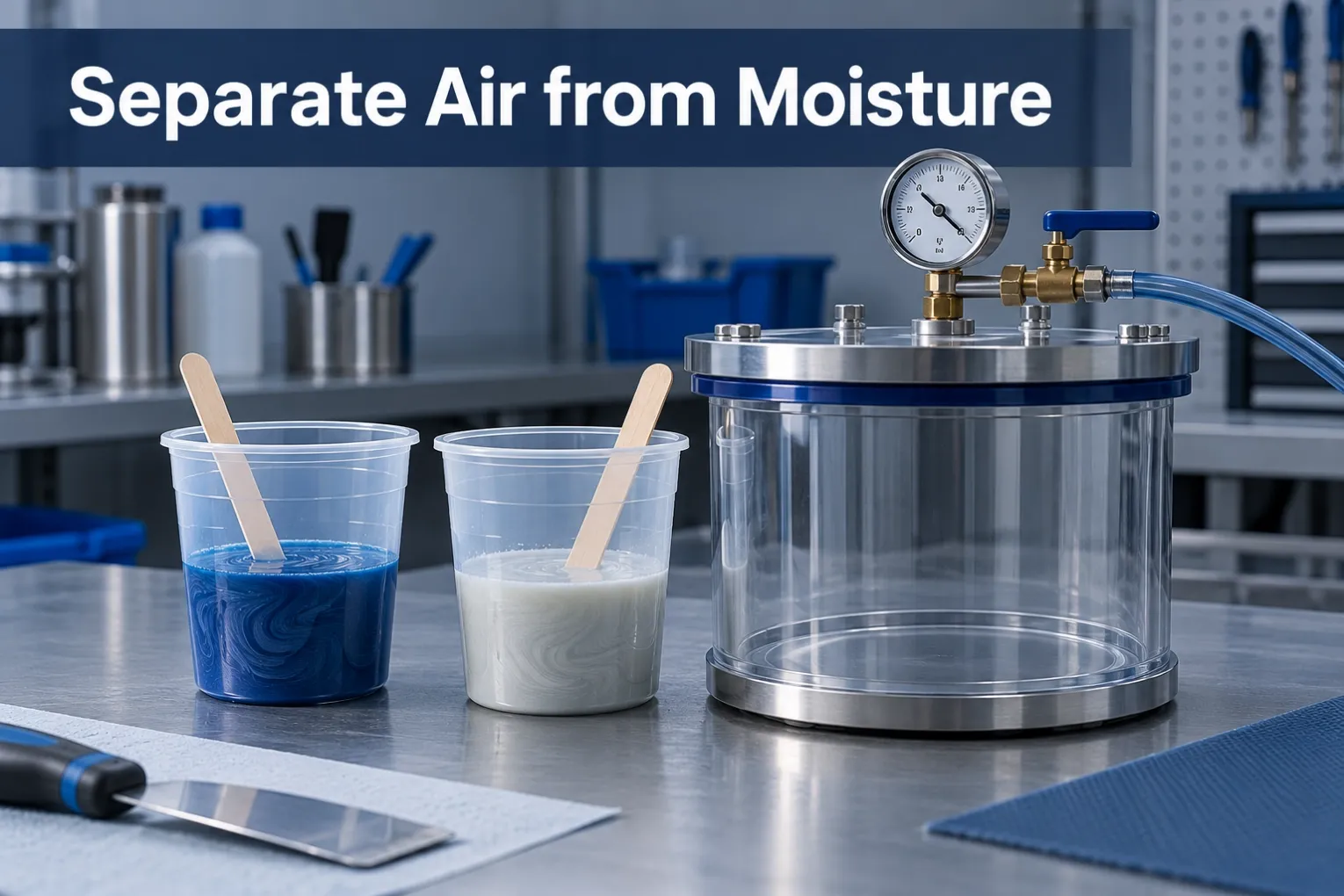
First run the approved resin system without mineral filler using the normal mixing and casting sequence. Next introduce the candidate quartz grade while holding resin ratio, component temperature, batch size, mixing tool and mold geometry constant. Record viscosity and elapsed time rather than trying to match mixing appearance by eye.
Use a separate, resin-supplier-approved mixing or degassing change to test the air pathway. If powder conditioning is investigated, agree its temperature and duration with the filler supplier and confirm that the treatment remains suitable. Do not change powder conditioning, vacuum, catalyst and filler loading in the same comparison.
Read the section and the process record together
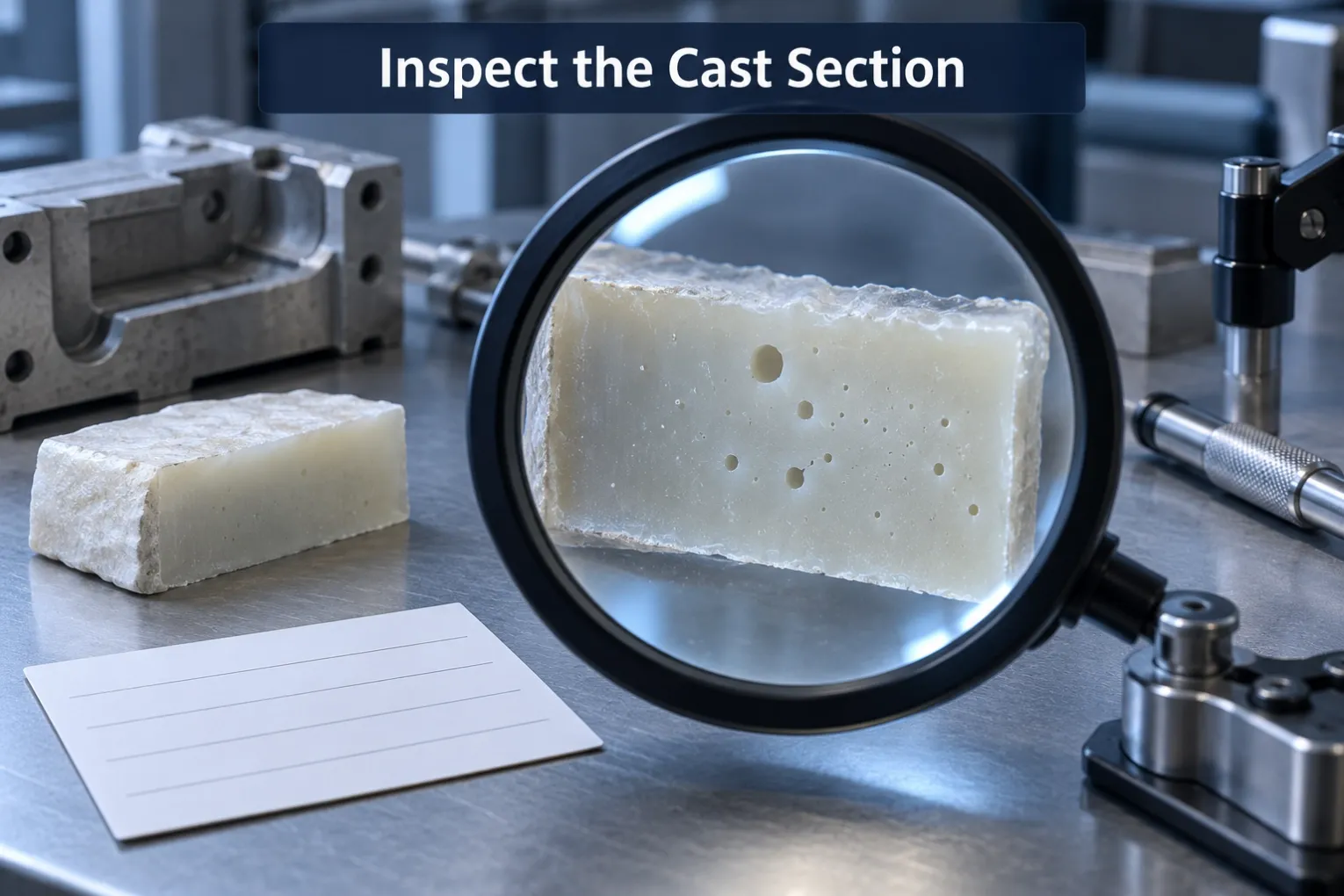
Inspect consistent cut planes after the agreed cure. Record cavity location, size distribution and any association with agglomerates or interfaces. This is diagnostic evidence, not a chemical identification of the gas. Comparing only the best-looking surface can hide internal defects.
Check whether a proposed change also alters flow time, cure progression, adhesion or dimensional behavior. A lower bubble count is insufficient if the revised mixture can no longer fill the part or meet its acceptance requirements. Keep unsuccessful trial records so that the next lot is not tested against a selectively chosen reference.
Match the treatment to the polyurethane chemistry
Changtong lists silane-treated mineral silica for selected sealant and adhesive binder systems. Use that catalog link as a route to grade review, not as proof of compatibility with every polyurethane. Provide the polyol/isocyanate system, cure route, filler loading and intended conditioning process.
This discussion concerns surface-treated ground quartz mineral filler. It does not transfer the behavior of fumed silica, precipitated silica or a silica desiccant to that material. Request current treatment information and lot documentation before defining a production trial.
Engineering boundary: the polyurethane research is an industry reference on foaming mechanisms, not a Changtong powder test. No water limit, drying schedule or bubble-free result is guaranteed here.
Frequently Asked Questions
Does hydrophobic quartz prevent polyurethane bubbles?
No universal claim follows from surface treatment. Water content, air entrainment, resin chemistry and the casting process require separate checks.
Can I dry the powder using any oven schedule?
Use a schedule agreed for the actual treated grade. Uncontrolled conditioning may change the surface treatment or introduce contamination.
Is loss on drying always the same as water content?
No. The analytical meaning depends on the method and material. Agree the water-specific or mass-loss measurement required by the polyurethane process.
Related products
Silane-Treated Silica Powder for Industrial SealantsRelated technical guides
Silane-Treated Silica: Compatibility and Trial GuideReferences and Evidence Limits
Public source descriptions checked on 26 October 2026. References support the stated subject and method boundaries; they are not Changtong test certificates. Consult the applicable full method for execution.
Request a Quote
Send your polyurethane chemistry, treatment requirement, moisture test basis and casting process so Changtong can review a candidate mineral grade.
Request a Grade Review and Quote