How to Troubleshoot Pinholes and Crawling in Enamel Glazes
A practical troubleshooting guide for pinholes and crawling in enamel glazes, linking sieve residue, calcined quartz selection, substrate preparation and firing checks.
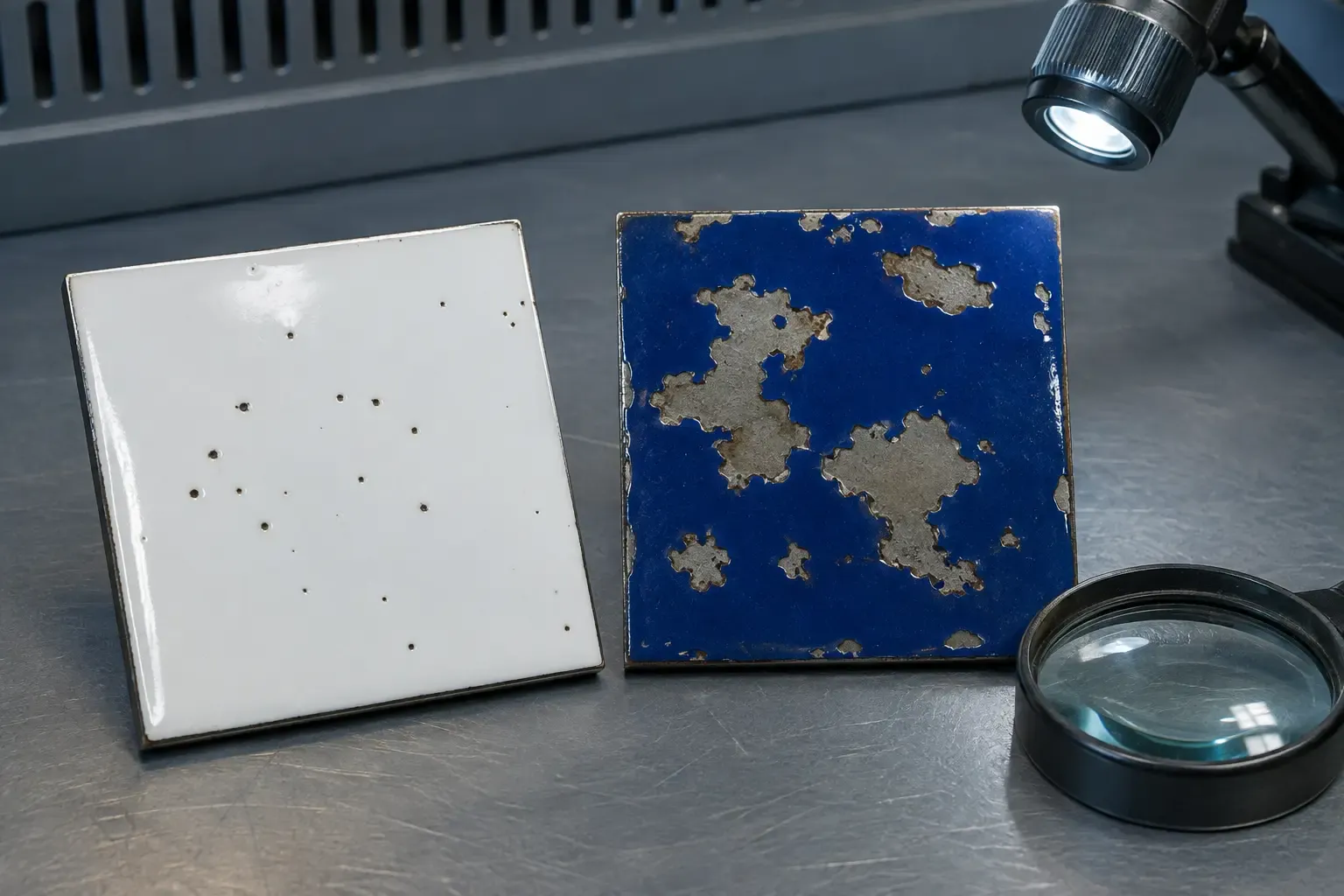
Pinholes and crawling are surface symptoms, not single-cause diagnoses. A reliable correction starts by classifying the defect, freezing the glaze system, and changing one material or process variable at a time.
In enamel glaze production, a small open hole, a shallow crater, and a large bare island can look similar from a distance but require different corrective actions. The investigation should therefore connect defect shape, powder control, slurry condition, substrate preparation, application thickness, and firing behavior rather than replacing the silica grade immediately.
This guide is written for customers evaluating calcined quartz or calcined silica in enamel glaze systems. It does not treat precipitated silica, fumed silica, fused silica, and calcined quartz as interchangeable materials. For the product context, see Calcined Quartz Powder for Enamel Glazes.
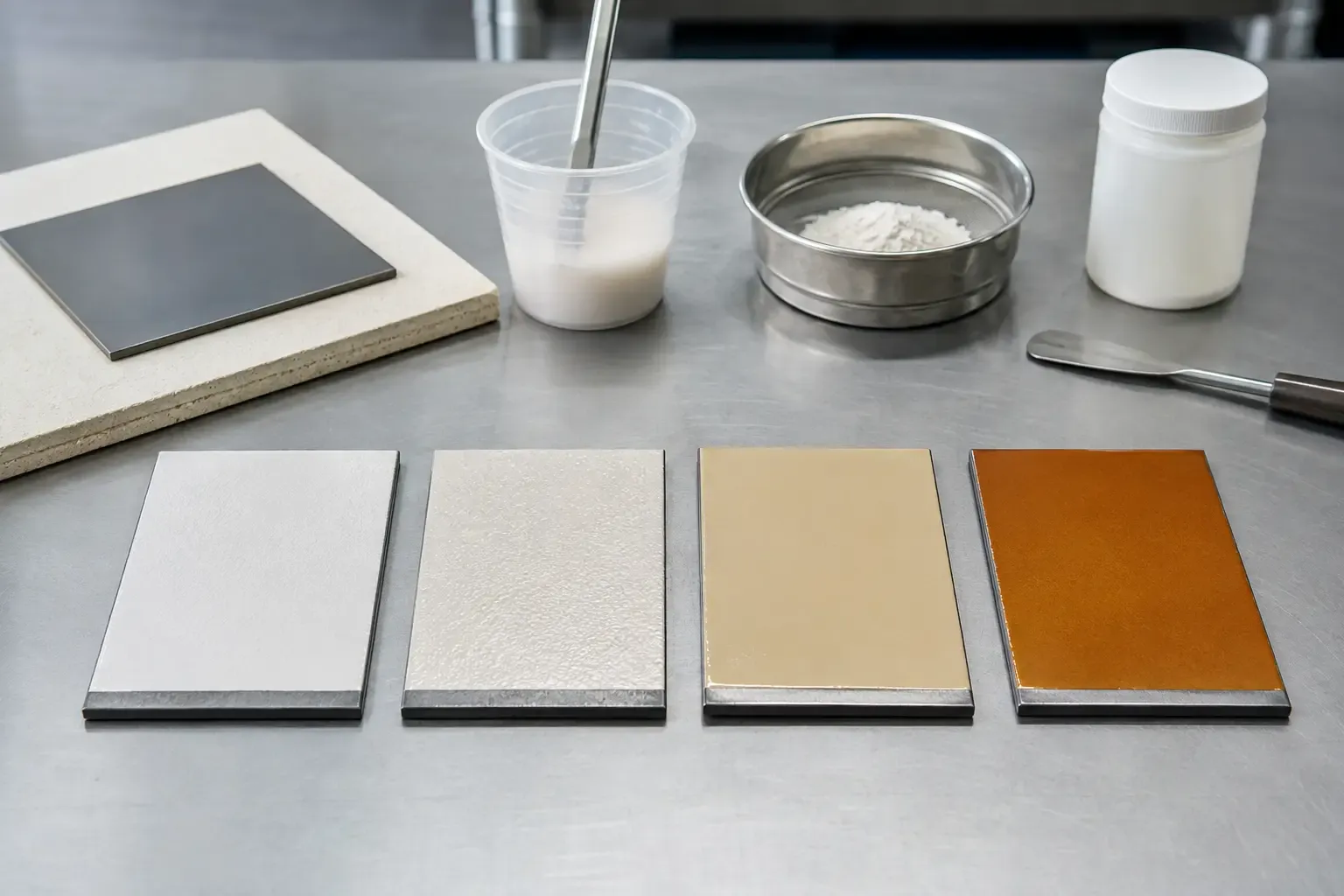
1. Identify the Defect Before Selecting a New Silica Grade
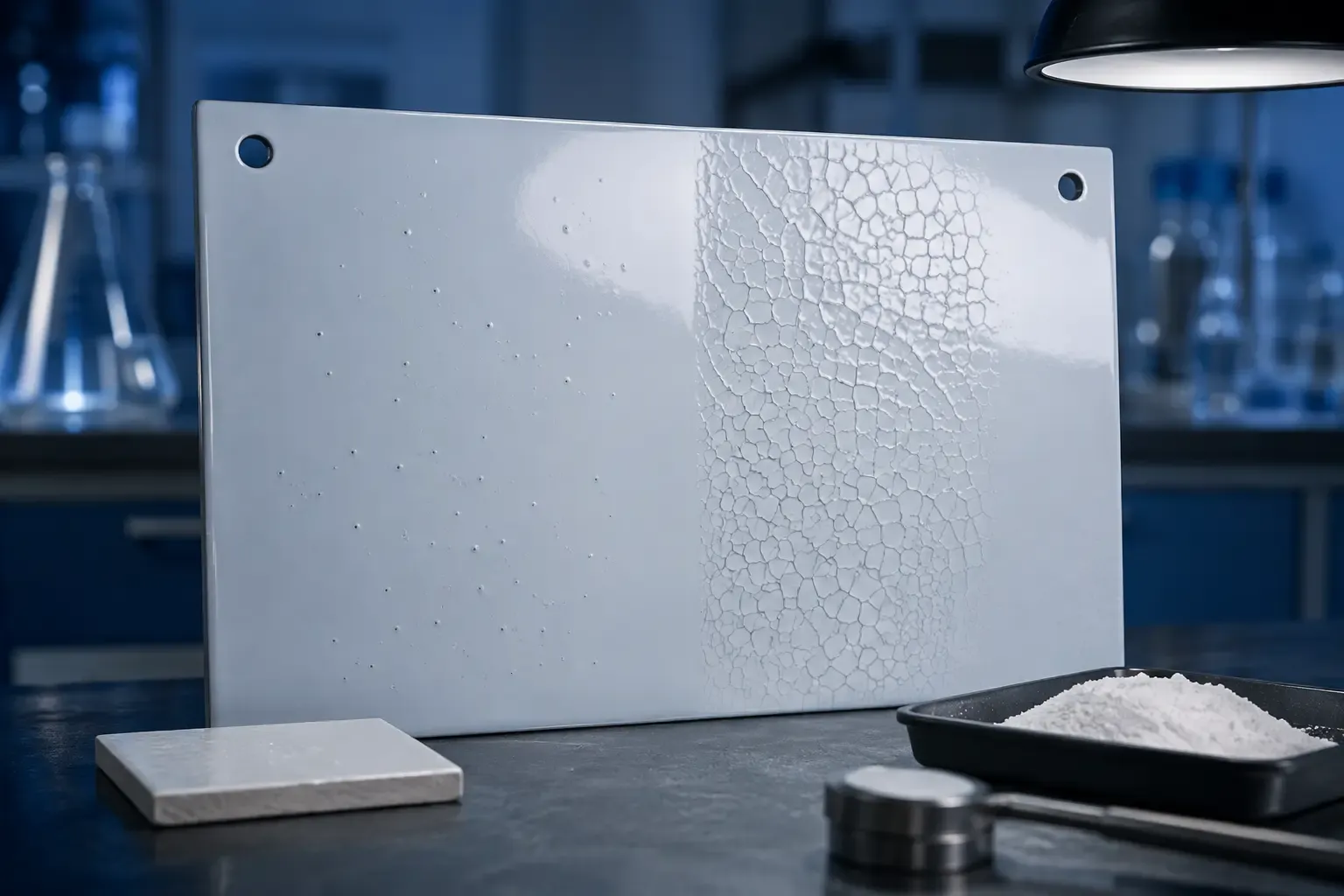
Use the fired panel as evidence. Record the defect size, distribution, location, surface depth, and whether the exposed area reaches the metal substrate. Do not use “pinholes” as a catch-all term.
| Observed appearance | Likely investigation path | Do not conclude too early |
|---|---|---|
| Small open holes | Gas release, slurry condition, coating thickness, firing hold and surface healing | The silica grade is automatically the cause |
| Shallow craters or pitting | Bubbles that opened, viscosity, wetting and whether the melt had time to heal | A crater count alone proves a material failure |
| Large bare islands or pulled-back patches | Oil or dust, poor substrate wetting, excessive thickness, poor adhesion or incompatible surface condition | Crawling is simply a larger pinhole |
| Raised blisters or repeated bubble clusters | Volatiles, moisture, trapped air, over-rapid heating, melt viscosity and cooling behavior | Visual gloss is equivalent to good adhesion |
2. Treat Sieve Residue as a Control Point, Not a Stand-Alone Answer
Calcined quartz particles can dissolve progressively in a glaze melt, but the effect of a particle-size change depends on the frit chemistry, loading, slurry condition, application thickness and firing curve. A finer or coarser grade is not automatically better for every enamel system. The useful comparison is a method-specific result under the customer’s agreed sample mass and sieve procedure.
Two dated customer-side comparison reports supplied for this product direction recorded the following reference values. The reports used a 55:25:20 ratio of 9312E, 9315 and 9316E, with each calcined silica sample added at 8% in the stated glaze trial.
| Report date | Sample comparison | 200 mesh residue | 325 mesh residue | SiO₂ / Fe₂O₃ |
|---|---|---|---|---|
| 2023-09-13 | 1# / 2# | 0.16 g / 0.04 g | 9.64 g / 5.80 g | 99.50% / 0.03%; 99.53% / 0.02% |
| 2023-10-30 | 1# / 2# | 0.80 g / 0.96 g | 8.76 g / 8.48 g | 99.43% / 0.07%; 99.63% / 0.08% |
3. Separate Powder Variables From Process Variables
A controlled trial is more valuable than a broad formula change. Hold the substrate, frit, water or vehicle system, loading, application method and firing schedule constant. Change only the variable stated in the trial plan and record the result with the same inspection method.
| Trial step | Keep constant | Change or verify | Record |
|---|---|---|---|
| A — baseline | Substrate, frit, loading, application and firing | No change | Defect type, count, location and photographs |
| B — powder screen | All baseline conditions | Agreed sieve residue or powder grade | Sample mass, method, residue, lot reference and fired appearance |
| C — slurry/application | Selected powder and substrate | Mixing order, wet viscosity, de-airing or coating thickness | Flow, leveling, bubbles, pinholes and crawling |
| D — firing window | Approved recipe and application | Heating profile, hold or cooling condition within the approved process window | Surface healing, blistering, adhesion and acceptance decision |
4. Corrective Checks for Pinholes, Crawling and Adhesion
Run the checks in an order that prevents one defect from hiding another:
- Substrate: confirm that the surface is clean, dry and free from oil, dust, release agent or an incompatible surface treatment.
- Powder and batch: record lot identity, moisture condition, agreed sieve method, residue and chemistry. Do not substitute a different silica form without documenting the material identity.
- Slurry: check mixing order, dispersion, wet viscosity, entrained air, settling and the time between preparation and application.
- Application: verify coating thickness and uniformity. Excessive or locally heavy application can delay bubble release and increase the risk of crawling.
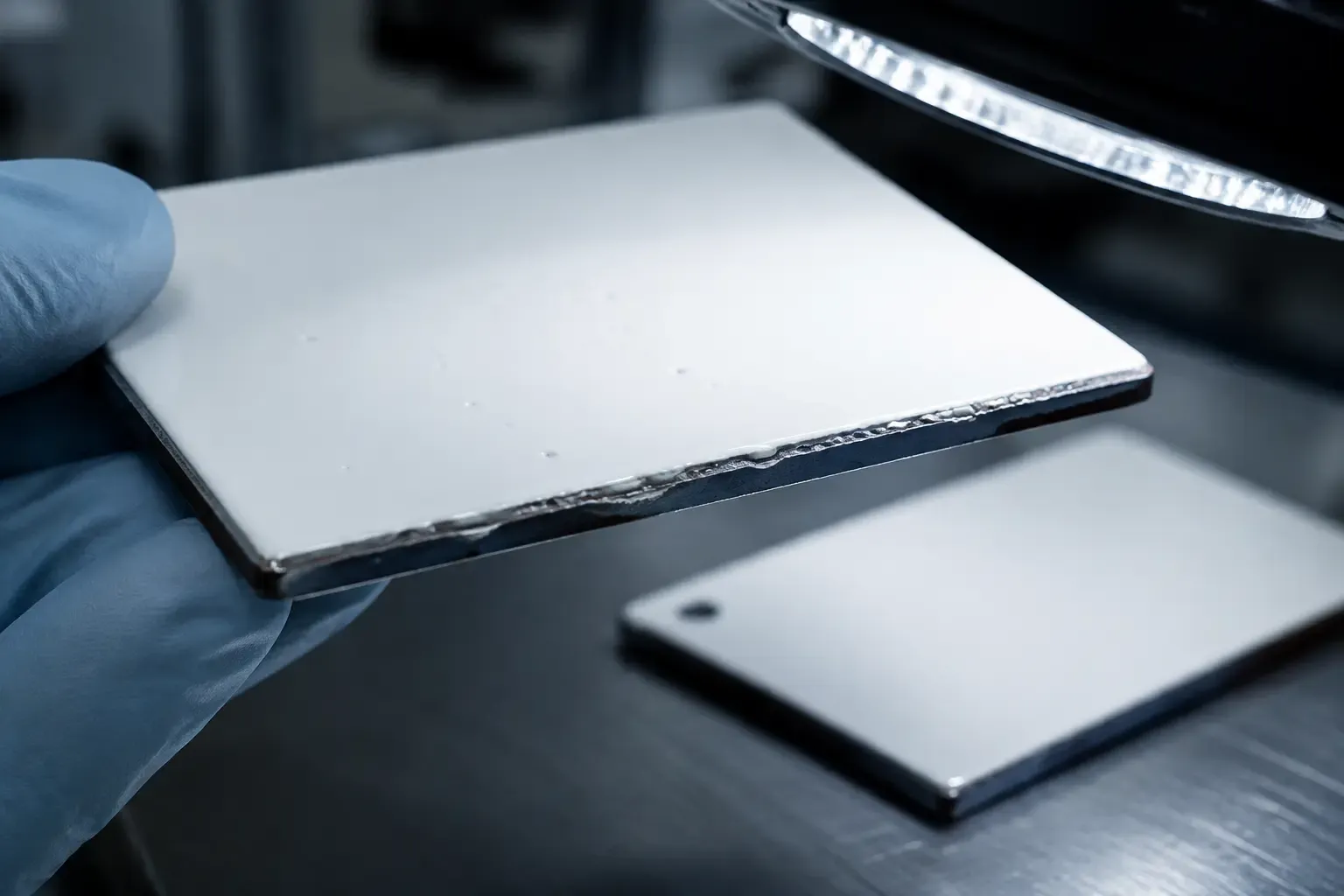
- Firing: review the actual heating profile and hold within the approved process window. The glaze needs appropriate melt fluidity and time to heal small openings before cooling.
- Performance: inspect adhesion separately from gloss and appearance. For corrosion or wear claims, use the chemicals, exposure and abrasion conditions that represent the intended service.
For the material-selection background, read How Calcined Quartz Supports Enamel Glaze Adhesion and Thermal-Cycling Performance. If the formulation team is comparing a different silica structure, review Fused Silica Powder 325 Mesh as a separate material route, not as a direct replacement assumption. You can also review Cristobalite Powder for Enamel Frits and Ceramic Glazes when the approved trial specifically concerns cristobalite phase and glaze fit.
Frequently Asked Questions
Does a finer silica grade always remove pinholes?
No. Particle size is one control variable. Gas release, slurry condition, coating thickness, firing and healing time must be checked in the same trial system.
Are pinholes and crawling the same defect?
No. Pinholes are small openings or pits, while crawling creates larger areas where the glaze has withdrawn from the substrate. The first checks should be different.
What should a supplier report for a powder trial?
Record the sample mass, sieve method, residue, chemistry, lot reference, material identity and any agreed application or firing conditions.
Can the comparison reports predict every enamel system?
No. They document close appearance and adhesion for the stated formulation and 8% addition under the reported conditions. They do not replace customer-specific validation.
Need Help Defining a Glaze Trial?
Share the defect description, substrate, frit, target residue method, addition level, application thickness and firing curve. Changtong can review the material questions before sampling and help define a traceable comparison.
Request a QuoteTechnical references
Customer-side calcined silica comparison reports dated 2023-09-13 and 2023-10-30, supplied for technical review.
Digitalfire: Glaze Pinholes and Pitting; Digitalfire: Silica in Glaze Melts; Glazy: Common Glaze Defects.
Updated · Lianyungang Changtong Silica Powder Co., Ltd.