Fused Silica Refractories: Separate Cold and Hot Strength
Compare cold and hot strength in fused silica refractories. Define specimen history, atmosphere and loading before high-temperature qualification.
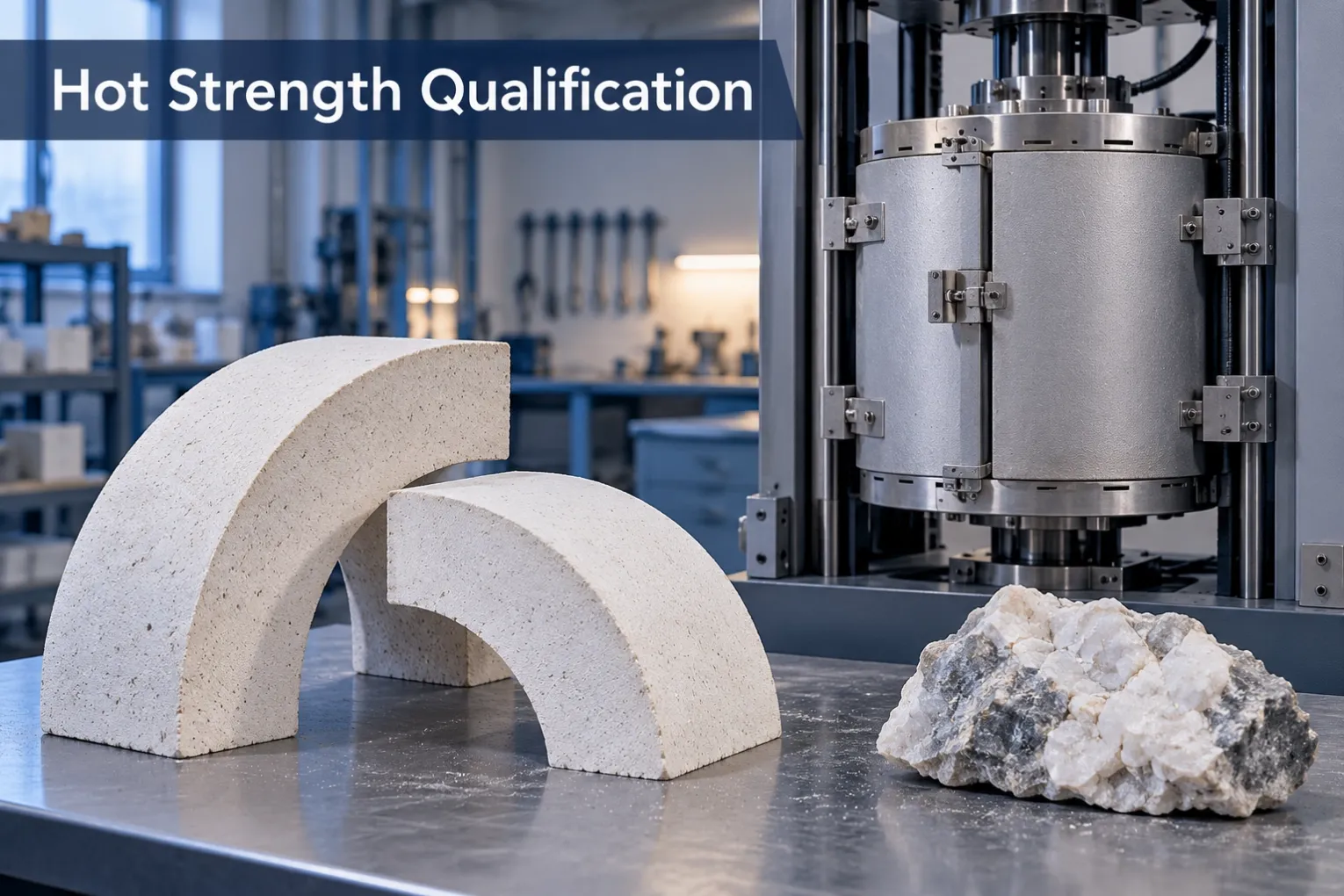
A cold crushing-strength number answers a room-temperature loading question. It cannot by itself approve a fused-silica refractory for a hot, loaded installation. A purchasing specification becomes more useful when it names the service question first and then selects the evidence needed to answer it.
Changtong technical guide · · Industrial Application Guides
Two strength reports can describe different questions
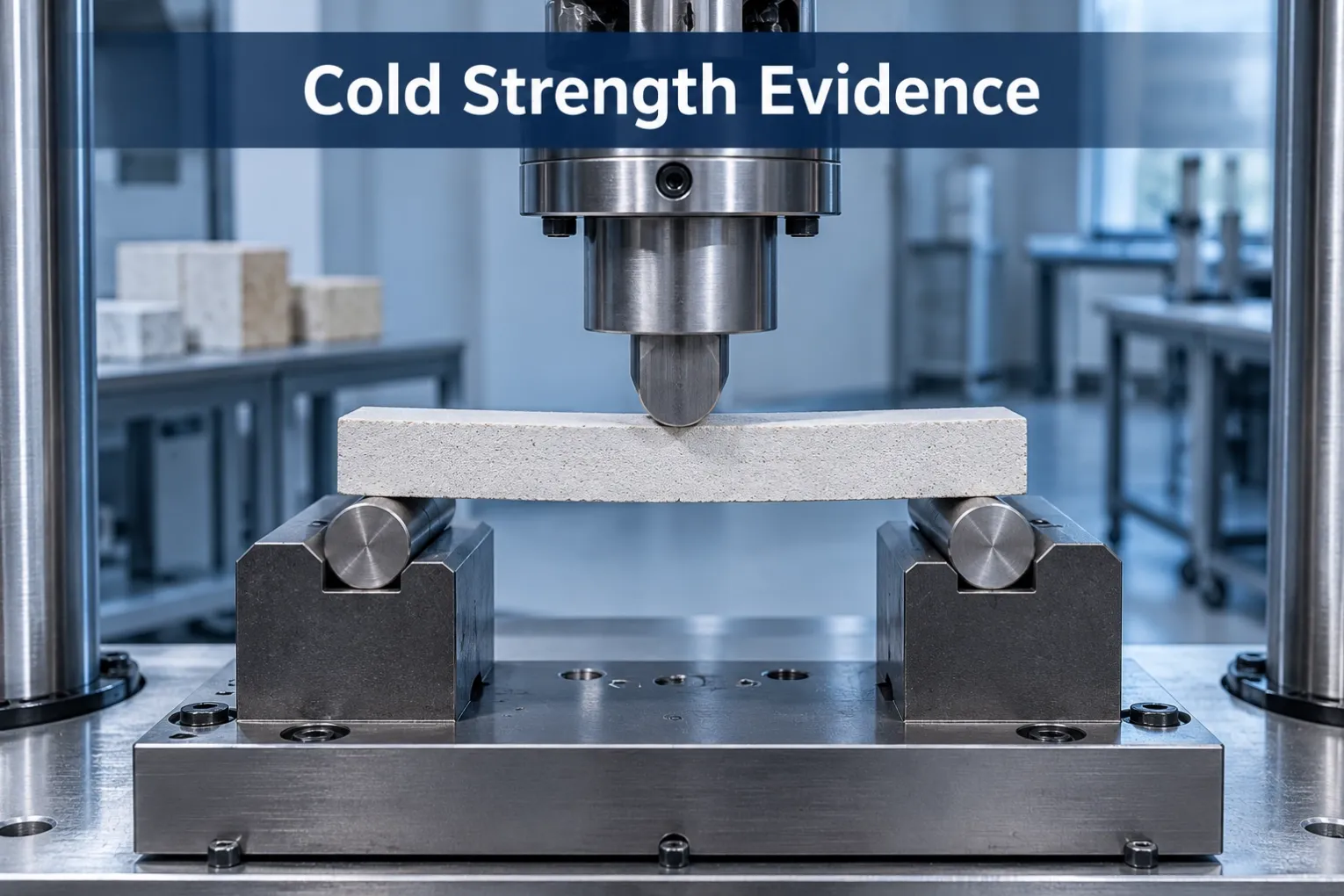
ASTM C133-24 covers cold crushing strength and cold modulus of rupture of refractory shapes. ASTM C583-15(2026) addresses modulus of rupture at elevated temperature, with an oxidizing-atmosphere scope. Their public descriptions establish different test boundaries; neither method name alone supplies the customer’s acceptance limit.
Compare bending with bending where the objective is a temperature comparison. A compressive result and a flexural result involve different loading modes. They should not be placed on one ranking scale simply because both are reported as stress.
| Evidence | Useful question | Unresolved by that result alone |
|---|---|---|
| Cold crushing strength | How does the prepared shape resist room-temperature compression? | Hot bending, creep and corrosive service |
| Cold modulus of rupture | How does a matched bar behave in room-temperature bending? | Behavior while the specimen is hot |
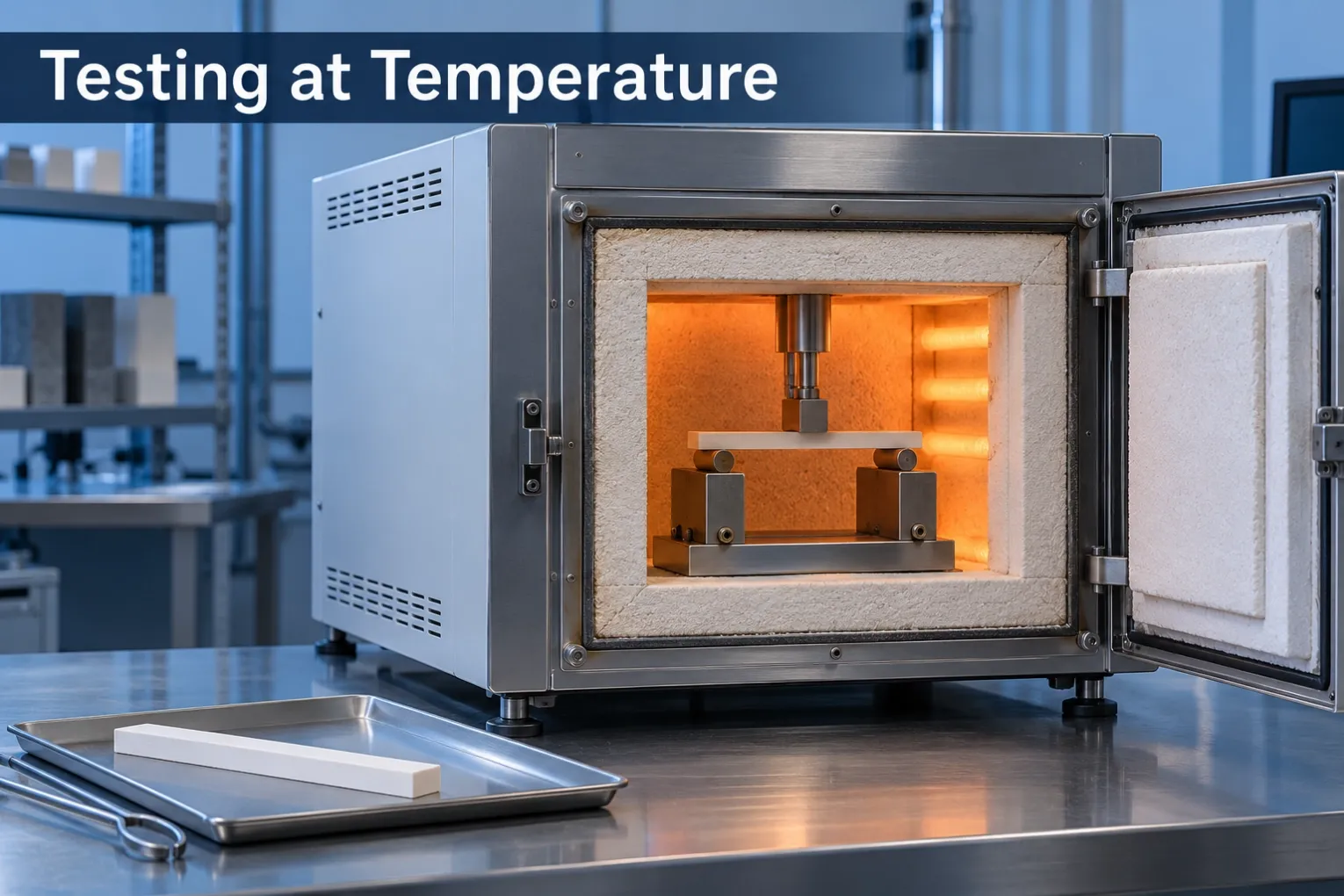
| Elevated-temperature modulus of rupture | How does a conditioned bar resist the stated hot bending test? | All long-term service or chemical exposure |
| Post-cycle strength | What remains after the agreed thermal history? | Performance under a different cycle or atmosphere |
Write the hot-service question before ordering bars
Specify whether the concern is installation handling, a short high-temperature bending load, sustained deformation, thermal cycling or chemical attack. A hot modulus-of-rupture test does not independently determine every one of these behaviors.
Describe service temperature, time, atmosphere and loading. If service involves a reducing environment, a corrosive deposit or long-term creep, agree additional methods with the refractory specialist. Do not label an oxidizing-atmosphere bend result as complete service qualification.
Control preparation before comparing formulations
For a castable containing fused silica, retain the complete recipe, water addition, mixing, placement, curing, drying and firing records. Match specimen dimensions and the way surfaces are formed or cut. Record the orientation of the tested face and the specimen’s relation to the casting direction.
Compare an approved reference and the proposed material under the same preparation and test plan. Report individual results and scatter using the laboratory’s agreed procedure. A higher average without comparable history may reflect specimen preparation rather than a useful formulation improvement.
Separate temperature effects from material identity
Fused silica is selected in some refractory designs partly for its low thermal expansion. That characteristic does not establish the hot strength of a bonded refractory. Binder development, porosity, phase evolution and exposure history belong to the complete shape.
Changtong’s fused silica powder for refractory castables is a raw-material candidate. Request current lot identity and phase evidence, then evaluate it in the intended binder and aggregate system. Do not substitute cristobalite or ground quartz based only on similar SiO₂ chemistry.
Use the failure origin as a review trigger
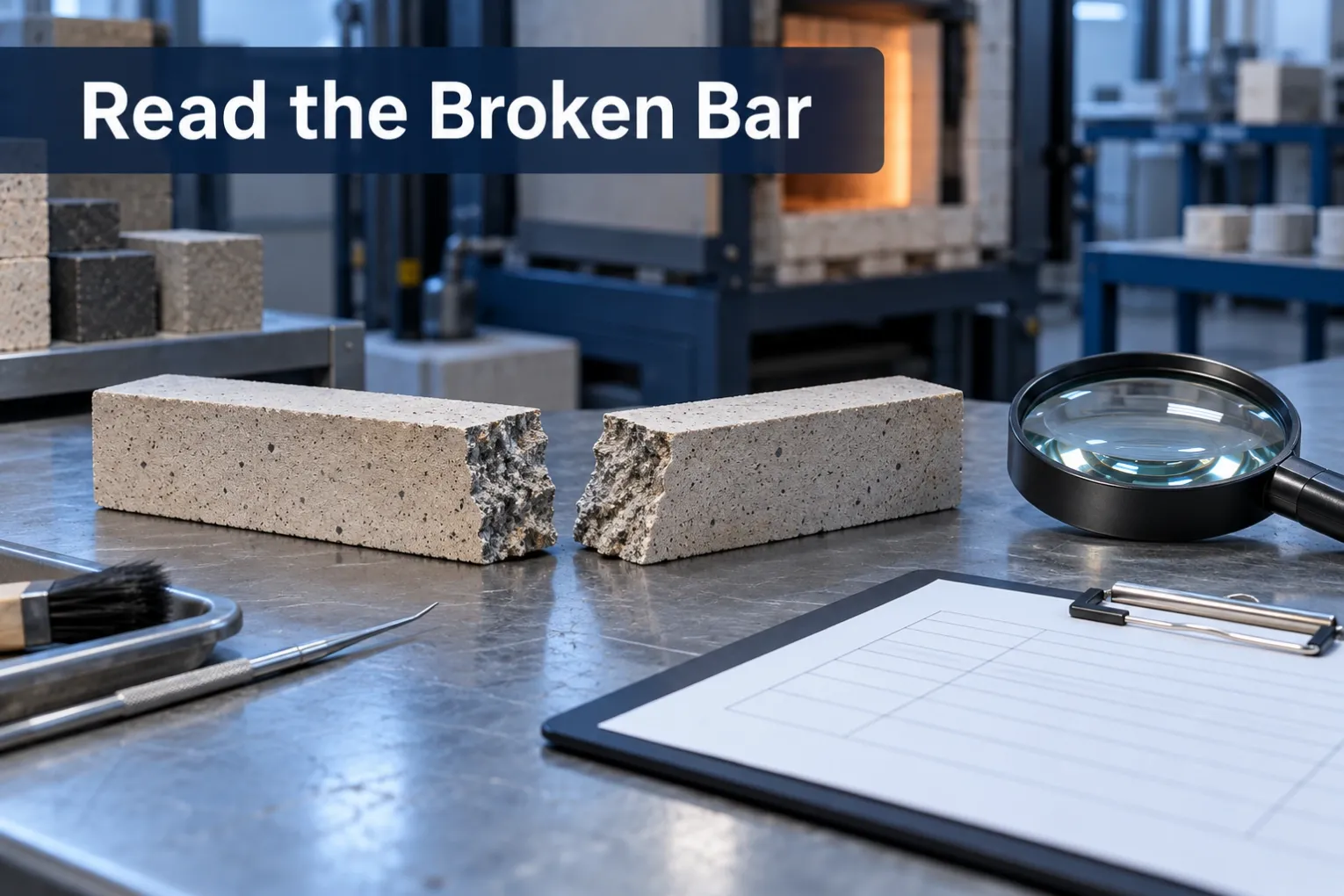
A broken bar can flag a preparation problem or a localized defect that deserves investigation. Keep its orientation and fracture photographs with the load record. Do not delete an inconvenient result without a documented, method-consistent reason; investigate whether the observation is a specimen artifact or part of the material response.
Turn the comparison into an acceptance record
Attach the method edition, specimen condition, thermal history, atmosphere and loading mode to each result. Record fracture origin and abnormal specimens. If a result changes after additional heat exposure, treat that as a separate condition, not as a correction to the original number.
Keep the service decision explicit: which evidence supports handling, which supports hot bending, and which remains outstanding? This makes a technical RFQ more actionable than asking a powder supplier for a single universal refractory-strength value.
Test descriptions are industry method references. They are not Changtong laboratory results, a claim of ASTM certification, or a substitute for the full method and customer acceptance criteria.
Frequently Asked Questions
Does low expansion guarantee high hot strength?
No. Expansion and mechanical strength are different properties, and the complete refractory must be tested under relevant conditions.
Can cold crushing strength replace hot modulus of rupture?
No direct substitution is established. They involve different temperature and loading conditions.
Is a hot bending result a creep result?
No. Sustained deformation requires its own defined loading and exposure assessment.
Related products
Fused Silica Powder for Refractory CastablesRelated technical guides
Fused Silica Firing Atmosphere and DevitrificationReferences and Evidence Limits
- ASTM C133-24: Cold strength of refractories — public scope
- ASTM C583-15(2026): Elevated-temperature modulus of rupture — public scope
Public source descriptions checked on 26 October 2026. References support the stated subject and method boundaries; they are not Changtong test certificates. Consult the applicable full method for execution.
Request a Quote
Send the binder and aggregate system, preparation history, service atmosphere and required strength-test conditions for a refractory raw-material quote.
Request a Grade Review and Quote