Switching Silica Powder Suppliers Without Disrupting Production
Use a controlled baseline, A/B trial, pilot bridge and lot evidence to qualify a new silica powder supplier without disrupting production.

Treat a supplier change as a controlled material change
A new supplier's COA may show the same headline values while the powder behaves differently in feeding, wetting, filtration, viscosity, surface finish or firing. The safe starting position is not “same specification means same material.” It is “same stated specification allows a controlled comparison.”
Change-control guidance in regulated industries makes the same general point: changing a source of a critical raw material deserves documented review, sampling and approval. That guidance is a useful quality-system reference, not a legal requirement for every silica application. Your product risk, customer agreements and local rules determine the actual approval plan.
Freeze the current baseline before requesting samples
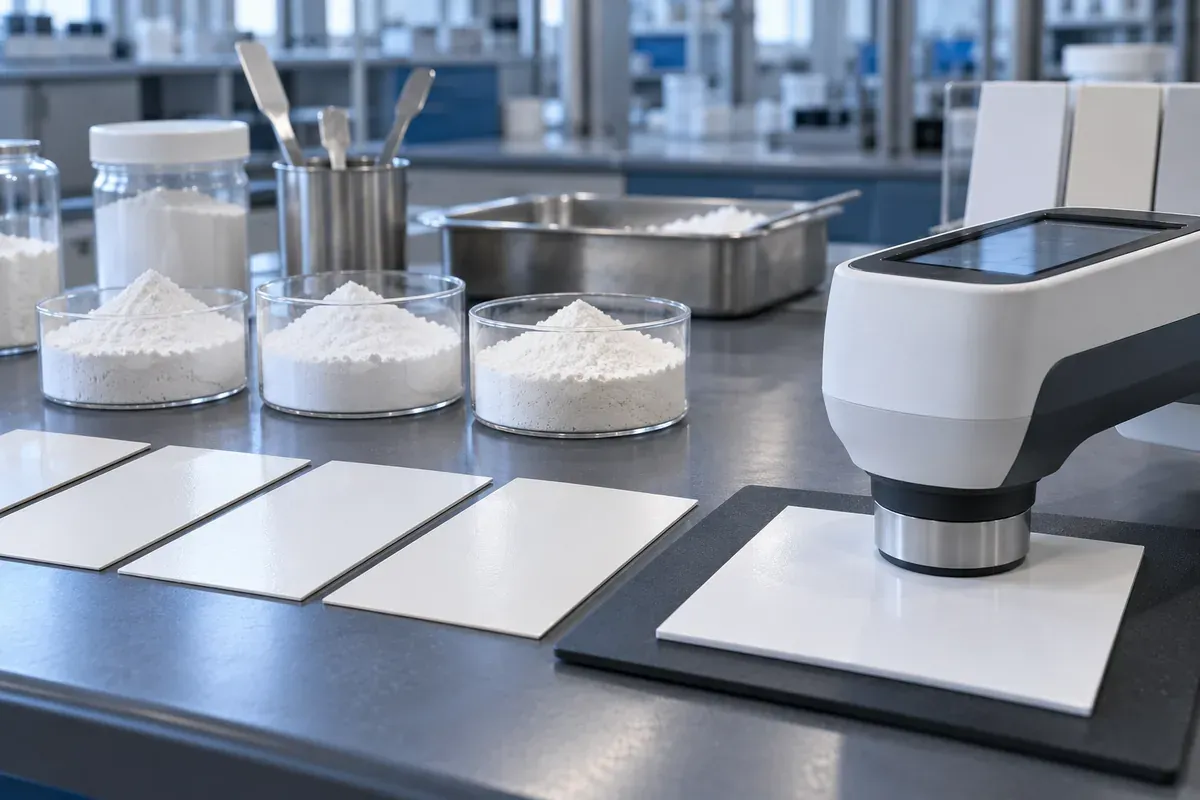
Write down what “working material” means while the incumbent lot is still available. Keep a sealed retain, its COA, the formulation revision and the process record from an acceptable production run. If the baseline exists only in operator memory, the new material will be blamed for unrelated variation.
| Baseline layer | Minimum record | Common mistake |
|---|---|---|
| Material identity | Phase, grade code, supplier and approved specification revision | Comparing fused silica with crystalline quartz under a generic “silica” name. |
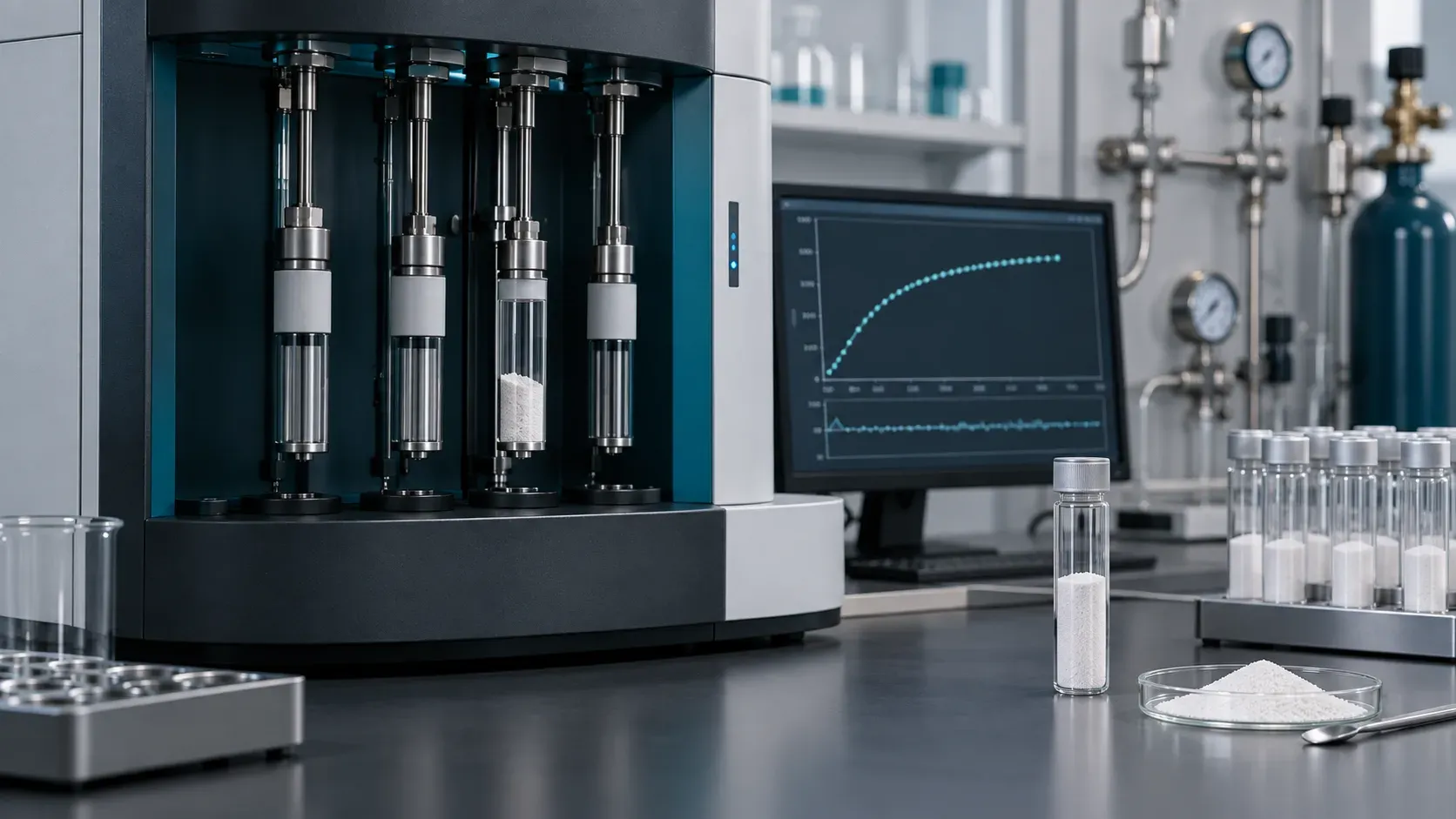
| Particle data | Method, units, D-values or sieve residue and sampling point | Matching one D50 while ignoring tails or test method. |
| Process | Batch size, addition order, mixer, time, temperature and vacuum | Changing mixing conditions during the supplier trial. |
| Finished result | Only the tests that release the customer's product | Collecting powder data without testing the finished article. |

Screen identity and evidence before application performance
Reject obvious mismatches before consuming plant time. Confirm the silica phase, grade, particle-size method, moisture basis, chemistry fields and packing identity. Review the SDS for handling controls. Where phase identity matters, use the agreed XRD evidence; chemistry alone cannot distinguish quartz, cristobalite and amorphous fused silica.
For electrical epoxy casting, the published Fused Silica Powder for Electrical Epoxy Casting page illustrates why the resin, filler loading, mold-filling route and cure schedule must be included in the request. A supplier should not promise finished-component performance from powder data alone.
Run an A/B trial with one controlled difference
Use the approved incumbent lot as A and the candidate as B. Keep resin or binder lot, filler loading, addition order, mixer, time, temperature, degassing, specimen geometry and test conditioning constant. Record the actual values rather than “same as normal.”
| Stage | What to compare | Stop or escalate when |
|---|---|---|
| Dry handling | Bag condition, lumps, flow, dust capture and feeding stability | Contamination, wet packs or unsafe transfer is observed. |
| Mixing | Wet-out time, torque/current trend, agglomerates and temperature rise | The planned equipment limit or dispersion rule is exceeded. |
| Processing | Viscosity at defined time/temperature, filtration, casting or extrusion | Material cannot pass the approved production window. |
| Finished article | Application-specific appearance, dimensions, strength, electrical or thermal checks | Any release criterion fails or the result is not repeatable. |

Bridge the trial to production
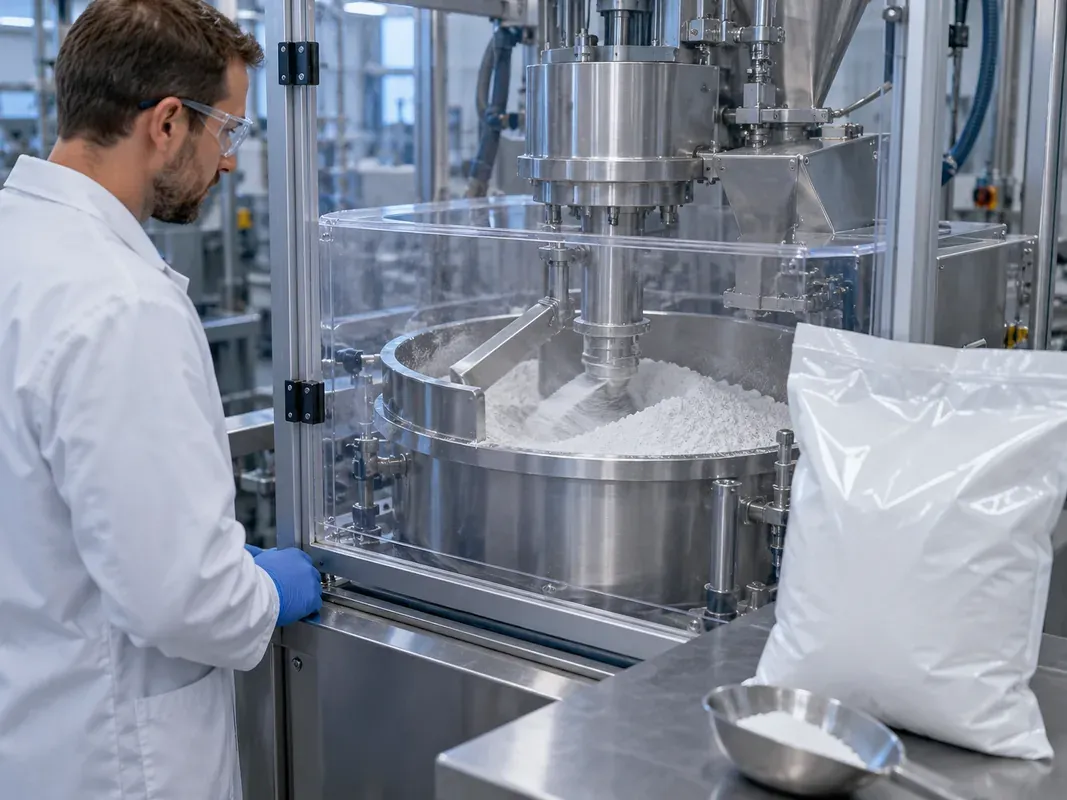
A laboratory pass is not an automatic plant release. Define a staged quantity that can run through the real feeder, mixer, filter, mold or kiln without creating excessive inventory risk. Decide in advance how many incoming lots and production runs are needed; there is no universal “three-lot” rule for every silica application.
The bridge plan should state who can release the first shipment, whether the candidate remains segregated, which retain samples are kept and how deviations are investigated. The existing guide on incoming inspection sampling, lots and retains provides a compatible framework.
Approve the source, not just the first sample
The purchase specification should bind the approved grade, current test methods, units, acceptance limits, packing and lot documents. Add a change-notification expectation for raw material, phase, process, test method, production site and packaging when those changes could affect your use.
FAQ
Can a matching COA replace an application trial?
No. The COA supports identity and agreed powder properties; it does not demonstrate performance in your exact formulation and process.
Should incumbent and candidate powders be blended?
Not during the first comparison. Blending hides differences and weakens traceability. Consider it only under an approved transition plan.
When can the new supplier become routine?
After the agreed incoming, process and finished-product evidence is complete, deviations are closed and the source is added to the controlled purchasing specification.
Prepare a supplier-change trial
Send the current material identity, application, key test methods, process window and trial quantity. Changtong can propose a candidate grade and document package for your controlled comparison.
Discuss the qualification plan