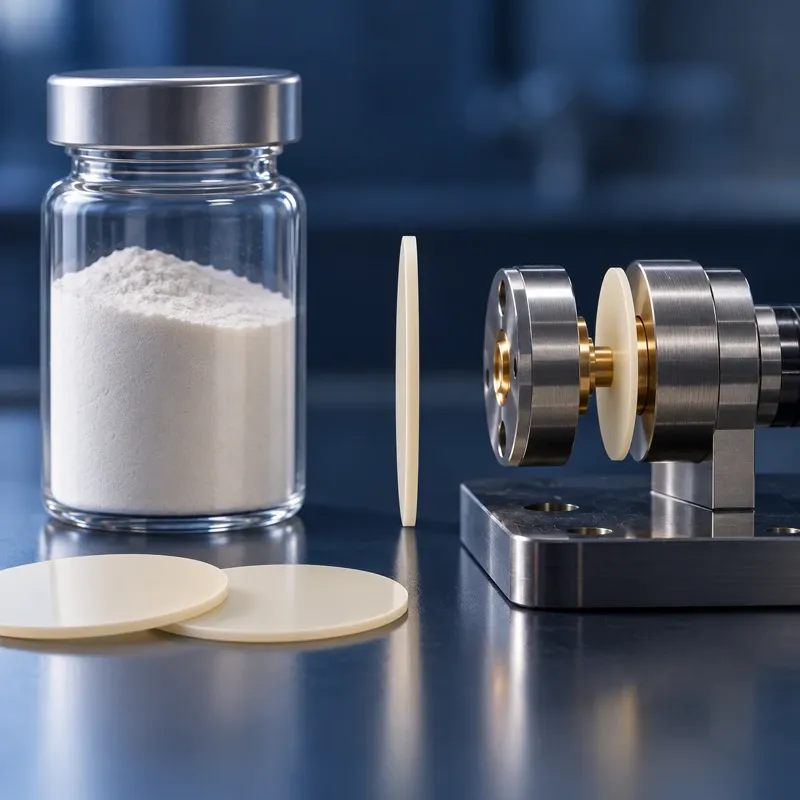
Fused Silica Powder for Microwave Epoxy Substrates
Fused silica powder candidate for microwave epoxy substrate trials. Compare lot PSD, phase and chemistry, then measure dielectric loss in the buyer's cured coupon and RF band.
Material application brief ·
Qualify dielectric loss on the cured coupon
Fused silica powder candidate for microwave epoxy-substrate development. RF designers need measured dielectric behavior from a cured composite at the intended frequency, thickness and conditioning state. This page addresses a flat epoxy substrate or coupon rather than a semiconductor molding compound or bulk electrical potting. Changtong can review a fused-silica powder candidate against your requested lot chemistry, particle-size distribution and mixing route; the finished substrate's dielectric loss is a customer qualification result.
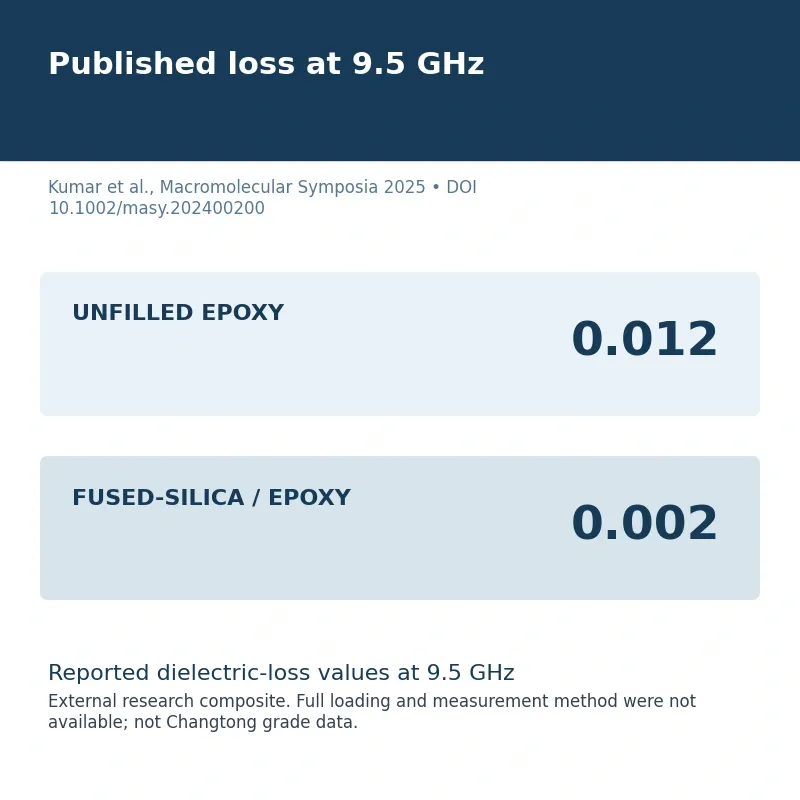
What the published comparison shows—and what it does not
Kumar and colleagues reported a fused-silica/epoxy composite prepared by powder processing for RF and microwave use. The journal abstract reports dielectric loss of 0.002 for its composite at 9.5 GHz versus 0.012 for its unfilled epoxy, with a reported composite relative dielectric constant around 2.5. These values belong to that experimental formulation and measurement. The abstract alone does not establish the powder loading, full fixture and conditioning details needed to transplant its result to a different epoxy or a Changtong grade. Use the figures to frame a controlled measurement, not as a catalog performance specification. Original study.
Powder properties for RF substrate screening
| Property | Why the RF buyer asks | Evidence needed |
|---|---|---|
| Fused/amorphous silica identity | Keep the feedstock distinct from crystalline quartz powder when comparing resin composites. | Current grade TDS and lot phase/XRD evidence when phase is a release criterion. |
| Particle-size distribution | Controls dispersion, sedimentation risk, surface finish and feasible substrate thickness. | Lot D10/D50/D90 in μm, method and any coarse-tail/agglomerate limit. |
| Chemistry, moisture and ionic species | Set relevant contamination and drying controls for the chosen resin and electrical design. | Batch COA with methods and agreed analytes; do not assume a semiconductor EMC grade's limits apply here. |
| Surface treatment | Wetting and coupling can affect voids and cured composite response. | Confirm untreated/treated status and treatment chemistry for the actual offered grade. |
Existing catalog reference: Changtong's broad 325 mesh fused-silica page lists SiO₂ >99.90% and Fe₂O₃ <50 ppm as chemical reference limits. These are not an RF-substrate grade promise or this candidate's COA. Numeric acceptance limits must come from a matched current TDS/COA and the buyer's RF design.
Applications and neighboring product boundaries
| Use | Controlling evidence |
|---|---|
| Flat RF epoxy substrate or laminate | Coupon thickness, filler fraction, dispersion, resonant or transmission measurement, frequency and temperature. |
| Semiconductor epoxy molding compound | Flow, package warpage and reliability dominate; see the existing EMC powder page. |
| Electrical epoxy casting and potting | Vacuum filling, insulation and bulk-component tests differ; see the casting powder page. |
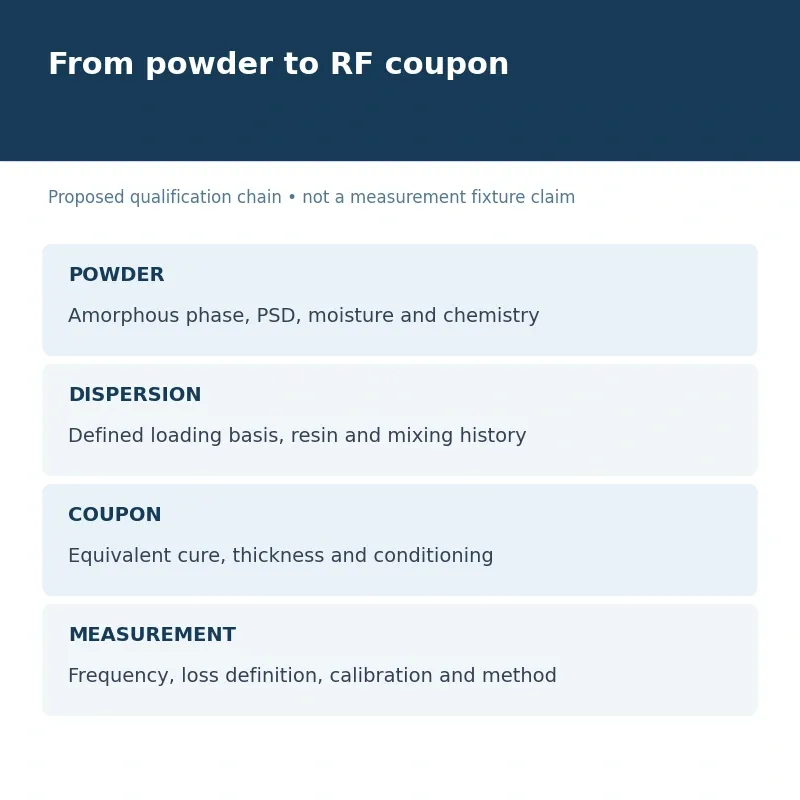
Set up a comparable RF trial
Start from one unfilled epoxy control and one or more weighed filler additions using the same resin batch, cure schedule, specimen geometry and post-cure conditioning. Record mass and volume fractions separately. Inspect voids and sedimentation before measuring relative permittivity and loss over the frequency band that matters to your circuit, with the instrument/fixture and test temperature documented. Check repeatability across coupons and lots. If thermal cycling, moisture uptake or aging matters, repeat the dielectric measurement after that exposure; a single 9.5 GHz result cannot answer another operating band or service life.
Frequently asked questions
Does this powder guarantee a dielectric loss of 0.002?
No. That is a published result for one experimental composite at 9.5 GHz, not a Changtong grade measurement or a universal value.
Can I specify the product from SiO₂ purity alone?
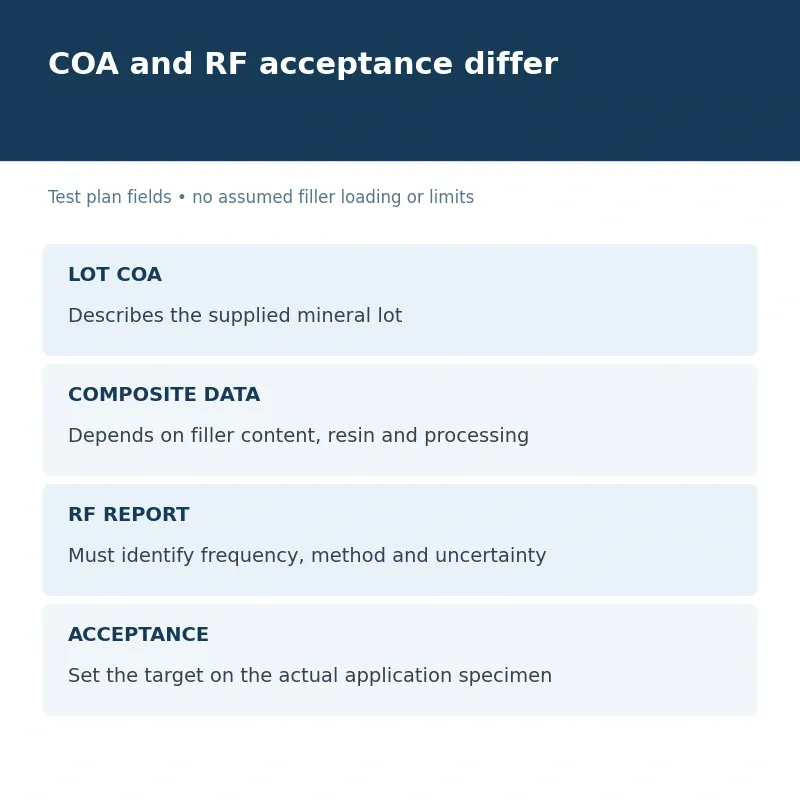
No. Phase, size distribution, moisture, surface condition, void content and epoxy processing all require attention. The cured coupon carries the RF result.
What should the RFQ contain?
Give the epoxy type, target filler loading, substrate thickness, operating band, loss/permittivity test method, moisture and ionic limits, size distribution in μm and required lot documents.
Send your frequency range, resin system, coupon thickness and target powder controls so Changtong can review material fit and documentation.
Request a technical quotationTechnical source and image context
Kumar, S.; Gupta, P.; Rajauriya, M. Epoxy and Fused Silica Composite for Radio Frequency and Microwave Applications. Macromolecular Symposia 414(1), 2400200 (2025). Source record. Peer-reviewed research; publisher abstract reviewed. Full formulation, filler loading and measurement method were not accessible. Source checked 15 October 2026. This is background evidence, not a newly published October 2026 study.
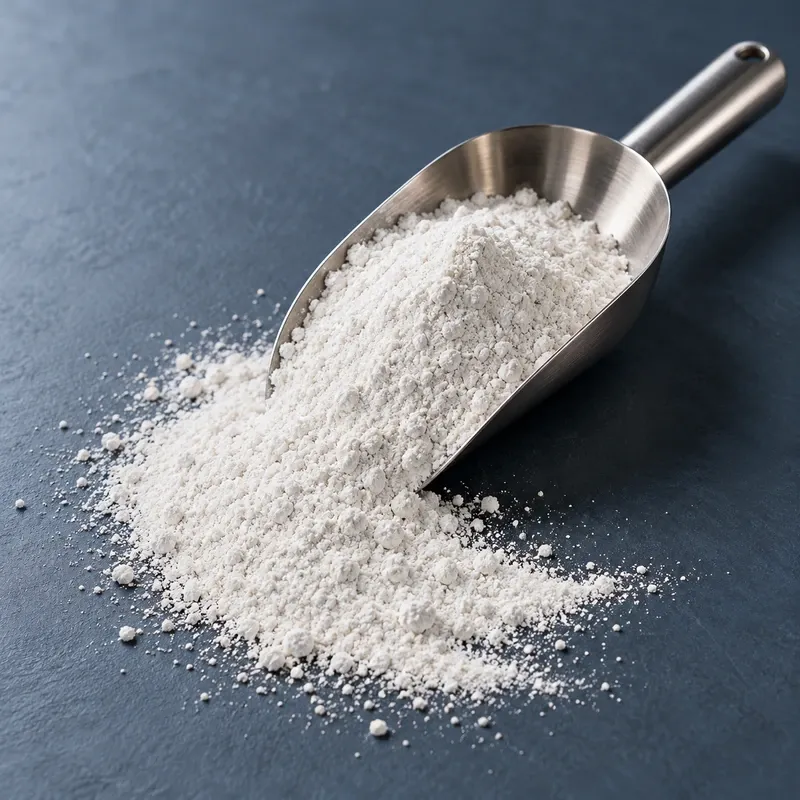
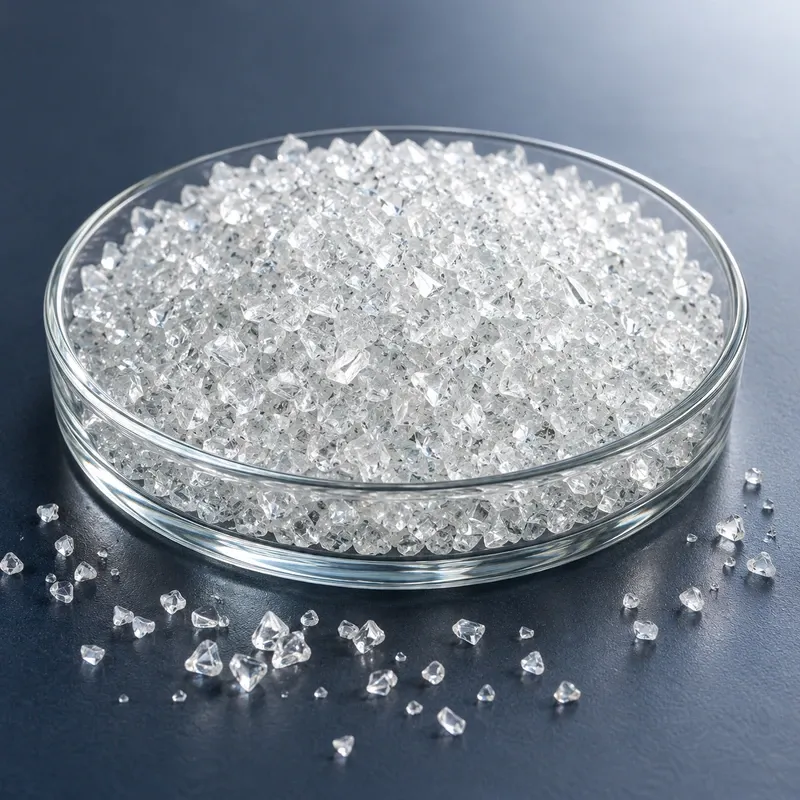
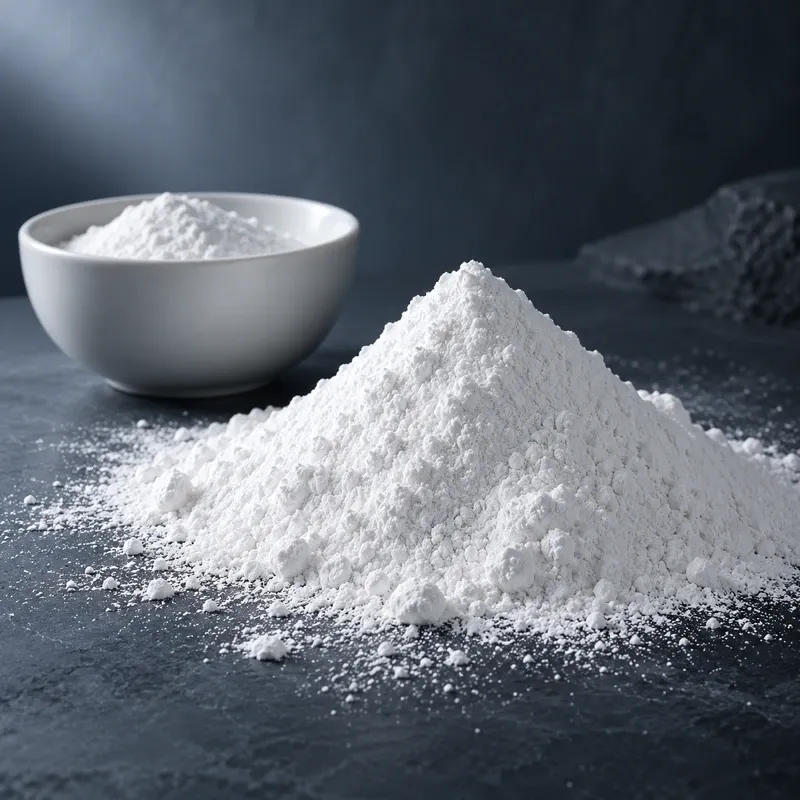
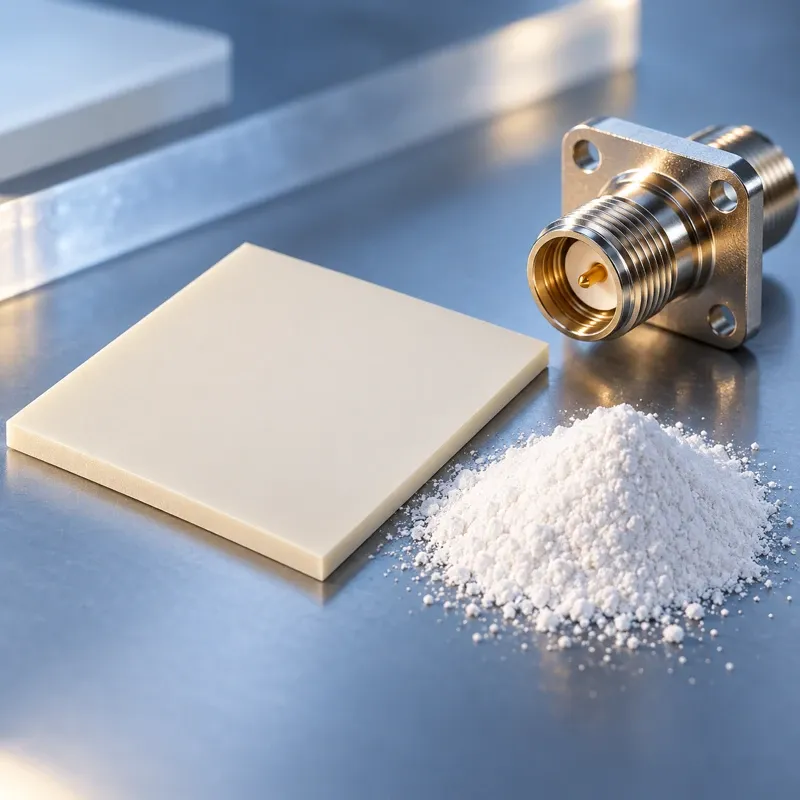
Main and detail images are conceptual AI-generated application illustrations, not photographs of Changtong production or tested customer parts. Body figures are original summaries of the stated research and proposed evaluation comparisons; they are not Changtong measurements.