Fused Quartz Flour in Ceramic Additive Manufacturing: Feedstock to Firing
A process-focused guide to screening amorphous fused quartz flour through feedstock rheology, printing, debinding and firing trials.
Process guide · Ceramic additive manufacturing
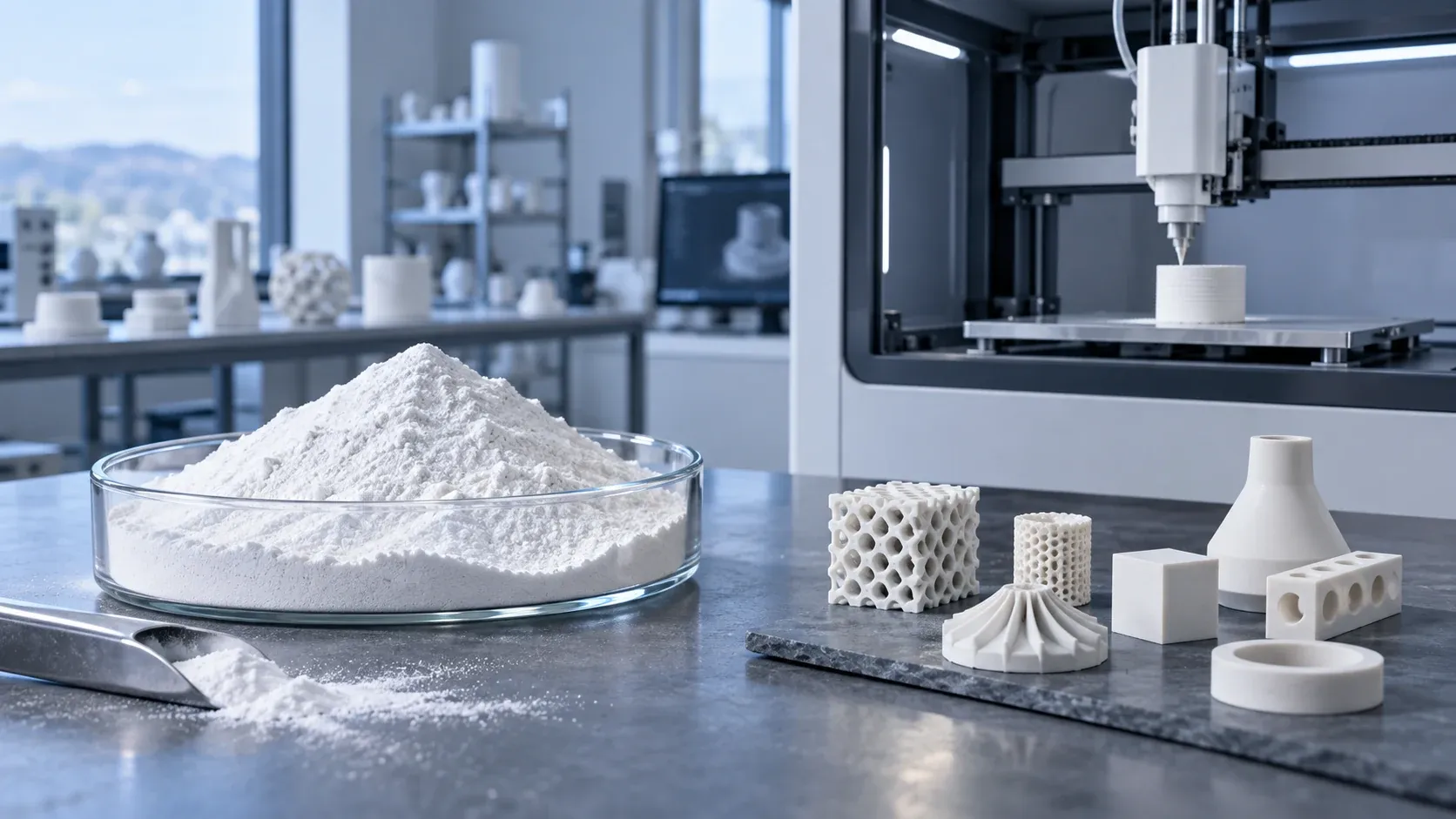
Fused quartz flour can be a useful amorphous silica input for ceramic additive-manufacturing trials, but print quality is controlled by feedstock rheology, solids loading, debinding and firing—not by powder name alone.
Why Feedstock Data Comes Before Printer Settings
NIST’s ceramics additive-manufacturing program emphasizes measurement of feedstock behavior, process defects and post-build sintering. Its guidance treats rheology and metrology as part of commercialization because a printed green body is only an intermediate state. For fused quartz flour, the first decision is therefore the route: binder jetting, vat photopolymerization, direct ink writing or another binder-based process.
Amorphous fused quartz is not natural crystalline quartz, cristobalite, precipitated silica or a ready-to-print feedstock. Keep phase identity and process qualification separate.
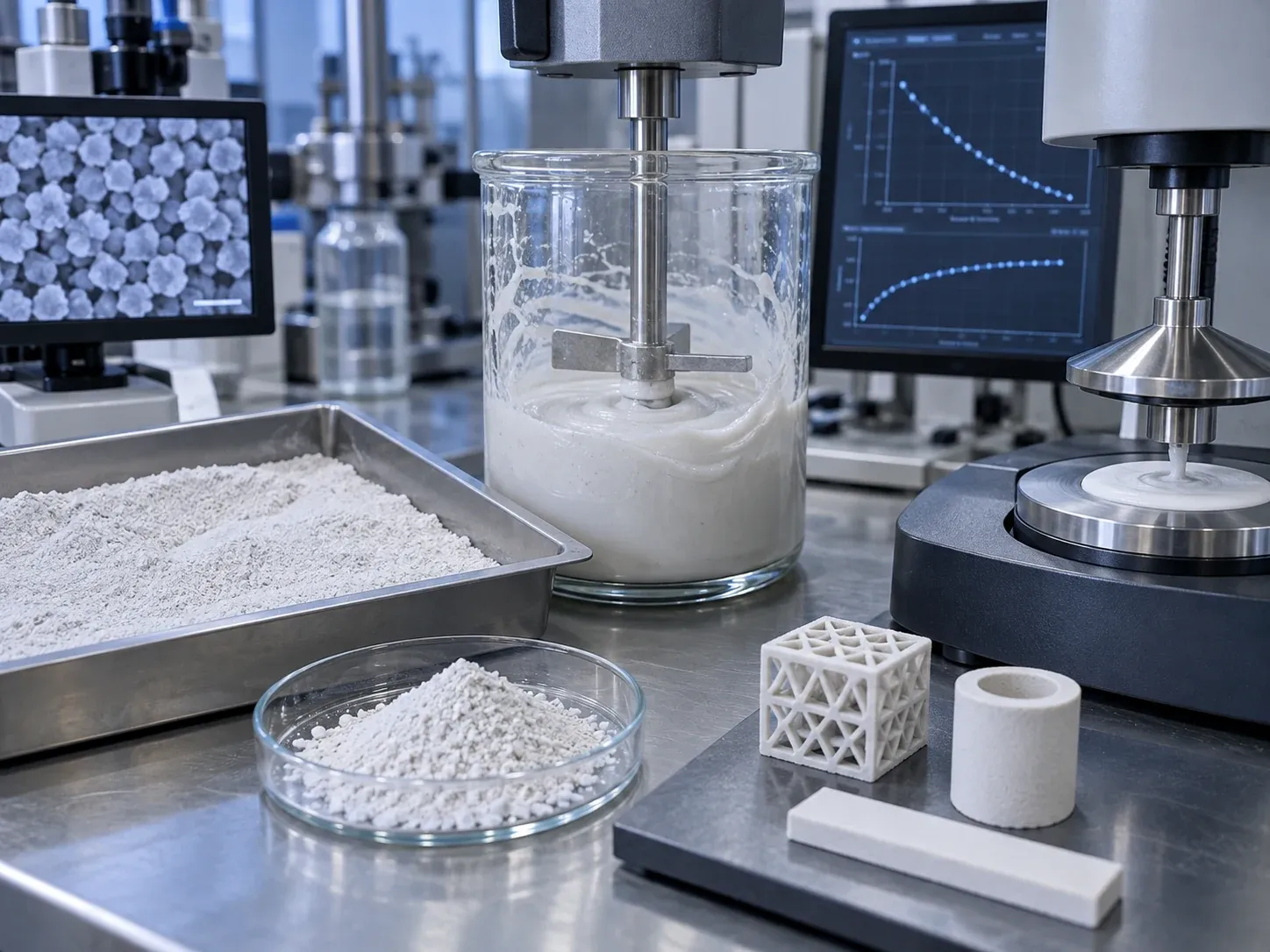
Feedstock Fields to Confirm
| Field | Evidence | Process relevance |
|---|---|---|
| Phase identity | Amorphous fused quartz/fused silica; current TDS/COA | Separates phase behavior from crystalline silica grades |
| PSD and oversize | D10/D50/D90 or sieve data, method and oversize limit | Affects packing, nozzle passage, layer quality and resolution |
| Morphology and moisture | Grade-specific supplier statement and current COA | Changes binder demand, dispersion and storage stability |
| Binder compatibility | Customer binder, solids target, rheology and de-airing plan | Controls flow, green strength and defect risk |
| Debinding/firing | Customer-developed cycle and coupon geometry | Controls cracking, shrinkage, distortion and final phase |
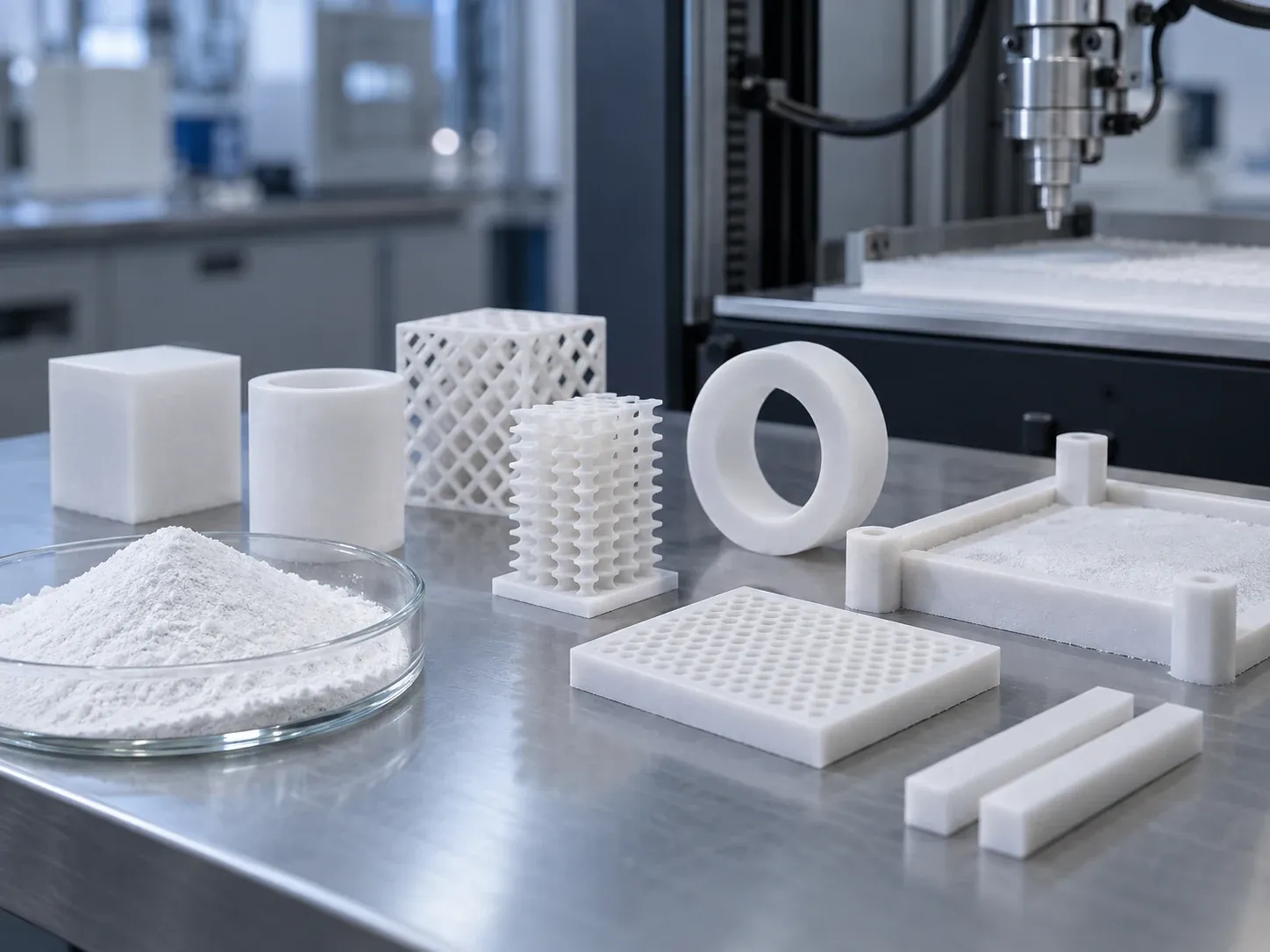
Build the Trial in Separate Stages
- Screen the powder. Confirm phase, PSD, oversize, chemistry, moisture and treatment status.
- Develop the feedstock. Record mixing order, solids loading, viscosity or flow method, stability and de-airing.
- Print standard coupons. Hold machine settings and geometry stable while checking layer quality, green strength and repeatability.
- Develop debinding and firing. Track mass loss, cracking, distortion, shrinkage, density and phase using the customer’s method.
Where to Compare Grades
Use amorphous fused quartz flour for ceramic AM when the process needs a powder input for a customer-developed feedstock. For a conventional fused-silica powder comparison, review fused silica powder 325 mesh and fused silica powder for refractory castables. If a crystalline phase is required, compare controlled-phase cristobalite powder instead of mixing templates.
FAQ
Is the flour ready to print?
No. The customer must qualify binder chemistry, solids loading, rheology, machine settings, debinding and firing.
Can one PSD fit every ceramic AM route?
No. Acceptable PSD and oversize depend on the machine, layer or nozzle constraint, binder and feature size.
Request a Fused Quartz Ceramic AM Trial Review
Send the printing route, binder family, solids target, PSD method, oversize limit, debinding concept, firing plan, quantity and required documents.
Request a Quote